


Algeria's regime is not especially afraid of losing the July 2 legislative election. The outcome was settled the moment Algiers wrote the rules that govern who may compete and who must comply. What actually worries the men who currently run the country is a single statistic that no amount of legal engineering can fully control: how many Algerians bother to show up.
This is the basic inversion that outside observers consistently miss when assessing Algeria's elections. Western coverage tends to ask whether the vote will be free, whether opposition candidates will be allowed to run, whether the National Liberation Front will retain its dominance. These questions answer themselves. Nearly 7,000 candidates are competing for 407 seats in the People's National Assembly, distributed through proportional representation with a 5 percent threshold that all but guarantees a parliament shaped to reinforce presidential authority. The real uncertainty, the number the regime cannot simply legislate into existence, is turnout.
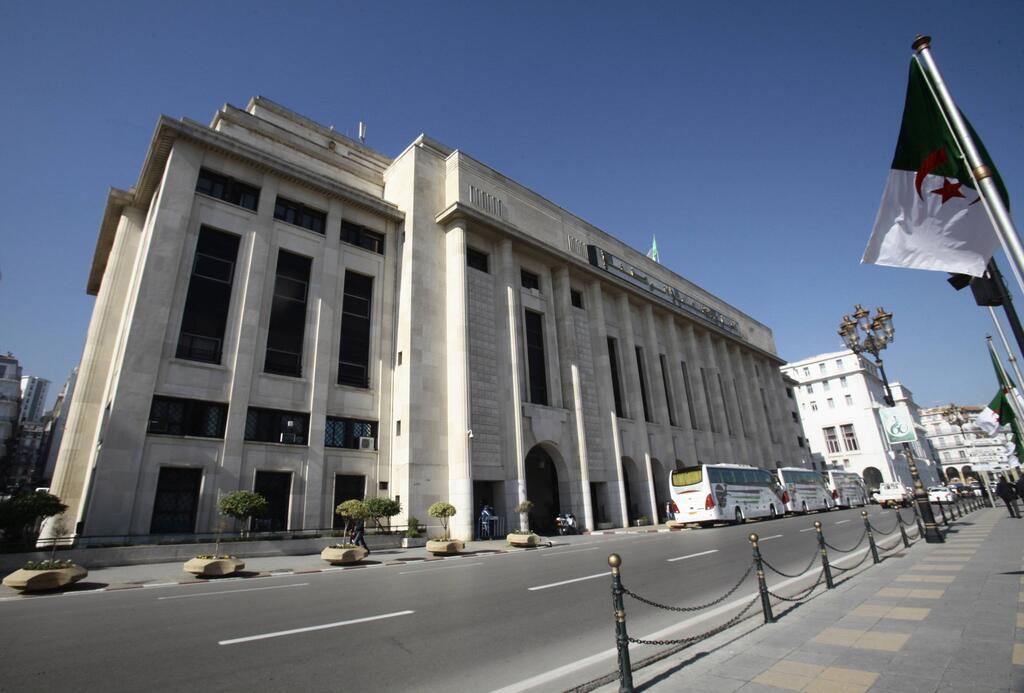
Algerian Parliament
(Photo: Reuters)
Algeria's recent electoral history explains the anxiety. The 2021 parliamentary election was marked by widespread boycotts and turnout low enough to embarrass even a government skilled at managing perception. The 2024 presidential race produced an official tally favorable to President Abdelmadjid Tebboune, but persistent questions about how many Algerians actually participated trailed the result for months afterward. Each cycle has reinforced a pattern: the regime can determine who wins, but it cannot fully manufacture the appearance that ordinary citizens care.
This explains the otherwise curious emphasis of the current campaign. Official media and candidates from across the spectrum have spent the closing days of campaigning not contesting policy but exhorting citizens to vote, treating turnout itself as the measure of success. That emphasis is a tacit admission. A system confident in its own legitimacy does not need to beg for attendance.
The compelled return of opposition parties to this election reinforces the same logic. A new Organic Law on Political Parties allows courts to dissolve any party that fails to field candidates in two consecutive national elections, converting boycott, the opposition's only remaining instrument of protest, into a legal liability. Parties that once abstained as a form of dissent are now campaigning to preserve their own legal existence. Their presence on the ballot is not a sign of renewed confidence in the system. It is a sign that the system closed off every alternative.
Economic conditions have compounded the regime's predicament. The cost of living crisis that intensified during Ramadan, driven by dinar depreciation and rising food prices severe enough to trigger isolated unrest in marketplaces, has deepened public disengagement from a political process widely viewed as irrelevant to daily hardship. Algerians queuing for subsidized staples have little reason to believe that a predetermined parliament will alter their circumstances, and the regime knows it. Hence the mobilization campaigns, the religious appeals, and the state media drumbeat urging citizens toward the polls in the campaign's final stretch.
None of this occurs in isolation from Algeria's regional posture. Algiers markets itself internationally as a stabilizing force, a mediator in African conflicts and a dependable energy supplier to Europe, a self-presentation that depends entirely on the fiction of domestic legitimacy that elections like this one are designed to sustain. Algeria's simultaneous diplomatic friction with France, and its fraying relationship with former Sahel partners following the downing of a Malian drone last year, suggest a foreign policy increasingly defined by confrontation rather than the steady reliability Algiers claims for itself. Algeria's claim to regional stewardship sits uneasily alongside a deteriorating Sahel security environment, where jihadist groups linked to al-Qaeda's regional network and the expanding footprint of Russian-aligned mercenary forces have outpaced the mediating role Algiers assigns itself, raising doubts about whether a government this consumed with managing its own electorate retains the bandwidth to manage a region in crisis. For a country positioning itself as a security partner on counterterrorism and migration, a domestic system this dependent on coerced participation should give Western governments pause about how much weight to place on Algiers' assurances.
This matters beyond Algeria's borders. A North African state whose internal governance rests on engineered consent rather than functioning institutions is a poor foundation for the kind of sustained counterterrorism and Sahel security cooperation that Western and Israeli interests both depend on. Promises of stability from a regime that must coerce its own opposition into participating are promises built on sand. Previous demonstrations may have been contained through arrests, media restriction, and the closure of civil society organizations, but containment is not resolution, and a parliament seated through manufactured turnout does nothing to address the underlying economic and political alienation that produced the protest movement in the first place.
The diaspora vote adds a further test of the regime's turnout anxiety. Millions of Algerians abroad are eligible to cast ballots through consular channels, and for the first time North America and Latin America have been carved into an independent electoral zone with two dedicated seats in the Assembly. Algiers presents this expanded representation as a gesture of inclusion. It also functions as a hedge. Expatriate communities, less exposed to the patronage networks and administrative pressure that shape turnout at home, have historically returned lower participation rates than domestic voters, and a weak diaspora showing would undercut the very narrative of broad-based legitimacy the regime is straining to construct in the campaign's final days.
What follows July 2 is predictable regardless of the final turnout figure. The FLN and its allies will retain their majority. Tebboune's government will describe the result as a popular endorsement of its program. International responses will likely settle into the familiar posture of cautious acknowledgment, treating the procedural fact of an election as sufficient grounds to avoid harder questions about what that election actually represents.
 Amine Ayoub
Washington should resist that posture. The State Department and Congress have consistently treated Algeria's electoral calendar as evidence of incremental reform, a framing that has allowed Algiers to trade procedural normalcy for diplomatic cover on energy and counterterrorism cooperation without corresponding accountability. That approach should end. Congress should use the reporting mechanism already available under Section 502B of the Foreign Assistance Act to condition future security assistance and counterterrorism cooperation on an annual State Department assessment of the independence of Algeria's electoral and judicial institutions, including the Organic Law on Political Parties and its dissolution provisions, rather than accepting turnout figures or procedural milestones as a substitute for genuine institutional accountability. Such a requirement would force successive administrations to weigh Algiers' security cooperation against a documented record of coercion rather than against the comforting fiction of an electoral calendar. A regime that needs to coerce its own opposition into appearing on a ballot has already told Washington everything it needs to know about how much weight its assurances deserve.
Amine Ayoub, a fellow at the Middle East Forum, is a policy analyst and writer based in Morocco. Follow him on X: @amineayoubx