


The most consequential Arab-Israeli peace agreement may not change Israel's formal borders at all. It could change how regional political actors define Israel. Egypt made peace with Israel decades ago. Jordan followed shortly after. The United Arab Emirates and Bahrain joined the Abraham Accords, while Morocco subsequently established diplomatic relations with Israel.
Yet none of those diplomatic milestones carried the same symbolic weight as a potential decision by Saudi Arabia. Saudi Arabia is not simply another Arab government managing regional bilateral trade. It is home to Islam's two holiest sites. Its religious and political influence extends far beyond its national borders, touching every corner of the Islamic community across the globe.
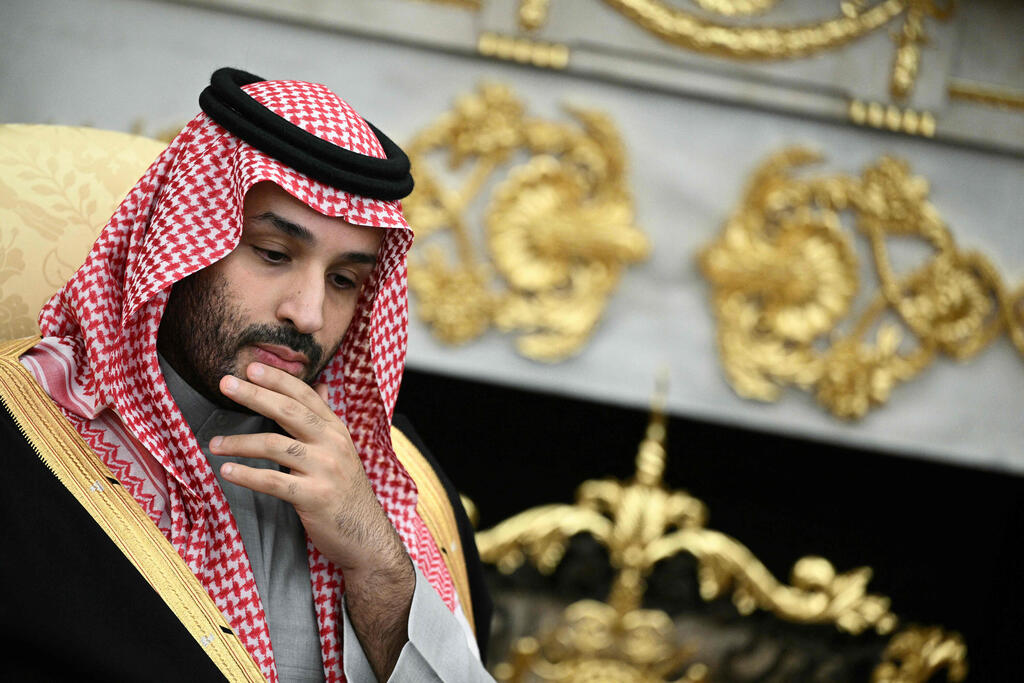
If Riyadh formally recognizes Israel, the consequences would reach far beyond an embassy in Tel Aviv or a Saudi diplomatic mission in Jerusalem or any other regional capital. The bigger question would be what happens to an ideology that has treated Israel as a permanent exception across generations of political discourse.
For decades, political movements have defined Israel as a state that can be fought and rejected, but never fully accepted as a legitimate participant in the regional order. Saudi normalization could force Muslim political movements to confront this reality directly. If the guardian of Islam's holiest sites can recognize Israel, what exactly remains of the argument that Israel itself must be permanently rejected? Saudi Arabia could change what Israel means to the broader Muslim political consciousness.
Yet the path is not frictionless. Any Saudi decision would still require a credible Palestinian component, something short of a full Israeli withdrawal but substantial enough to be defensible inside the Kingdom and across the wider Muslim public. Residual religious sensitivities remain real, and the trauma of October 7 has hardened attitudes on both sides.
An Israeli government would also have to deliver tangible concessions on settlements, security arrangements, and a pathway to Palestinian statehood that its own coalition can survive. Rejectionist movements will not simply concede; many will brand the Saudi leadership traitors and attempt to use the deal as a recruitment tool. These constraints are genuine. They do not, however, erase the structural shift. Once the custodian of the two holy mosques treats Israel as a legitimate interlocutor, the old absolute prohibition loses its theological and political monopoly. The argument must then be rebuilt on narrower, less potent grounds.
Tehran has long exploited the Palestinian cause as its primary ideological vehicle for regional hegemony. By positioning itself as the sole champion of resistance against Israel, the Iranian regime masked its broader strategic ambitions across the Middle East. Tehran's propaganda apparatus routinely painted Arab governments as weak or corrupt collaborators, contrasting them with the revolutionary purity of the Islamic Republic and its network of proxies.
A formal Saudi-Israeli normalization deal would actively challenge this narrative by showing that regional stability triumphs over revolutionary theology and empty posturing. At a time when Riyadh faces severe security pressures, including Houthi attacks from Yemen, while simultaneously engaging in regional diplomacy alongside partners like Turkey, Egypt and Pakistan, Saudi strategy increasingly prioritizes state interests and regional security.
If Riyadh eventually establishes formal ties with Israel, Iran would face a serious challenge to its claim that resistance to Israel offers the region's most credible political alternative. The resistance axis led by Tehran could increasingly appear less like the region's inevitable political future and more like an alternative model competing with a Saudi vision centered on state interests, diplomacy and economic integration.
Tehran's claim to represent the broader regional cause of resistance against Israel would become harder to sustain when the guardian of Mecca chooses diplomacy over perpetual warfare. The geopolitical cost for Iran could be substantial, particularly if Saudi normalization were accompanied by deeper bilateral Israeli-Gulf security cooperation, stripping its regional strategy of its primary ideological shield and exposing its expansionist goals to harsher international political scrutiny.
For decades, groups like Hamas have built much of their political identity around armed resistance to Israel and rejection of a permanent political settlement on Israeli terms. Normalization with Saudi Arabia would strip away the illusion that time is on the side of armed rejectionism. When a regional titan like Saudi Arabia embraces a pragmatic path, the argument that armed confrontation is the only viable avenue for Palestinian aspirations would face a powerful new competitor: diplomacy backed by the region's most consequential Arab power.
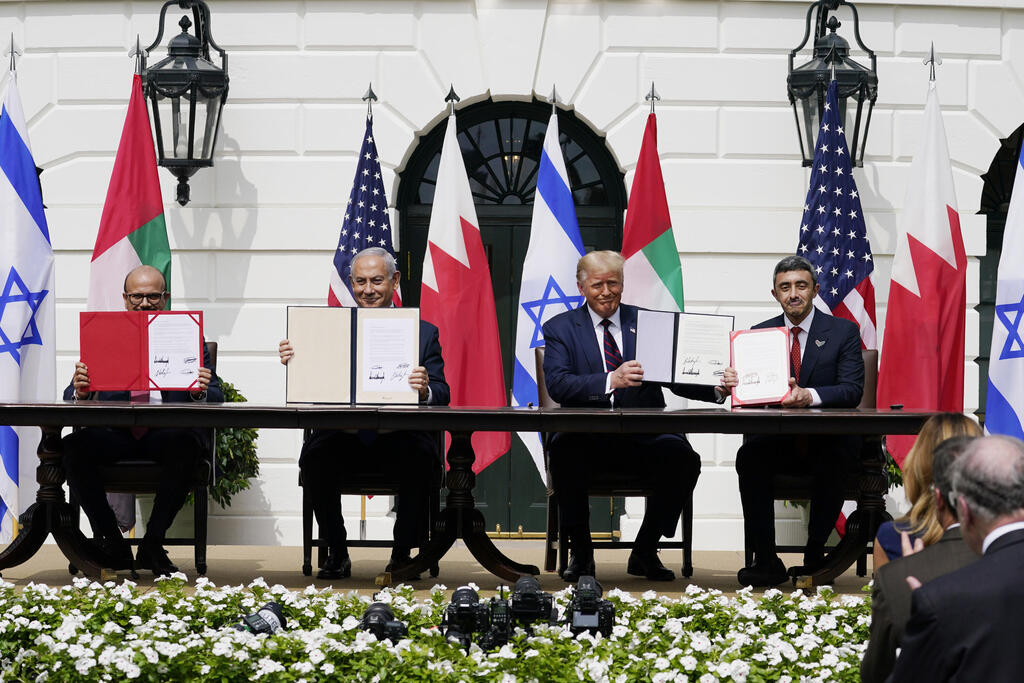
Abraham Accords signing
(Photo: Alex Brandon/AP)
This matters because Hamas and its ideological cousins have long treated diplomatic isolation of Israel as a strategic asset. Once that isolation begins to erode under Saudi sponsorship, the political returns on pure rejectionism decline. Armed groups would still retain the capacity for violence, but their claim to represent the only authentic path for Palestinian national aspirations would face a more formidable regional counter-narrative than at any point since 1967.
The political space available to militant movements could narrow if Saudi Arabia demonstrated that engagement with Israel could coexist with broader Arab political and economic interests. Many key Arab nations across the Middle East have long desired closer strategic and economic cooperation with Israel but hesitated due to domestic sensitivities and public pressure. The fear of being branded as traitors by the wider Muslim street kept capitals cautious. Saudi Arabia could provide the most consequential political cover yet for Arab governments considering deeper relations with Israel.
When Riyadh takes the historic step of formally recognizing Israel, it redefines the acceptable boundaries of regional diplomacy, empowering other capitals to pursue bilateral ties openly, safely, and confidently.
The ripple effects would extend further. Inside the Organization of Islamic Cooperation and the Arab League, working methods and consensus language would come under quiet but sustained pressure. Turkey and Pakistan, two large Muslim states that have long straddled the issue, would face sharper choices about their public postures.
Iranian proxies operating in arenas where Saudi soft power and funding still matter, from Lebanon's Sunni communities to parts of Yemen and the Horn of Africa, would confront a higher political cost for pure rejectionism. Normalization would not convert these actors overnight. It would, however, change the relative price of ideology versus state interest across multiple theaters at once.
Other governments in North Africa, the Middle East and beyond could find themselves with greater political space to pursue their own bilateral ties with Israel without fearing catastrophic domestic blowback from extremist factions or radical political groups. The precedent set by the kingdom transforms normalization from a controversial outlier into a mainstream diplomatic option for the entire region.
The theological debate surrounding engagement with Israel could undergo a profound transformation. The conversation could shift from outright rejection toward questions of negotiation, economic partnership and cultural exchange. That could give moderate voices greater room to argue that engagement with the modern world is compatible with Islamic identity and national interests. Critics often argue that normalization bypasses Palestinian rights completely. Yet a Saudi-led agreement would not make the Palestinian issue disappear entirely.
Riyadh has made clear that Palestinian statehood remains central to its diplomatic position. The potentially transformative change would be that the Palestinian question would increasingly become a subject of constructive negotiation with Israel rather than a reason to reject relations with Israel altogether. Instead of facing a wall of unyielding political hostility across the region, Israel could find itself confronting a collective Arab demand for a durable two-state reality backed by one of the Muslim world's most influential states.
That shift would not completely dissolve political Islam, neutralize Iran, or resolve the core Palestinian question overnight. It would, however, strip the most absolute version of rejectionism of its previous theological and political monopoly. Israel would remain a contested actor, but no longer an illegitimate exception by definition. In a region long structured around that exception, the change in baseline assumptions may ultimately prove more consequential than any single treaty clause.
Amine Ayoub, a fellow at the Middle East Forum, is a policy analyst and writer based in Morocco. Follow him on X: @amineayoubx