


In the manifesto of the child-killer from Minneapolis, he wrote that his first target of choice is “Zionist Jews.” Such Jews are the only rare point of overlap between America’s far right and radical left; for both sides, they are enemy number one.
In the Israeli media this week, much attention was given to a disturbing trend of growing alienation of young Republicans towards Israel. Australia expelled the Iranian ambassador 10 days ago after intelligence pointed to Tehran’s involvement in antisemitic attacks in the country.
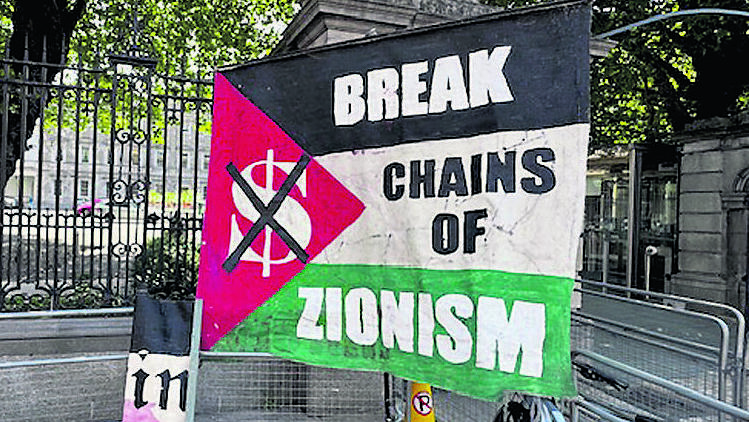
In Germany, Jews who hung pictures of the hostages were assaulted; their attackers screamed at them, “child killers.” Such assaults have become daily occurrences across Europe, and in Canada, this week, an elderly Jewish woman suffered a knife attack by another Jew-hater.
In Jerusalem, the cabinet avoided discussing the hostages in Gaza, with ministers rushing instead to a celebratory dinner organized by the Settler Binyamin Council in a restaurant. The government did devote itself to easing travel to Uman, meaning Israel will now pay a special “Jew tax” to Moldova for safe passage, while Haredi draft dodgers—during wartime—travel abroad without hindrance. Three friends received emergency reserve draft orders for the upcoming sixth call-up. Another told me he doesn’t know how to tell his wife. He walks around with the news locked in his heart, hiding it, agonizing over the right moment to reveal it.
Also this week, Prime Minister Netanyahu continued to clash with the worn-out defense establishment, which repeatedly insists on the need for a ceasefire and a hostage deal in Gaza; his allies threaten—a hollow yet dangerous threat—to appoint a chief of staff above the chief of staff. Globally, Israel's diplomatic crisis continued—from the U.K. to France and Turkey, the government was hit with various sanctions and threats.
These events are connected. They hint at a larger story: the crossroads at which the Jewish people, in the Diaspora and in Israel, now find themselves. In essence, Jewish existence is under mounting and severe threat everywhere. In the Diaspora and in Israel alike, the threat is both external and internal.
The nature of these threats differs from country to country, but in every case—whether in Paris, Tel Aviv, or New York—the Jewish sense is one of existential peril. The war in Gaza did not create these processes, but it accelerated and worsened them. Other developments—technological and social, like social media, artificial intelligence, and the rise of populism and nationalism—all feed into this reality.
The catastrophe is not here yet, but disaster lurks close by.
Let us begin with the Diaspora. I am reminded of Dan Senor's speech on the state of the Jewish people, and how he opened it with words from a new antisemitic song by Kanye West, words that would have been incomprehensible a decade ago.
Jews outside Israel have been caught inside a triangle of animosity and hatred. One corner is the classic one: antisemitic far-right extremism. The far right has thrived since the 2008 global financial crisis. That year, I interviewed the leader of Britain’s nationalist party, a Holocaust denier; he predicted correctly that when “refrigerators go empty,” support for the far right would rise. True, some far-right movements try to distance themselves from traditional antisemitism, but these are anomalies. The genetic code of nativist, chauvinistic, nationalist right-wing politics sees the Jew as the ultimate “other.” Needless to say, the last decade has been the best for the global far right since the 1930s.
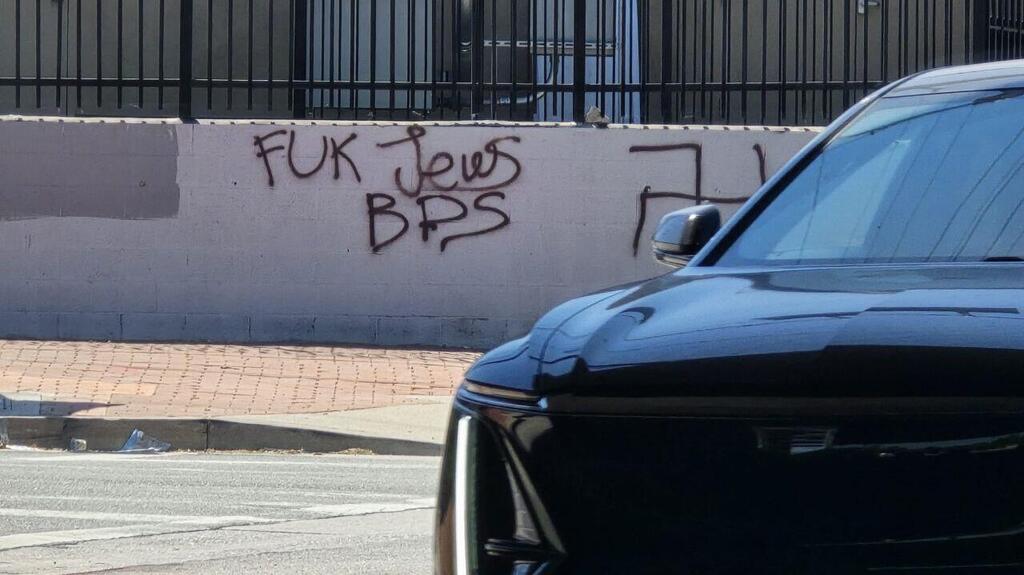
Los Angeles
(Photo: IAC)
Another corner of the triangle is Islamist fundamentalism, which regards Jews (and Christians as well) as infidels and potential slaves. Jews have particular sins, foremost their perceived support for Israel. The growth of immigrant communities across Europe has provided fertile ground for the rise of violent fundamentalism aimed at Jews.
The third corner is the radical left. Unlike the other two, the left has no inherent doctrinal rejection of Jewish existence. But Zionism, the defining marker of modern Jewish identity, is viewed as an unforgivable sin. This is not merely opposition to the idea of a Jewish state in Eretz Yisrael, but to the very dual nature of Jewish existence: as both a people and a religion.
The notion that Jews are a nation, entitled to self-determination, has become illegitimate within the radical left—both non-Jewish and, at times, Jewish. Those who see all nationalism as fascism struggle especially to accept the newest members of the nation-state “club”: the Jews. By the logic of Israel’s “original sin” of existence, the Naqba, any Jewish support for Israel incriminates them and their communities with every possible charge—apartheid, ethnic cleansing, genocide. The radical left has taken the position that Israel, and only Israel, has no right to exist as a result of its sins.
This is the triangle of animosity in which Jews in the Diaspora live—whether in the U.S., Europe, Australia, or Latin America. In some places, the radical left corner is far stronger than the others. In France, by contrast, the security concern almost always involves the prospect of Islamist terror attacks. In the U.S., the white far-right corner has begun spilling over into fringes of the populist movement; a good example is Candace Owens, who has become fully antisemitic.
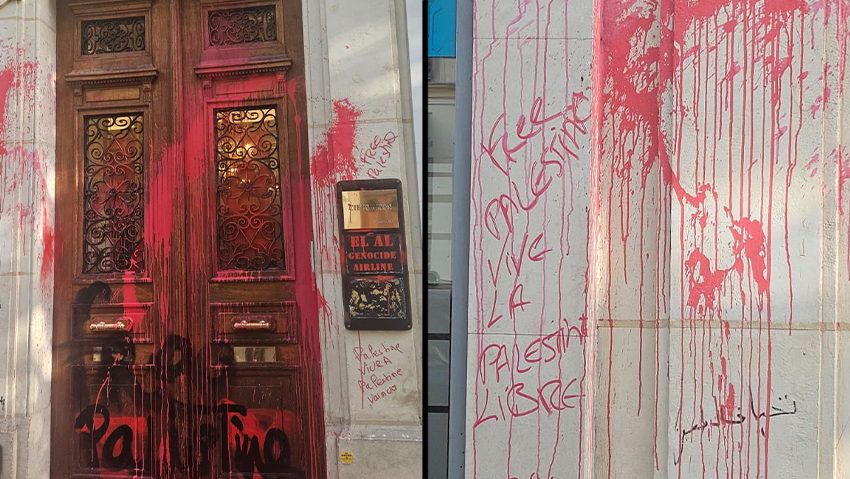
Antisemitic incident in France
In any case—and this is crucial—the corners no longer remain separate. This is the major development to which the Gaza war has contributed. America’s far right now suddenly shows “empathy” for Palestinians while really holding the same white supremacist views toward them, only to take a hit at Israel and Jews; parts of the progressive left are willing to adopt anti-colonial narratives from Al Jazeera, Qatar, and Hamas, all of which either defend dictatorships or preach totalitarian theocracies. These three corners of this triangle are now converging around a rare consensus: hatred of Israel. The result is a radioactive cocktail of hate.
The prolongation of the Gaza war, the solidarity around the hostages, and the Jewish value of “all Israel is responsible for one another,” alongside the undeniable harm to innocents in Gaza, put Diaspora Jewish communities in an impossible bind. The majority want, and feel obligated, to support Israel. But such support only tightens the noose of hostility around them.
Many of these developments are born out of local societal trends that have nothing to do with Jews; others are the result of Israel’s government’s reckless decisions, Israel’s collapsing popularity, and entrenched local antisemitism. This triangle of hate spills over from the extremes into the mainstream, further endangering Jews. Popular podcasts now platform pseudo-historians who dust off Holocaust denial and call it revisionism. They are merely trying to profit from the grassroots Jew-hatred now becoming more legitimate.
Are daily lives unraveling? Not always. But communal reality is under threat. Parents who send their children to Jewish schools know their children’s schools can become targets. Worshippers who go to the synagogue see the security presence that surrounds it. Political debates about the State of Israel, or arguments over the war in Gaza, make everyday life more caustic. These changes can reach a singular tipping point.
That is what happened in the great crisis of the Jewish people before the Holocaust, after the assassination of Tsar Alexander II in Russia. The wave of pogroms and racist legislation that followed the assassination—and the blood libel that Jews were somehow involved—produced an acute sense of existential distress among Eastern European Jews. It set off an unprecedented wave of migration and laid the foundations of Zionism. Pinsker concluded that the Jewish people would never be “normal” in exile, and that they must free themselves, ultimately, in a state of their own. But the answer for most Jews was America.
That was the earlier crossroads, and around it raged a monumental debate: Eretz Yisrael or America. On the essential point, however, there was agreement: the Jews were hated. They had to choose. And in the words of the editor of 'Hayom' newspaper in January 1886 (as cited by Dr. Naomi Friedman): “We are all responsible for one another, we are all hated, despised, and reviled. And what, then, should divide our hearts? Is it because one desires to settle in the Land of Israel while another sends his poor relative to the lands of America?”
We might be again at a crossroads. In theory, the solution is ready-made. Israel was established to provide refuge, the ultimate shelter—the “self-emancipation” Leon Pinsker envisioned.
But even in Israel, Jewish existence is in danger. Beyond internal debates, Jews in the Middle East are surrounded by people hostile to their very existence, not just politically. October 7 proved decisively that the region’s fundamentalists truly believe they can wipe Israel out, murder its inhabitants, and expel whoever remains.
The Muslim Brotherhood and extreme Shiite forces have proclaimed this openly for years. Despite the devastating blows Israel has dealt them during the war, these forces still enjoy immense popularity across the Arab and Muslim world.
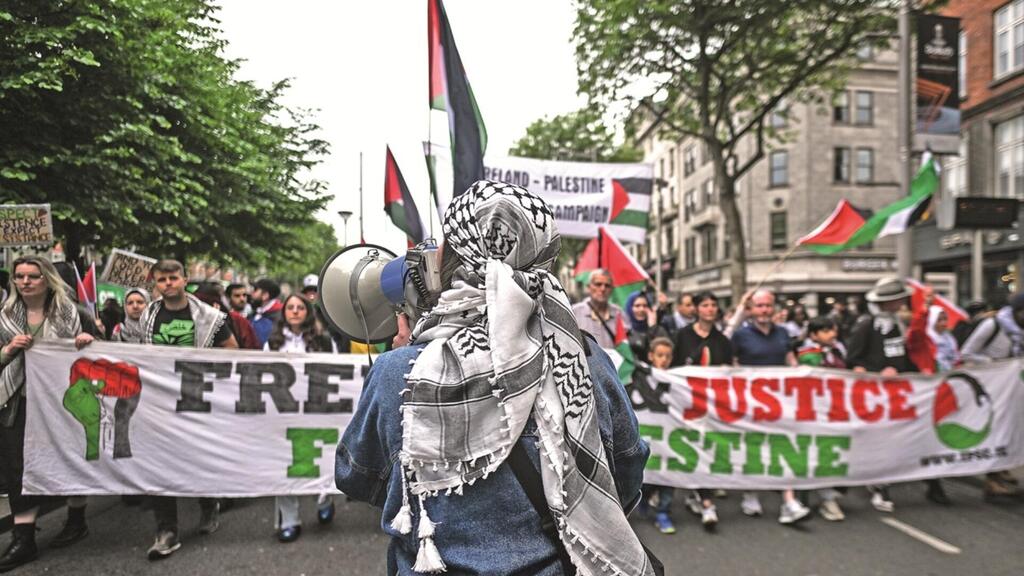
(Photo: Artur Widak/GettyImages)
The Gaza war has eroded prospects for reconciliation. The images of rubble and civilian death have poisoned the possibility of peace. This, in a sense, was Hamas’s precise goal: to sabotage any chance of political resolution, to rekindle the flame of jihad, what Sinwar calls his “great project.”
Half of Israelis now tell pollsters they believe the existence of their state is in serious jeopardy—even after Israel has eliminated the top military leadership of Iran, Hamas, and Hezbollah.
Granted, the threat to Israel’s existence is not new; it has shadowed the state since its founding. But in recent decades, a new toxin has been added: corrupt, tribal, repressive, and above all, irresponsible politics.
Responsibility—this is what Israelis most want in their leaders, according to surveys. Yet this is what their government flees from. Responsibility for October 7, the worst disaster to strike the Jewish people since the Holocaust. Responsibility for corruption on a biblical scale: accepting money from a hostile state during wartime and channeling it directly to Netanyahu’s cronies, as in the Qatar investigation. Responsibility for trying to silence critics, when self-criticism has always been the Jewish people’s essential virtue, and the lifeblood of democracy. Many would point to the vibrancy of Israeli society—the demonstrations, the free press. These remain, and yet the governing elite continues to pass law after law, move after move, aimed at silencing criticism: threatening independent media, and ordering the police to suppress dissent with force.
Moral clarity is often treated as treason. Thus, a fundamental tool of the Jewish state since its founding has been smashed in favor of a cultish loyalty. Many coalition MKs are disgusted by the draft-dodging laws for Haredim, but they do not obey their conscience; instead, they follow the dictates of Aryeh Deri, Moshe Gafni, and Benjamin Netanyahu. Why? Because they know that if they “betray”—that is, if they reject draft-dodging during wartime—the ruling party’s politics will destroy them.
In 1948, when Israel’s most celebrated columnist and poet wrote to Ben-Gurion about alleged war crimes, the Prime Minister ordered his dissent circulated among all the soldiers then fighting the country’s most devastating and existential war. In 2025, by contrast, when cultural figures or the press raise suspicions of war crimes in Gaza, they are instantly branded by the ruling classes as traitors-in-waiting or Third-World sympathizers of Hamas.
Israel lives with a deep contradiction. It is a miracle: a society, economy, and spirit of innovation of extraordinary capability. But its politics, especially within the coalition, is reminiscent of third-world societies. As Prof. Dan Ben-David from Tel Aviv University illustrates in his grim charts, a Third World scenario is entirely possible in the near future, also because of the lack of basic education for the ultra-Orthodox, the fastest-growing segment of Israeli society. Israel would not be able to sustain a First World economy or an army like the IDF under these conditions. Israel, he explains, relies on 300,000 exceptionally skilled people in high-tech, medicine, academia, and defense. If they start leaving en masse, he warns, the collapse spiral will be uncontrollable.
His data shows it is a phenomenon of the past decades: in 1970, Israel’s vehicle density was almost identical to Western Europe. Today, it is 3.4 times higher, despite fewer cars overall. Israel’s education in core subjects is the lowest in the developed world, even without counting the ultra-Orthodox, who until recently refused to allow the state to monitor studies for elementary students at all. These are just snapshots of a heavy body of data.
The founding contract of Israeli society was to build a state in the harshest conditions, in the heart of a hostile region, but one with mutual responsibility, social services, and an effort to create a model society. That contract has been violated, as seen in the anguished cries of the hostages’ parents who feel abandoned by their government. Many will answer by litigating the faults of Hamas, but this misses the point: the ruling political class, which has been there for decades, has not earned responsibility and has not installed unity during Israel's worst war to date.
Above all hovers a moral crisis. Israelis continue to allow the failed government of 2023 to remain in power. Knesset members continue to give it their confidence. Meanwhile, Israel digs deeper into a bloody war in Gaza, while parts of its public and leadership chant, “there are no innocents” in the Strip. There is not enough of a pause, self-examination, or real, painful reckoning—not with its corrupt leaders, and not with the civilian victims in Gaza who suffer. Nothing here is meant to excuse Hamas from its overall responsibility for the war or the destruction in Gaza.
Thus, we reach the crossroads. In the Diaspora, Jewish existence is endangered by processes in the surrounding non-Jewish societies. In Israel, Jewish existence is endangered by the region and by the political leadership itself.
It is both a junction and a race: which crisis will reach a tipping point first? Because ultimately, one can predict, either the Diaspora will flow into Israel, or Israel will spill into the Diaspora.
 Nadav EyalPhoto: Abigail Uzi
Actually, both could happen simultaneously. Across the Jewish world, modern Orthodox communities demonstrate increasing aliyah to Israel; this is natural, considering the triangle of hatred built around those who identify as Jews. Meanwhile, more and more secular Israelis ask if they can trust governments that exempt their allies from military service while demanding that their own children fight and die.
It is certainly possible that the antisemitic storm will pass, like a hurricane leaving destruction in its wake, after the war ends. And perhaps Israel will leave behind the current political darkness and commit to major reforms.
But what will come first—a positive transformation, or a catastrophe, or both?
In the 19th century, Jews had at least two escape routes: the Land of Israel and America. In the 21st century, many Jews feel they have none. Everything is in flux, and Jews who identify openly as such are targets everywhere.
The Jew of Eretz Yisrael whispers: if we are doomed to live in a darkening world, one of nationalism, racism, and populism, should we not live in our own state, speak our own language? Should we not try to shape a small community where we have power and agency?
Others will reply—even here, in Israel—that it is already lost. That hope lies only elsewhere. This, too, is a Jewish debate.
This is the race. And from the Israeli angle, and as an Israeli, it is also the singular opportunity: to reform now, before a greater disaster, to rebuild the home defiled by corruption, arrogance, and indifference to the weak. In the Diaspora, Jews are buffeted by forces they cannot control. In Israel, Jews still possess the power to shape their destiny by themselves. We must not hesitate now.
It is certainly possible that the antisemitic storm will pass, like a hurricane leaving destruction in its wake, after the war ends. And perhaps Israel will leave behind the current political darkness and commit to major reforms.
But what will come first- a positive transformation, or a catastrophe, or both?
In the 19th century, Jews had at least two escape routes: the Land of Israel and America. In the 21st century, many Jews feel they have none. Everything is in flux, and Jews who identify openly as such are targets everywhere. The Jew of Eretz Yisrael whispers: if we are doomed to live in a darkening world, one of nationalism, racism, and populism, should we not live in our own state, speak our own language? Should we not try to shape a small community where we have power and agency? Others will reply - even here, in Israel- that it is already lost. That hope lies only elsewhere. This, too, is a Jewish debate.
This is the race. And from the Israeli angle, and as an Israeli, it is also the singular opportunity: to reform now, before a greater disaster, to rebuild the home defiled by corruption, arrogance, and indifference to the weak. In the Diaspora, Jews are buffeted by forces they cannot control. In Israel, Jews still possess the power to shape their destiny by themselves. We must not hesitate now.