


First, the facts: There is no concrete intelligence indicating that Iran or Hezbollah intends to attack Israel before or after the elections. What is known is that a debate is underway within Iran's leadership, which is now more fanatical and jihadist than ever, over whether Iran should strike before U.S. President Donald Trump and Prime Minister Benjamin Netanyahu attack Iran.
But the debate at the top of the Iranian regime concerns Trump's intentions more than anything else, particularly what will happen after the U.S. midterm elections and how Iran should prepare for that possibility, rather than the elections in Israel.
Gallery
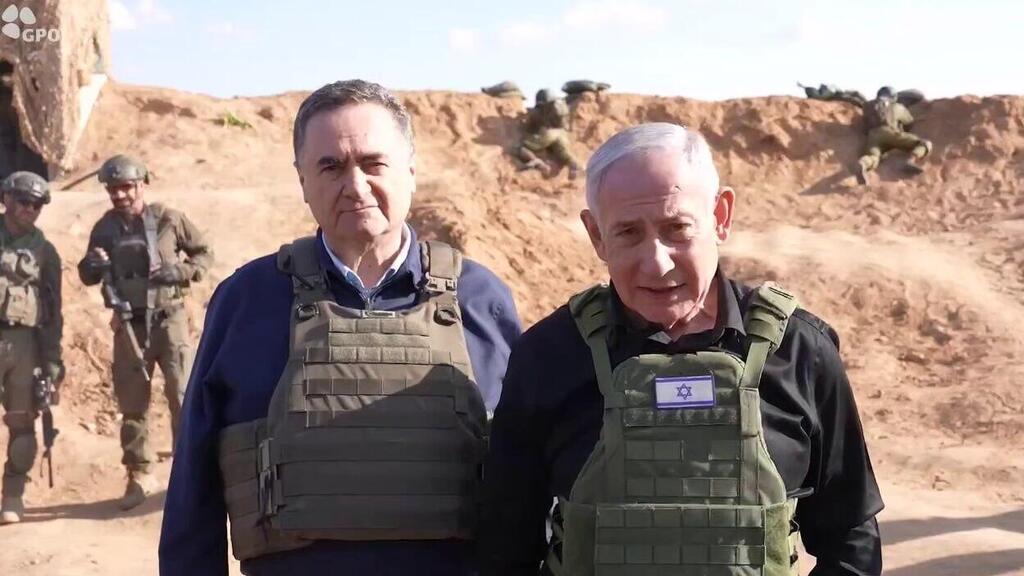
Defense Minister Israel Katz and Prime Minister Benjamin Netanyahu in the northern Gaza Strip
(Photo: GPO)
It is also known, as reported in the Arab press, that Iran has demanded that Hezbollah join a high-intensity military confrontation with Israel and the United States if such a conflict breaks out, or if another round of airstrikes takes place. This means there is currently no immediate, concrete threat to Israel and its citizens ahead of the coming elections, apart from the possibility of what is known in military terminology as a miscalculation. In other words, the Iranians could misinterpret preparations by the Americans and Israelis for a possible strike on Iran at some undetermined point in the future. The miscalculation would occur if the Iranians mistakenly concluded that the date for such an attack had already been set and, in that case, decided it would be better to strike first in order to inflict maximum damage on American forces in the Middle East, Israel and Washington's Arab allies in the Persian Gulf.
Israel's concern about such a miscalculation is justified. What is not justified, however, is the way Netanyahu and Defense Minister Israel Katz are making statements and taking actions for their own electoral purposes, thereby increasing the likelihood that the Iranians will interpret those statements and measures as preparations for an imminent attack. There is no intelligence indicating a concrete Iranian intention to attack, complete with an operational plan and a date for carrying it out. Rather, there is an assessment that Iran could launch an attack to preempt the aggressive intentions it attributes to the United States and Israel. The contradictory statements by Trump, Netanyahu and Katz are fueling Tehran's fears that an American-Israeli attack is approaching, possibly even before the U.S. midterm elections.
The question is why Netanyahu and Katz have appeared almost daily in recent weeks at IDF bases or military facilities, issuing belligerent statements directed not only at Iran but also at Hezbollah and Hamas, when there is currently no concrete reason for doing so beyond an assessment that something might happen. The answer is complicated. On the one hand, after the October 7 massacre, even an assessment that Iran and its proxies might conclude that Israel's severe internal divisions ahead of the elections present an opportunity to attack is legitimate. Such an assessment justifies not only heightened military preparations and the highest state of alert in the IDF, but also statements by the country's political leadership. Yet the objective situation and the available intelligence do not justify belligerent declarations.
It is therefore reasonable to assess that the security scare being cultivated by Netanyahu and Katz, through both their statements and their actions, is intended to improve the coalition's electoral prospects, particularly those of Likud, in the elections less than a week away. On the one hand, Israel's political leaders responsible for security boast about the achievements of the current coalition during the war. On the other, they create an atmosphere of security uncertainty that Netanyahu apparently believes increases support for him. As one voter told a television reporter, "You don't change horses halfway up the hill." For many right-wing voters, Netanyahu remains "Mr. Security," despite the terrible strategic failure of October 7.
Katz has tied the government's hands
Netanyahu and Katz are not content with belligerent declarations alone. They are also taking action, such as Netanyahu's urgent need to present what he described as Israel's security doctrine to reporters who are not critical of him. What Netanyahu presented was not an official Israeli national security doctrine, which the Cabinet has yet to approve, but rather a list of principles guiding his conduct, not all of which genuinely serve Israel's security interests. The presentation was intended to reinforce Netanyahu's image as "Mr. Security." His hurried flight to meet U.S. Secretary of War Pete Hegseth at Ovda Air Base in southern Israel, on Israeli sovereign territory, was also intended to demonstrate that Netanyahu truly is Israel's protector against Iranian threats, as Trump said in his unusual public endorsement of Netanyahu's reelection as prime minister.
That trip only damaged Israel's security and its image as an independent country rather than a vassal of the feudal lord Trump. Never before in Israel's history has an Israeli prime minister flown to meet a foreign minister, however important, on Israeli soil instead of having that minister come to Jerusalem to meet him. Netanyahu's meeting also revealed an interesting fact: Ovda Air Base in southern Israel has effectively become a fully fledged American base, which the U.S. secretary of war can visit without observing the diplomatic protocol normally required when an official visits a foreign country.
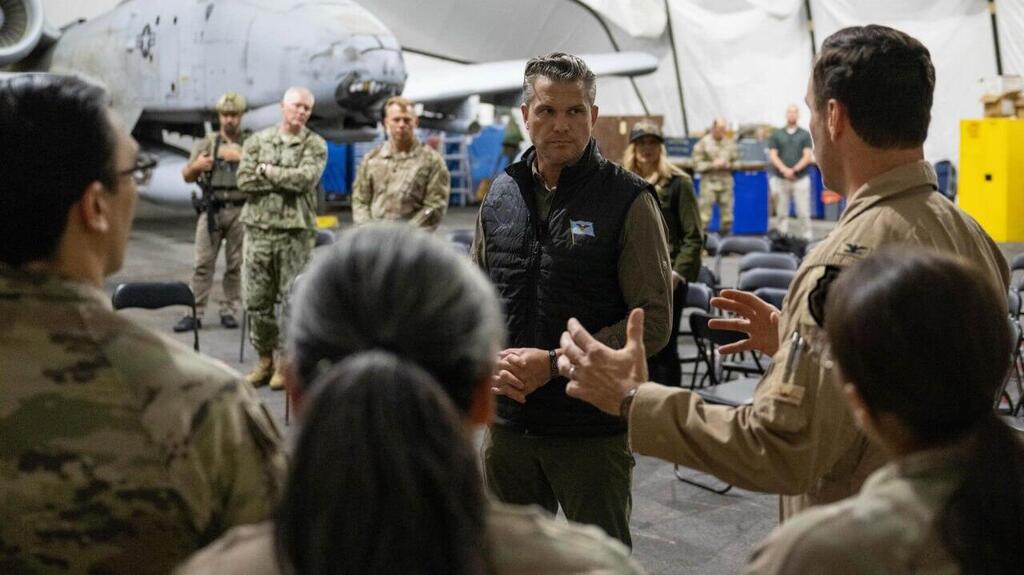
Ovda Base has effectively become an American base. US Secretary of War Pete Hegseth speaks with troops during a visit to the US Central Command area of operations
(Photo: US Department of Defense)
Indeed, the Americans have transferred some of the aircraft previously stationed at land bases elsewhere in the Middle East to Israeli territory, and not only to Ovda. The visits and statements at IDF facilities have also revealed Israel's deterrence policy toward Lebanon and Hezbollah. Katz was particularly specific in outlining its components, effectively tying the hands of the Israeli government and the IDF without any apparent need to do so.
First, Katz declared that "any fire or launch of drones or unmanned aerial vehicles toward Israeli cities, towns or kibbutzim will be met with a powerful response against the Dahiyeh district of Beirut," Hezbollah's stronghold in the Lebanese capital's southern suburbs. It is unclear whether such a declaration has a practical basis or whether it was coordinated with Trump, who has explicitly demanded that Israel refrain from striking Dahiyeh.
Second, Katz declared that "if Hezbollah joins an Iranian attack on Israel, the IDF will maneuver into additional areas around Nabatieh and the Litani," referring to areas of southern Lebanon, and that "the territory will permanently become part of Israel's security zone in Lebanon." Third, he declared that "the IDF will not withdraw from the security zone as long as Hezbollah has not been disarmed."
These declarations were intended to deter Hezbollah while also heightening security tensions among residents of northern Israel, as if they had not already experienced and endured enough. By making such commitments, Katz reduces the operational flexibility and deterrent options available to Israel and the IDF toward Lebanon. He also increases the risk of an embarrassing setback if, for example, the IDF is ordered to strike Dahiyeh but Trump prevents it from doing so.
Netanyahu has also caused considerable damage to Israel's relations with Arab countries. In a map he presented to reporters as part of his security doctrine, he portrayed Sudanese rebels accused of committing genocide in Darfur as potential allies of Israel. In doing so, Netanyahu effectively took sides in Sudan's bloody civil war, aligning himself with those accused of the Darfur atrocities rather than with Sudan's official leader, Gen. Abdel Fattah al-Burhan, who signed the Abraham Accords.
Some argue that Netanyahu wants, and perhaps is even planning, to postpone the elections until a more convenient date for himself and his coalition by triggering a major military confrontation with Iran and Hezbollah. There is no concrete indication that this is what he intends to do. But it is entirely clear that Netanyahu and Katz are conducting a security fear campaign with the explicit aim of increasing support for Likud and their leadership ahead of and during the elections.
Deter Iran from a miscalculation
The IDF cannot remain indifferent to this campaign, particularly when the current situation, the information about the debate within Iran's leadership over a preemptive strike, the intentions of extremist elements within Hezbollah and Hamas, and the growing tensions in the West Bank all justify increased preparations and a military alert level one step below the highest. There is a genuine need to deter Iran and its proxies from making a miscalculation by raising the level of readiness and adjusting military deployments.
The purpose is to make clear to the Iranians that a surprise attack would not achieve a result that undermines Israel's or the Americans' ability to strike back. Instead, such an attack would bring even more severe destruction, devastation and economic paralysis upon Iran than Israel and the United States had originally intended to inflict.
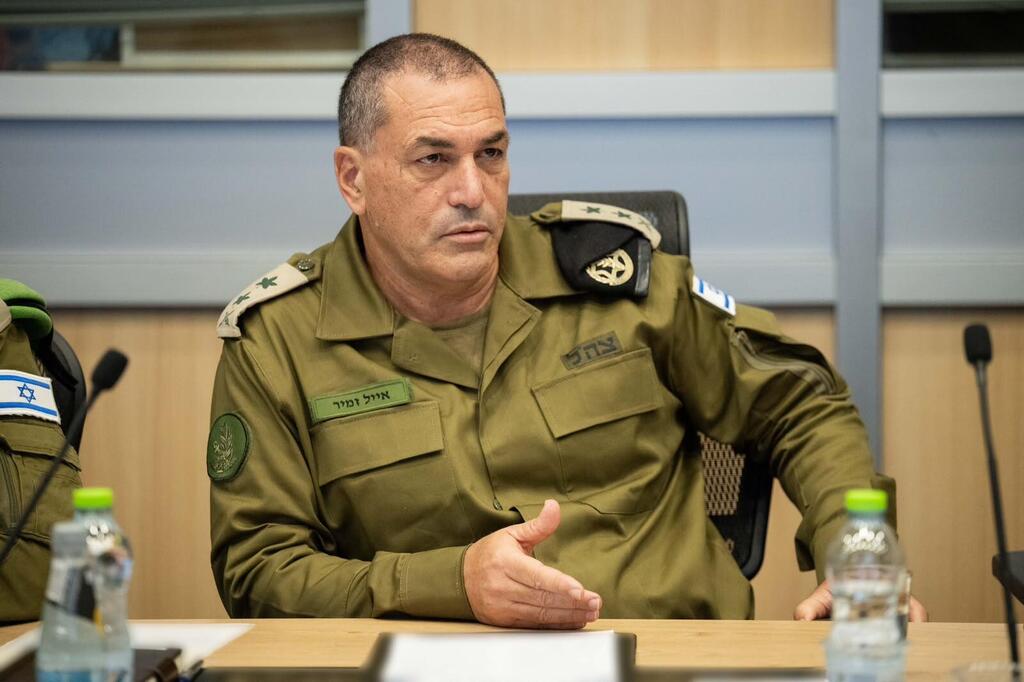
IDF Chief of Staff Eyal Zamir
(Photo: IDF)
Hamas must also be deterred from attempting to abduct an Israeli soldier, something several of its commanders in Gaza are considering. But the one concrete and immediate reason for the heightened military preparations and alert is the situation in the West Bank, where tensions are mounting daily because of attacks and harassment by Jewish rioters. This is a situation that could lead to a major eruption of violence without warning. It is the only immediate, tangible threat at present, and the IDF is preparing accordingly.
There has already been an increase in Palestinian plans and attempts to carry out terrorist attacks. For now, however, these are initiatives by individuals that are being met with a very high level of vigilance by the Shin Bet security agency and the IDF. Nevertheless, a broader outbreak of violence under the current circumstances, fueled by the actions of Jewish extremists, remains a real possibility for which the military must prepare.
Beyond that, the declaration of heightened alert and the repeated public emphasis on it by IDF Chief of Staff Lt. Gen. Eyal Zamir are apparently the way he and the generals of the General Staff are signaling to the political leadership that they oppose any Israeli initiative to launch a war before the elections. The heightened readiness and military preparations convey a clear message: There is no need to initiate an attack. Israel is prepared to quickly thwart and confront any Iranian, Hamas or Hezbollah aggression.
In a democratic country, military leaders cannot explicitly tell the political leadership this in public. But the IDF's heightened alert and preparations, along with Zamir's explicit message to the Americans, indicate that an Israeli-American military operation at this time would harm Israel's elections. The IDF wants the vote to take place on schedule and in an orderly manner, without outside interference.