

The moment the first phase of President Donald Trump’s 21-Point Plan to end the war in Gaza began, a familiar argument returned: the claim that Israel has become a kind of American protectorate. Some people said we were now the 51st state, and television commentators delivered emotional, and at times hypocritical, monologues imagining a new star on the American flag for Israel.
Like many arguments rooted in political positioning, this one was shallow and overly dramatic. I still remember the claim that Trump’s America had “abandoned” Israel because it stopped taking part in airstrikes in Yemen. The same tone resurfaced at the start of Operation Rising Lion, when some insisted the United States would stay out of the campaign. The noise only grew louder before the operation, as Trump and Prime Minister Benjamin Netanyahu publicly played to a media eager for even a hint of conflict. The very commentators who talked about abandonment quickly pivoted to saying Israel was now dependent on Washington.
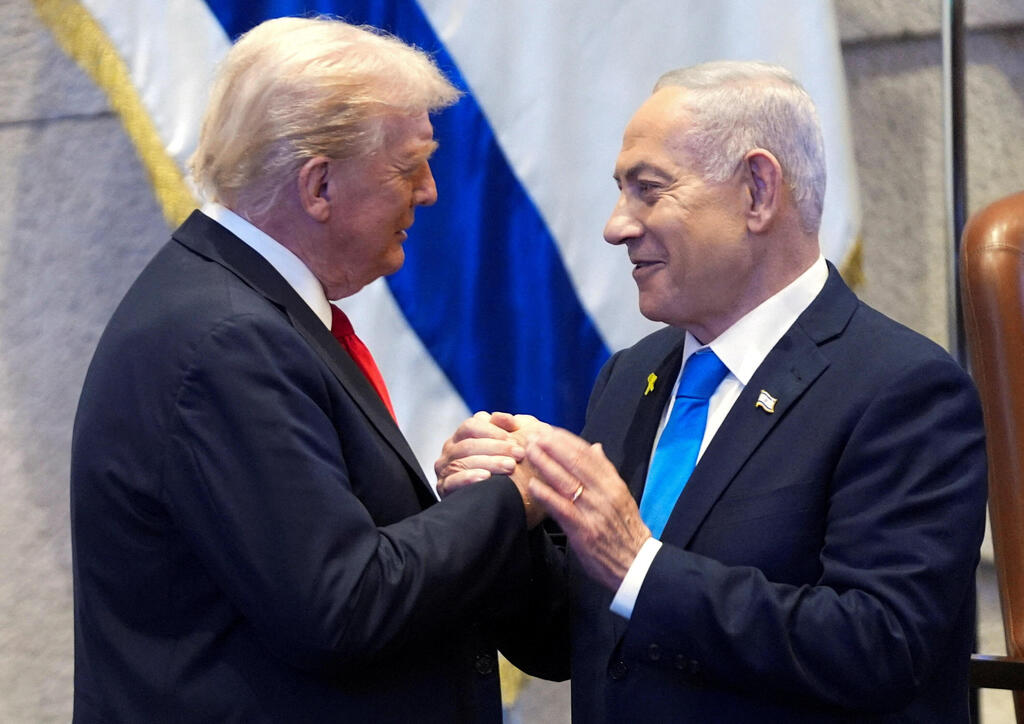
(Photo: JALAA MAREY/Pool via REUTERS, Chip Somodevilla / POOL / AFP)
Anyone who follows complex situations wasn’t surprised this week when Israel stepped up its actions in both Gaza and Lebanon. The idea that Hamas would remain armed or that Gaza would avoid demilitarization exists only for those who refuse to accept how much changed on Oct. 7.
People who understand international relations also understand that alliances are a mix of shared values, competing interests and the egos of national leaders. The relationship between Israel and the United States has never been simple or neatly controlled.
History offers plenty of reminders. After Israel captured Sinai in the 1956 Suez Crisis, David Ben-Gurion withdrew under heavy pressure from President Dwight Eisenhower, despite having brushed off the United Nations a year earlier. Years later, Prime Minister Yitzhak Shamir held back from striking Iraq because Washington asked him to. When Barack Obama entered the White House, Netanyahu delivered the Bar-Ilan speech under American pressure. The left celebrated, the right felt betrayed and over time many understood it for what it was — a political maneuver.
Israel had its interests then, the United States had its own, and they didn’t always match. Leaders had to decide whether to blow up the relationship or take some political hits to preserve larger strategic goals. These decisions always depend on timing and circumstances.
Sometimes you keep your head down. Sometimes you stand your ground. It all depends on the equation in front of you.
Netanyahu moved into Rafah despite objections from former President Joe Biden and former Vice President Kamala Harris. When their administration paused weapons shipments, Netanyahu spoke out publicly. There are moments when Israel chooses restraint, and moments when it makes its position clear.
Yet those who push the protectorate narrative ignore what has actually happened. According to them, Israel supposedly does nothing without American approval, Turkey supposedly controls Gaza and terrorists in the tunnels supposedly walk out unharmed. But Israel eliminated Hezbollah’s chief of staff, hit militants inside the tunnel networks and Turkey’s role has largely amounted to placing its flags on heavy equipment, despite the friendly ties between Trump and Turkish President Recep Tayyip Erdogan.
With the pace of recent events, it wouldn’t be surprising if the next round of claims flips again — that the Americans have now “abandoned” us because we are not obedient enough. Luckily, we’ve had plenty of practice dealing with these swings.