


With the return of the body of hostage Dror Or, Hamas is now holding the remains of two other captives: Sgt. First Class Ran Gvili and Thai national Sudthisak Rinthalak. Israel appears closer than ever to entering the second phase of the deal, under increasing American pressure, but officials in Jerusalem remain adamant that they will not move forward with President Donald Trump's 20-point plan without the return of all captives.
Search efforts for the bodies are underway, but not intensively. One Israeli official familiar with the matter described them as "low flame searches." Israel continues to pressure Hamas to locate and return the remains, refusing to reopen the Rafah crossing, expand humanitarian aid to Gaza or discuss further withdrawals from the so-called yellow line.
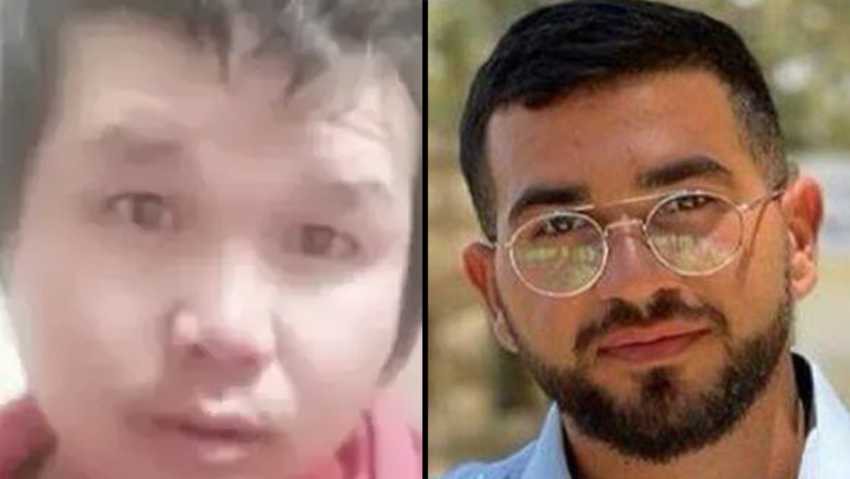
The main pressure point, according to the official, is that there are leads on the whereabouts of the two deceased captives. "I’m sure Hamas can invest more effort. They can be brought back," the official said.
Israel is also expected to propose, via mediators, joint efforts with Hamas to locate the remains. The message from Jerusalem is clear: "As long as all the fallen are not returned, there will be no progress on other elements of the plan."
Officials describe a sense of deadlock surrounding the issue and stress that once the bodies of Gvili and Rinthalak are recovered, Israel will begin discussions on various aspects of Gaza’s reconstruction, more than two years into the war.
Another obstacle to moving forward with the plan’s second phase is the group of terrorists holed up in tunnels under Rafah. Israel has been willing to allow them safe passage to a third country, but no country has agreed to accept them. A few dozen terrorists remain in the area. In several cases, they have emerged from the tunnels—some were shot, others surrendered. On Wednesday alone, four terrorists were killed after emerging from a tunnel in Rafah.
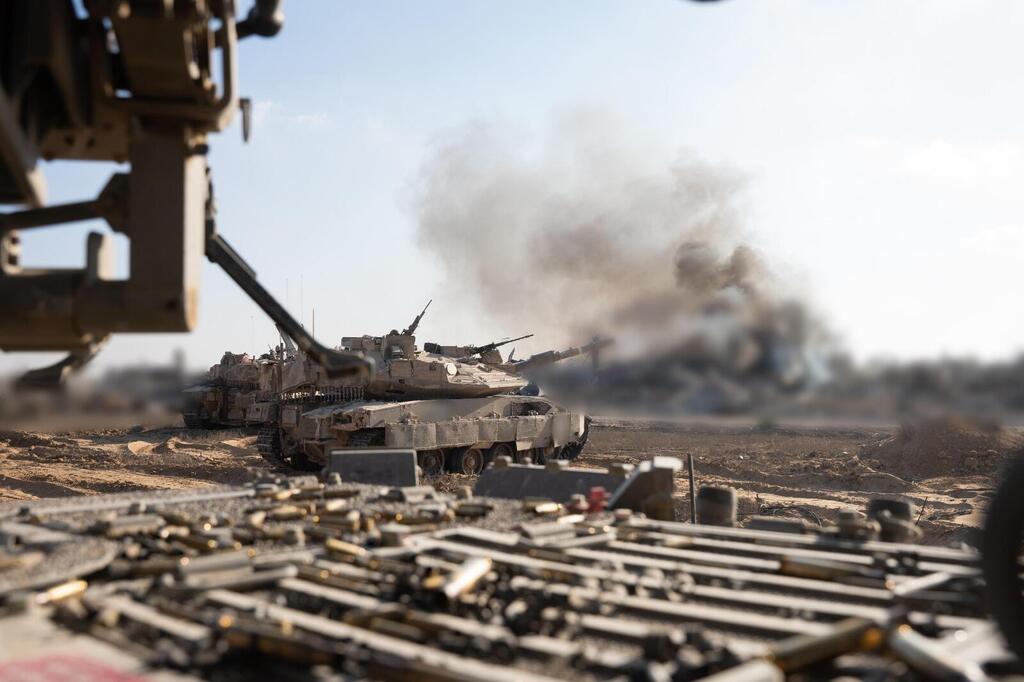
IDF forces operating in eastern Rafah
(Photo: IDF)
Hamas also addressed the deadlock over the second phase of the deal. "The second phase includes additional issues and complexities and requires national consensus before it can proceed," group spokesman Hazem Qassem said.
The force blocking the way forward
The United States continues its preparations for the second phase of the deal, but progress is being hampered, primarily by difficulties in assembling the International Stabilization Force, or ISF. So far, few Arab or Muslim countries have agreed to contribute the thousands of troops needed to take responsibility for Gaza from the IDF.
Azerbaijan initially expressed a willingness to send forces, but appears to have backtracked—possibly under pressure from Turkey, which is reportedly seeking to fill the vacuum itself by deploying troops to Gaza.
Israel firmly opposes any deployment of forces from Turkey or Qatar, both of which host senior Hamas leaders, but is open to forces from Azerbaijan and Indonesia. Since the terrorist group has declared it will not cooperate with the ISF, any participating country understands it may face armed clashes with Hamas and risk the lives of its soldiers.
“There is currently no progress in assembling the stabilization force,” said one official familiar with the matter. “It’s unclear when the first soldiers will arrive in the area. In any case, they’ll require training and preparation before deployment. This is the key issue the Americans need to resolve.”

(Photo: AP Photo/Abdel Kareem Hana, Yair Sagi, AP Photo/Alex Brandon)
The prevailing assumption in Israel, the official added, is that if the stabilization force fails to disarm Hamas, Israel will have to do it itself. Hamas, for its part, continues to oppose disarmament, offering only to give up heavy weapons. “For Israel, that’s a non-starter. We are insisting on complete disarmament,” the official said.
Behind the scenes, other ideas are being explored, such as integrating Hamas personnel into the Palestinian security forces that would take up positions in post-war Gaza.
A key question now facing Israeli officials is what happens if the whereabouts of the remaining hostages cannot be determined. Would Israel still agree to proceed with the second phase of the deal? The issue has sparked disagreement at the highest levels, including during a recent meeting of the Security Cabinet. Officials acknowledge that a point is fast approaching when Israel may no longer be able to hold back progress on the U.S.-backed plan for Gaza.
American officials, according to sources, have been blocking Israel from imposing new sanctions on Hamas at this stage, which Israeli officials say is allowing the group to stall. “The U.S. is losing patience,” one official said, “and we may soon see American pressure on Israel.”
Israel maintains that Hamas is violating the Trump-brokered agreement, while the terrorist group—backed by Turkey and Qatar—claims the opposite.
There is mounting concern in Israel that the ongoing deadlock could lead the U.S. to insist on deploying Turkish troops to Gaza—an outcome Israeli officials view as deeply problematic. Those concerns are amplified by reports of Hamas reasserting control in parts of the territory, reinforcing Israel’s position that the group must be fully disarmed. Officials continue to stress that there will be no compromise on this point.
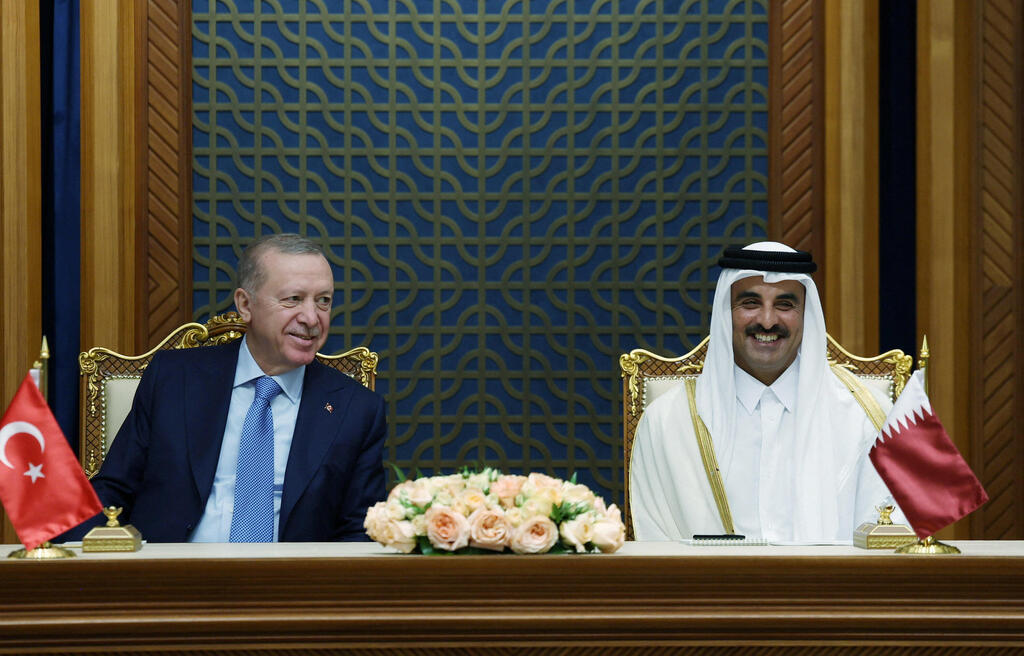
Turkish President Recep Tayyip Erdogan and Qatari Prime Minister Mohammed Al Thani
(Photo: Murat Kula/Turkish Presidential Press Office/Handout via REUTERS)
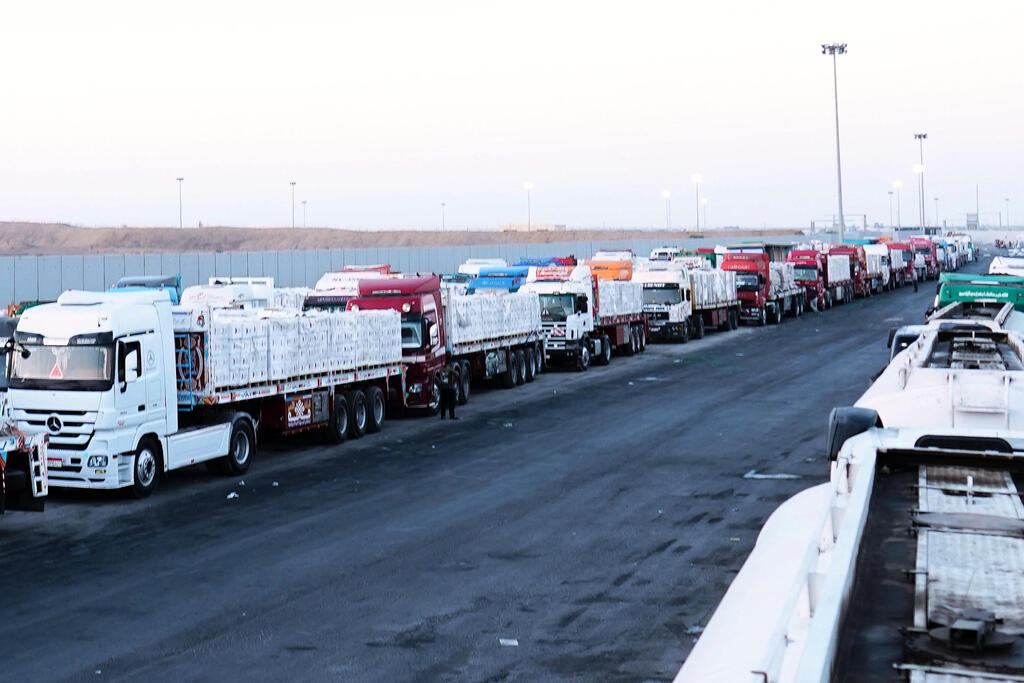
Gaza-bound Humanitarian aid supplies convoy
(Photo: AP Photo/Mohamed Arafat)
Meanwhile, the fate of the ISF remains uncertain. According to diplomatic sources, the U.S. has reassured partner nations that it remains committed to the agreement and is working toward its implementation. These countries are being asked not only to send troops but also to assist behind the scenes—whether by contributing to the command center in Kiryat Gat, providing logistics or offering financial support. Still, U.S. officials are continuing their search for countries willing to deploy soldiers to Gaza.
On Monday, senior officials from Egypt, Turkey, and Qatar met in Cairo to discuss advancing to the second phase of the deal. Egyptian intelligence chief Hassan Rashad, Turkish intelligence head Ibrahim Kalin and Qatari Prime Minister Mohammed Al Thani reportedly agreed to “continue strengthening coordination and cooperation with the Civil Military Coordination Center (CMCC)” and reviewed alleged “Israeli violations” of the truce terms.
Israel’s military liaison to the Palestinians and the American command in Kiryat Gat announced Monday that more than 16,600 aid trucks have entered Gaza since the start of the ceasefire last month, most carrying food.
The agencies also reported that 199 local kitchens are now operating across the territory, producing roughly 1.5 million meals daily. “COGAT is working with international partners and the Civil-Military Coordination Center (CMCC) to support a broad range of humanitarian operations,” the statement read. Coordination with the U.S. is ongoing, but all inspections and logistics are managed by Israel.
Einav Halabi contributed to this report.