

It is hard not to wonder whether Israel has in recent days become a protectorate of the United States — or perhaps America’s de facto 51st state. Prime Minister Benjamin Netanyahu and U.S. Vice President J.D. Vance rejected that suggestion Wednesday as they met in Jerusalem.
Some Israelis have dubbed the new American approach “Bibi-sitting.” Others liken it to a basketball tactic: the Americans have switched to tight man-to-man defense — determined not to let Netanyahu upend the ceasefire. To ensure that, Washington has kept a steady stream of high-level visitors in Israel, ensuring the country is never without a senior U.S. presence.
Prime Minister Benjamin Netanyahu and U.S. Vice President J.D. Vance
(Video: GPO)


It began with the visit of President Donald Trump’s envoys, Steve Witkoff and Jared Kushner, who have coordinated the process. Then came Trump’s own historic trip, where he laid out his vision to end the war “at any cost” and secure the hostages’ release. The envoys later returned, followed by Vice President Vance. Secretary of State Marco Rubio is expected to arrive Thursday.
The United States has established an international command center in Israel and deployed 200 troops. The base, located in the Kiryat Gat industrial zone, includes soldiers from Jordan, the United Arab Emirates, Britain, Denmark and Germany, with more countries expected to join.
Vance toured the command center to emphasize U.S. leadership, holding a press conference inside a large industrial hangar surrounded by young American troops and senior officers, including U.S. Central Command chief Brad Cooper, Gen. Patrick Frank and a British general. Behind him hung the flags of Israel, the United States and other participating countries — except for the UAE, which preferred to remain in the background.
Two large signs beside the flags read “Trump’s 20-Point Plan.” Critics say the president’s vision was vague, but Washington was ordered to fill in the details — “and God,” as the saying goes, “is in the details.” The visits by U.S. officials and generals aim both to give the plan substance and to ensure its implementation.
At the start of his meeting with Vance, Netanyahu dismissed suggestions that the U.S. was placing Israel under its protection.
“We are not a U.S. protectorate,” Netanyahu said. “Sometimes they say Israel is our protectorate, sometimes that we are theirs. Israel will decide its security.”
Vance replied that the United States seeks partnership, not control.
Gallery
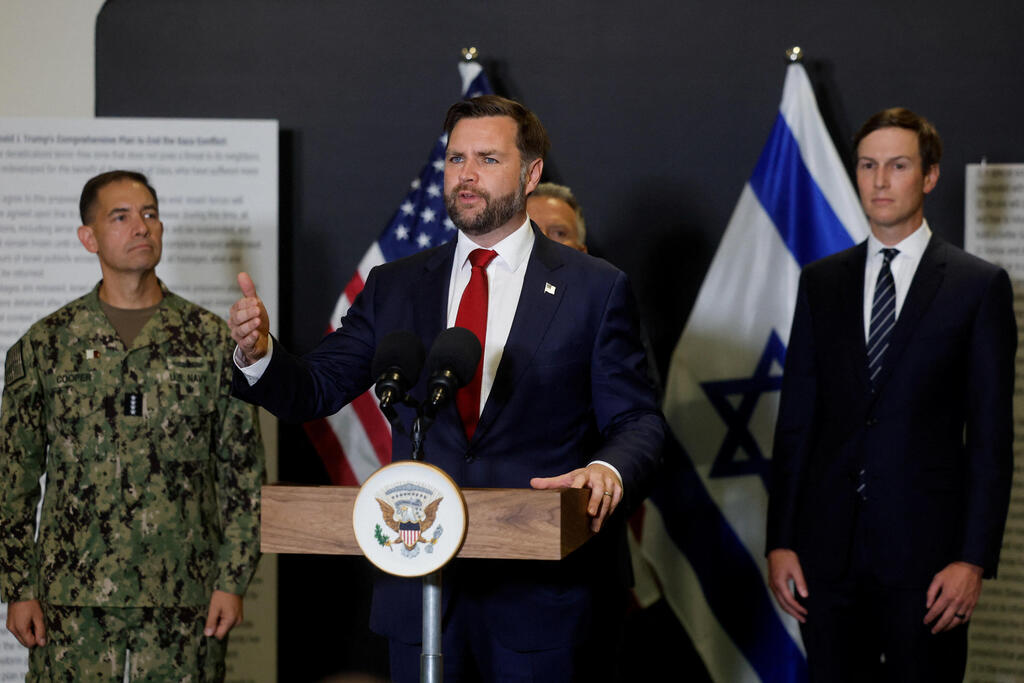
Vance, Kushner and Witkoff at the US-backed international command center
(Photo: REUTERS/Ammar Awad)
“We don’t want a protectorate — and that is not what Israel is,” he said. “We want a partnership, an ally here. The president strongly believes that Israel can play a positive leadership role in the region. We see an opportunity to build on the Abraham Accords — and the deal in Gaza is a critical part of opening the Abraham Accords.”
Despite the denials, Washington’s role appears increasingly hands-on. The U.S. intends to prevent any collapse of the ceasefire, prioritizing the return of hostages bodies to Israel. Vance said some remains are buried deep underground and locating them “will take time — we must be patient.”
The Americans are already developing the second phase of the Gaza deal, which would establish a multinational stabilization force to ensure Hamas disarms and Gaza remains demilitarized. The presence of foreign soldiers, officials believe, will also deter Israeli strikes.
In parallel, Washington is forming a civilian governance mechanism for Gaza — a technocratic administration composed of Palestinian and international experts. Israeli officials insist they will vet all appointees and disqualify anyone linked to Hamas.
Vance warned that if Hamas fails to disarm, it will be destroyed, but said individual members could receive amnesty if they comply with the agreement.
Israel vetoed the deployment of Turkish and Qatari troops to Gaza. Vance confirmed that Washington would not impose foreign forces Israel opposes, suggesting those countries could instead contribute to reconstruction and humanitarian relief.
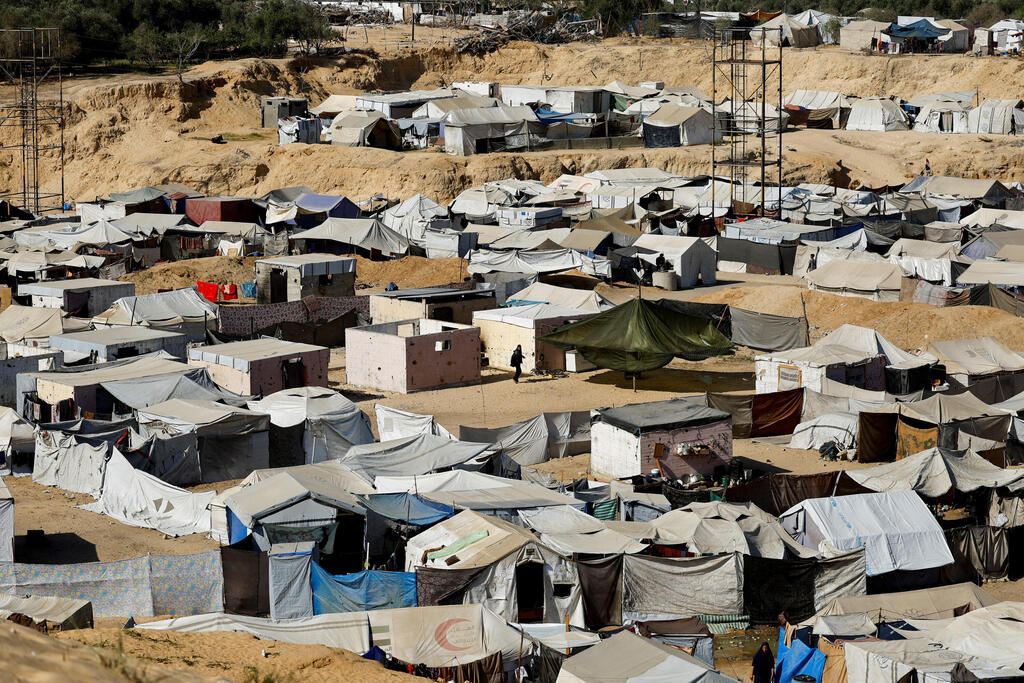
(Photo: REUTERS/Mahmoud Issa)
The U.S. seeks significant Saudi funding for Gaza’s reconstruction, recognizing that Riyadh will not contribute if Hamas remains in control. Disarming Hamas, officials say, is both Israel’s and the Saudis’ shared interest and the only way for Gaza to rebuild.
American officials also signal growing regional alignment against Hamas. Vance hinted that states which once backed the group are “rethinking their path.” Whether Turkey’s President Recep Tayyip Erdoğan and Qatar’s Emir Tamim bin Hamad Al Thani will join that shift remains uncertain.
The growing American presence raises questions about sovereignty, particularly for Netanyahu’s right-wing government, which champions independence. For now, officials emphasize appearances. The government insists Israel’s autonomy remains intact, portraying the U.S. role as strategic partnership rather than supervision.
In the words of one senior Netanyahu aide, “Our independence has not been eroded. It is as strong as ever. What has been added is unprecedented intimate cooperation between the two countries that multiplies Israel’s power on the security and diplomatic fronts.”
He added that the visits by Trump, Vance, Witkoff, Kushner and Rubio “were meant to cement the shared connection and achieve the joint goals.”