


For years, Libya’s eastern parliament refused to endorse the maritime memorandum Turkey signed with Tripoli in 2019. On October 20, it approved the deal unanimously and repealed its 2020 resolutions against the agreement and political relations with Ankara.
The reversal did not stay inside Libya. Within two days, the Greek and Egyptian foreign ministers were publicly discussing an eastward extension of their 2020 exclusive economic zone agreement toward Cyprus, explicitly linking the talks to the Libyan vote. In Tobruk, a position once treated as a red line had become negotiable.
Gallery
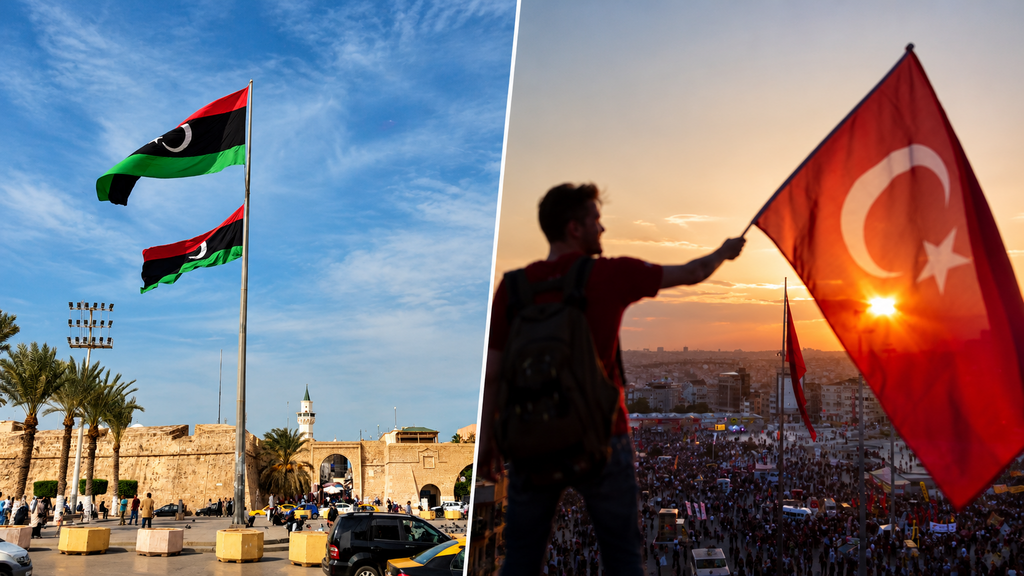
For years, Libya’s eastern parliament refused to endorse the maritime memorandum Turkey signed with Tripoli in 2019
(Photo: Gettyimages)
A vote in Tobruk does not close an Israeli shipping lane or give Turkey undisputed control of the seabed. What it changes is the political setting. Ankara can point to support from Libya’s east as well as the authorities in the west that signed the original memorandum.
That matters to Israel because the maritime dispute touches its ties with Greece, Cyprus and Egypt, as well as future energy projects and the undersea infrastructure that carries data and power around the region. A political shift can complicate planning long before a vessel enters disputed waters.
The vote followed a change at the top of the chamber. On October 6, lawmakers elected Al-Salhin Abdelnabi al-Obeidi as speaker, replacing Aguila Saleh after nearly 12 years in the post. The previous day, 98 lawmakers had approved rules limiting the speaker and deputies to 12-month terms.
Saleh had faced criticism from colleagues. Al-Obeidi had chaired the House’s Libyan-Turkish Parliamentary Friendship Committee, a detail worth noting, though it does not prove he engineered the maritime vote. The leadership change shifted the political landscape, but it does not, by itself, explain every lawmaker’s decision.
There were other signs that the old hostility was easing. In July, the eastern-based Libyan National Army’s General Command announced a contract with Turkish company Akteknik for an integrated land-border management and surveillance system.
The first phase covered 275 kilometers, and the project was presented as part of the force’s Vision 2030 program under the supervision of deputy commander Saddam Haftar. It was a land-border monitoring contract, not permission for maritime drilling or evidence that Turkey was building military bases in eastern Libya. Still, it showed a former adversary becoming a commercial partner.
The energy relationship had begun earlier. On June 25, 2025, Libya’s National Oil Corporation signed a memorandum with Turkish Petroleum Corporation, or TPAO, for geological and geophysical studies in four offshore areas. The announcement also referred to discussions over a two-dimensional seismic survey covering 10,000 kilometers.
The memorandum did not authorize drilling in every disputed block. It did, however, give the two sides a reason to keep working together and point toward further commercial cooperation. For eastern leaders seeking investment and leverage in talks about Libya’s future, opposing every Turkish initiative may offer less than negotiating over what Ankara can provide.
Turkey has long been influential in western Libya and is now cultivating contacts in the east. Washington continues to press rival Libyan centers toward a political and institutional settlement. Eastern leaders have reasons to broaden their options rather than depend only on Cairo, Moscow or Abu Dhabi.
No single bargain has been established as the cause of the vote. But these developments help explain why the old anti-Turkey alignment was no longer guaranteed to hold once economic and political incentives began to change.
Reports in September suggested that Prime Minister Benjamin Netanyahu may have met Saddam Haftar, Khalifa Haftar’s son and deputy commander, in the United Arab Emirates. The reports drew partly on flight-tracking data showing a plane associated with Saddam Haftar arriving in Abu Dhabi while Netanyahu was visiting.
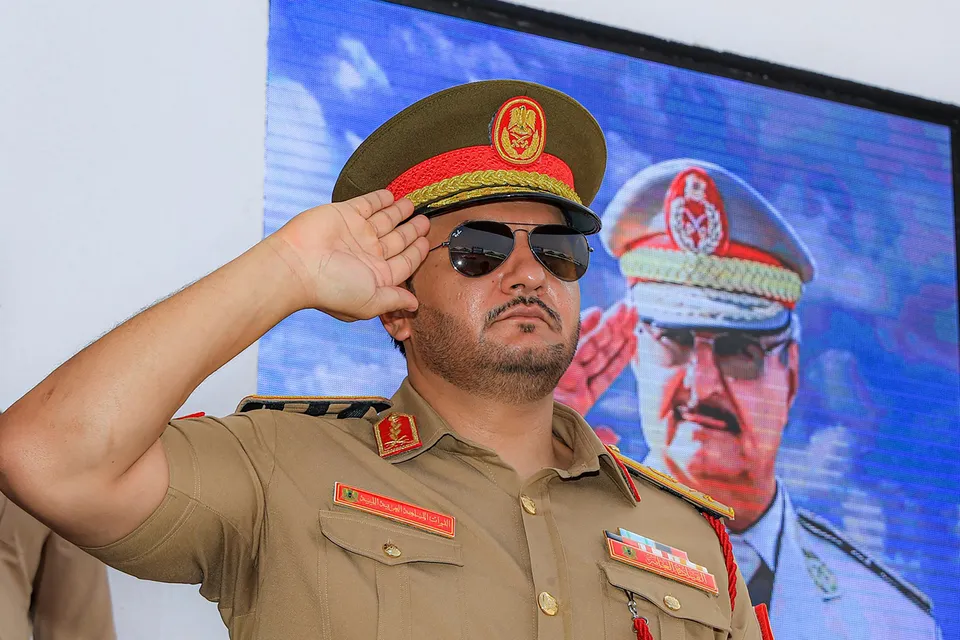
Saddam Haftar, the son of eastern Libyan military strongman Khalifa Haftar
(Photo: Media office of Khalifa Haftar / AFP)
Neither government confirmed a meeting. Even if contact took place, no public evidence shows that Haftar promised to contain Turkey or that Israel secured a strategic commitment. The report is worth mentioning, but it cannot carry the argument or turn the parliamentary vote into a proven betrayal.
The maritime dispute itself is not new. Turkey and Libya’s then-Tripoli-based Government of National Accord signed the memorandum on November 27, 2019. It sets out their claims to continental shelf and exclusive economic zone areas in the Mediterranean.
Greece argues that the line disregards the maritime rights of Greek islands, including Crete and the Dodecanese. Egypt, Cyprus, Israel and the European Union have also objected to the agreement or its implications. Turkey and Libya defend it as consistent with international law and their national interests.
The eastern parliament’s approval does not settle those competing positions. Nor does registration with the United Nations make every claim binding on third states.
The distinction between approval and permission matters. The 2019 maritime memorandum and the 2025 NOC-TPAO study agreement are separate instruments. Any exploration still depends on licenses, the location of proposed activity and the legal and political constraints that apply.
It would be wrong to say that the vote gave Turkish drill ships a green light from both halves of Libya. The immediate effect is political: Eastern Libya has dropped an important institutional objection to closer maritime cooperation with Ankara.
Israel should now work with Athens, Nicosia and Cairo on a shared legal assessment that maps contested zones, documents third-party rights and sets out a common position for the United Nations and European capitals.
The three partners will not agree on everything, but they can make it harder for a disputed line to be presented as an uncontested settlement. Jerusalem should also push for better maritime information sharing, particularly about seismic vessels, exploration activity, offshore installations and undersea cables.
The first task is to exchange timely information and agree on how to respond to incidents, not to announce a military alliance whose members have yet to define its purpose.
Israel should work with European partners to press for transparent licensing and exploration procedures consistent with international law. That would help distinguish a parliamentary endorsement from a permit to operate or a final maritime boundary.
It should also make a precise case to Washington. The United States has an interest in a stable Libya, reliable commercial routes and avoiding a fresh confrontation among regional partners.
Israel should identify the claims that threaten agreed rights, explain how proposed exploration could affect infrastructure or commercial decisions and press for a settlement that lasts longer than the next diplomatic announcement. Personal assurances from one Libyan figure cannot substitute for commitments that survive a change in leadership.
Jerusalem should be careful about treating eastern Libya as a single actor controlled by one family. The House has competing factions, and the change at the top followed complaints about how decisions were made.
Al-Obeidi’s role in the parliamentary friendship committee with Turkey is relevant, but it is not proof that his election was designed to secure approval of the memorandum. The same caution applies to claims about infrastructure contracts or succession plans. Timing may prompt questions, but it cannot answer them on its own.
There is still a place for quiet diplomacy. Backchannels are useful when formal relations are absent or public contact carries political costs. The mistake is to confuse access with leverage or to assume that an actor’s opposition to Turkey today guarantees alignment with Israel tomorrow.
Libya’s vote is a reminder that governments and political factions pursue their own interests, and those interests change. Israel should keep channels open in both eastern and western Libya while judging each interlocutor by what it does, not by presumed loyalty.
The vote has made the Eastern Mediterranean dispute more urgent. It has not settled the law, authorized immediate drilling or uncovered a secret anti-Israel plot.
Israel should prepare its legal case, share maritime information with partners and coordinate diplomacy before a licensing dispute or exploration project becomes a crisis. The next test will be what Libya’s institutions and Turkey do with this political opening. Israel should watch those actions closely and make sure its policy rests on evidence, not on who once agreed to meet behind closed doors.
Amine Ayoub, a fellow at the Middle East Forum, is a policy analyst and writer based in Morocco. Follow him on X: @amineayoubx