

Since Syrian President Ahmad al-Sharaa came to power, several agreements have been signed between his government and the Syrian Democratic Forces, a coalition made up largely of Kurdish fighters. The best-known and most frequently cited of those understandings over the past year was reached on March 10, 2025.
At the time, al-Sharaa had been in office just over a month. He met with SDF commander Mazloum Abdi, and the two reached understandings under which Kurdish forces would be integrated into Syria’s new state institutions. That never happened. Clashes between Kurdish forces and units aligned with the government continued intermittently throughout the year, even as both sides repeatedly issued statements about efforts to return to negotiations and implement the original agreement.
(Photo: AP Photo/Ghaith Alsayed)
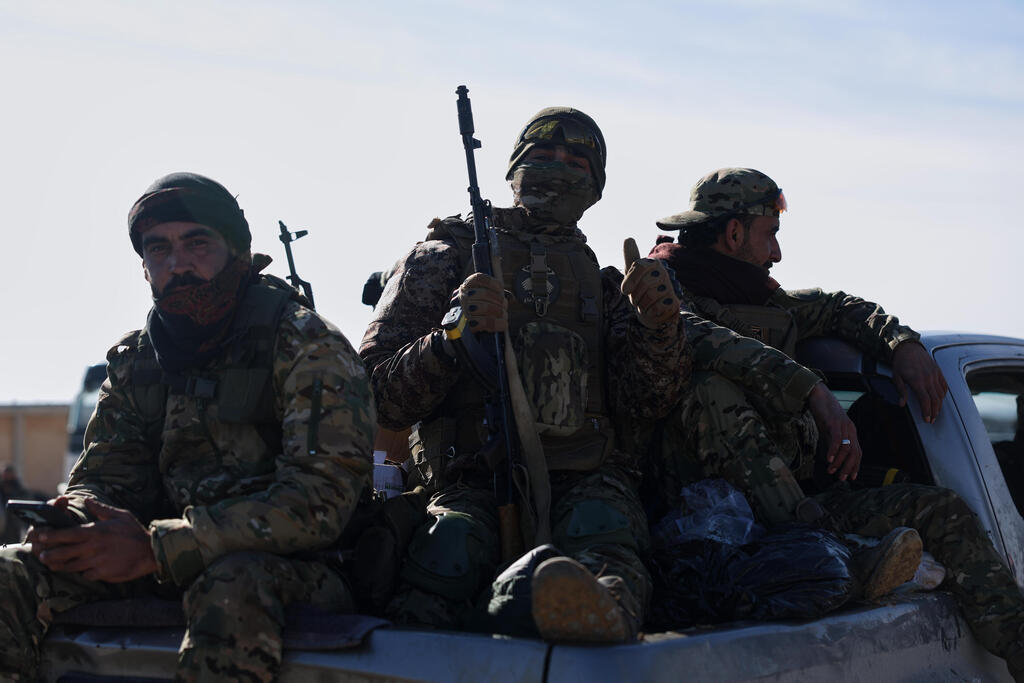
Tensions erupted again in early January. Fighting began in the Sheikh Maqsoud and Ashrafieh neighborhoods of Aleppo, spread to other provinces including Raqqa and Deir al-Zor, and deteriorated into the current situation. Kurdish forces were steadily pushed back, and the territory under their control continued to shrink. During just the weeks of renewed escalation, there were at least five reported ceasefires, understandings or agreements — all of which collapsed.
On Jan. 7, the SDF denied reports of a ceasefire in Aleppo, saying that every attempt to reach an agreement with the government in Damascus had failed. Two days later, after days of intense fighting, Syria’s Defense Ministry announced a ceasefire in the Aleppo neighborhoods where clashes had taken place. That attempt also collapsed quickly, and the fighting continued.
On Jan. 11, Abdi announced another ceasefire, brokered by international mediators, “to stop the attacks on Aleppo.” That, too, did not hold.
By Jan. 16, it appeared that the situation might finally be moving toward a resolution. Al-Sharaa released a video message addressed to the Kurds, saying: “Beware of believing the narrative that we wish harm upon the Kurdish people. Anyone who harms you will be our enemy until Judgment Day.” Syria’s presidency also issued a decree affirming that Kurdish citizens are an inseparable part of the Syrian people.
Later that day, Abdi announced that the SDF had decided to withdraw its forces east of Aleppo. He described the move as a gesture toward completing integration and implementing the original March 10 agreement. Despite that, the fighting did not end.
Arab media outlets broadcast the signing of another agreement and published its clauses. Syria’s Defense Ministry issued an official statement declaring an end to the fighting, and Abdi confirmed it on behalf of the SDF. That announcement also unraveled within a short time.
On Jan. 18, al-Sharaa signed yet another ceasefire agreement. Once again, Arab channels documented the signing and circulated its terms, and the Defense Ministry announced a halt to hostilities, with Abdi’s confirmation. That ceasefire, too, quickly collapsed and talks stalled.
On Tuesday, Jan. 20, at 8 p.m., another ceasefire went into effect, this time for four days, according to the Defense Ministry. It said the pause followed understandings with the SDF and was intended to support “the success of national efforts.”
Has that brought calm? Since the latest ceasefire took effect, both sides have already accused the other of violations. Officially, it is set to expire at 8 p.m. on Wednesday, but a source in Syria’s Foreign Ministry was quoted on state channels warning that if it collapses, “all options are open.”
The repeated agreements appear to carry little weight. What will happen when this ceasefire ends — and what fate awaits the remaining areas under Kurdish control — remains unclear. For now, the Kurds say they feel betrayed by their own state, as well as by the United States and Israel, and left alone without external support.