

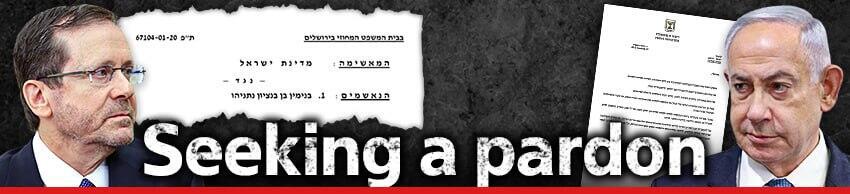

No one saw it coming. Despite advance preparations and a coordinated and consistent campaign alongside President Donald Trump, Prime Minister Benjamin Netanyahu’s pardon request landed with open-mouthed shock across Israel’s legal establishment and political system.
The brief statement issued Sunday by the President’s Residence caused such deep confusion that even the fastest-typing ministers and lawmakers waited a long time before offering hesitant, box-ticking reactions. But as the dust settled, one thing became clear. The timing of Netanyahu’s extraordinary appeal to President Isaac Herzog was anything but accidental.
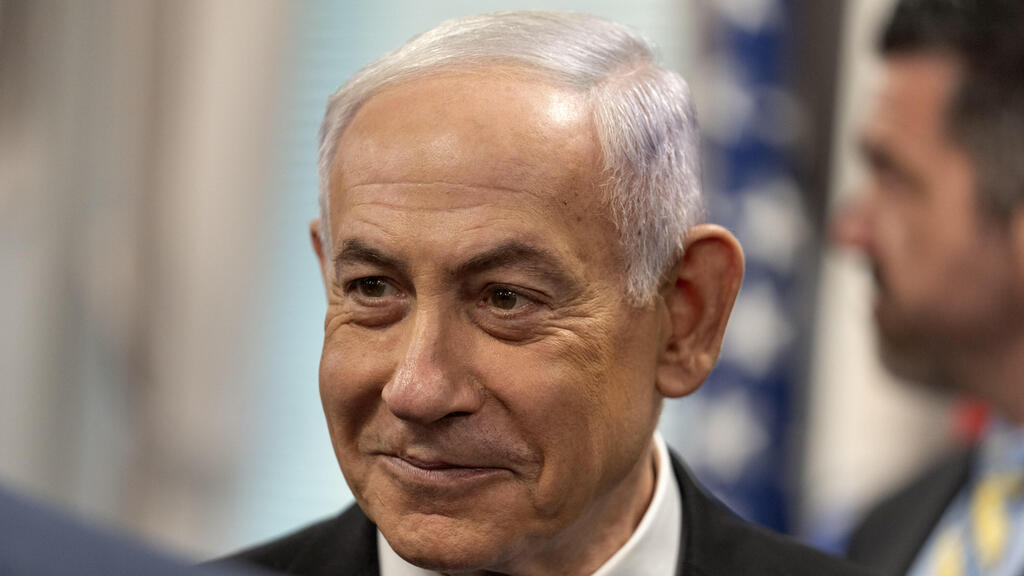
Without offering anything in return, no admission, no remorse and certainly no resignation, Netanyahu is effectively seeking a full erasure of his corruption trial. And he is doing so before facing a public reckoning over the Oct. 7 disaster, and while it is still unclear whether he has the public legitimacy to continue serving as prime minister.
Contrary to the way his opponents want to frame the move, Netanyahu is not begging for mercy. There is not a single letter in the request that hints at guilt or surrender. The message of the document is not really aimed at Herzog at all. It is aimed at the justice system, and it says: Cut your losses.
Why submit a pardon request now, after years of insisting he never would? There are likely several reasons, but one stands out. Netanyahu sees a shaken, weakened legal system, frightened and at a public low point. The military advocate general affair, claims of a cover-up, what critics describe as the attorney general’s poor handling of that case, and related episodes have rattled the system’s leaders and created a sense that a circle is closing around them.

Attorney General Gali Baharav-Miara
(Photo: Amit Shabi)
Whether or not that assessment is factually correct, Netanyahu senses an opening. He tells them, ease the pressure on me and I will ease the pressure on you. Or, as he hinted in the language of his request, granting a pardon would allow the prime minister to deal with “additional issues, such as in the justice system and the media.”
Netanyahu believes he is watching his strategy pay off. The systems he has targeted in recent years, often intensively and in gray zones, are finally showing cracks. So he steps forward with a one-time offer. If you want, he is proposing mutual amnesty.
In Netanyahu’s view, the political and legal systems have been locked in a gladiator fight and have reached a decision point. He is offering a draw. Each side gets what it needs, as he sees it. The political system will back off the attorney general and the High Court of Justice, and they will back off him.
To secure a pardon, Netanyahu may still need the legal system’s help. He knows that because this would be a pardon before a verdict, Herzog will seek a position paper from the prosecution. Such an opinion could weigh heavily on the process and its outcome. On the other side of the ledger, Netanyahu may hope to influence the appointment of a new investigator in the military advocate general affair, and to spare the attorney general the embarrassment he thinks is waiting for her.
Beyond the opening he believes he has identified, there is another factor. Anyone who has spoken with Netanyahu lately hears the same thing: he is exhausted by the legal grind. Three theoretical exits stood before him. A request to freeze proceedings, in other words to bury them. A plea deal, which the attorney general would insist must include moral turpitude. And a third route, a presidential pardon.
He chose the option he believes, and likely checked in advance, has the best odds. If it succeeds, the whole plan works. If it fails, he returns to his natural posture and launches a campaign of the wronged Cossack: I wanted unity, but you wanted my head. In that scenario, the next election campaign will be even more explosive than anyone imagined.