


We could have been, today — a year after the heavy blow Hezbollah took — in the midst of a war to destroy the terrorist group that threatens us from the north. Every week, perhaps every day, there would have been more dead. A just war? Certainly. The most just. Should Hezbollah be destroyed down to its last fighter? Certainly it should. There is always a fear it will regroup, and that renewed threat would return us to square one, with fresh danger to all northern communities.
But Netanyahu made the right decision. He was satisfied with the fact that Hezbollah took a heavy hit. And a cease-fire agreement was reached. The force Hezbollah still retains, including long-range rockets that threaten Tel Aviv, is much greater than the force Hamas retained after its far more severe blow. And yet Hezbollah has been weakened, precisely because of the agreement. All the organization’s lifelines were cut. Iran is no longer sending vast sums. For the first time in decades the Lebanese government is standing up and deciding to strip Hezbollah of its weapons.
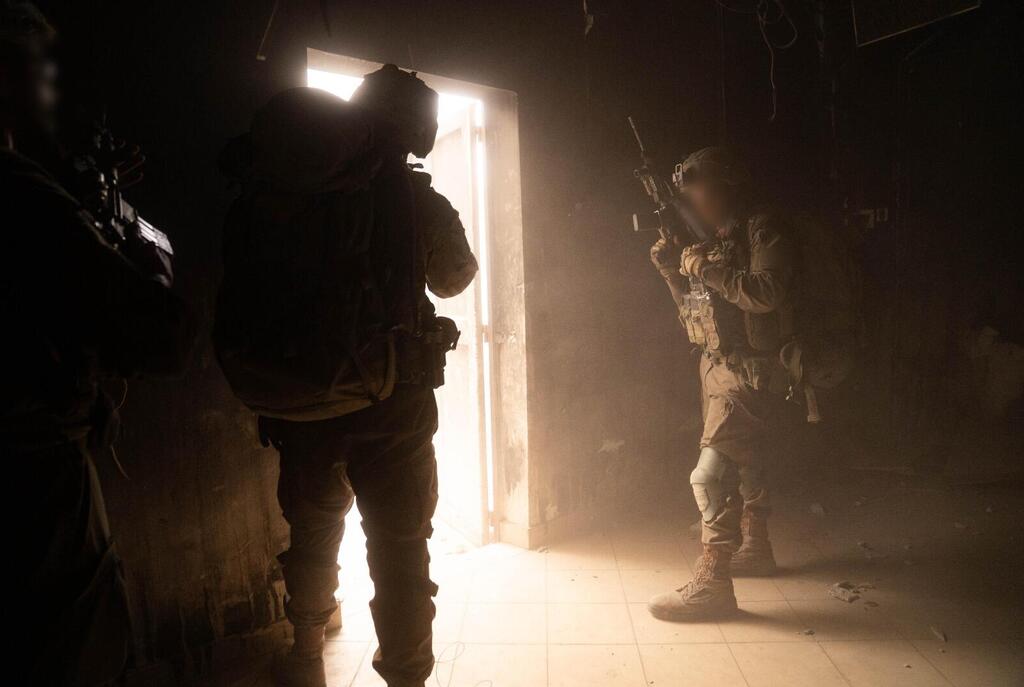
IDF soldiers operate in Gaza City
(Photo: IDF Spokesperson's Unit)
Hamas is on its last legs. But with the remnants of its power it is turning IDF soldiers into sitting ducks. The threat in the form of “they will repeat October 7” is an empty one. And over the insistence on refusing a deal to free hostages and halt the fighting — which Netanyahu himself supported until he made a puzzling and inexplicable about-face — we are paying compound interest. More soldiers killed. Greater danger to the hostages. And political, cultural and economic blows that make Israel much weaker.
BDS and Hamas could not have dreamed of such huge gains. Why, for God’s sake, does Netanyahu insist on granting them? Just to preserve the coalition? The deal with Lebanon proved itself. It strengthened Israel. So why not continue the same approach with Hamas?
Now on the table is Trump’s 21-point plan, apparently drafted by Tony Blair and Jared Kushner. Netanyahu has a very good excuse to reject it outright. There is no clause calling for the immediate disarmament of Hamas. That would happen only later.
But there was no such clause with Hezbollah either. Israel supported the Lebanon deal because it is clear that drying up Hezbollah is preferable to sinking in the quagmire of all-out war against Hezbollah. Without the agreement there would have been hundreds more IDF dead, and the north would have continued to absorb rockets that would have worsened the damage. The agreement proved itself. The IDF is free to strike any Hezbollah provocation, while the Lebanese government issues condemnations even as it is actually very pleased. In addition, toppling Assad cut off the land supply route from Iran. In Hamas’ case — under the present circumstances — such a route no longer exists in practice.
What could happen
All the measures taken so far against Israel are small change compared with what could happen in the coming weeks. When Italy already declares “support for partial sanctions” against Israel — the die is cast. There is a majority for sanctions. Israel's acceptance of the 21-point framework would avert the worst.
It may be that Netanyahu and his family aren’t bothered by Israel becoming an autarky. They are taken care of. For most Israelis it would be an economic collapse. Entire sectors would crumble. Those who can flee will flee. Is that the vision? That is what will happen to Israel the moment sanctions like those imposed on South Africa are applied.
 Ben Dror YeminiPhoto: Avigail Uzi
It is not just Eurovision we will be excluded from. It is not only sports. It is high tech. It is industry as a whole. It is collapse. And that is exactly what could happen if Netanyahu insists on a war without pause. The world stopped being shocked by the images from October 7. It is moved now by the images coming out of Gaza. That should have been clear on October 8. But what should have been clear is not clear to the current government.
The 21-point plan is a respectable way out. It is not certain that Hamas will agree. After all, it revels in the additional blows Israel suffers on the international stage. So Israel should have, long ago, not only accepted the plan but initiated it itself. Israel has an opportunity to prevent a collapse from becoming a catastrophe. It must not be missed.