


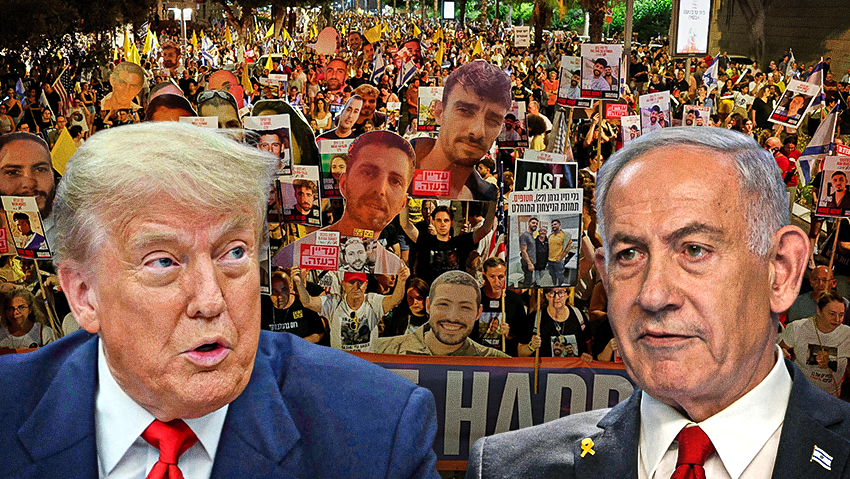
New details have emerged about U.S. President Donald Trump’s 21‑point peace plan, which Israeli officials assess is highly likely to be implemented. The U.S. president seeks to advance a comprehensive deal to release all hostages “in one fell swoop” at the start of a cease‑fire. Under current indications, the release would stretch over several days — possibly around 72 hours.
In Israel there is growing concern that the clause in Trump’s plan calling for Hamas’ exit from Gaza and the dismantling of its weapons is “too rhetorical.” The assessment is that Hamas will not actually dismantle its weapons systems. In light of this, Netanyahu faces two options: reject the plan on the grounds that it is insufficient, or accept it, secure the release of the hostages — and if Phase 2 does not materialize and Hamas remains in the Strip, justify the continuation of fighting.
Senior officials in Israel say that the plan lacks an explicit agreement by Hamas to exit the Strip. Israel is prepared in return to grant immunity to Hamas leaders — both those who depart to Turkey or Qatar and senior figures already outside Gaza. The officials believe that Netanyahu is likely to tell Trump that he must first hear Hamas' response to the plan.
Another point of contention is the U.S. aid fund to Gaza. In Israel there is fear Trump may decide to shut it down and hand over aid distribution to U.N. agencies — a move unacceptable in Jerusalem given past attempts in which aid convoys were looted by Hamas. Behind the scenes, the fund is suffering from a serious budget crisis and in the Trump administration there is currently no one willing to sign off on the aid budgets at the State Department — largely due to opposition among Republican backers to overseas spending on conflict zones.
Meanwhile, just prior to the meeting with Trump at the White House on Monday, pressure on Netanyahu is also coming from within the coalition. National Security Minister Itamar Ben-Gvir wrote Saturday night on his X account: “Mr. Prime Minister, you do not have a mandate to end the war without Hamas’ total defeat.” On the other hand, Foreign Minister Gideon Sa’ar expressed confidence in Netanyahu: “I trust the prime minister to represent Israel’s interests as required in talks with President Trump. After two years of war Israel’s clear national interest is to end the war and achieve its goals.” Knesset Member Moshe Gafni of United Torah Judaism also voiced support: “Our position is for ending the war and returning the hostages.”
Opposition Leader Yair Lapid also addressed Trump’s initiative, again promising a “safety net” from him for a hostage deal. “I informed the U.S. government today that Netanyahu has from me a safety net for a hostage deal and ending the war. There is a majority in the Knesset and in the country, there is no need to be excited about empty threats from Ben-Gvir and Smotrich,” Lapid wrote on X.
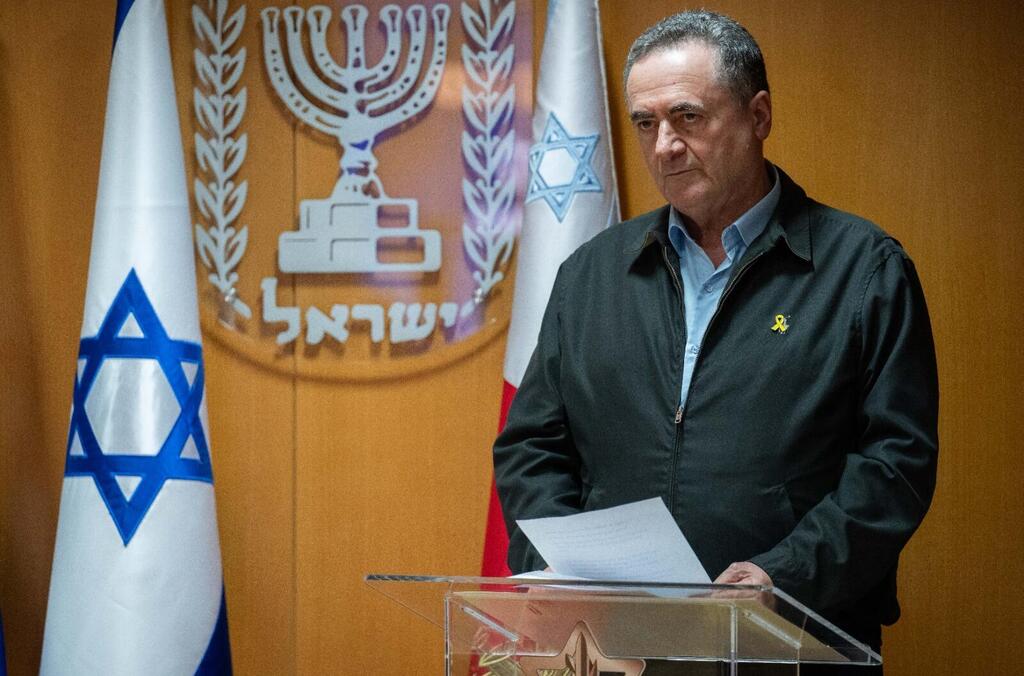
Defense Minister Israel Katz
(Photo: IDF Spokesperson's Unit)
At the same time, Defense Minister Israel Katz said in a strong statement Saturday night: “If Hamas does not release all the hostages and dismantle its weapons Gaza will be destroyed and Hamas will be annihilated. We will not stop until all war goals are achieved.” He added that the Israel Defense Forces are increasing the intensity of operations, deploying autonomous explosive armored vehicles ahead of troops, and taking control over additional neighborhoods and territory in the Strip.
Katz’s statement angered the Hostages and Missing Families Forum, which published a sharp response: “The defense minister is again blowing up yet another chance for a deal to return the hostages and end the war. This is the path to abandoning hostages, abandoning the soldiers, and destroying the basic values of security and national resilience. The defense minister bears personal direct responsibility for every hostage harmed, killed or lost forever.”

Israel's national youth soccer team
(Photo: Seb Daly - UEFA via Sportsfile)
Criticism of Qatar is also rising in Israel. Sources in Jerusalem accuse it of orchestrating the wave of threats of sanctions, including pressure in UEFA to expel Israeli soccer clubs from European competitions. In Israel, a counter‑plan is being formed, and surprises are being prepared for Qatar so that it does not emerge “unscathed” from its behind‑the-scenes activity.
Qatar approached Spain and sought to increase pressure on Israel following the strike in Doha, in exchange for advancing Qatari investments in the country. Indeed, in recent weeks clear steps by Spain against Israel have been observed.
Also in Morocco, a change of tone is evident: Foreign Minister Nasser Bourita has sounded harsher, and two critical articles about Israel were published on semi‑official news sites after a long period of media silence. A source familiar with the matter says this is not purely a pro‑Palestinian sentiment or internal pressure, but a coordinated Qatari diplomatic move, relying on economic leverage and regional influence.