

The single most important problem of the American-Iranian Islamabad memorandum of understanding lies not in any of its specific paragraphs. Rather, it is rooted in the fact that it bears the name of Pakistan’s capital and was signed by Pakistani Prime Minister Shehbaz Sharif as a witness and supposed mediator. This gives the wholly false impression that there is a neutral interlocutor between America and Iran.
Pakistan is not at all neutral. Its national passports infamously state that they are “valid for all countries of the world except Israel.” On 18 June, the same day when the memorandum was officially published, Pakistan joined Qatar and six other Muslim states in condemning what they labelled “the continued illegal Israeli measures in the Occupied Palestinian Territory.”
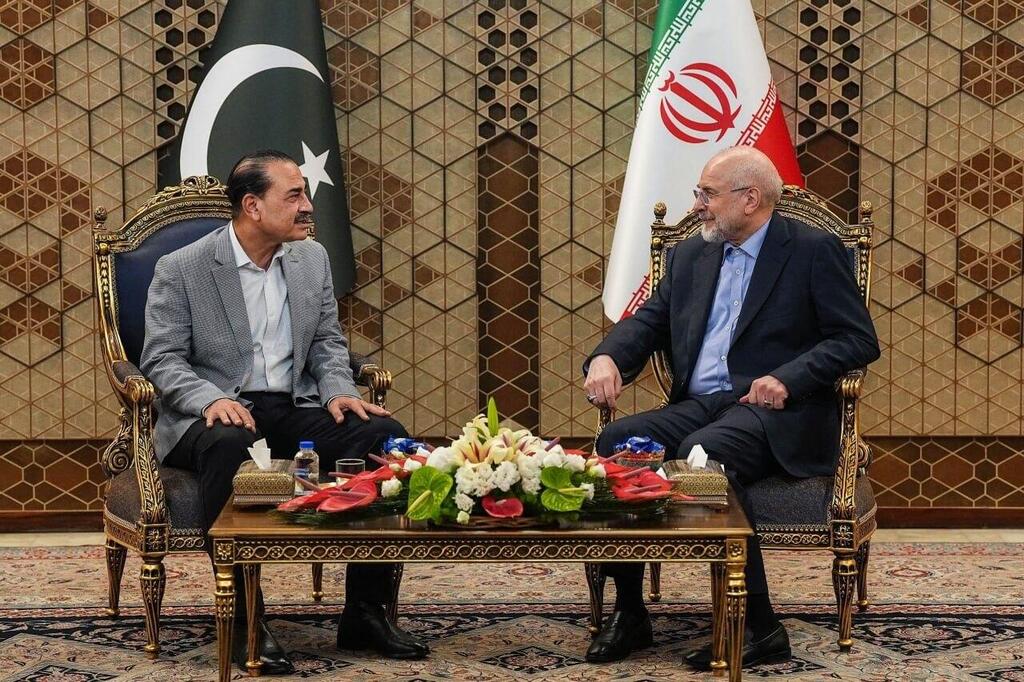
Following the meetings at Bürgenstock which Pakistan and Qatar deceptively labelled the ‘Lake Lucerne Summit,’ ignoring the fact that Iran’s most senior political and military leaders were absent, the two supposed mediators issued a statement, the sole purpose of which was to support Iran’s two central objectives in the negotiations. The first of these is to waste time, which the statement does by making reference not once but thrice to ‘technical talks,’ without any details. Iran’s second objective is to split the American-Israeli alliance which it cannot defeat militarily. This the statement does by inventing a ‘de-confliction cell’ which deliberately excludes Israel and makes no mention of the terrorism of Hezbollah.
The reason that Abbas Araghchi, the Iranian foreign minister, celebrated the statement is the fact that it serves the core interests of the regime. Araghchi, representing the government which re-started the most recent Lebanon War by directing Hezbollah to attack Israel, claims that Pakistan and Qatar “delivered major progress to end” that same war. This is just one example of the open collusion between Iran, Pakistan and Qatar.
An even more brazen example of this collusion was displayed on Tuesday 23 June, when Iranian President Masoud Pezeshkian was invited to visit Pakistan. There, he openly stated that the “missiles we have for our defense,” the same missiles which his regime has salvo launched at any country it happens to dislike, are not subject to negotiation. Prime Minister Sharif of Pakistan, the welcoming host, was on hand to condemn the “double standards” of those who do not wish Iran to have missiles, and emphatically stated that one “cannot digest this duplicity.” This is the same man who signed the memorandum as a supposed neutral and fair witness.

Qatar’s role is even more malign than Pakistan’s
(Photo: Gfx Nadia/Shutterstock)
Qatar’s role is even more malign than Pakistan’s. With the administration acquiescence, it is inserting itself deeply into the process of making decisions which could rapidly benefit the Iranian regime. Vice President J.D. Vance has described the proposed joint approval by Qatar and the United States of the unfreezing of Iranian assets as not less than “a very interesting solution.”
The House of Thani, Qatar’s rulers, will have been very pleased to see President Trump spending time on the Boeing 747 which they have recently gifted him, and even more pleased to hear him describe it as “a flying White House at a level of luxury that nobody has ever seen before.” They have reason to believe that they have a high level of access to and influence on the administration, which they will use to pursue their own, and not America’s, interests.
Mohammed al Thani, the Qatari Prime Minister, is publicly working for Iran when he demands that “the continued occupation of Lebanese territory must end immediately,” two days before General Esmail Qaani, commander of Iran’s Quds Force, repeats this demand and appends the threat that otherwise Israel will be forced out “tomorrow in shame and humiliating defeat.”
President Trump, Vice-President Vance and the rest of the administration are stuck with mediators who are working for Iran, and making very little effort to disguise this fact. Meanwhile, the electoral clock ticks on. General elections in Israel are due no later than 27 October. American midterm elections will take place on 3 November. Aided by false mediators, Iran is wasting time, once again, and hoping that the elections will lead to further domestic division in both the United States and Israel, and either eliminate or substantially reduce the political space for a return to war against the regime.
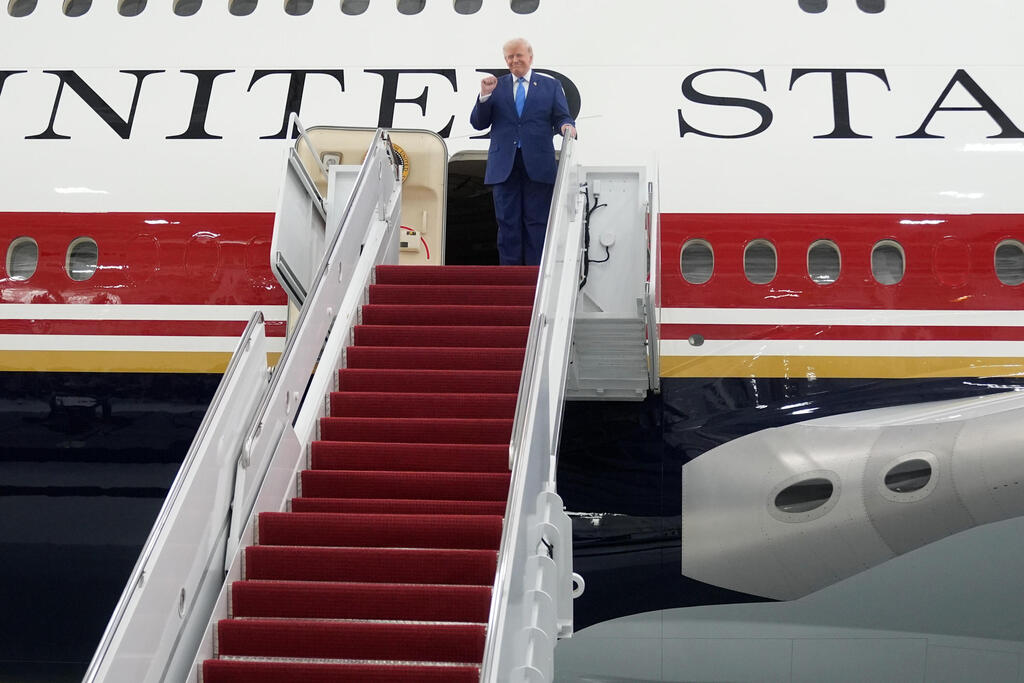
Qatar’s rulers will have been very pleased to see President Trump spending time on the Boeing 747 which they have recently gifted him
(Photo: AP Photo/Manuel Balce Ceneta)
The domestic political pressures in the United States which led the administration to choose the memorandum process are clear, and they are severe. The American public is confused and does not like the war. In YouGov’s snap poll published on the day the war began, 28 February, only 34% of those polled approved of the strikes. Now, with the talks dragging miserably on, 60% of voters think the war was not worth it, according to a Quinnipiac poll, even as essentially the same percentage thinks the prospective deal with Iran will fail.
The voters are especially confused because the Democratic Party takes an approach to the issue which can only be described as odious. Senate Democratic Leader Chuck Schumer behaves like a third-rate demagogue, calls the war not only “disastrous” but also “reckless and aimless,” while gleefully declaring that “Iran took Trump to the cleaners.” Schumer acts as if President Trump, not the Iranian regime, is by far the more important threat to America.
House Democratic Leader Hakeem Jeffries is even more vicious in his statements, and even less rational. He resorts to open lies when he states that “Iran is actually stronger now, relative to their position in the Middle East, than they were prior to this war,” and revels in duplicity when he judges that “our ability to arrive at a diplomatic resolution … has been greatly weakened,” even as it is he and his colleagues who are constantly acting to weaken both American diplomacy and American resolve.
The Democrats do not understand, or at the least do not wish to understand, that the consequences of not finishing off the Iranian regime will be as catastrophic for them as for the Republican party. The criminal aggression of the regime, and its efforts to develop nuclear weapons, will only be spurred on by Democrats’ public positions, and their desire to defeat Trump even at the cost of watching the world burn. Particularly if the Democrats win the next Presidential election, they will be faced with a catastrophic security crisis which they refuse to acknowledge, let alone help solve.
It is clear that the administration is facing a very difficult set of domestic problems, but its decision-making is catastrophically irrational nonetheless. It has chosen a road which leads nowhere and is now thoroughly trapped. The memorandum has not led to any improvement at all in the generic Congressional vote polling, or in President Trump’s personal approval rating. More time spent on empty talk, and more tensions between Israel and the United States engineered by Iran together with its Qatari and Pakistani collaborators, will not lead to anything other than an even higher probability of a severe electoral defeat.
The one and only choice that will change the administration’s situation, and even more importantly the security crisis confronting America and the wider West, is a return to war. Decisive military success is needed, and is eminently possible. The President threatened the regime’s oil export infrastructure on Kharg Island as long ago as 14 March and as recently as 11 June. It is time to stop the threats and drop the bombs. Otherwise, Pakistan and Qatar will carefully assist Iran in sinking the administration.
Dan Zamansky is a British-Israeli independent historian and author of The New World Crisis, a Substack analyzing the problems of today.