


Daily life is slowly returning across much of Israel, except in the Galilee, but the four main fronts facing the IDF remain at risk of renewed escalation.
In Lebanon, fighting is effectively ongoing. But under limits imposed by President Donald Trump, Israel cannot operate throughout Lebanon or against every target it says it needs to strike.
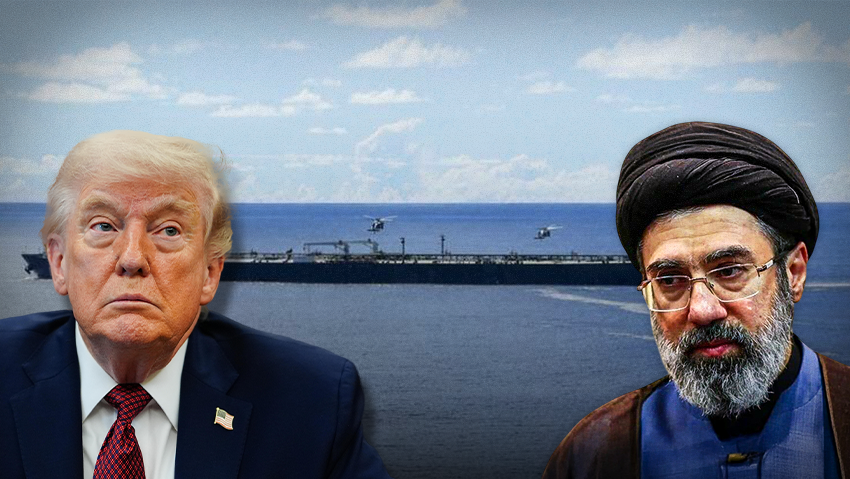
Across the region, the picture is increasingly clear: In Iran, the United States and Tehran are now waging an economic and psychological war, each seeking to force the other to accept minimum demands in diplomatic talks aimed at ending the war.
Israel is largely watching from the sidelines while preparing for the possibility that fire resumes. Trump appears intent on exhausting the damage he can inflict on Iran before deciding whether to return to direct military action against national infrastructure. Both Washington and Tehran appear prepared to play for time in the coming week or two.
Hezbollah tries to block US-Saudi plan
In Lebanon, unless there is a shift after repeated rocket and drone launches and Prime Minister Benjamin Netanyahu’s order to “strike forcefully,” Israel has decided to cooperate with a U.S.-Saudi framework aimed at weakening Hezbollah and stripping it of legitimacy to continue fighting.
The plan centers on negotiations for peace and normalization between Lebanon’s government, which represents most Lebanese communities and much of public opinion, and Israel.
IDF strikes in Lebanon
(Video: IDF)


The diplomatic move would require concessions from Israel, mainly over territory it currently holds in southern Lebanon. But Washington and Riyadh believe that an agreement with Iran, alongside peace between Israel and Lebanon, could force Hezbollah to stop fighting and possibly place its heavy weapons under international supervision. That, they believe, could bring long-term security to northern Israel.
Hezbollah is trying to thwart that U.S.-Saudi effort. The ceasefire, which Trump said was extended by another three weeks, resembles the ceasefire declared in late 2024 between Israel and Lebanon, during which Israel continued systematically targeting Hezbollah’s attempts to rebuild and rearm.
This time, Hezbollah has decided to respond, seeking to show that it remains capable and that it is defending Lebanon — and therefore must keep its weapons.
Hamas gains legitimacy as Gaza fighting may resume
Gaza has become a secondary arena after Iran and Lebanon, and the situation there is effectively frozen.
Hamas refuses to disarm, leaving no progress on other elements of Trump’s 21-point plan. But Hamas is using the deadlock to reassert its rule and, apparently, rebuild militarily.
Municipal elections were held Saturday in Deir al-Balah, which is under Hamas control, alongside elections in the West Bank conducted by the Palestinian Authority. The vote gives Hamas legitimacy and allows it to build standing among international organizations and the peace council.
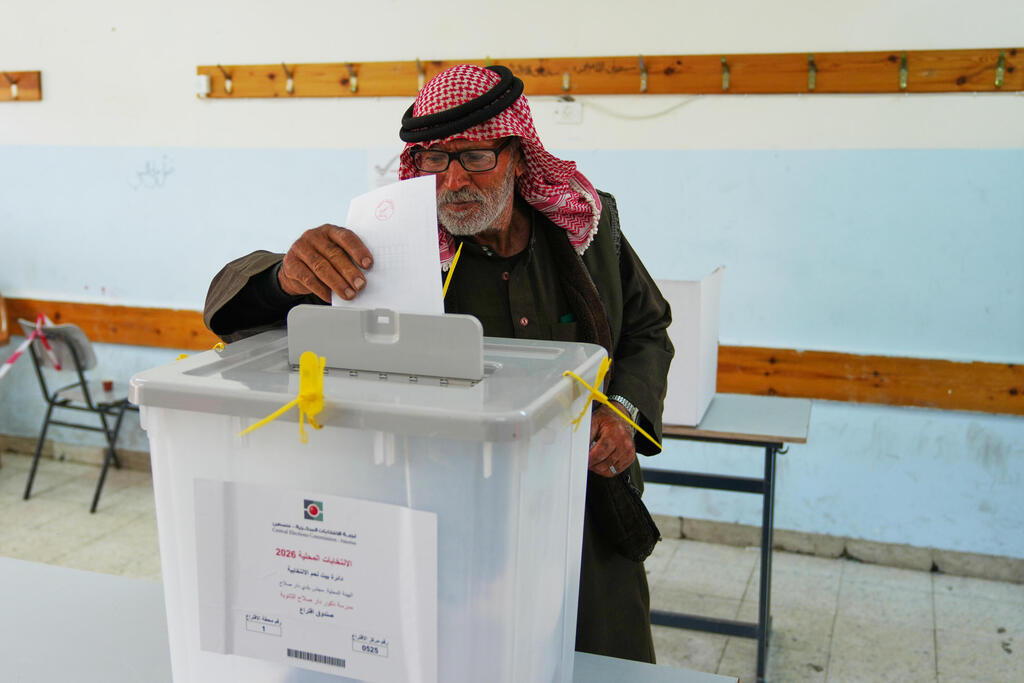
Voting in Gaza
(Photo: AP Photo/Mahmoud Illean)
In Israel, officials say there may be no choice but to resume fighting to remove Hamas from Gaza and disarm it. But within the IDF, there are quiet warnings that without arrangements in Lebanon and Iran, the military will face difficulty carrying out what is needed in Gaza, mainly because of a shortage of combat manpower.
West Bank near anarchy
In the West Bank, the situation is nearing anarchy.
Palestinian communities facing economic distress are under growing pressure from Jewish rioters operating from hilltop farms and illegal outposts between Palestinian towns and villages.
Israel is struggling to enforce the law, especially against Jewish rioters, in a way that resembles the police’s difficulty enforcing law in the Arab sector. The number of Palestinians killed by Jews is rising at a pace that increasingly recalls the killings inside Arab communities.
Palestinian unrest is also growing. On Saturday, dozens of Palestinians entered the abandoned Jenin refugee camp despite an order barring entry by the regional commander.
The Iranian gamble
In Iran, both sides have shifted to economic warfare because both Tehran and Washington see it as preferable to renewed direct fighting.
For Iran, the reason is clear. Its only effective pressure point against the United States, and indirectly against Israel, is the closure of the Strait of Hormuz. Tehran hopes the damage to the global economy, especially the energy price crisis it created, will pressure Trump to stop the war.
Gulf oil producers are also pressing in that direction, and Iran is betting that Trump, facing higher gasoline prices at home, will eventually be forced to give in.
Trump, meanwhile, is using a broad and systematic economic campaign to choke the Iranian regime functionally and threaten the survival of the ayatollahs and the Revolutionary Guards.
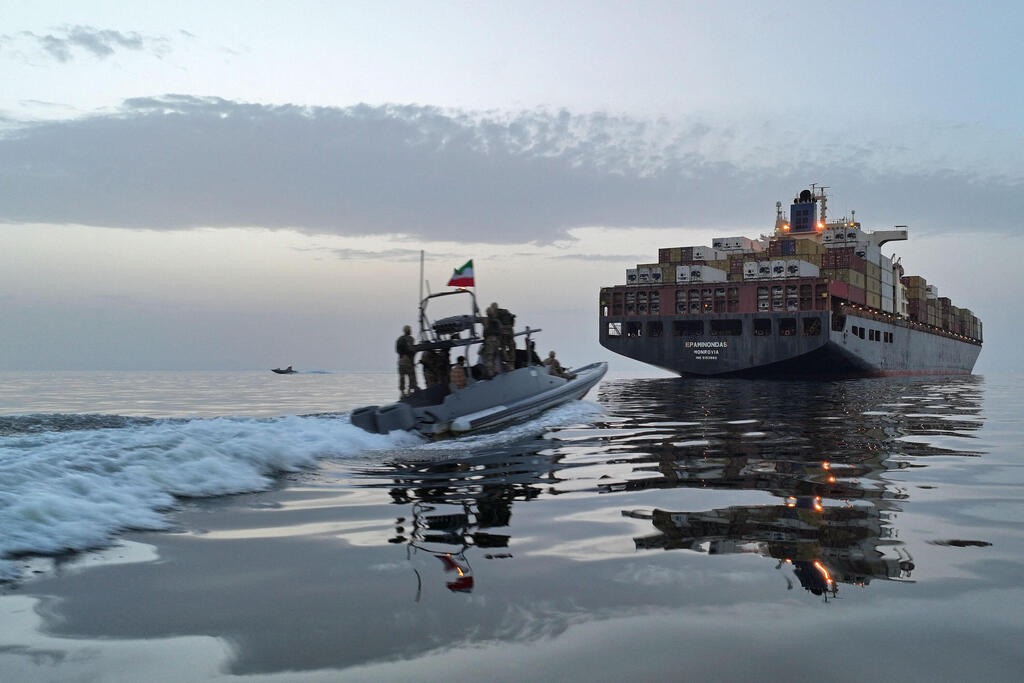
(Photo: Meysam MIRZADEH / TASNIM NEWS / AFP)
Trump and his advisers chose economic warfare because they believe it can create the same threat to the regime’s survival as strikes on national infrastructure, such as electricity, oil and gas production and bridges. They also believe it avoids direct suffering for civilians in Iran.
Trump does not want Iranian civilians, most of whom oppose the regime, to be physically and economically harmed by strikes on infrastructure in major cities. He does not want Iranians to turn against the United States and rally around the regime.
Trump, like Netanyahu and parts of Israel’s security establishment, still hopes the regime can be toppled by mass protests after the war. As long as bombs are falling near them, the masses are unlikely to take to the streets.
Another reason Washington chose economic pressure is that the U.S. military and the IDF have largely exhausted what they can do from the air and sea against Iran’s military and nuclear capabilities. The task now is to preserve those gains and prevent Iran from rebuilding for years.
An economic campaign centered on a naval blockade can deny Iran the money, materials and access to allies such as China and Russia that it needs to restore what was damaged. The blockade does not apply in the Caspian Sea, and Iran can receive some aid from Russia, but not in quantities significant enough to rebuild its nuclear, missile and air defense capabilities.
A third reason is that strikes on Iran’s national infrastructure, including oil and gas facilities, power stations and desalination plants, would almost certainly trigger harsh Iranian retaliation against oil and refining facilities in Gulf states. That would worsen their economic condition and continue damaging the global economy even if the Strait of Hormuz reopens.
For now, the United States prefers “soft” economic and psychological pressure and is not rushing to renew fire.
The naval blockade and Iran’s bluff
The most important tool Washington is using is the naval blockade.
The United States is not limiting itself to a direct blockade of Iranian vessels in the Strait of Hormuz or ships trying to enter ports in southern Iran. It is also targeting the “shadow fleet” Iran used to ship oil to China, India and other countries, bypassing U.S. sanctions.
Iran developed an alternative economy, run largely by the Revolutionary Guards, to smuggle oil to countries willing to buy it cheaply. The same networks helped buy materials used to make missiles and explosives and transfer them by ship from China and Russia to Iran.
The U.S. Navy is now trying to stop those smuggling operations, not only for oil but also for dual-use and other strategic materials, mainly in the Indian Ocean. The U.S. Navy has seized two such ships in recent days and is expected to continue.
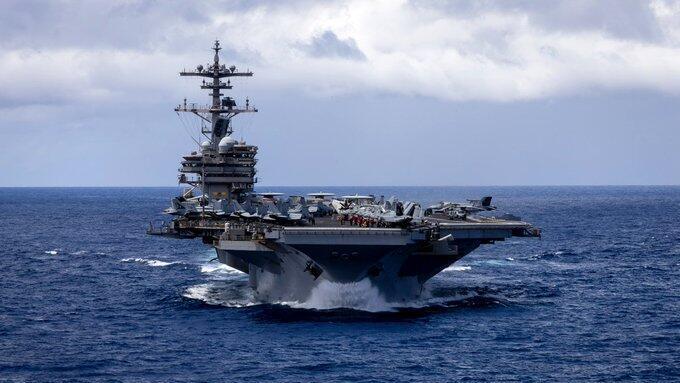
USS George H.W. Bush
Iran claims it can cross Hormuz and smuggle oil, but those efforts are being disrupted by U.S. naval forces operating far from Iran’s coast, beyond the range of missiles and drones that could threaten the aircraft carrier Lincoln, its accompanying destroyers, the carrier Bush and its task force.
If a tanker crosses Hormuz, U.S. forces wait and seize it in the Indian Ocean on its way to China. Iran’s claims are therefore aimed mainly at propaganda and domestic messaging. But all signs indicate the naval blockade is hurting, which is why Tehran says it will not enter negotiations as long as the blockade continues.
Alongside the naval blockade, Washington is applying economic pressure through every available channel.
CNN reported that the U.S. Treasury recently froze $334 million in cryptocurrency accounts used by the Revolutionary Guards. Cryptocurrency has become an important financial tool for Iran. International actors, Iran and people inside Iran are believed to hold $7 billion to $8 billion in cryptocurrency, with about half of that held in digital wallets belonging to the Revolutionary Guards.
In Israel, Iranian agents recruited for espionage were paid in cryptocurrency and converted it into cash. Information from those cases may have helped U.S. authorities identify some accounts. CNN also reported that hackers, apparently acting for Israel, stole $90 million last year from cryptocurrency accounts linked to the Revolutionary Guards.
Another pressure track is sanctions on small Chinese refineries that buy smuggled Iranian oil. The measures show the United States prepared the economic campaign in advance. The remaining question is who breaks first.
Time works against Iran
Iran is playing for time, but time may work against it.
The naval blockade could cause lasting damage to Iran’s oil industry. Iran has limited ability to export crude oil, and storage tanks on Kharg Island and at oil fields are already full. Israel has bombed much of Iran’s petrochemical industry, limiting its ability to refine oil.
As a result, Iran is being forced to reduce production and may soon have to stop pumping altogether. Oil wells that remain inactive for months lose internal pressure needed to bring oil to the surface. Restoring production later would require a long and costly repair process.
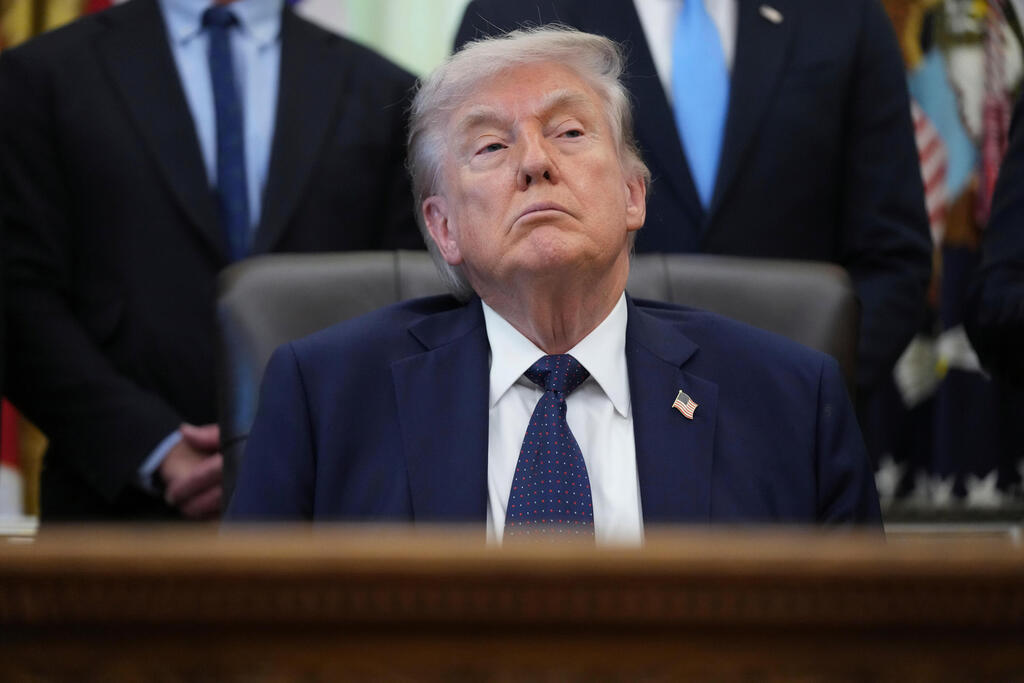
Iran is counting on international pressure on Trump over the energy crisis, and on antiwar sentiment in the United States reflected in weak polling. That is a problem for Trump ahead of midterm elections, where he could lose his majority on Capitol Hill.
(Photo: AP Photo/Mark Schiefelbein)
But Trump is signaling that he has time. He appears to be betting that he can repair the political damage at home through a “victory agreement” in which Iran gives in.
Meanwhile, the Pentagon is building up forces, while CENTCOM and the IDF gather intelligence, identify targets and draft new options for striking the regime — options they did not have before.
Iran, by contrast, has little more it can do beyond what it has already done. The economic campaign will continue, and both sides are preparing for renewed kinetic fighting while trying to avoid it.
In Israel, there is skepticism that Iran can be forced to surrender through economic warfare alone. Some argue that only severe strikes on national infrastructure will convince a hard-line regime in Tehran to give up its nuclear capabilities and accept limits on its missile program.