


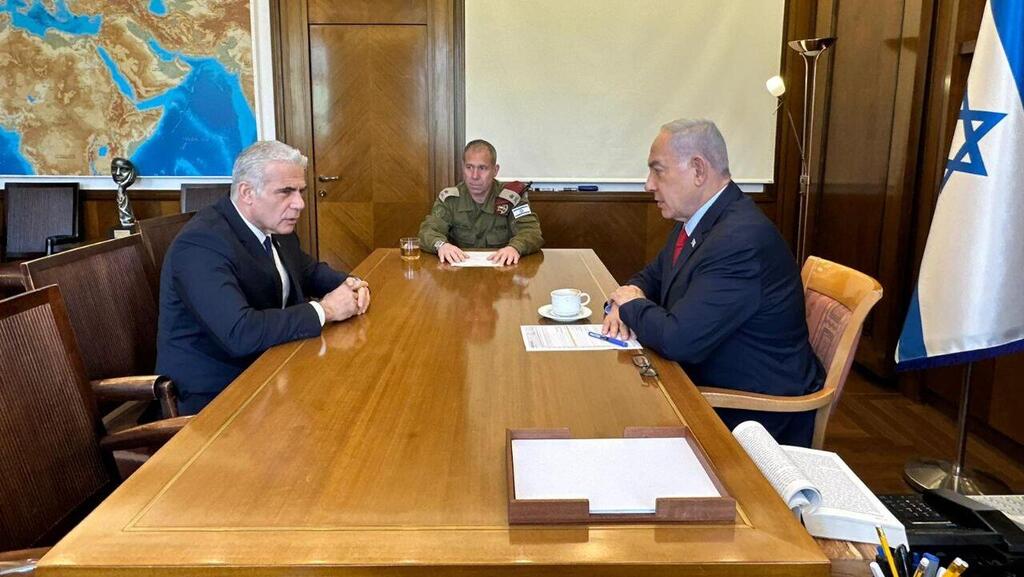
Years of war, dramatic warnings and a late awakening: It is striking that Prime Minister Benjamin Netanyahu and Finance Minister Bezalel Smotrich are now sending the IDF Planning Directorate chief, a uniformed major general, to persuade opposition leader Yair Lapid and explain the military’s budget distress: a shortfall of some 40 billion shekels needed for ongoing operations and force buildup, at one of the most sensitive security periods Israel has faced in years.
The government has reached this point because, during an election period, a move of this scale cannot be advanced without opposition support. But it did not have to wait this long. The problem did not emerge today. Throughout the past year, the IDF repeatedly warned of a severe and dangerous budget crisis in the defense establishment, stemming from a gap of tens of billions of shekels urgently needed by the military.
The IDF is approaching a fourth year of war after enormous attrition in stocks, systems and manpower. It faces Iran, Hezbollah, Hamas, Syria and Yemen, each requiring different capabilities. At the same time, Israel must retain the ability to fight a multifront war rather than assume that each front will erupt separately.
The gaps that have developed in force buildup are substantial. Defense officials say they cannot detail all of them, and rightly so. Some of the information concerns stocks of interceptors, munitions and missiles, some concerns production capacity and some procurement programs. But the implication is clear: The military has managed to continue fighting for years, but in the process it has also consumed its future.
The distress is not merely accounting. It is reflected first and foremost in serious shortages of munitions, shells and interceptors and in the critical need to replenish stocks depleted during the prolonged fighting. Defense officials are also warning of the possibility that production lines at Israeli defense companies could be halted without an agreed budget, precisely when the IDF needs to rebuild its strength and prepare for the next campaign.
That is what makes the dispute over the budget so significant. Israel has been discussing Netanyahu’s force buildup plan, estimated at roughly 350 billion shekels over a decade. Finance Ministry officials have warned about its scale, while claims have resurfaced in recent weeks that Netanyahu wants to reopen the state budget to transfer additional funds for force buildup. Defense officials, however, say the money transferred so far has largely gone toward current needs and managing the war and has not closed the gaps created in rebuilding military capabilities.
The crisis has also been aggravated by the continuing confrontation with the Finance Ministry. Defense officials believe the ministry is taking advantage of the fact that the IDF cannot publicly reveal the full extent of its shortages and requirements, making it harder for the military to rebuild its capabilities against threats on multiple fronts.
An increasingly urgent problem
And this was not a single warning. The IDF chief of staff and his deputy presented the political leadership with explicit warnings about the military’s financial condition and the security consequences of failing to close the gaps. Maj. Gen. Tamir Yadai recently warned in a document that the measures already taken by the IDF to cope with the shortage “are causing real harm to the ability to maintain the IDF’s stability today.” Chief of Staff Lt. Gen. Eyal Zamir has said plainly that “the coffers are empty.”
The practical meaning of those warnings is dramatic: reducing the process of restoring readiness, prioritizing force-building resources solely for core operational needs, delaying long-term force buildup and postponing infrastructure investments and projects intended to support the IDF’s defensive concept along its new deployment lines. In other words, this is not simply money missing for future projects. The shortage is already affecting the IDF’s ability to carry out its current plans, replenish its stocks and maintain readiness.
The chief of staff warned. His deputy warned. The head of the Planning Directorate warned. Those warnings were placed before the political leadership for months. Netanyahu cannot say he did not hear them. Both Netanyahu and Smotrich eventually accepted that additional money had to be transferred to the IDF. But that realization came late, and now the government cannot simply transfer the required 40 billion shekels. The sum is significant enough to require changes to the budget framework and amendments to legislation.
That makes the matter particularly urgent. If the money is not approved through legislation now, the IDF could be forced to wait until after the election and the formation of the next government. That process could take about six months, during which the military would have to manage the gap by postponing programs, cutting spending and reducing readiness and force-building processes.
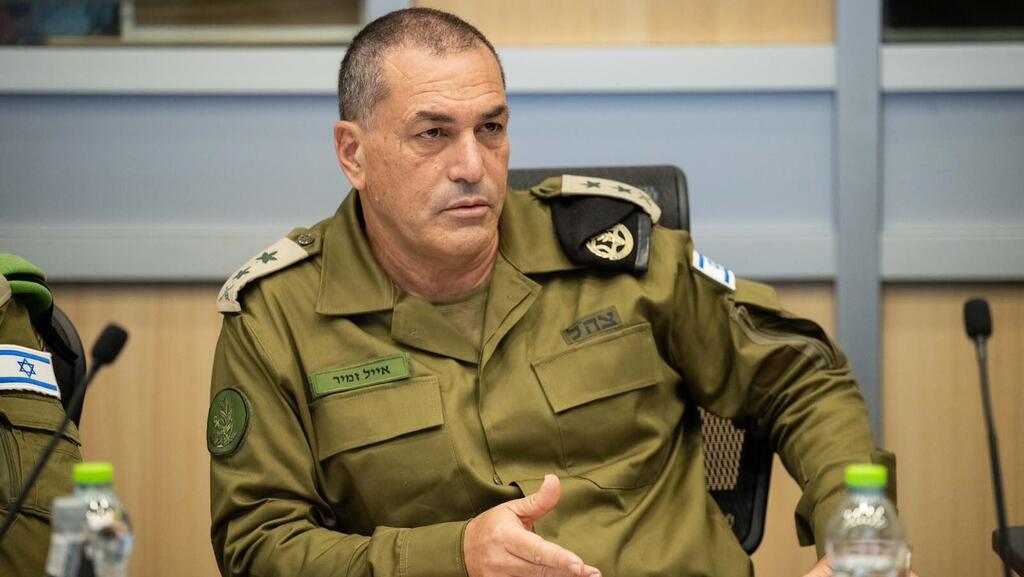
IDF Chief of Staff Lt. Gen. Eyal Zamir
(Photo: IDF)
Netanyahu argues that opposition consent is therefore required and that the Knesset plenum must be convened to approve the changes despite the election period. That is precisely where the failure lies: The government knew about the problem for months but did not address it in time. Now that the gap has become a crisis, it must reopen the budget and ask the opposition to help transfer the money.
Lapid, according to his office, told the Planning Directorate chief: “I support the proposal and support transferring the funds, because the IDF needs to be strengthened, but the budgetary source cannot be the tax increases on the middle class and reservists that you are leading toward. Instead, include in the proposal the cancellation of the corrupt coalition funds and the tens of billions of shekels you are currently transferring to fund ultra-Orthodox draft dodging, and we will support the proposal in the Knesset as well.”
Likud accused Lapid of “misleading the public about the defense budget,” calling his claims “baseless and false” and saying defense spending could be increased without raising taxes. Lapid responded that “Likud is once again lying and abandoning the security of the state,” reiterating that he supports transferring the money to the defense establishment but maintaining his condition over its source.
Defense Minister Israel Katz then called on Lapid “to support the IDF’s request for an additional budget,” saying that “the regional reality does not allow us to wait.”
“It would not be right to tie the security issue to the usual political dispute with the government over various budget items,” Katz said. “The economic situation is good and the required funds exist in the Treasury, but formal legislation in the Knesset is required.”
Yashar! party chairman Gadi Eisenkot backed Lapid, saying: “Even during the most difficult war in Israel’s history, the IDF is warning of gaps in munitions, manpower and budget and is not receiving a response. Just as in the days before the October 7 disaster, an irresponsible political leadership is ignoring warnings and calls from senior defense officials.”
“Lapid is right,” Eisenkot added. “If the Netanyahu government wants a solution, it could have met all the IDF’s needs until the election: Shut off the flow of coalition funds and transfer the money from associates and draft dodgers to the IDF.”
The IDF did not suddenly discover that it needs money. The chief of staff and his deputy warned about it. The head of the Planning Directorate warned about it. The message was clear: The coffers were being depleted, stocks had to be replenished and the shortage was already damaging the military’s ability to rebuild its strength.
Ultimately, this is not only a question of another 40 billion shekels. It is a question of whether Israel is funding the military force it needs after three years of war, or continuing to manage its security through temporary solutions and postponed decisions.
And the harder question is directed at the government: If all these warnings had been on the table for months, why wait until the problem became a budget crisis that requires the IDF itself to turn to the opposition?