


Opposition leader Yair Lapid met Prime Minister Benjamin Netanyahu on Monday for a security briefing, during which Netanyahu asked him to support reopening the state budget to provide additional funding for Israel’s defense establishment, according to Lapid’s office.
Maj. Gen. Hedi Silberman, head of the IDF Planning Directorate, also attended the meeting.
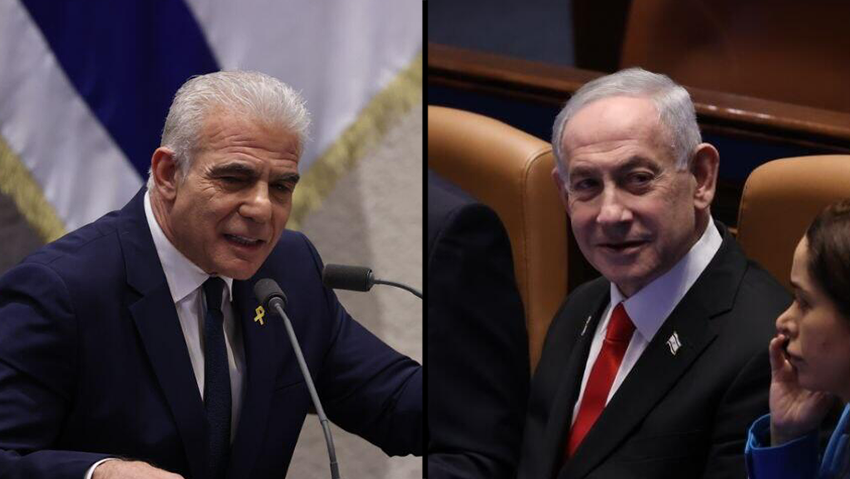
Lapid said he supported increasing defense spending but rejected raising taxes on the middle class and military reservists to pay for it.
“I support the proposal and support transferring the funds, because the IDF needs to be strengthened, but the budgetary source cannot be the tax increases on the middle class and reservists that you are leading toward,” Lapid told Netanyahu, according to his office.
“Instead, include in the proposal the cancellation of the corrupt coalition funds and the tens of billions of shekels you are currently transferring to fund ultra-Orthodox draft dodging, and we will support the proposal in the Knesset as well.”
Netanyahu’s appeal to Lapid comes after months of increasingly stark warnings from the military over what senior officers describe as a severe budget crisis.
In late June, ynet reported that the IDF was struggling to operate within its existing budget, cutting the scope of reserve duty and even refraining from certain operations because of their cost.
The defense establishment was seeking to raise its budget from 144 billion shekels to 183 billion shekels. Defense officials said at the time that parts of the military had effectively become paralyzed, while three successive discussions on the dispute between the Defense Ministry and Finance Ministry were canceled at the Prime Minister’s Office.
About three weeks ago, IDF Chief of Staff Lt. Gen. Eyal Zamir escalated those warnings, saying publicly that “the coffers are empty.”
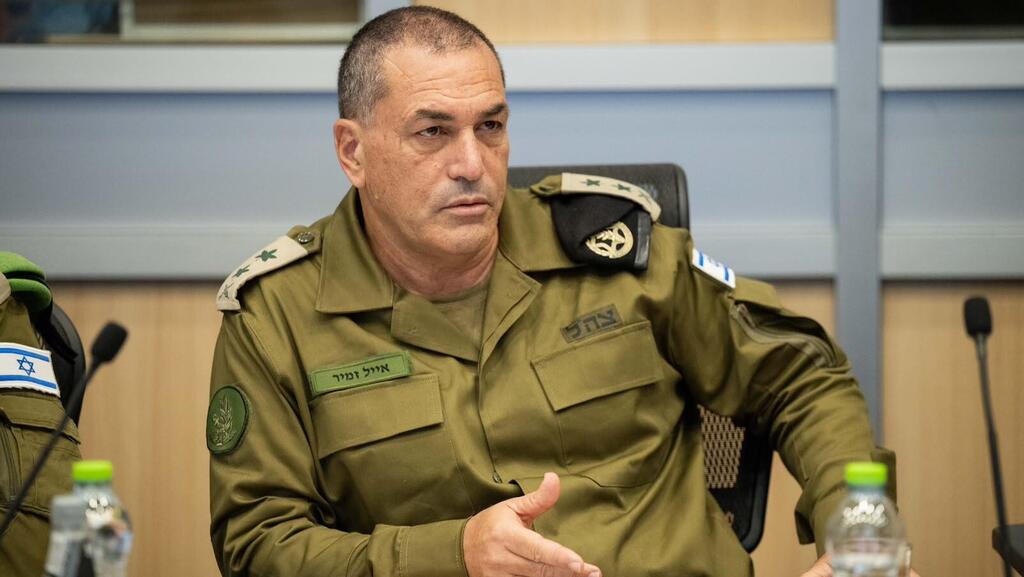
IDF Chief of Staff Lt. Gen. Eyal Zamir
(Photo: IDF)
He described the battle for funding as another front being fought by the defense establishment, this time against the Finance Ministry.
Senior military officials warned that the IDF had reached a critical point threatening operational readiness, saying promised funding had failed to materialize while deadlines on major procurement deals had expired.
A senior defense official said in closed-door discussions at the time that “the Finance Ministry’s Budget Department has slammed on the brakes completely, and we are on the edge of a cliff.”
The official said the political leadership, including Netanyahu, had recognized a 40 billion shekel funding gap and instructed that 15 billion shekels be transferred immediately. According to the official, however, the money never arrived and the military was left with no available funds.
Netanyahu and Finance Minister Bezalel Smotrich had also agreed to increase the defense budget to 183 billion shekels, but a government discussion on the issue was canceled. No formal proposal was circulated to ministers ahead of the planned meeting as normally required.
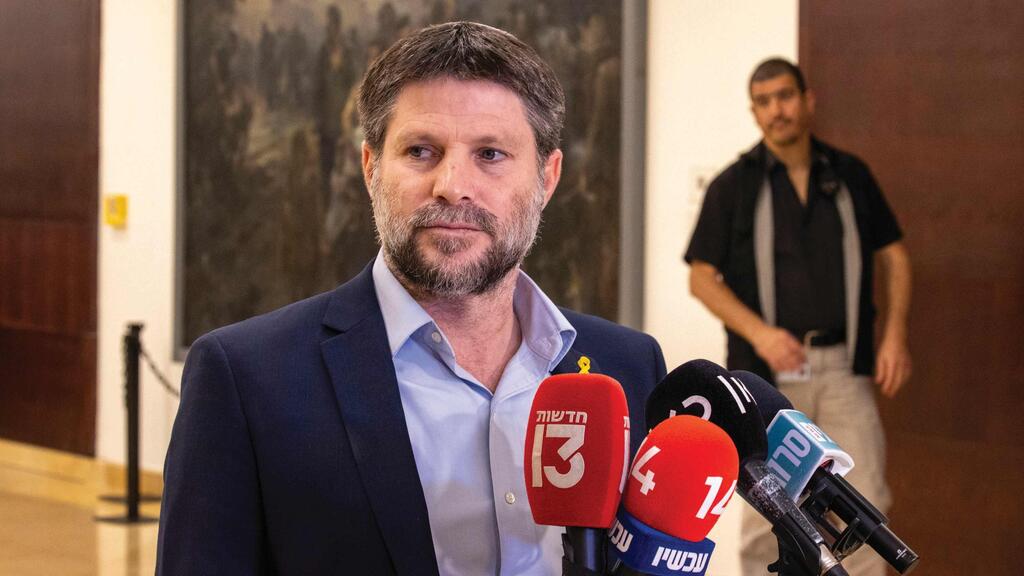
Finance Minister Bezalel Smotrich
(Photo: Amit Shaabi)
The Finance Ministry has meanwhile warned that the 2027 state budget will require tax increases and painful spending cuts, decisions that will fall to the next government.
Responding to Zamir’s criticism, the Finance Ministry said at the time that it had honored every commitment it made.
“There is no agreement we have failed to uphold, above and beyond the original budget approved by the Knesset,” the ministry said. “The heads of the defense establishment must listen seriously to the calls for them to address the billions of shekels spent each year, so that they are used efficiently for the country’s security and managed responsibly.”
Procurement deals collapse
Defense officials have strongly rejected claims that the IDF receives effectively unlimited funding without sufficient oversight.
Another senior military official warned that the budget squeeze was increasingly affecting both day-to-day operations and efforts to rebuild capabilities after fighting across several fronts.
Alongside difficulties repairing tanks, the military is now facing a serious shortage of hundreds of Humvee vehicles destroyed during fighting in Lebanon, the official said.
The absence of a clear budget framework is also closing the window for further purchases because production in the United States of Humvees configured for Israeli requirements is expected to end soon, according to the official.
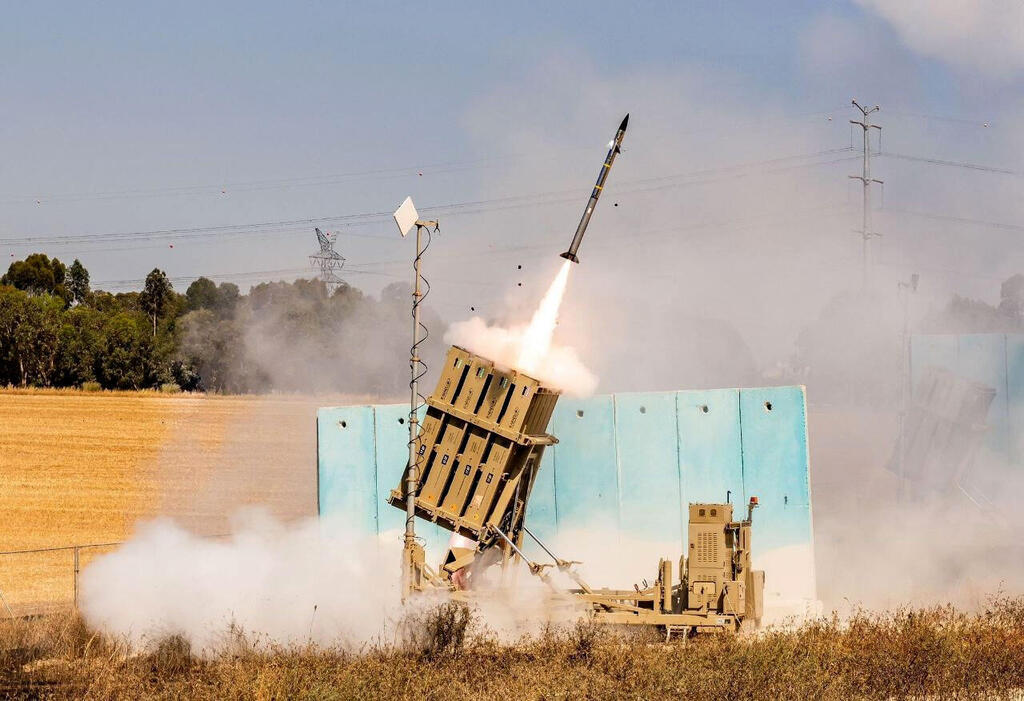
Iron Dome battery
(Photo: IDF)
Production lines for ground-force munitions at Israeli defense companies are also nearing completion, the official said, adding that companies such as Elbit Systems and Rafael cannot be expected to finance Defense Ministry orders themselves.
The financial crisis is also affecting the Israeli Air Force and capabilities considered central to Israel’s strategic military advantage.
One prominent example cited by defense officials is the collapse of a planned deal with the U.S. government for Apache attack helicopters. The purchase had been developed over the past two years based on the military’s assessment that attack helicopters were essential for border defense and ongoing combat operations.
“The political leadership imposed a budget of 111 billion shekels on the IDF instead of the 143 billion it requested, and reduced reserve duty from 60,000 to 40,000 days,” the senior official said.
“During Operation Roaring Lion, the budget was raised to 143 billion, but the gap between the political leadership’s directives and the actual budget grew to 40 billion shekels because of the deep ground operation in Lebanon; a 40-day campaign against Iran; control of 62% of the Gaza Strip; a security zone in Syria; and increased activity in the West Bank and along the eastern border, including confronting the drone threat there.”