

Zohran Mamdani stood before the cameras and said Israel's prime minister should be arrested the moment he lands on American soil. He knew he had no power to do it. He said it anyway—because the goal was never enforcement. It was applause. That gap — between what a mayor can actually do and what he wants the world to believe he stands for — is the story Jews need to understand, in New York as much as in Israel.
This is not really about one politician or one news cycle. It is a preview of where a rising wing of American politics is heading.
New York City Mayor Zohran Mamdani


A mayor of New York cannot execute an International Criminal Court warrant. The United States is not a party to the Rome Statute, and matters involving foreign heads of government belong to the federal government, not City Hall. Mamdani knew this. The statement was never meant to function as policy. It was meant to perform as political theater—and it performed exactly as intended: international headlines, applause from ideological allies, another opportunity to cast Israel as uniquely deserving of global condemnation.
That should worry Jews everywhere, because this is no longer an isolated event. Ideas that once lived at the fringe of campus protests and UN resolutions are migrating into City Hall, state legislatures, and eventually, national office. It is a pattern that has moved from the margins into institutional power, and Mamdani's election is proof that the pattern now wins elections.
Increasingly, Israel is not treated as one democracy confronting terrorism under extraordinarily difficult circumstances. It is cast as the world's defining human-rights offender.
Gallery
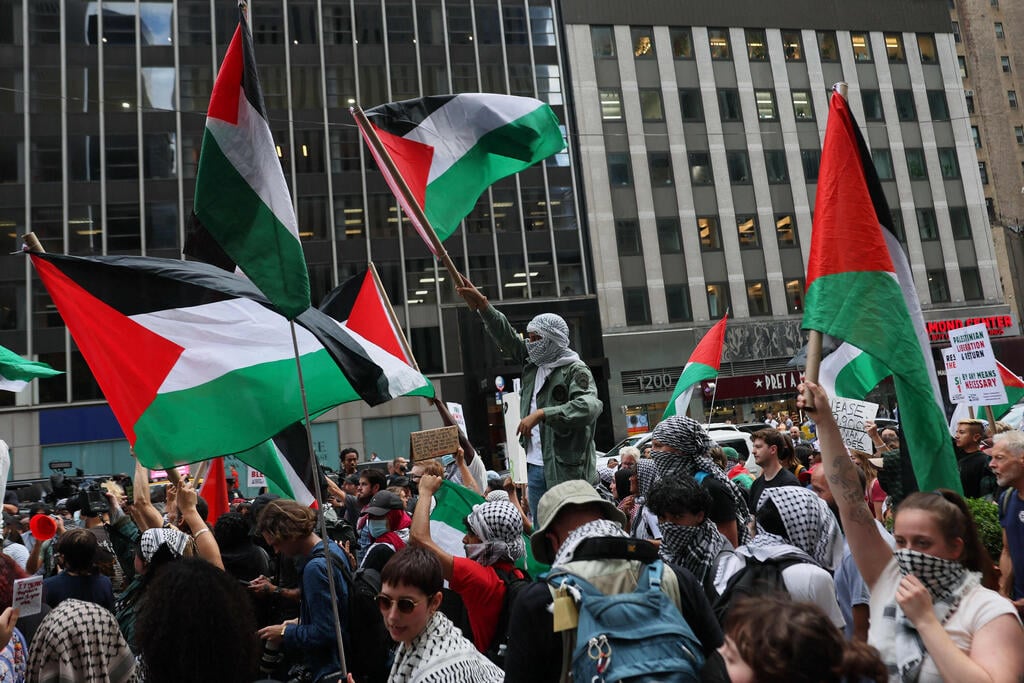
Ideas that once lived at the fringe of campus protests and UN resolutions are migrating into City Hall, state legislatures, and eventually, national office
(Photo: Michael M. Santiago / Getty Images / AFP)
If universal human rights were truly the guiding principle, where is the same relentless energy directed at what the U.S. State Department and a UN fact-finding mission have both formally called genocide—the Rapid Support Forces' campaign of mass killing, starvation, and systematic rape against the Masalit and other non-Arab communities in Darfur, Sudan? Where is it for the genocide the United States government has determined Beijing is committing against the Uyghurs, over a million of whom have been swept into internment camps and forced labor programs? Where is the outrage over the Taliban's near-total erasure of Afghan women from public life, or over Nigeria, where Boko Haram and Fulani militias have destroyed hundreds of churches this year alone and, according to the United Nations' own human rights office, forced Christian women and girls into conversion, child marriage, and sexual slavery?
Where is it for the Islamic Republic of Iran, which executes its dissidents and openly calls for the destruction of the USA and Israel, or for Russia's continued military occupation of sovereign Ukrainian territory?
These are not abstractions. They are genocide, enslavement, forced religious conversion, and occupation, happening now, verified by international bodies—and met with a fraction of the sustained global outrage reserved for Israel.
To be clear, this is not whataboutism, and it draws no equivalence. Israel is a democracy that holds elections, permits a free press, allows its own citizens to protest its government in the streets, and answers to independent courts—including for its own conduct in war. It operates under the same international laws of war that govern every other democratic military, and it investigates and prosecutes its own violations rather than covering them up. None of the regimes named above can say the same.
Yet Israel alone is held to a standard demanded of no other nation on earth—and much of what it is condemned for is not even accurate. Disinformation and misinformation campaigns, amplified across social media and echoed by hostile state and non-state actors alike, routinely blame Israel for atrocities it did not commit and casualty figures it did not cause. Naming these regimes' actual, documented atrocities is not a defense of anything Israel has done; it is a demand for a single, consistent standard of judgment and of fact, applied evenly rather than reserved almost exclusively for the one Jewish state on earth. The disparity in outrage is not proof that Israel is blameless. It is proof that the outrage was never really about human rights, or the truth, to begin with.
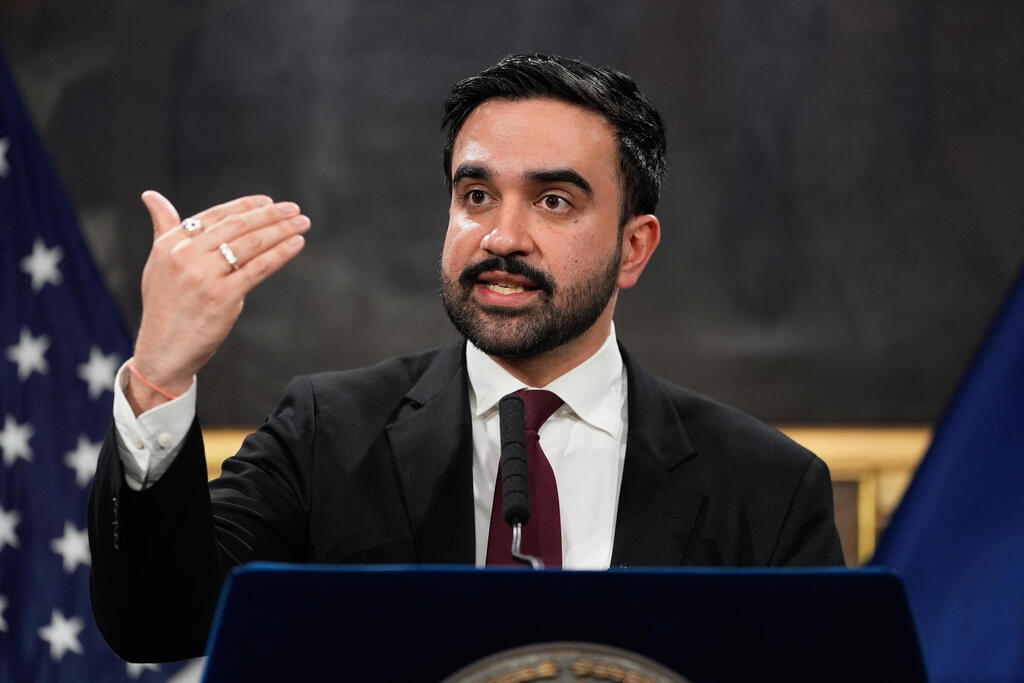
Mamdani himself is not an aberration within his party—he is a symptom of where a growing wing of it is headed
(Photo: AP Photo/Seth Wenig)
None of that happened by accident, and none of it happened without willing amplifiers. Mamdani himself is not an aberration within his party—he is a symptom of where a growing wing of it is headed. He is a longtime member of the Democratic Socialists of America, whose New York chapter has explicitly branded Israel an apartheid, colonialist state and pushed the boycott movement against it, even those facts and statistics prove that Israel is definitely not an apartheid colonialist state. That is no longer a fringe caucus arguing among itself. In 2026, DSA-backed candidates whom Mamdani personally endorsed won Democratic congressional primaries in New York, expanding the group's foothold in Washington itself. A mayor who built his political career inside a movement that treats Israel's delegitimization as a founding principle is now positioned to shape how the Democratic Party approaches the Jewish state for a generation. That is not incidental. It is the machinery behind the arrest headline.
Nor is this only a story about socialism. Mamdani's coalition has consistently elevated voices and causes aligned with Islamist politics—rhetoric that treats Israel's existence itself, not merely its policies, as the injustice to be corrected. When a mayor's political alliances run through a movement that chants for the "globalization" of armed resistance and cannot bring itself to condemn a massacre of Israeli civilians, the question is no longer whether he is antisemitic by intent. It is whose agenda he is amplifying, and why.
The amplifiers were not only ideological. There is also the matter of who was cheering loudest online. The New York Post reported that in the month before the primary, Mamdani's Instagram following exploded by more than 1,200 percent, and that engagement from India, Pakistan, and Bangladesh reportedly outnumbered engagement from New York City itself. His campaign attributes the surge to savvy organic strategy, and that may well be part of the story. But whether the enthusiasm behind his rise was generated by New Yorkers or manufactured well beyond America's borders is a question Jews have every reason to ask—because it goes to the heart of whose interests his politics actually serve.
That is why this reaches far beyond New York. The battle over Israel's legitimacy no longer lives only at the UN or on university quads. It now reaches city halls, state legislatures, newsrooms, boardrooms, and cultural institutions across the democratic world—and it is shaping how the next generation of American leaders will approach the U.S.-Israel relationship before they ever take national office.
And here is what should alarm Jews in New York most of all: the same forces reshaping politics abroad are already at work on the streets these Jews call home, and the city is where that happens in real time. "Anti-Zionist, not antisemitic" has become the password that lets open hostility toward Jews travel under a respectable name. A synagogue is not attacked — a "Zionist institution" is targeted. A Jewish student is not harassed for being Jewish — she is confronted for her "complicity."
The line between opposing a government's policy and hating the people who share its faith and heritage has not blurred by accident. It has been blurred deliberately, and a mayor who came up inside that political culture, and who has treated calls to "globalize the intifada" as a legitimate expression rather than an incitement to violence, is now the one setting the tone for how his city treats its Jewish residents. This is not only a warning about Israel's image abroad. It is a warning about what is being normalized on Jewish New Yorkers' own doorsteps.
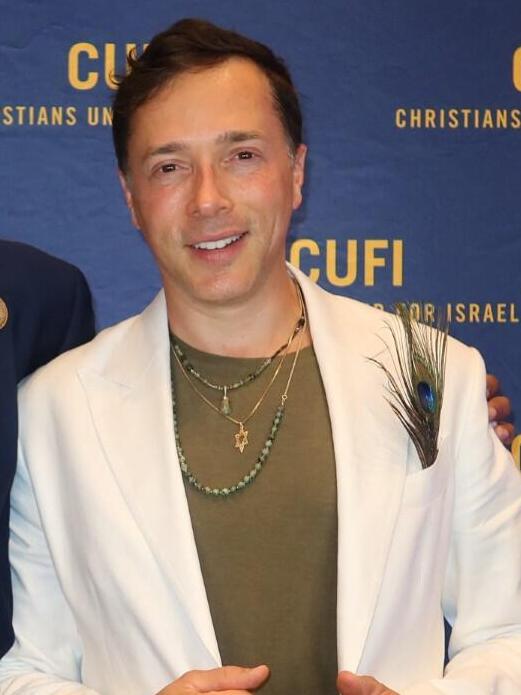 Yuval David
The strongest friendships are built on honesty, shared values, and a common commitment to democracy, not ideological performance. The question was never whether Zohran Mamdani had the authority to arrest Israel's prime minister. He did not, and he knew it. The more important question is why the mayor of America's largest city chose to spend his office on a promise he could never keep, instead of the crises he was actually elected to solve.
When political theater replaces principled leadership, the first casualty is not diplomacy. It is credibility.
And when Israel alone is held to a different moral standard, the issue is no longer justice. It is prejudice dressed in the language of justice.
Yuval David is an Emmy Award–winning journalist, filmmaker, actor, and international news commentator specializing in U.S., Israeli, and Middle Eastern affairs — with a focus on Jewish and Zionist issues, human rights, and the fight against antisemitism and Islamic extremism. A political advisor and strategic communications expert, he advises government leaders, diplomatic missions, NGOs, and policy organizations on advancing democratic values, civil rights, and the U.S.-Israel relationship. He is a Fellow at the Middle East Forum, and appears regularly across major American, Israeli, and international news networks.