


In most of his arguments for signing the memorandum of understanding with the regime in Iran, President Donald Trump is wrong, both factually and interpretively. For example: continuing the blockade of the Strait of Hormuz until a better agreement was reached would not have collapsed the global economy; the Great Depression of the 1930s did not break out because of a war, but because of the high tariffs imposed on imports to the United States by then-President Herbert Hoover; and President Barack Obama did not lift all economic sanctions on Iran. He actually left most of them in place. Obama, it turns out, was an excellent president for Israel.
On one critical point, however, Trump is right: Israel does not know how to deal with Hezbollah. For 44 years, we have been confronting this cursed Shiite Lebanese terror organization and have been unable to defeat it. It survives war after war, operation after operation, assassination after assassination, and still has not raised its hands or waved a white flag.
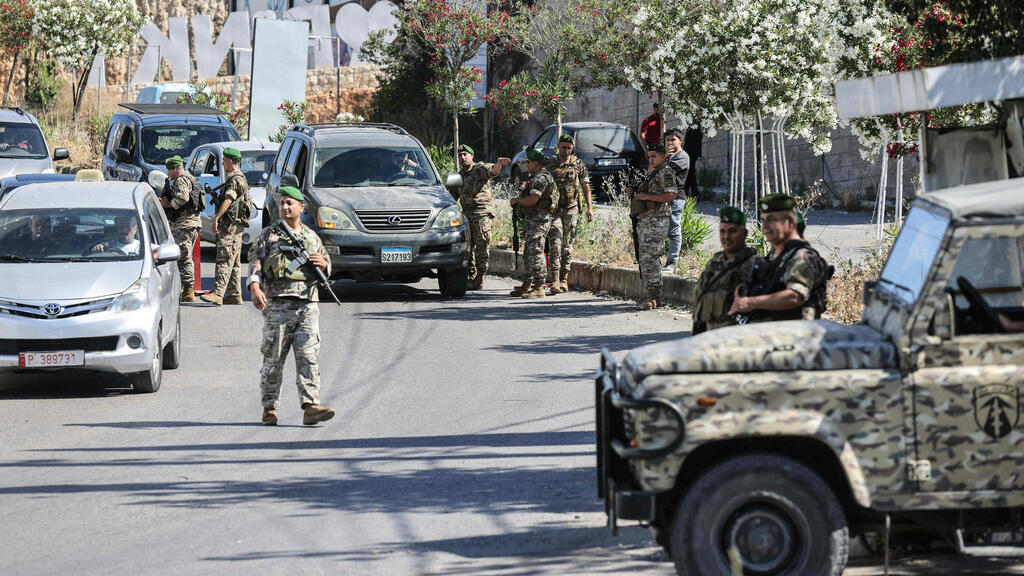
Entrance to Nabatieh as locals return home
(Photo: Mahmoud Zayyat / AFP)
At the end of every round of fighting, and there have been too many to list, the assessment heard in Israel is that Hezbollah has now suffered a crushing, final, absolute blow from which it will not rise and will not recover. But it does recover. It gets back up and stands on its feet. Limping, but not collapsing. Dahieh, the Beirut district that houses Hezbollah’s headquarters, has been bombed, destroyed and flattened by us countless times, in the Second Lebanon War, in the Third Lebanon War that is still ongoing and in operations in between.
Did the bombings crush Hezbollah? It does not look that way. It is therefore clear that the strategy of Israel’s struggle against Hezbollah, a chain of retaliations for retaliations for retaliations, did not work and is not working.
This is a surprising failure. On the face of it, Hezbollah has no right to exist. It is not a Palestinian organization fighting against occupation, nor is it an offshoot of the Islamic State seeking to restore the days of the Ottoman Empire. Hezbollah’s leadership presents itself as the defender of Lebanon’s sovereignty, even though Lebanese governments did not ask it for any such defense. On the contrary, when they asked for anything, they asked it to disarm and become a political party in every respect. That explicit request has not been answered to this day.
It survives war after war, operation after operation, assassination after assassination, and still has not raised its hands or waved a white flag
Trump’s appeal to Netanyahu to be more “considerate and cautious" and not destroy an entire building in Beirut in order to eliminate one terrorist is especially puzzling. It reflects highly selective morality: Trump and his administration were not troubled by the massive destruction of Palestinian homes and institutions in the Gaza Strip. There, far more serious and far deadlier Israeli hostilities than the IDF’s cautious approach toward Hezbollah centers in Beirut did not disturb their peace of mind.
In general, the word “Palestinians” has already been removed from the diplomatic lexicon of the current U.S. president. His counterproposal to transfer the “handling” of Hezbollah to the new regime in Syria, made up of veterans of the most extreme Sunni Islamist terror organizations, is plainly unacceptable. By any measure, it is an invitation to mass slaughter.
It is worth recalling that, between the many rounds of fighting, our border with Lebanon saw quite a few years of calm, growth, population absorption, investment, a real estate boom and domestic and foreign tourism. What happened, and under what circumstances, that war keeps returning there and repeatedly undermining security and the sense of security? How is it that the way Israel, as a state, has managed the 16,000-day war against Hezbollah, an organization whose annual budget was about 3% of Israel’s annual defense budget before the Swords of Iron war and 1% in the two and a half years since, consistently brings us to the same dead end? To more and more soldiers killed and wounded?
There is no avoiding the conclusion that its basic assumptions, that military force and the occupation of security zones will solve everything and remove every enemy, are unrealistic. This is the time to use and activate the diplomatic brain.