

The recent war on Israel's northern border has ended, but the calm that followed is a tense and fragile one. Hezbollah suffered a severe blow - losing senior commanders, critical infrastructure and significant portions of its weapons arsenal. Yet, the organization was not defeated.
Now, under both domestic and international pressure, Hezbollah is working to rebuild and upgrade its power, while engaging in political maneuvers designed to preserve its arsenal under the guise of being “Lebanon’s defensive arm.”
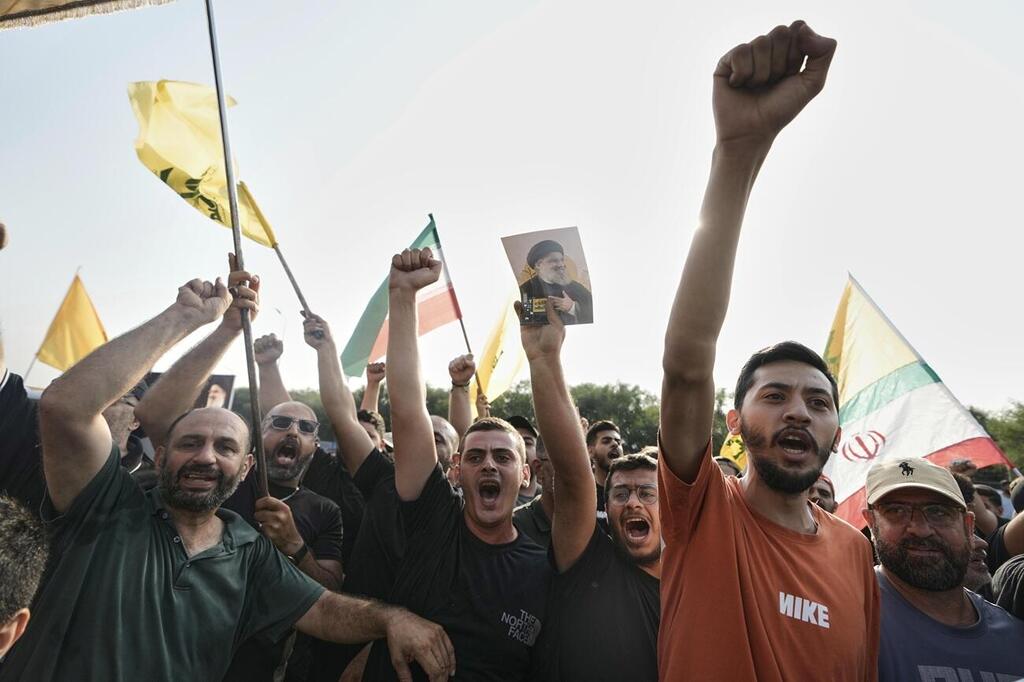
The central question now is: Will Hezbollah truly disarm and transfer its weapons to the Lebanese Armed Forces, or is this merely another tactical ploy aimed at buying time until the next round of conflict?
Following the war, the Lebanese government officially adopted a principled decision to unify all weapons under state control. However, when the moment of truth arrived, Shiite ministers walked out of the meeting, a clear signal that Hezbollah has no intention of relinquishing its real power.
The atmosphere in Beirut is one of stalling and delay. Hezbollah has expressed a willingness to “discuss” disarmament, but only on the condition that Israel withdraws from disputed territories and halts all strikes within Lebanon. This is a calculated move designed to appear open to the international community while in reality entrenching the status quo of a “state within a state.”
Hezbollah is not merely restoring what was destroyed; it is actively enhancing its capabilities: Local weapons production—establishing domestic industries for drones and precision rockets to reduce dependence on Iranian supply lines; strategic dispersal—spreading weapons stockpiles and building new underground facilities to make future Israeli strikes more difficult; and propaganda campaign—presenting itself as a “defensive force” rather than a terrorist organization, to gain legitimacy both internally and internationally.
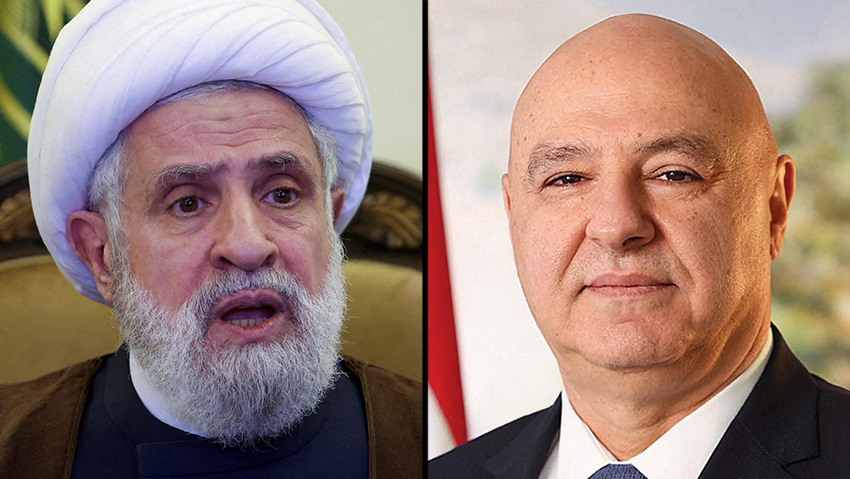
Hezbollah leader Naim Qassem, Lebanese President Joseph Aoun
(Photo: REUTERS/Aziz Taher/File Photo, AFP PHOTO / HO / LEBANESE PRESIDENCY)
Israel, meanwhile, continues targeted strikes deep inside Beirut's Dahieh district—a Hezbollah stronghold—and southern Lebanon to disrupt Hezbollah’s rebuilding process. However, it is evident that this will be a long-term and ongoing struggle.
What should Israel do now?
The fight against Hezbollah goes far beyond military action. It is a comprehensive strategic campaign that must include five core pillars:
Genuine implementation of UN Resolution 1701: Israel must not settle for empty diplomatic statements. It should demand a robust verification and enforcement mechanism in cooperation with the U.S. and France, including weapons-free zones south of the Litani River, deployment of the Lebanese Armed Forces and UNIFIL, with clear performance benchmarks and defined timelines and explicit sanctions for violations.
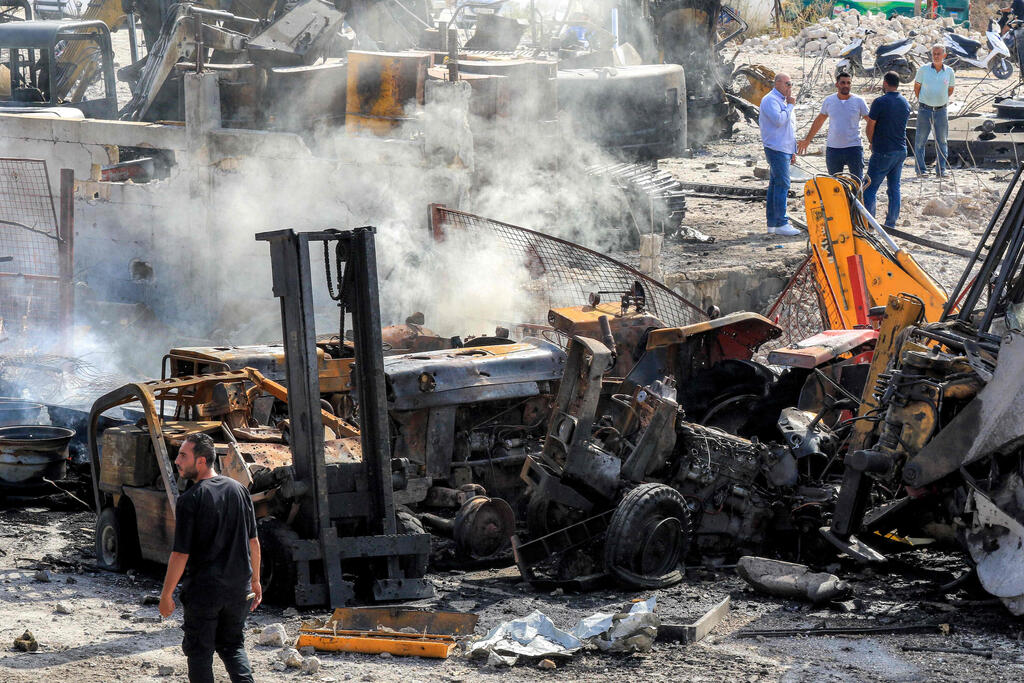
Aftermath of IDF strike on heavy equipment used to rebuild Hezbollah sites in southern Lebanon
(Photo: MAHMOUD ZAYYAT / AFP)
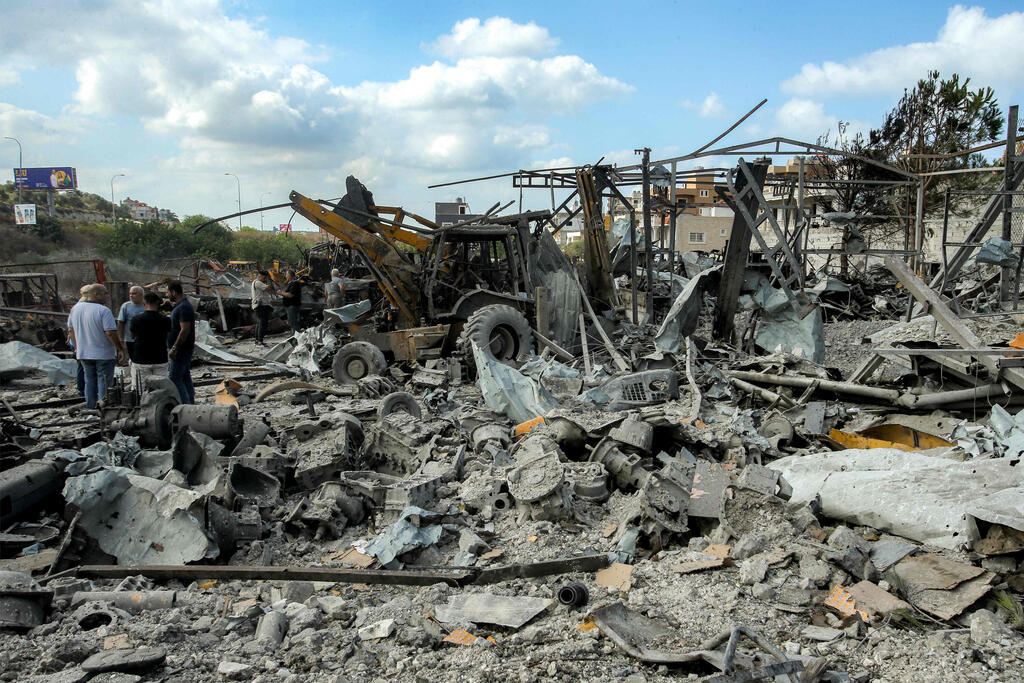
(Photo: MAHMOUD ZAYYAT / AFP)
Smart disruption of Hezbollah’s rebuilding: Conduct precise operations targeting Hezbollah’s development and production infrastructure, especially its drone and precision missile projects, while minimizing collateral damage and avoiding civilian casualties.
Economic incentive levers: Provide indirect support to the Lebanese army and state institutions, strictly conditional on measurable progress in disarmament. Every aid package must be explicitly tied to tangible actions: weapons seizures, southern deployments and consistent law enforcement.
Fortifying and rebuilding northern Israel: A rapid and safe return of residents to border communities will create strong deterrence and send a clear message that Hezbollah failed to alter the demographic and strategic map of northern Israel. Israel must invest in advanced interception systems to counter drone threats and significantly strengthen fortification infrastructure.
Sustained diplomatic channel: Maintain an active and continuous mediation channel with international powers to prevent a slide back into conflict. This should include addressing boundary disputes, establishing buffer zones and implementing technological solutions for monitoring and deconfliction.
 Munir Dahir
To summarize, Hezbollah will not voluntarily disarm. The organization is buying time, rebuilding and upgrading its capabilities while projecting an illusion of political dialogue.
Israel’s foremost responsibility is to prevent Hezbollah from gaining international legitimacy and to block its unrestricted rebuilding efforts. Only a strategic combination of precise military pressure, smart policy levers and rapid reconstruction of northern Israel can ensure that the last war does not become a prologue to an even bloodier round.
Israel must view this campaign not merely as a series of military operations but as a long-term struggle over its security and regional identity.