


War of attrition or cracks in Iranian control: Israeli officials on Sunday analyzed Iran’s morning missile fire at Israel, which forced millions of people to remain in protected spaces for more than an hour.
On one hand, the launches triggered nonstop sirens across large parts of the country. On the other hand, in quantitative terms, the number of missiles fired was not extensive.
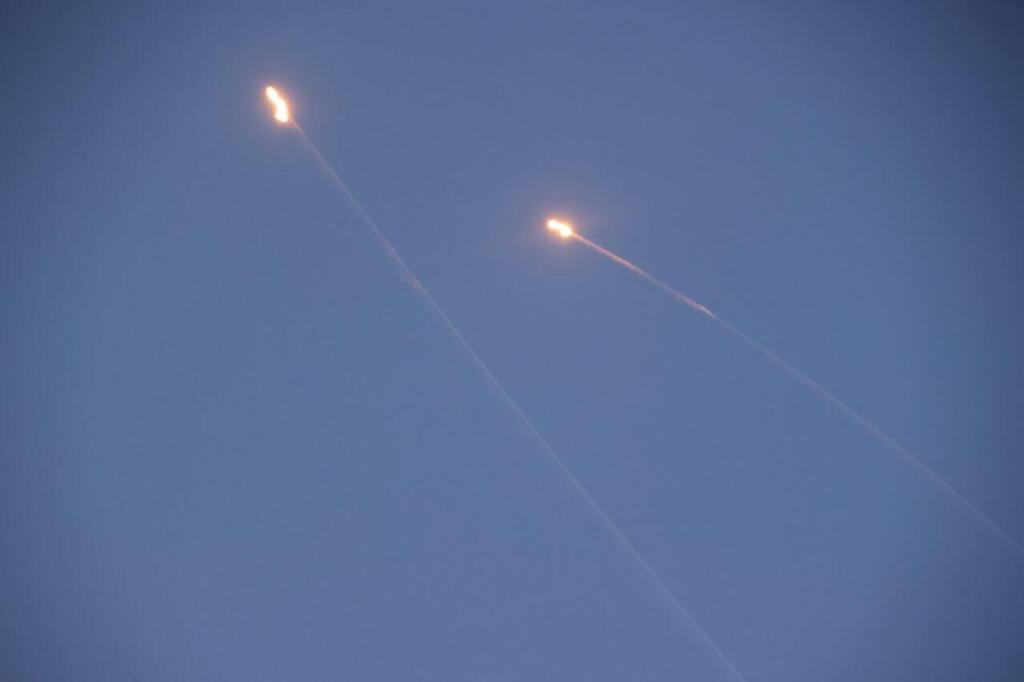
Interceptions over Tel Aviv
(Photo: Moti Kimchi)
Israeli officials say it may reflect an attempt to wear down the population through sustained alerts and disruption. At the same time, security officials are examining whether the limited scale points instead to cracks in Tehran’s command and control or difficulties in managing the campaign.
As missiles were fired toward Israel and the Gulf states, Israeli Air Force fighter jets and UAVs were hunting launchers and missiles in an effort to reduce the volume of fire as part of a broader push to establish air superiority over Iran.
Following the opening strike by the Israeli Air Force on Saturday, which included the killing of Iran’s Supreme Leader Ali Khamenei, the military launched what it described as a key phase of the campaign: a wide-ranging assault on surface-to-air missile batteries and hundreds of missile sites in western Iran.
About 200 fighter jets struck hundreds of targets, aiming to cripple Iran’s air defense and missile arrays. The objective, Israeli officials said, was to blunt Iran’s offensive capabilities and create operational breathing room for continued fighting.
In recent months, the Air Force intelligence directorate and Military Intelligence compiled thousands of targets linked to the Iranian regime, its air defense systems and missile forces. Many of those targets were hit in the opening hours of the operation Roaring Lion.
“At this stage, we are continuing flight operations targeting missile systems, launchers and surface-to-surface missile sites in western and central Iran,” the military said. “At the same time, we are strengthening our air superiority as we advance eastward.”
Over the past 24 hours, dozens if not hundreds of Iranian surface-to-surface missiles were launched at Israel. There were several direct impacts, the most severe in Tel Aviv, where a woman was killed in a direct hit.
Israel’s multilayered air defense system was deployed in a broad forward posture, integrating all available capabilities and operating in coordination with the U.S. The Air Force also intercepted dozens of Iranian drones using fighter jets, attack helicopters and the Iron Dome system.
Air Force officials described cooperation with the U.S. as strong in both offensive and defensive operations. “We are continuing according to plan,” an Air Force official said. “The Air Force commander is directing the operational timeline, and the missions are continuing.”