

On August 8, 2025, İlham Aliyev and Nikol Pashinyan stood in the White House and initialed the framework for peace between Azerbaijan and Armenia. One regional power was missing from the room: Turkey. For thirty years Washington has treated Ankara as its indispensable gateway to the South Caucasus, the senior partner that supposedly delivers Baku. That assumption is obsolete, and the August summit proved it.
The United States dealt with Azerbaijan directly and walked away with its biggest strategic win in the region in a generation. The lesson is not complicated. Azerbaijan, not Turkey, should be America’s anchor in the Caucasus.
On August 8, 2025, İlham Aliyev and Nikol Pashinyan stood in the White House and initialed the framework for peace between Azerbaijan and Armenia


Start with the partner Washington keeps deferring to. Turkey is no longer an ally in any meaningful sense. It is a competitor wearing NATO’s uniform. It bought Russia’s S-400 air-defense system over explicit American warnings, got itself expelled from the F-35 program and sanctioned under CAATSA, and never looked back. It held NATO’s enlargement hostage for two years, ransoming Sweden and Finland for concessions. It applied to join BRICS, the bloc built to break the West, while cashing the security guarantee of the alliance it sabotages.
Its president calls Hamas a “liberation group” of “mujahideen” and shelters the group’s operatives in Istanbul. It cut off all trade with Israel, an American partner, in the middle of a war. And its state media runs a relentless campaign of anti-Americanism that has trained its own public to name the United States as the enemy. This is the more dangerous adversary precisely because it operates under institutional cover. Russia is sanctioned. Iran is contained. Turkey sits inside the tent.
The alternative is no longer theoretical. At the summit in August, 2025 President Trump initialed the peace framework, waived the Section 907 restrictions on aid to Baku, and elevated the relationship to a formal strategic partnership. The centerpiece is the Trump Route for International Peace and Prosperity, a transit corridor across southern Armenia that American firms will develop for ninety-nine years, bypassing both Russia and Iran and wiring Azerbaijan to Europe without asking Moscow or Tehran for permission. Ankara was not in the room. Washington got the deal anyway.
The thaw underneath all of this is real and it is accelerating. Border demarcation has advanced. Connectivity talks are underway. The Zangezur question, once a casus belli, is now a shared opportunity.
Azerbaijan no longer needs Turkey as its shield in every exchange with Yerevan, and it is proving it can pursue its own interests without Ankara’s hand on its shoulder. Reward that maturity. Do not subordinate it to Turkey’s grievances about the Armenian border or genocide-recognition debates. And notice who is actually holding the region back.
Turkey keeps its own border with Armenia sealed and has announced it will not normalize until Baku is satisfied, conditioning its entire Armenia policy on Azerbaijan. Ankara is not the gateway. It is the roadblock.
Gallery
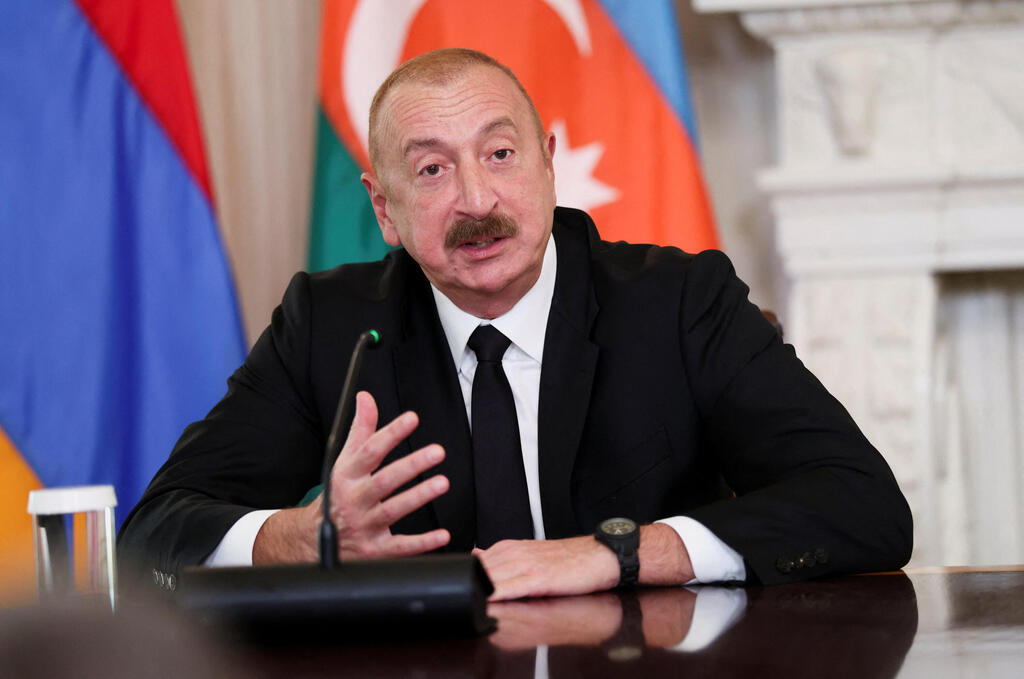
İlham Aliyev. Azerbaijan no longer needs Turkey as its shield in every exchange with Yerevan
(Photo: REUTERS/Kevin Lamarque)
Azerbaijan’s partnership with Israel is not opportunism. It is bedrock, and it is the clearest measure of how far Baku has drifted from Ankara. Israeli loitering munitions decided the Azerbaijan-Armenia 2020 war. The energy relationship has only deepened since.
Azerbaijan now supplies roughly 40 percent, and by some 2025 measures closer to half, of Israel’s crude oil, and its state company SOCAR has bought into Israeli gas fields and won exploration rights in Israeli waters. Here is the tell. When Erdoğan declared a total embargo on Israel, Baku kept its oil flowing to Israeli refineries through the Turkish port of Ceyhan, its tankers sailing on in defiance of Ankara’s ban. Turkey grandstands. Azerbaijan delivers.
Baku has also become a forward platform against Iran, with Israeli forces reportedly operating from Azerbaijani soil during the 2025 war with Tehran. That is the quiet, interest-based alignment Washington prizes. Ankara stopped offering it years ago.
And Baku is courting Washington in plain sight. Azerbaijan supplies Europe with gas under a deal to double exports by 2027. It anchors the Middle Corridor, the east-west trade route that lets Eurasian commerce skip Russia entirely. It runs a secular, business-friendly state. Its officials are tired of being cast as the junior partner in the Turkish orbit, and they no longer feel obliged to clear every move with Ankara.
They have said, repeatedly and on the record, that they want a deeper and more direct relationship with the United States. Washington should take yes for an answer.
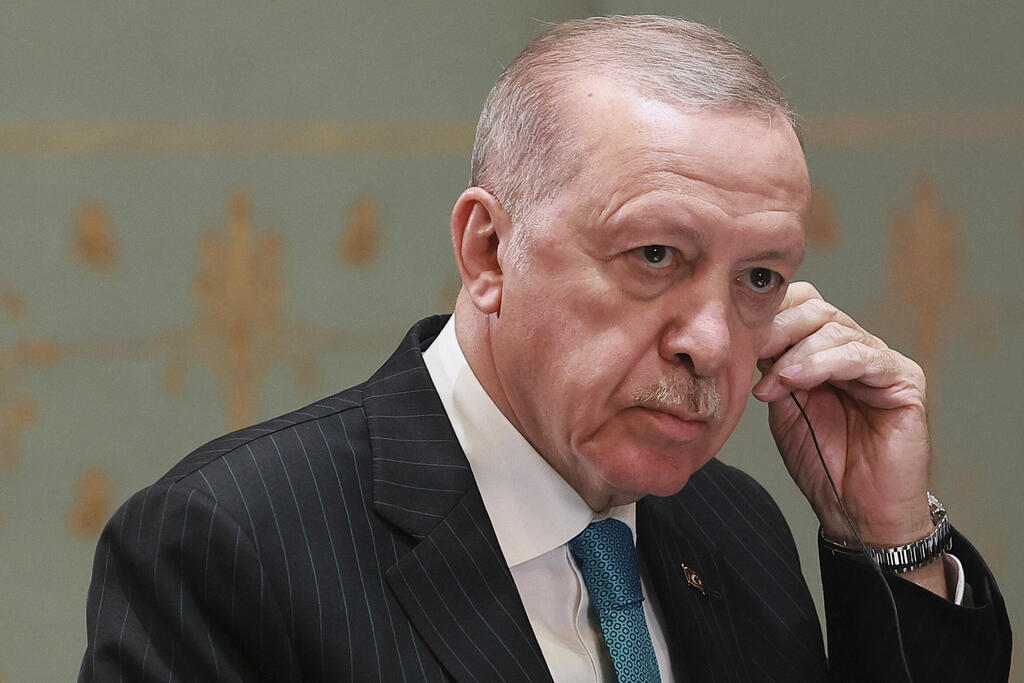
Recep Tayyip Erdogan. Turkey is no longer an ally in any meaningful sense
(Photo: Vladimir Smirnov, Sputnik, Kremlin Pool Photo/AP)
So move. Washington should convert the new strategic partnership into hard deliverables: codify the Strategic Partnership Charter, expand military training and interoperability, and lock in investment protections for American firms across Azerbaijan’s energy and critical-minerals sectors.
Treat Aliyev as a peer, not a supplicant. Endorse Azerbaijan openly as the western gateway to Central Asia through the Middle Corridor and the Trump Route. Tie a finalized Armenia-Azerbaijan peace to American economic engagement that flows straight to Baku and never through Turkish hands. And encourage Azerbaijan to diversify its partners, with one message made unmistakable: a closer embrace of Washington requires no permission slip from Ankara.
None of this requires a formal break with Turkey, which will remain a NATO member whatever Washington does. It requires ending the reflex that treats an obstructionist Ankara as the indispensable middleman in a region where Azerbaijan now holds the stronger hand and the cleaner alignment. Anchor American strategy in Baku and Washington gains a partner already aligned on the things that matter: containing Iran, breaking Europe’s dependence on Russian gas, and building an east-west corridor that routes around both. No S-400. No BRICS application. No Hamas office. Just a country that shows up.
The window opened on August 8. It will not stay open forever. Clinging to the Ankara-first hierarchy is not prudence. It is the surrender of a region America has just won. Elevate Azerbaijan, and the map of the Caucasus reorients toward Washington. Hesitate, and it drifts back toward the very powers America just outmaneuvered. The choice is that stark, and the clock is running.
Gregg Roman is executive director of the Middle East Forum, a nonprofit that promotes American interests and Western values in the Middle East, and a former Israeli Ministries of Foreign Affairs and Defense official.