


The images from the Aegean coast last week told a story that no press release could fully contain. Alongside the flags of fifty nations fluttering at Turkey's EFES-2026 military exercise near Izmir stood two that had never appeared at any foreign exercise before: Libya's and Syria's. For military analysts across the region, the symbolism was impossible to miss.
Turkey is no longer merely a NATO ally with regional ambitions. It is constructing something more deliberate and more dangerous: a military network that wraps around Israel's flanks, built on the rubble of two collapsed Arab states and cemented by Turkish guns, Turkish drones, and Turkish instructors.
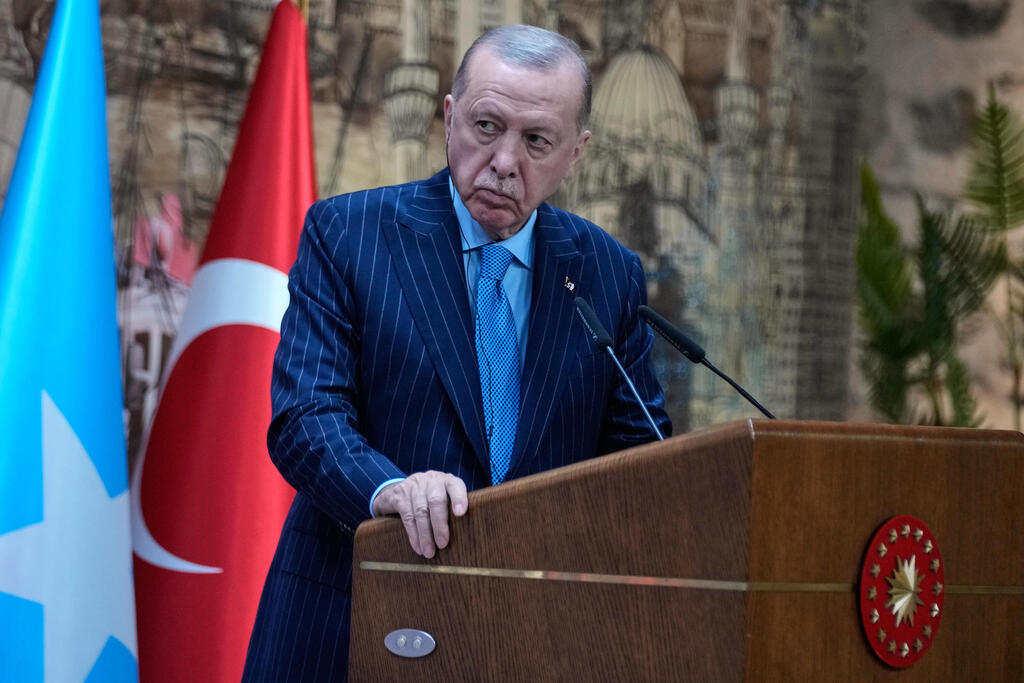
The mechanics of EFES-2026 were impressive on their own terms. More than 10,000 personnel from 50 nations gathered along the Aegean coast near Izmir for one of Turkey's largest combined and joint exercises to date. Turkey's unmanned systems took center stage, with the Bayraktar TB3 operating directly from TCG Anadolu, the country's light aircraft carrier, alongside the heavy-payload Bayraktar Akinci supporting joint operations. Turkey also showcased its Steel Dome integrated air and missile defense architecture, a layered system linking together multiple platforms designed to intercept threats ranging from cruise missiles to commercial drones. The exercise was a catalog of Turkish defense-industrial ambition translated into live firepower. But the hardware was almost beside the point. The guests were the story.
Libya deployed 502 troops, 331 from the country's eastern forces and 171 from the west, training side by side under a single Libyan flag. It was the first time the two rival factions had jointly deployed abroad. Turkish defense officials framed this as a concrete step toward Ankara's "One Libya, One Army" goal, a phrase that sounds like peacebuilding but functions as something else entirely: the absorption of a strategically positioned North African state into a Turkish-led military orbit. Libyan personnel received training in amphibious warfare, electronic warfare systems, mine and improvised explosive device operations, and special forces tactics. These are not the skills of reconstruction. They are the skills of projection.
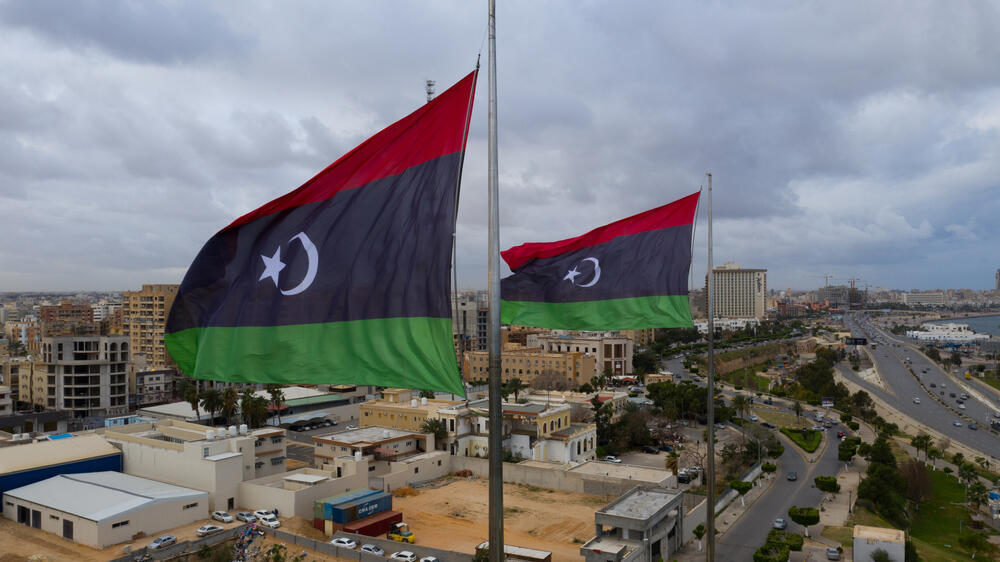
Libyan capital of Tripoli
(Photo: Hussein Eddeb / Shutterstock)
Syria's participation was smaller in numbers but larger in implication. Syrian army units took part in EFES-2026 in the first reported participation by Syria's reconstituted military in an exercise abroad since the fall of Bashar al-Assad's government in December 2024. Turkey and Syria had signed a defense cooperation memorandum in Ankara in August 2025, covering military training, consultancy, weapons systems, military equipment, and logistical support for Syria's new authorities. Defense experts had expected an increase in Turkey's role following Assad's collapse, from rebuilding the national armed forces to supplying Damascus with armored vehicles, drones, and air defense systems. EFES-2026 showed that the expectation has become reality.
Consider what this means geographically. Turkey now holds military advisory relationships with the government in Tripoli, has embedded itself as the patron of the new Syrian armed forces, and maintains a forward naval posture in the eastern Mediterranean through its 2019 maritime demarcation agreement with Libya. That agreement, which Greece, Egypt, and Israel regard as illegal, carves out an exclusive economic zone that cuts across some of the most contested hydrocarbon waters in the world. Ankara has been pushing for ratification of the agreement, and Israel, together with Greece and Egypt, views these moves as a direct threat to its energy sovereignty in the region. The military encirclement and the economic challenge are two faces of the same strategy.
Turkish Foreign Minister Hakan Fidan has done little to disguise where Ankara's attention is focused. In April, Fidan warned that Israeli attacks in Syria represent a major crisis hotspot directly threatening Turkish national security, and accused Prime Minister Benjamin Netanyahu of seeking to declare Turkey as his new enemy, stating that Israel cannot live without enemies after Iran. These are not the words of a country that views its regional expansion as a defensive matter. They are the words of a country that sees an opportunity in Israel's preoccupation with Gaza and Tehran and intends to exploit it.
Israel has been here before, in the sense that it has watched regional powers attempt to use failed and transitional states as platforms for pressure. Iran spent two decades doing exactly that with Lebanon and Syria. The difference with Turkey is structural. Iran operated through proxies, militias, and deniable channels. Turkey operates through defense ministries, signed memoranda, bilateral training programs, and the cover of NATO membership. Even before the current conflict, Ankara had imposed a full trade embargo on Israel, closed its airspace to Israeli aircraft, and a Turkish court had initiated criminal proceedings against Netanyahu and dozens of other Israeli officials over the interception of a flotilla in October 2025. This is state-to-state hostility wearing an institutional uniform.
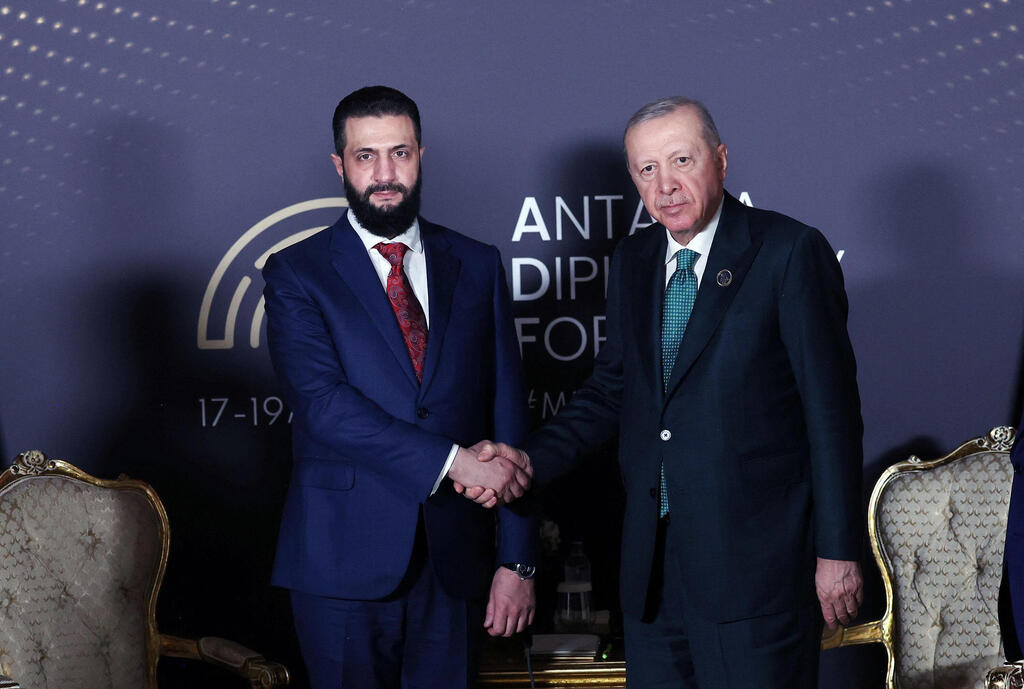
(Photo: AFP PHOTO / TURKISH PRESIDENTIAL PRESS SERVICE / HANDOUT)
The EFES exercise also illuminated how Turkey is using the legitimacy of multilateral formats to launder its geopolitical project. The participants at EFES-2026 included the United States, Germany, France, the United Kingdom, and dozens of other allies and partners. When Syrian soldiers train alongside American and German counterparts under the Turkish flag, Ankara gains something that Iranian proxy networks could never purchase: the optics of normality. The new Syrian army is not presented as a Turkish client force. It is presented as a partner in reconstruction, standing alongside NATO members, absorbing the same professional military culture. The absorption is real; the framing is theater.
Israel cannot afford to treat EFES-2026 as a footnote. The question of what the Syrian armed forces will look like in three years, who will have trained them, what equipment they will carry, and whose command culture they will have internalized is among the most consequential questions facing Israeli defense planners. Syria's participation in EFES marked the moment that integration formally began, placing its military inside the same multinational exercise framework as countries it had never trained alongside before. The clock on that process is now running.
Turkey's ambitions are not secret. Erdogan has stated them openly. The question is whether the rest of the region, and Israel in particular, will respond with equivalent strategic clarity, or whether the gradual consolidation of a Turkish-anchored military network from Tripoli to Damascus will be allowed to proceed until the architecture is too entrenched to reverse. The flags at Izmir were a message. The only real question is who was listening.
Amine Ayoub, a fellow at the Middle East Forum, is a policy analyst and writer based in Morocco. Follow him on X: @amineayoubx
First published: 18:17, 06.01.26