


Last weekend, multiple media outlets reported that unnamed sources within the IDF were inclined to accept Hamas’ casualty figures from Gaza. But who exactly were these sources? I repeatedly contacted the IDF Spokesperson’s Unit seeking a background briefing with someone involved. “That’s not our position,” I was told. They directed me instead to a statement by IDF Spokesperson to the Foreign Media Nadav Shoshani:
“The details published do not reflect the official data of the IDF. Any publication on this matter will be released formally and in an official manner.”
It wasn’t a denial. It wasn’t a rebuttal. It was, above all, an evasion.
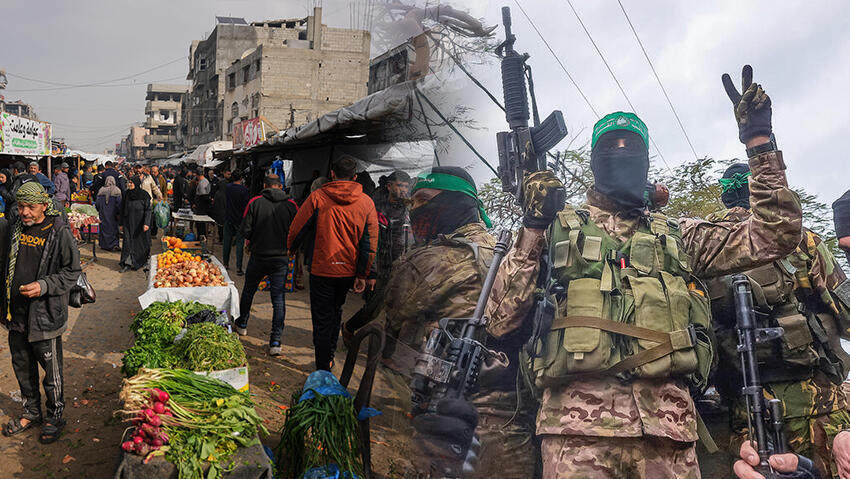
Numerous researchers have cast doubt on the reliability of Hamas’ numbers of dead in Gaza. Yet, as we know, those challenges are a drop in the ocean compared to the number of institutions that have adopted Hamas’ Health Ministry reports without question. “Fine,” many have said. “Let’s assume Hamas is publishing accurate data.”
But it's worth noting: these figures also include those who died of natural causes; those killed by rockets misfired by Gaza terror groups—including, according to Hamas itself, hundreds who died in the blast at al-Ahli Hospital, later confirmed to be the result of a failed Islamic Jihad launch; and likely, those executed by Hamas internally.
After all, the Hamas Health Ministry’s figures include no Hamas fighters and no deaths from natural causes. Are such numbers really credible?
And yet, even if we take the figures at face value, what do they show? That the majority of the dead are, in fact, men of combat age. The graphs doesn’t lie.
And where is the IDF in all of this? In the past, the IDF did release casualty estimates. This time it’s more complicated. Still, there’s nothing wrong with a credible official providing a formal IDF assessment—as long as they know what they’re talking about.
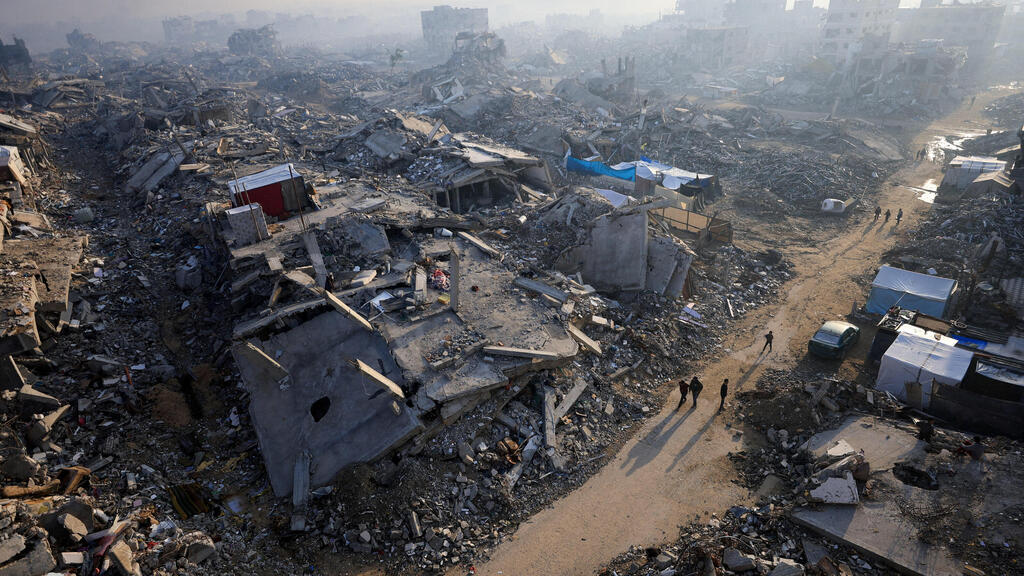
Destruction in Gaza City
(Photo: Dawoud Abu Alkas/Reuters)
In the meantime, others are doing what the IDF has not. For example, researcher Salo Aizenberg has conducted rigorous analyses of Hamas’ own published data. His findings—some of the most reliable in the field—appear to have gone unnoticed by those engaging with the issue.
A quick investigation reveals that, indeed, an IDF source did say something in a background briefing. But he wasn’t an authorized spokesperson. He wasn’t an expert on the matter. He didn’t intend for his words to be understood the way they were. And his comments were twisted and distorted.
But the damage? Enormous.
Israel’s detractors seized on the misstatement like treasure.
“Where can I go to get an apology,” wrote Mehdi Hasan, “from Mark Regev, Eylon Levy, John Spencer, Alan Dershowitz, Douglas Murray and Jonathan Conricus?”
Hasan is one of the most aggressive and influential anti-Israel propagandists—and now he’s celebrating. According to him, the IDF has confirmed his claims.
I looked far and wide, but found no one who was convinced by the IDF’s half-hearted clarification.
“For more than two years,” journalist Piers Morgan wrote, “most of my pro-Israel guests angrily denied Gaza Health Ministry casualty numbers as grossly inflated. Now, the IDF accepts them as accurate data.”
Morgan is not among Israel’s haters. On the contrary—he gives a platform to a wide range of voices. But even so, the damage is spreading.
The BBC, CNN, The Times, and others all ran headlines suggesting the IDF had confirmed Hamas’ casualty data. But we can hardly fault the global media when this entire fiasco stems from a misstep by an Israeli military source.
We may never know the precise number of deaths in Gaza. What matters far more is stating the truth: whether it’s a thousand or a hundred thousand, Hamas—and Hamas alone—is to blame.
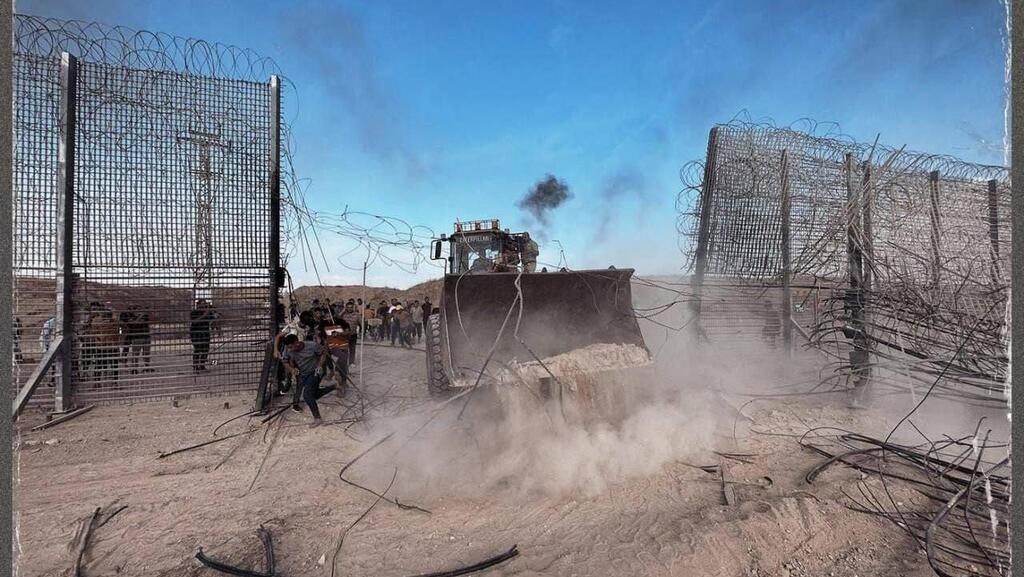
Hamas terrorists breach the border with Gaza on October 7
It is Hamas that for years incited genocide against Jews.
It is Hamas supporters who waved swastika flags.
It is Hamas leaders who proudly declared their use of women and children as human shields.
It is Hamas that launched a murderous rampage on October 7.
These are undeniable facts, and they must be repeated by every Israeli and non-Israeli, Jew and non-Jew, who values the truth.
But instead of making firm and factual statements, we find ourselves reeling from an offhand remark—a stone tossed into the sea by one irresponsible source that even a thousand wise men may not be able to retrieve.