


The stream of senior U.S. officials landing in Israel does not signal the arrival of lasting peace promised by President Donald Trump — nor the positive change in the Middle East that Prime Minister Benjamin Netanyahu has already claimed credit for. Instead, it reflects growing panic in Washington, where the administration is struggling to conclude Phase One of Trump’s 20-point Gaza plan. The U.S. lacks even the beginnings of a framework accepted by all parties, let alone a practical roadmap or funding for implementing Phase Two.
The panic stems from concerns that Netanyahu — as he did after the previous hostage deal this past winter — will seize on Hamas' stalling tactics and the broader implementation hurdles as justification to resume the war. Washington is well aware that members of Netanyahu’s government, and likely Netanyahu himself, believe Hamas can only be disarmed and Gaza demilitarized through an all-out military campaign in which the IDF decisively crushes the terror group. They see the current moment — after the release of all living hostages — as a rare opportunity to strike hard from air and land across the entire Gaza Strip, without risking Israeli lives, until Hamas fighters surrender.
Meeting between Prime Minister Benjamin Netanyahu and US Vice President JD Vance
(Video: Omer Miron/GPO)


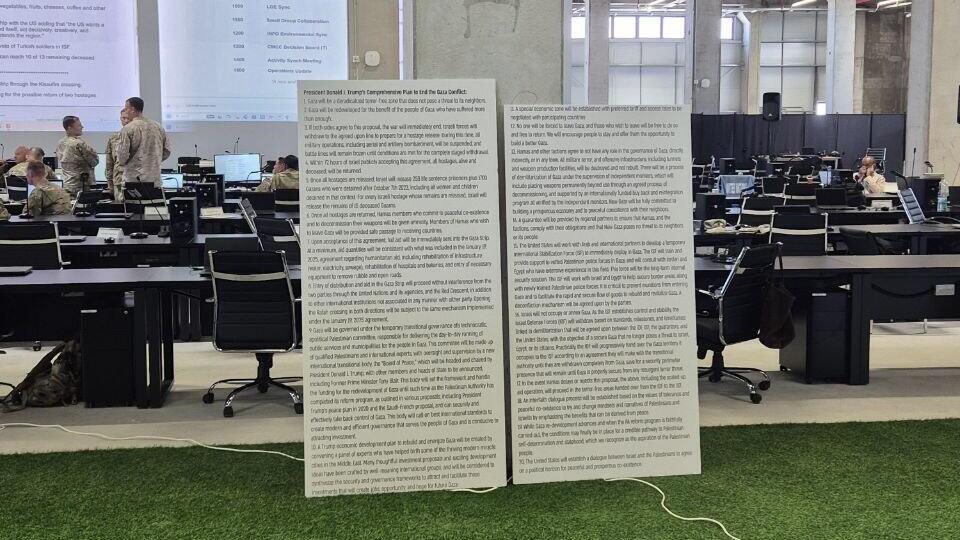
This is exactly what worries Qatar and Turkey, who now have Trump’s ear. According to sources familiar with the discussions, they’ve convinced him that if the cease-fire collapses, so too will his 20-point plan. At best, its implementation will be significantly delayed, diminishing his chances of reshaping the region and earning a Nobel Peace Prize.
Trump’s remedy to the panic has been creative, if somewhat crude: "Bibi-sitting" — a form of diplomatic babysitting involving a constant rotation of senior U.S. officials in Israel, whose physical presence is meant to deter Netanyahu from resuming hostilities or blocking humanitarian aid. Notably, this airlift of American envoys no longer includes Jared Kushner or Steve Witkoff, who are abroad seeking regional cooperation and unable to personally keep Netanyahu in check.
A U.S.-led international military monitoring mission, now based in the Israeli city of Kiryat Gat, is serving the same purpose. Its personnel are using surveillance to ensure that neither the IDF nor Hamas takes any action that could unravel the cease-fire. The Israeli government is begrudgingly accepting a situation in which its hands are tied by the U.S., effectively allowing Hamas to drag out Phase One by releasing the bodies of hostages in small increments.
Meanwhile, Hamas has been rapidly reasserting its civilian control and military presence in Gaza — reportedly carrying out brutal acts aimed at reestablishing dominance over the Strip’s two million residents by instilling fear. When the cease-fire began and videos surfaced showing Hamas operatives rampaging through the streets, Trump told reporters he didn’t object to the group maintaining order temporarily. But as Hamas itself released footage of mass executions, even the White House — and apparently the Qataris — realized the group had gone too far. For now, the public displays of brutality have significantly decreased.
The IDF must ask permission
Hamas now controls 43% of Gaza’s territory and a majority of its population. The Americans have designated this area, west of the “yellow line” where the IDF has withdrawn, as the “red zone.” Under rules set by U.S. officials in coordination with Israel’s top military brass, the IDF is prohibited from initiating high-intensity offensive operations in this zone. Soldiers are only permitted to open fire in self-defense if attacked. Any “exceptional offensive action” in this area must be reported — effectively, approved — through the established U.S.-Israeli coordination and oversight mechanism.
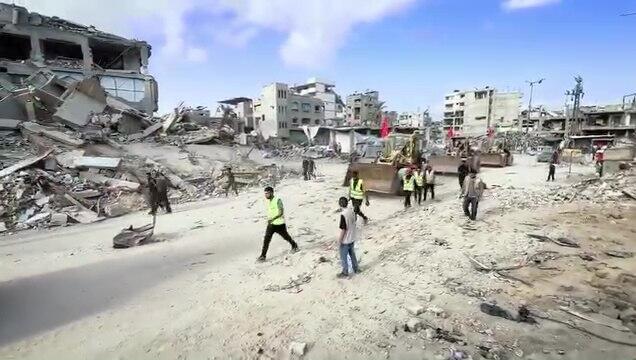
A Turkish tractor in the Gaza Strip
(Photo: IHH)
In contrast, the IDF fully controls 57% of the Strip, in areas east of the yellow line and in narrow zones to the north and south, which the Americans refer to as the “green zone.” These areas are now home to roughly 200,000 Gazans, including most of the clans, armed groups and criminal gangs opposed to Hamas.
Even during the cease-fire, the IDF is actively working in the green zone to expose and destroy tunnels and other terror infrastructure. Occasionally, troops encounter Hamas and Islamic Jihad cells trapped in the tunnels, who sometimes attack. The rules of engagement here are unequivocal: soldiers are authorized to shoot anyone who poses a threat, without requiring prior approval.
A major point of friction between the U.S. and Israel concerns Hamas’ slow release of the remains of deceased hostages. After receiving intelligence briefings from the IDF Chief of Staff and senior defense officials, U.S. Vice President JD Vance and his team were persuaded that Hamas is deliberately delaying the process. As a result, over the weekend, Washington gave Israel the green light to slow some humanitarian aid deliveries and to keep the Rafah crossing closed as leverage.
Despite the delays, both Jerusalem and Washington remain confident that Phase One of Trump’s 20-point plan will eventually be completed — albeit on a slower timeline than originally envisioned. But Phase Two? Whether it can even be implemented remains the great unknown, and it’s what most worries the White House.
According to Israeli and foreign sources, two major obstacles are stalling efforts by Steve Witkoff, Jared Kushner and CENTCOM commander Brad Cooper to advance the plan. The first is Hamas’ refusal to disarm and its insistence on maintaining a dominant presence in Gaza, even if behind the scenes. The second is Israel’s firm rejection of any Palestinian Authority involvement in postwar governance or policing — despite plans to train PA security forces in Jordan and Egypt with U.S. support.
The demilitarization dilemma
Although Hamas formally agreed to the 20-point plan — which includes a demand to demilitarize Gaza — the group now proposes a creative alternative: it would surrender only its heavy offensive weapons (rockets, anti-tank missiles and drones), but retain “self-defense” arms. That includes Kalashnikov and M16 rifles, RPGs and explosive devices. In fact, Hamas is already collecting thousands of unexploded Israeli munitions across the Strip to harvest explosives for makeshift bombs.
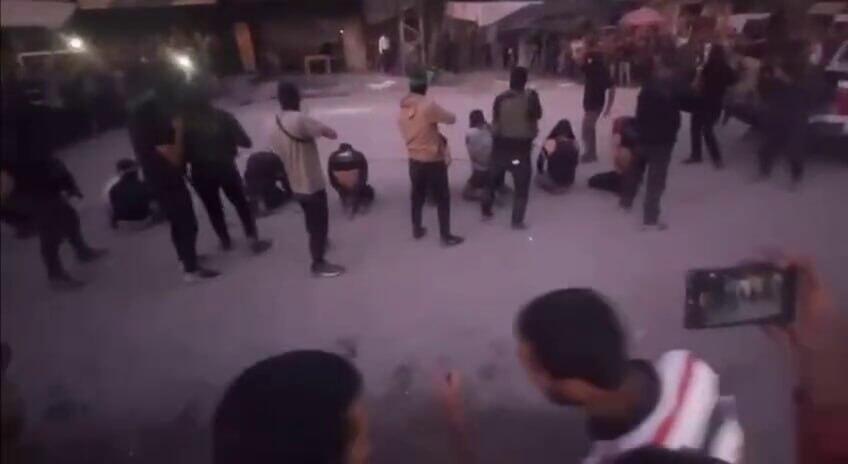
Executions in Gaza; Hamas reestablishes its rule through fear
The implications are twofold: Hamas could continue to rule Gaza by force, much like Hezbollah in Lebanon, and could also resume guerrilla warfare against Israel.
The group’s second condition is that it will completely disarm only if its weapons are handed over to a future Palestinian state — if and when one is established. This demand, reportedly supported by Qatar, Turkey and possibly Egypt, would mean a symbolic disarmament, with remaining heavy weapons (most of which were destroyed in the war) transferred to a friendly Arab entity.
This is why many Muslim countries that once pledged to contribute troops to a planned multinational stabilization force in Gaza are now backtracking or stalling when approached by the U.S. They fear their soldiers will end up fighting Hamas or getting caught in Israeli airstrikes targeting the group’s resurgence.
At the same time, the United Arab Emirates and Saudi Arabia refuse to invest the tens of billions they pledged for Gaza’s reconstruction as long as Hamas — even lightly armed — remains in the Strip. They worry that renewed Hamas attacks could provoke another Israeli offensive and destroy their investments — again.
Resistance to PA involvement
Prime Minister Benjamin Netanyahu and his right-wing government fear that the return of Palestinian Authority officials to Gaza would be a practical first step toward establishing a Palestinian state in the Strip and significant parts of the West Bank. To appease Trump, Israel says it agrees to the idea of PA involvement in Gaza’s governance — but only after the PA undergoes sweeping reforms, including eradicating corruption, halting payments to terrorists and ending incitement against Israel in its education system. For Netanyahu, these are red lines.
In Jerusalem, officials are confident — some say certain — that such reforms will never happen, making it easy to offer theoretical support. However, both Saudi Arabia and the UAE insist they will not get involved in Gaza without the legitimacy that comes from PA participation. In other words, the PA must be part of the governing body that replaces Hamas.
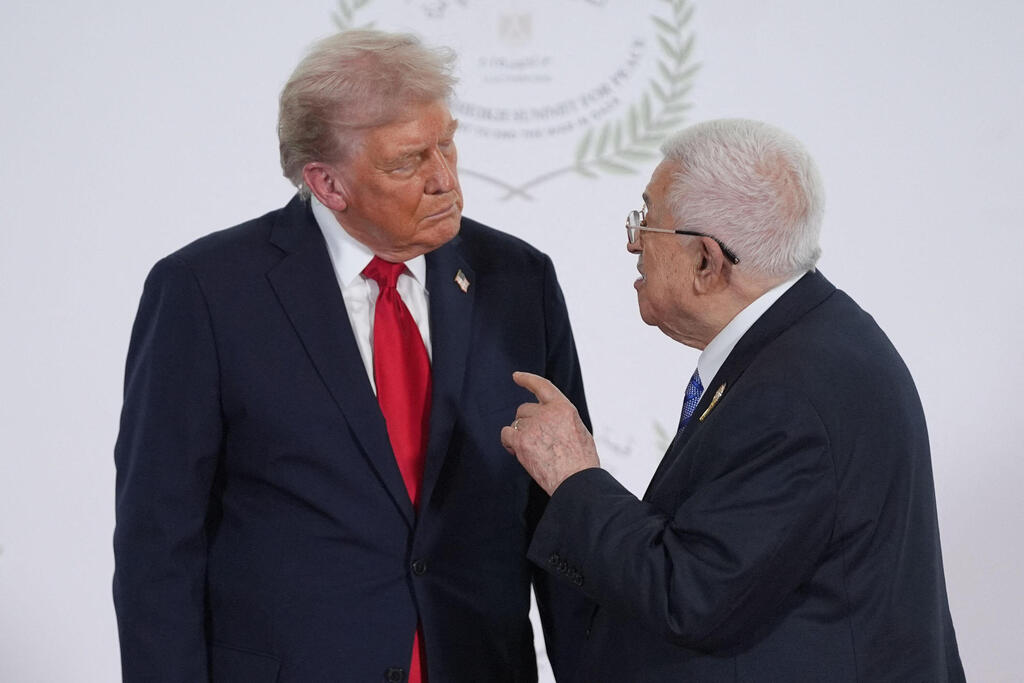
Mahmoud Abbas with Donald Trump
(Photo: Evan Vucci / POOL / AFP)
Qatar and Turkey, on the other hand, are willing to join the multinational stabilization force and profit from reconstruction contracts without demanding PA involvement. But Israel opposes any military or civilian presence from these two nations, which are ideologically aligned with the Muslim Brotherhood and long-time Hamas supporters. Security officials warn that the greater their involvement, the easier it will be for Hamas and Islamic Jihad to rebuild military infrastructure and tunnel networks under the guise of reconstruction.
These two obstacles are already making Phase Two of Trump’s plan look nearly unworkable — and they’re not the only ones. The proposed multinational stabilization force itself faces serious political and logistical challenges. Key questions remain unanswered: What will its legal mandate be? Will it be empowered to disarm Hamas or enforce demilitarization? Will it be allowed to use force? Where will it deploy after the IDF withdraws? And what will Israel be allowed to do if Hamas resumes guerrilla attacks?
Government in limbo
Another unresolved issue is Egypt’s effort to form a “Palestinian technocratic government” — supposedly excluding both Hamas and the PA, in line with Israeli demands. However, the list of names announced by Egypt’s foreign minister includes individuals approved by Hamas, and many are expected to serve the group’s interests, much like Hezbollah-affiliated ministers in Lebanon’s government. Egypt has yet to reconcile Hamas and Fatah to enable the formation of such a government, despite Israel’s objections.
Additional questions still lack answers: Who will finance and carry out reconstruction work, given that 76% of buildings in Gaza are either destroyed or uninhabitable? Where will displaced Gazans be housed in the meantime? Jared Kushner has proposed starting reconstruction in the “green zone” — the areas currently controlled by the IDF — but what happens if the multinational force and technocratic government are eventually established, forcing an Israeli withdrawal?
At present, no one has concrete answers to these pressing questions. For now, the White House is expected to continue pressuring Netanyahu not to resume fighting, while pursuing negotiations — directly or through mediators — with Hamas on demilitarization and other key components of Phase Two.
If a compromise is reached between the U.S., Hamas and mediators, it will likely come at Israel’s expense. If no deal is made, fighting could resume — and with it, the risk that Trump loses interest in the issue, or worse, turns against Israel. That could jeopardize not only military aid, but what little international legitimacy Israel still retains.
Still, Israel has leverage the U.S. recognizes: Jerusalem is conditioning Gaza’s reconstruction on a framework that addresses its security and diplomatic needs. All is not lost — but to change the current bleak outlook, bold action is needed. Netanyahu, even in an election year, could agree to openly involve the Palestinian Authority in Gaza’s civilian and security administration, in exchange for maintaining Israel’s operational freedom — similar to its current latitude in southern Lebanon. Such an arrangement could restore support from key Sunni states while sidelining Qatar and Turkey.