

About six months before the election, Prime Minister Benjamin Netanyahu’s biggest problem may not be rival parties, but his own political home.
While opposition parties are trying to form alliances, frustration is growing inside Likud. Party activists say that unless something dramatic happens — meaning at least one more war that ends in a clear victory — Likud’s position could be far worse than polls suggest.
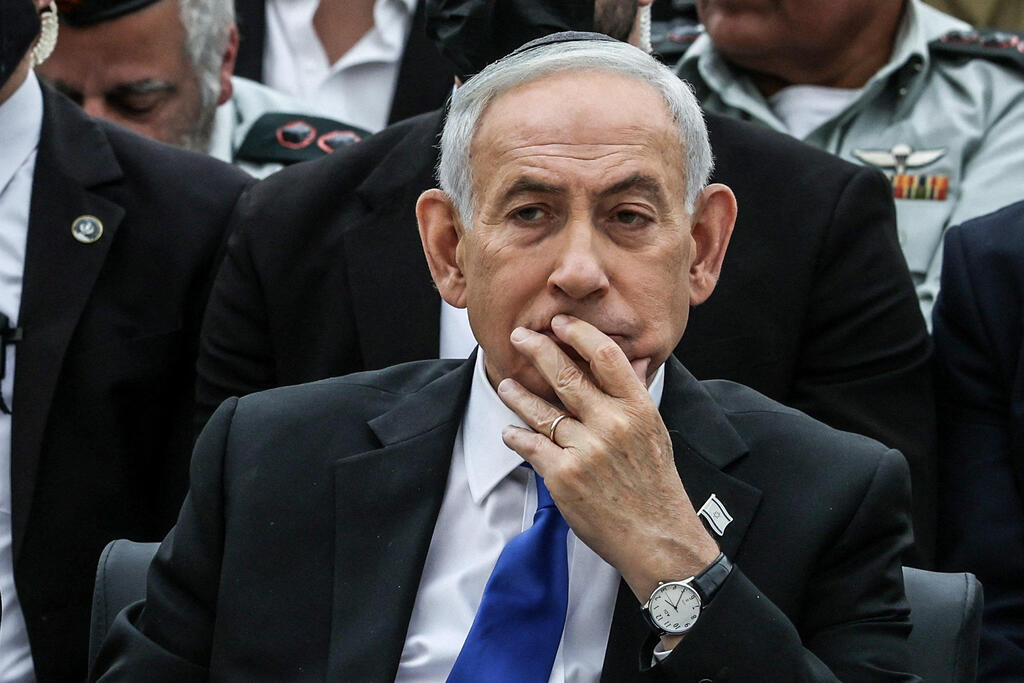
(Photo: ILIA YEFIMOVICH/Pool via REUTERS)
These are no longer just opposition figures or hostile media voices. They are people from within Likud who see a broader breakdown: rising crime, almost no police presence on the streets, the failure of the formal education system and, above all, deadlock on three fronts.
The promise of “total victory” has turned into a longing for any victory at all.
“If this is what Netanyahu brings to the election — three open fronts — he won’t get my vote,” one longtime Netanyahu supporter said this week.
Whether that actually happens remains to be seen. Likud voters have torn up membership cards in front of cameras before elections, only to later admit they voted for the party. But even those who still support Netanyahu’s leadership acknowledge there is little excitement on the ground.
There is no “wow,” one senior Likud figure said, though he insisted there is also no real criticism or frustration.
Still, those arguing that Israel has not achieved a decisive outcome on any front have a point: Hamas still controls half of Gaza, Hezbollah continues to strike while Israel is constrained by the U.S. president, and Iran is celebrating what it sees as a complete victory.
Operational fatigue is showing in the destruction of religious symbols and looting, settler violence in the West Bank, exhausted soldiers, the emerging draft-exemption law and a government that is not enforcing High Court rulings on denying economic benefits to the ultra-Orthodox.
Two and a half years have passed since Netanyahu promised victory. There is still no victory. Judging by Trump’s recent contacts, Israel may not achieve even one of its goals.
What achievements does Netanyahu plan to take into the election?
“I don’t recognize phenomena like frustration or abandonment,” the senior Likud official said. “Naturally, people are under pressure because the Knesset slate is very crowded.”
He was referring to the same slate in which Netanyahu wants to reserve 10 spots, while Likud members are tearing their hair out.
While Gadi Eisenkot is bringing in the most popular political recruit of the season — former Shin Bet chief Yoram Cohen — Netanyahu wants to shorten the required waiting period for Hadar Muchtar and allow her to run in Likud primaries.
One of the leading opponents is Tally Gotliv, who accused Muchtar of lying during a previous Knesset run and said there is “no forgiveness” for that kind of lie. This comes from the same lawmaker who exposed the name of protest leader Shikma Bressler’s partner, a Shin Bet officer, and accused him of speaking with Yahya Sinwar before Oct. 7.
In any case, the number of reserved spots will likely be decided in a compromise between Netanyahu and Haim Katz, the chairman of the Likud Central Committee. Katz has no interest in expanding the reservations too much because he is fighting for his own political survival.
After Naftali Bennett and Yair Lapid held a joint news conference, it was Avigdor Lieberman’s turn.
Those who think Lieberman’s main goal is becoming prime minister are wrong. “First of all, replacing the government,” he says explicitly. What he does not say is that he would be willing to make personal concessions — another way of saying he would put his ego aside.
Lieberman is discussing possible alliances with other parties and says he is in close contact with Eisenkot.
“We will check whether a merger between us brings even one additional seat,” he said.
And then what — who is No. 1? Lieberman cut the question off.
“We know how to work things out with each other,” he said. “But you make such a move 50 days before an election, not 150 days before and wear it down.”
He did not hide his criticism of the Bennett-Lapid move.
“I didn’t understand the urgency,” he said. “Everyone must act according to a bloc strategy.”
Was he included in it?
“Yes,” he said, “two minutes after it was published.”
“Even if the world turns upside down, I will not sit with Netanyahu,” Lieberman said at his news conference. But he also will not sit with the ultra-Orthodox parties.
In a conversation, he called Bezalel Smotrich “crazy,” citing past comments that Hamas was an asset, that as a minister in the Defense Ministry he did not know before Oct. 7 what Nukhba was, and that he recently said a government with Mansour Abbas was far worse than the massacre, which he called “a terrible failure but a tactical failure.”
“We need to prepare a booklet of Smotrich quotes,” Lieberman said.
Eisenkot received another interesting appeal Thursday. At the annual conference of the Berl Katznelson Foundation, Yair Golan called on him to join the Bennett-Lapid alliance, or Golan’s Democrats party, and not split the bloc.
“Victory in the election and saving the country,” Golan said, “depend on our ability to stand stronger.”
The one not receiving such respect is Benny Gantz.
This week, two more of the people closest to him left: Chili Tropper and Eitan Ginzburg. Together with Eisenkot, that makes three former protégés, people Gantz placed at the front of the stage. When he joined Netanyahu’s emergency government, he brought Eisenkot and Tropper in as ministers on his behalf.
When the people closest to you leave, there is no comeback. The patient is dead, as people once said.
Despite all the criticism of Gantz, it is sad to watch this total collapse, perhaps because Gantz is still considered a good man. Seeing him in politics remains immeasurably preferable to seeing figures such as Shlomo Karhi, Gotliv, Levin and Amir Ohana.
There is also concern over what he may still do. Will he remain a stubborn candidate whose refusal to quit costs the entire camp, or will he come to his senses at the last moment and withdraw?
Gantz is certain he will rise again, as he once did before. But what was tragedy the first time becomes farce the second.
When one of the leaders of the change camp was asked what they would do, he said: “Leave it to me. I’ll take care of him.”
That is another reason to worry.