

It is still too early to assess how the succession struggle in Iran will unfold following the assassination of Supreme Leader Ali Khamenei. His death could spark political and ideological battles and affect the balance of power among the various centers of authority in the Islamic Republic. What is already clear, however, is that removing Khamenei from the stage after 37 years in power — although a significant intelligence and operational achievement — is only the first and relatively simple step toward bringing about a fundamental change in the Islamic Republic and laying the groundwork for a transition to an alternative governing model.
Since the Islamic Revolution, Iran’s political system has been characterized by complexity stemming from the existence of two parallel political systems: the republican system, which includes a series of institutions elected by the public — foremost among them the president and parliament (Majles) — that are meant to express the sovereignty of the people; and the revolutionary-Islamic system, which includes a series of institutions established after the revolution that are not elected by the public.
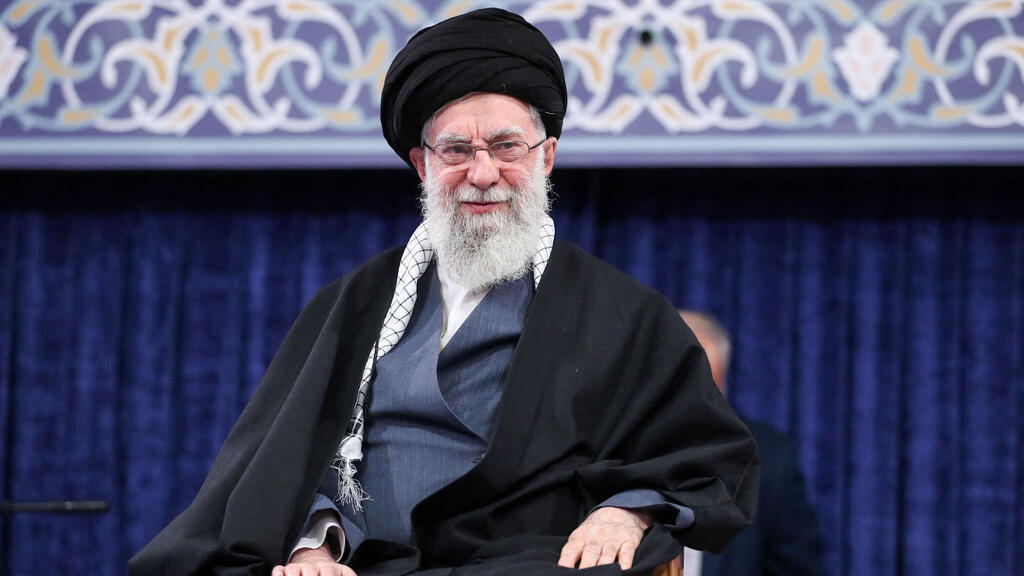
In the tension between the elected political institutions and the unelected bodies, the clear superiority of the latter has stood out since the revolution, led by the supreme leader, who serves as head of state and concentrates most governing authority in his hands.
However, unlike totalitarian regimes such as Iraq under Saddam Hussein or Syria under the Assad dynasty, the influence of Iran’s supreme leader is usually not expressed through direct involvement in day-to-day governance, but rather through the use of the institutions and power centers under his authority to enforce his strategy. Although no central decisions can be made without his consent, he does not make national-level decisions on his own.
Alongside the leader operate several bodies that assist him in exercising his authority, including the Guardian Council, a 12-member body empowered to disqualify legislation and vet candidates for elected institutions. There is also the Expediency Discernment Council, which among other roles serves as an advisory body to the leader on matters related to state governance.
Announcement on Iranian television of death of Khameini


Since his appointment, Khamenei worked to impose his authority over the religious establishment. By virtue of his position, he operated an extensive patronage system through the appointment of clerics to positions in governing bodies and numerous oversight mechanisms at all levels and across all regions of the country. Among other measures, he appointed thousands of personal representatives in government ministries and agencies, as well as in religious, educational and cultural institutions, who function as a kind of “religious commissars.” Together with Friday prayer leaders in mosques — also appointed by the leader — they form a broad supervisory network that enables him to enforce his authority, maintain control and ensure implementation of his policies nationwide.
Khamenei also consolidated his control through Iran’s charitable foundations, known as bonyads. These foundations were established primarily in the early phase of regime consolidation after the revolution and assumed responsibility for advancing its goals in various fields. Some of these bodies, which centralized property confiscated from figures associated with the previous regime as well as assets of wealthy individuals who fled Iran, became centers of political and economic power and an important instrument of social oversight. Their significance derives from their substantial control over major sectors of the Iranian economy and their transformation into an extensive patronage network under the leader’s authority. These institutions enjoy large budgets, are often granted tax exemptions and are not subject to parliamentary or financial oversight.
For his routine work, Khamenei relied on his office, which effectively serves as his executive arm. Since becoming leader, he expanded the status, size and power of his office and turned it into an institution combining a traditional organization — used by senior clerics to collect religious taxes, respond to citizens’ inquiries and needs, and handle matters related to their religious students — with a modern bureaucratic body.
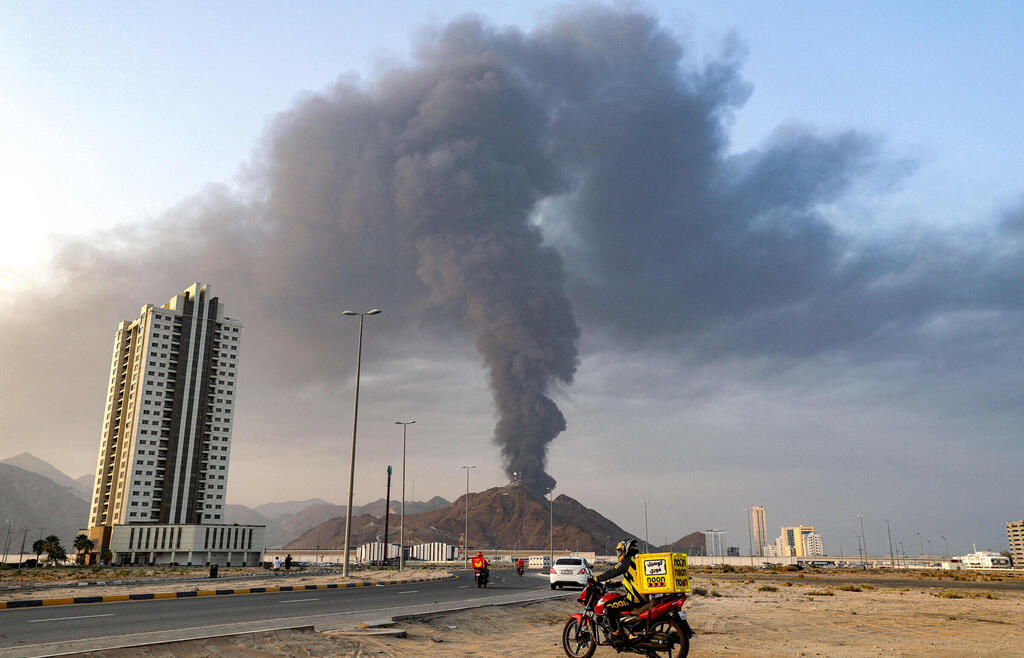
(Photo: Fadel Senna/ AFP)
The supreme leader’s control over state institutions is also enabled by institutional duplication among different power centers that compete with one another to influence decision-making. This duplication is a prominent feature of the political system and allows the leader to encourage competition among various bodies with overlapping responsibilities, interest groups and formal and informal circles of influence. For example, the armed forces are characterized by duplication and a certain degree of overlap between the regular army and the Islamic Revolutionary Guard Corps, even though both are directly subordinate to the leader. Iran’s intelligence apparatus is also marked by power struggles, primarily between the IRGC Intelligence Organization, which answers to the supreme leader, and the Intelligence Ministry, which is subordinate to the president.
Within the framework of the “deep state,” special importance is attributed to the Islamic Revolutionary Guard Corps. Established a few months after the Islamic Revolution, its central mission was to defend the new regime. Over the years, however, the organization has accumulated significant power. In addition to its senior status as a military organization, the IRGC developed political and economic clout. It expanded its economic activity primarily through its construction conglomerate, Khatam al-Anbiya. Since its establishment after the Iran-Iraq War in the 1980s, hundreds of major economic projects have been entrusted to the conglomerate, which today employs thousands of companies and contractors and more than 150,000 workers. The conglomerate represents the “spearhead” of the IRGC’s economic involvement, with its personnel controlling a central share of the Iranian economy.
 Raz Zimmt
The IRGC is also responsible for the Basij militia, a volunteer force that assists in law enforcement, Islamic indoctrination, promotion of economic development projects and emergency response. Its broad geographic deployment across all of Iran’s provinces and its deep penetration into various social sectors — including women, students and teachers — have made it a significant mechanism of oversight and repression for the regime in both routine and emergency situations.
In sum, Khamenei’s death constitutes a profound shock to the Islamic Republic and may lay the groundwork for undermining the regime’s foundations. At the same time, the Iranian system has, over 47 years, evolved into an institutionalized and organized structure designed to function even in times of crisis, including leadership transitions. Therefore, any significant political shift — and certainly regime change — would require dismantling a deep state-bureaucratic system that relies on hundreds of thousands of individuals. This task may prove in the coming weeks and months to be far more complex to implement than the elimination of the leader himself.
Dr. Raz Zimmt is director of the Iran and Shiite Axis Program at the Institute for National Security Studies