


There is an irony buried inside the photographs of Egyptian Foreign Minister Badr Abdelatty sitting across from his Syrian counterpart Asaad al-Shaibani in Cairo this weekend so glaring that most regional commentary has carefully avoided naming it.
Abdel Fattah el-Sisi built his entire political identity on a single foundational premise: that political Islam in power is an existential threat to the Arab state system. He came to power in 2013 by dismantling the Muslim Brotherhood government of Mohamed Morsi, designated that organization a terrorist entity, imprisoned or killed thousands of its members, and made counter-Islamism the organizing principle of every foreign policy decision he has taken since.
Ahmed al-Sharaa, the man Sisi effectively endorsed when he exchanged warm pleasantries with him on the sidelines of a Cyprus summit last week, spent years leading Hayat Tahrir al-Sham, an organization that grew directly from al-Qaida's Syrian franchise. Born in Riyadh in 1982, he founded Jabhat al-Nusra as an al-Qaida affiliate, formally broke with the organization in 2016, and rebranded through successive iterations until landing on HTS in 2017. He remained on the United Nations sanctions list until January 2025. Washington only removed his name from terrorism designations after his government was already a fait accompli on the ground.
And yet here is Cairo, signing gas supply memoranda with Damascus, constituting a joint business council, and dispatching its foreign and industry ministers together to formalize the embrace.
To call this pragmatism is too generous. What it actually represents is a test case for what scholars of political Islam are beginning to call "post-Islamism," the open question of whether movements rooted in jihadist ideology can genuinely transform into nationalist governing entities, or whether they adopt pragmatism tactically to reach and consolidate power before reverting. Sisi, of all people, has decided to bet on the former. Not from conviction. From fear of being left behind.
Since Assad's government collapsed in December 2024, the competition to shape post-Assad Syria moved at a pace that left Cairo visibly and embarrassingly behind. Turkey, which backed the rebel factions that ultimately drove Assad out through deep intelligence coordination, arrived with existing relationships and leverage. Qatar brought financial firepower. The Gulf states moved quickly to stake economic claims. Cairo watched all of this while still processing its own anxieties about foreign fighters embedded within the new Syrian security structures, individuals whose networks extend toward Libya and Sinai.

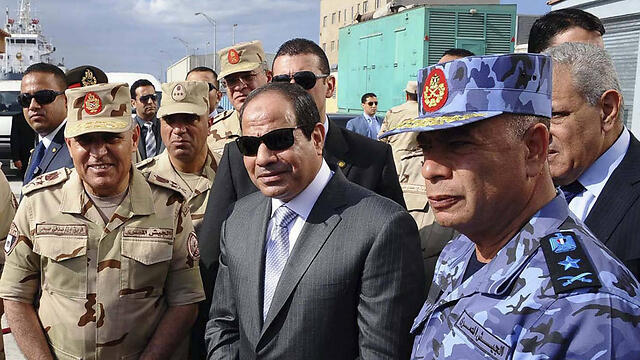
Syrian Assad army corps
(Photo: AP)
Reports indicate that secret security consultations between Cairo and Damascus preceded the ministerial meetings by weeks, an unusual sequencing that reveals Egypt conducting quiet due diligence before committing political capital.
What Egypt wants from Syria is specific and material. It wants reconstruction contracts for Egyptian engineering companies that desperately need foreign markets as the domestic economy strains under debt and currency pressure. It wants the gas supply arrangement to function as regional infrastructure leverage. The joint business council announced simultaneously with Sunday's ministerial meeting, constituted on the Syrian side under Ghassan Karim and enabled by the gradual unwinding of Caesar Act sanctions, signals that Cairo insisted on economic substance alongside the diplomatic symbolism.
What Egypt is offering Damascus in return is something more intangible but genuinely valuable: the legitimacy of the Arab world's most populous state, extended by a leader whose counter-Islamist credentials are unimpeachable. If Sisi can do business with al-Sharaa, the regional argument goes, then the jihadist question is settled.
It is not settled. Assad's collapse simultaneously destroyed Iran's "Shia Crescent," severing Hezbollah's overland supply routes and leaving Tehran in its worst strategic crisis since the Iran-Iraq war. Al-Sharaa understands that any opening toward Iran ends his international legitimacy and invites Israeli military action. This structural reality is doing more to moderate Damascus than any genuine ideological conversion. Israel continues striking inside Syrian territory precisely because the new government cannot assert meaningful sovereignty over its own borders, a fact Cairo declines to name publicly while simultaneously condemning Israeli violations of Syrian sovereignty in its official statements.
(Photo: Reuters)
The economic incentives running through this relationship deserve sober scrutiny from Western capitals. The gas arrangements, the business council, the reconstruction contracts being discussed: all of these create material dependencies that will make it progressively harder for Egypt, the Gulf states, and eventually Europe to apply meaningful pressure on Damascus if al-Sharaa's government reverts toward repression or radicalism. Engagement is being structured in ways that reward the current performance of moderation without locking in its permanence.
Al-Sharaa is being asked, in effect, to permanently kill the jihadist commander he once was in exchange for economic survival and international legitimacy. Whether that transaction is genuinely possible, whether the transformation is structural or theatrical, is the question on which Egypt's entire gamble rests.
Sisi knows this better than anyone. He spent a decade building a career on the answer.
He is betting the other way now anyway. And calling it diplomacy.
- Amine Ayoub, a fellow at the Middle East Forum, is a policy analyst and writer based in Morocco.
First published: 20:16, 05.04.26