


The temporary halt in hostilities was marketed to the international community as a necessary window for diplomatic engagement. In reality, the Islamic Republic of Iran utilized this strategic reprieve to establish an unprecedented maritime extortion racket.
On Thursday, senior parliamentary officials in Tehran confirmed the successful collection of their initial revenues derived from newly imposed transit fees in the Strait of Hormuz. This brazen declaration coincided with a complete cessation of traffic through the critical waterway, an outcome prompted by Iranian Revolutionary Guard Corps gunboats assaulting three commercial vessels and seizing at least two of them.
Iranian forces seize to vessels in Strait of Hormuz


Amidst the gunfire and illicit banking transactions, Tehran achieved a historical first. The regime transformed a vital international maritime corridor into a highly lucrative, state-sponsored enterprise.
The financial scale and sophistication of this operation represent a massive strategic challenge. Recent intelligence and financial tracking reports indicate that the regime is extorting up to two million dollars per transiting vessel.
To entirely bypass the Western banking apparatus and nullify international sanctions, the Islamic Republic mandates payment in cryptocurrency, specifically bitcoin, or Chinese yuan.
Should maritime traffic return to pre-escalation volumes, conservative analytical models suggest this illicit toll system could enrich the regime by twenty million dollars daily from oil tankers alone.
The procedural hurdles imposed on global shipping are equally draconian. Operators must initiate contact with intermediaries linked directly to the IRGC. They are required to surrender comprehensive cargo manifests, complete crew registries, and detailed transponder histories. Crucially, they must demonstrate absolute dissociation from the United States and Israel. Vessels surviving this vetting process are granted an Iranian naval escort. Those failing to comply face immediate expulsion or kinetic military action.
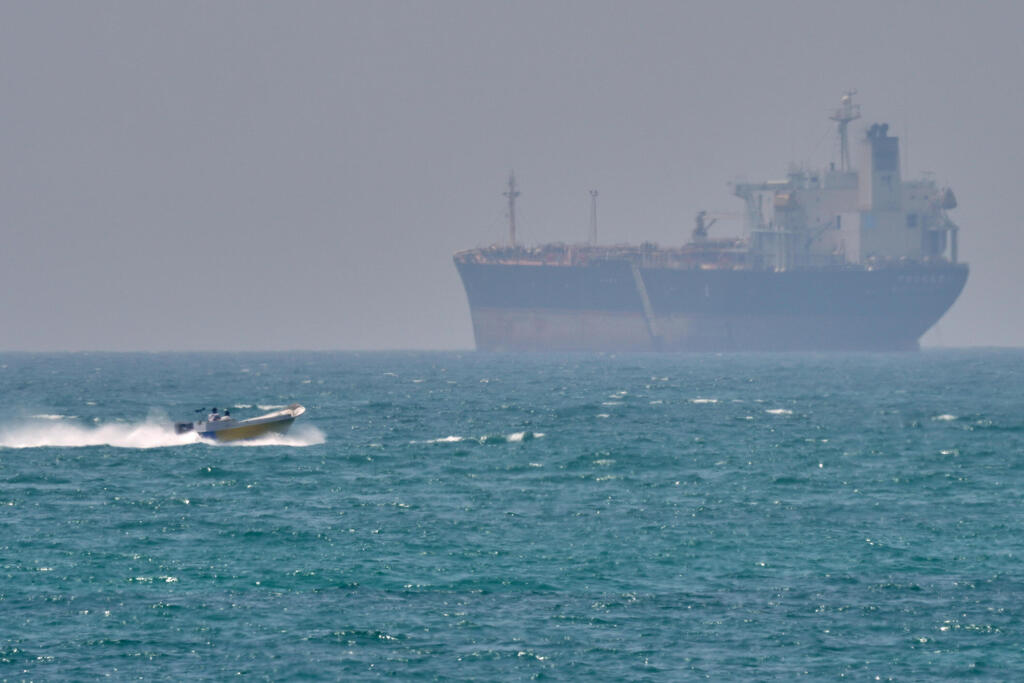
The Strait of Hormuz
(Photo: AP Photo/Asghar Besharati)
This extortion is not applied uniformly, revealing a calculated geopolitical strategy. The Iranian parliament officially institutionalized this racket in late March under the guise of the Strait of Hormuz Management Plan.
The legislation mandates a strict five-tier nationality ranking system. Nations demonstrating political alignment with Tehran enjoy heavily reduced tariffs. Adversarial states are barred completely.
The geopolitical implications are starkly evident in the exemptions. China has enjoyed unfettered and cost-free transit since the earliest days of the conflict. Meanwhile, Gulf Arab nations find their state oil conglomerates forced to forfeit a portion of their revenues to the IRGC for every single barrel exported from their ports. The global maritime industry, having already endured a ninety percent reduction in strait traffic prior to the ceasefire, must now navigate an IRGC surcharge payable via digital wallets.
Perhaps the most alarming aspect of this crisis is the official reaction from Washington. When questioned regarding the seizure of the commercial ships, White House press secretary Karoline Leavitt delivered a surprisingly blunt assessment. She stated that the current administration does not view the attacks as a violation of the ceasefire explicitly because the targeted vessels did not belong to the United States or Israel. They were flagged to Greece, Panama and Liberia.
This narrow interpretation of deterrence effectively signals that Tehran possesses carte blanche to terrorize the global merchant fleet, provided they avoid specific flags. Despite previous rhetoric concerning the defense of global energy flows and threats against Iranian infrastructure, the current official posture translates to a tacit permission slip for maritime terrorism.
 Amine Ayoub
The secondary economic shockwaves are already compounding the direct military threats, a reality that Israeli and Western policymakers must internalize. Lufthansa announced the cancellation of twenty thousand flights extending through October due to a massive spike in aviation fuel costs. United Airlines issued corresponding warnings regarding severely depressed second-quarter profits. Every international carrier reducing capacity or inflating ticket prices is essentially passing the IRGC transit tax down to the global consumer. Western citizens importing consumer goods or fueling their vehicles are directly subsidizing a waterway patrolled by hostile entities wielding both advanced weaponry and cryptographic ledgers.
The strategic paralysis in the West appears deeply entrenched. Recent Pentagon briefings to the House Armed Services Committee detailed grim intelligence assessments warning that post-conflict mine clearance operations in the Strait of Hormuz could require up to six months.
This translates to a potential half-year disruption affecting roughly twenty percent of the global energy supply. It also guarantees sustained, untraceable revenue streams for an IRGC apparatus that has spent years perfecting the architecture of illicit finance.
While the American president expresses satisfaction with existing economic pressure campaigns and awaits diplomatic overtures, the reality on the water tells a starkly different story. The Islamic Republic is not waiting for negotiations to bear fruit. They are actively collecting their tolls.
- Amine Ayoub, a fellow at the Middle East Forum, is a policy analyst and writer based in Morocco.