

Confession. I’m originally from Kiryat Gat. It’s an amazing city with wonderful people. Put two people from Kiryat Gat together anywhere in the world and you’ll get camaraderie greater than that of soldiers finishing an elite unit’s training. They’ll also both be able to tell you exactly where “7 Floors” or “12 Shops” are. Those aren’t official names, but everyone in the city knows them. The first is a building that became the city’s gathering spot on Yom Kippur. The second is a small, legendary shopping center. No one recognizes them by their exact address. Everyone knows how to direct you there.
The truth is that every city has places like that. Landmarks whose names were born out of spontaneous communal consciousness, creating a fait accompli. Of course, this phenomenon isn’t unique to physical locations. It also applies to national events. For example, the “strike on the Iraqi reactor” is not known by its military code names, Operation Tamuz or Opera. Even the reactor’s name, Osirak, never stuck. The magnitude of the event made any other name seem like unnecessary ornamentation. The public saw what stood before it and gave it a name.
History is full of similar examples. Because there is the official world—and there is reality. And in reality, the public labels events, like places, according to how they are naturally perceived. That is why what happened on October 7 was understood for what it truly was. Not an occurrence, or an incident, or a situation, or a case, or a circumstance, or a state of affairs. It was a massacre, in the plain meaning of the word.
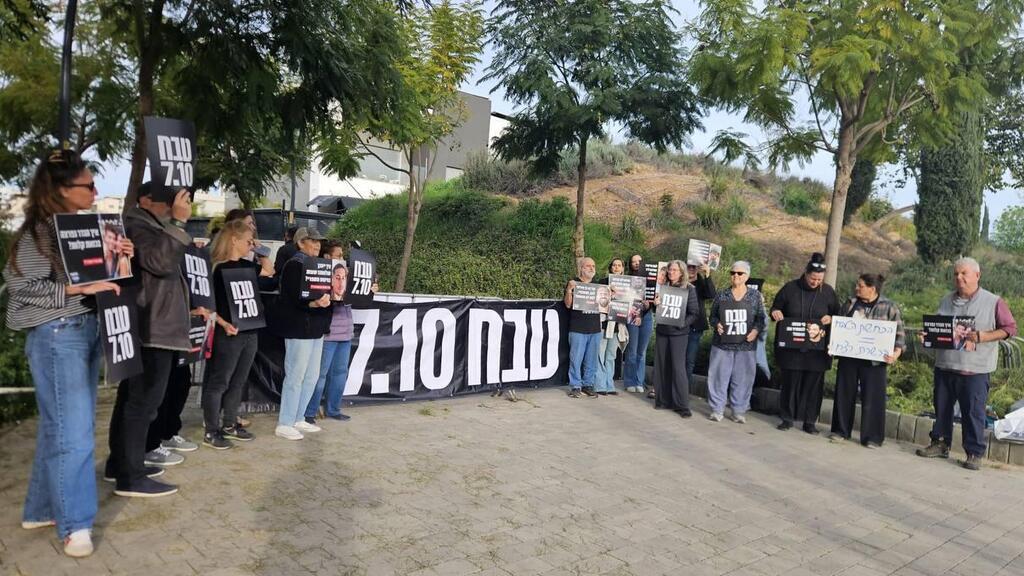
Families of October 7 victims protest with sign which reads ' October 7 massacre'
(Photo: October Council)
The thing about public perceptions is that they are like rock. In the short term, they are rigid—especially when reality is clear and painful. But with persistent dripping, over the long term they can be changed. No one disputes the names “the strike on the Iraqi reactor” or “7 Floors,” so the issue doesn’t arise there. But the perception of the massacre is being challenged. And that is a troubling realization.
A few days ago, protests were voiced over the Prime Minister’s Office’s request to delete the word massacre from the title of the proposed law commemorating the day that changed us all. On the surface, it looked like a random display of insensitivity. But it is important to understand that this is not an isolated incident, but part of a long, creeping process.
About six months after the Black Saturday of October 7, in March 2024, the government decided on a national day of remembrance for the “events” of October 7. The word “massacre” did not appear in the decision. In August 2024, the Education Ministry issued a director-general’s circular for that same day of remembrance. The word “massacre” was mentioned only once, and for some reason the ministry’s website stated that “the notice is not in effect.”
In April 2025, the ministry again published guidelines and a video ahead of the “Month of Revival.” The word “massacre” was not there. Half a year later, the name of the war was changed to the “War of Revival” in a government decision. The word “massacre” does not appear in that decision either.
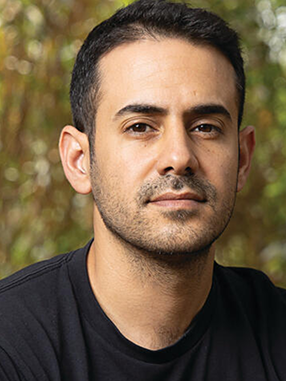 Gadi EzraPhoto: Avigail Uzi
The desire to highlight heroism is understandable and appropriate. But when you look at the sequence, alongside the opposition to a state commission of inquiry, it feels less like positive empowerment and more like an erosion of consciousness. During a Knesset discussion last week, a government representative noted that the reason for removing the word “massacre” is that “memory builds resilience.”
The problem is that resilience built on false consciousness produces weakness. And the implication is that, alongside the fight against the denial of the atrocities abroad, a domestic battle is underway over the very truth of those atrocities. The damage is twofold: we are weakened externally, but above all we voluntarily relinquish one of the most important lessons for the Jewish people.
Denial of the massacre will not succeed in the present, but the danger of forgetting exists in the future. Recognizing what happened is what will ensure our existence here tomorrow. For that reason, the war over the narrative of the massacre would be best abandoned. Otherwise, there will be no one left to tell the story of the massacre at all.