


On June 30, 2026, the Intelligence Branch of Lebanon's Internal Security Forces executed a highly sensitive raid in the heart of Beirut. The target was a 32-year-old Syrian national, identified in judicial records as H.R., born in 1994.
Far from a low-level operative or a desperate refugee, H.R. was subsequently exposed as a premier regional commander of the Islamic State. He served as the general security emir overseeing the group's critical southern and central provinces in Syria.
Gallery
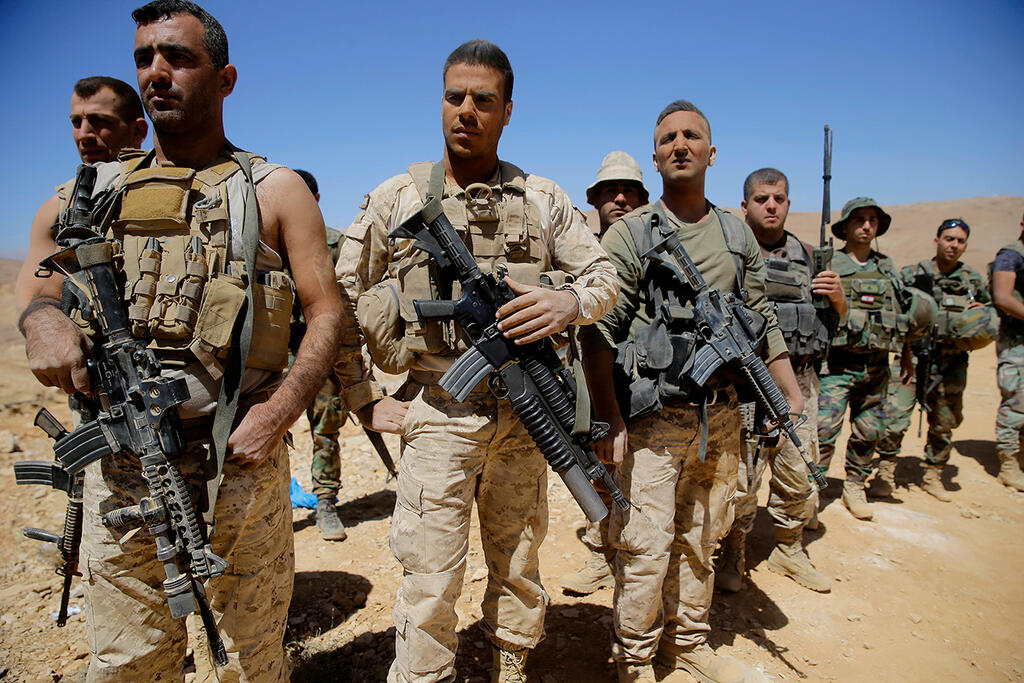
Lebanese soldiers and Hezbollah supporters celebrate Lebanon's victory over the Islamic State group near the Syria-Lebanon border, August 30, 2017
(Photo: AP)
While the tactical precision of the arrest earned praise from regional observers, the subsequent judicial investigation revealed a much more alarming reality. This high-ranking commander was not passing through; he had established a semi-permanent residency in the Lebanese capital. From a quiet apartment in Beirut, an ISIS emir was actively coordinating communication networks, managing regional logistics and planning complex insurgent operations inside Syria.
This dramatic arrest shatters the carefully cultivated myth of Lebanese national security. For years, authorities in Beirut have pointed to isolated counter-terrorism operations as proof of a functional state security apparatus. However, the presence of a top-tier ISIS commander living comfortably in the capital exposes a deep structural paradox. A state may possess the tactical intelligence to execute a single arrest, yet remain strategically hollowed out and unable to police its own territory.
The Damascus plot planned from a Beirut apartment
The operational details of H.R.’s residency highlight how easily transnational terror networks can exploit Lebanon’s institutional paralysis. According to judicial files, H.R. was not operating in isolation.
Upon his arrest, security forces confiscated personal computers and advanced communication devices that revealed deep ties to active cells in southern Syria. Analysis of these devices showed that he was actively planning a massive, coordinated assault on a Syrian military facility in the Daraa governorate, alongside several other operations in the heart of the country.
The fact that an operative of this caliber could reside semi-permanently in Beirut points to a systemic collapse in basic administrative oversight. In a functional nation, border control, municipal registries and local intelligence networks act as a multi-layered shield. In Lebanon, this shield has been completely degraded. The economic collapse that began in 2019 has starved the public sector of resources, leaving security personnel underpaid and border crossings highly vulnerable to bribery and corruption.
In this environment, high-level terrorists do not need to hide in rugged border caves; they can simply buy their way into the relative safety of Beirut's dense urban neighborhoods, blending into the background of a failing metropolis.
Hezbollah’s double game: hollowing the state, welcoming the enemy
This security failure becomes even more damning when viewed alongside the rhetoric of Lebanon’s dominant political and military force. Hezbollah has long justified its independent, Iranian-funded army by presenting itself as the ultimate bulwark against Sunni extremism.
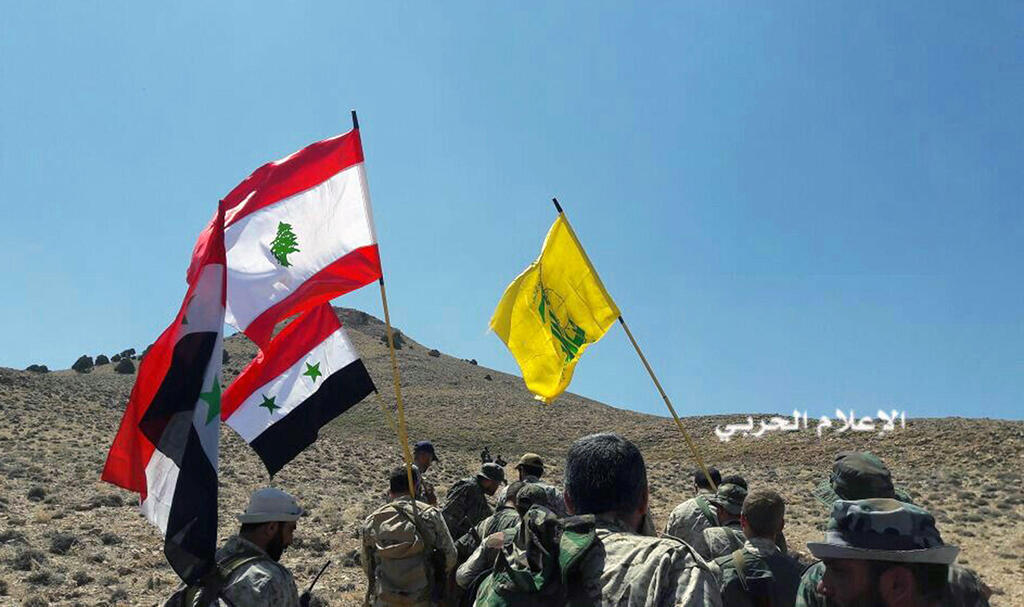
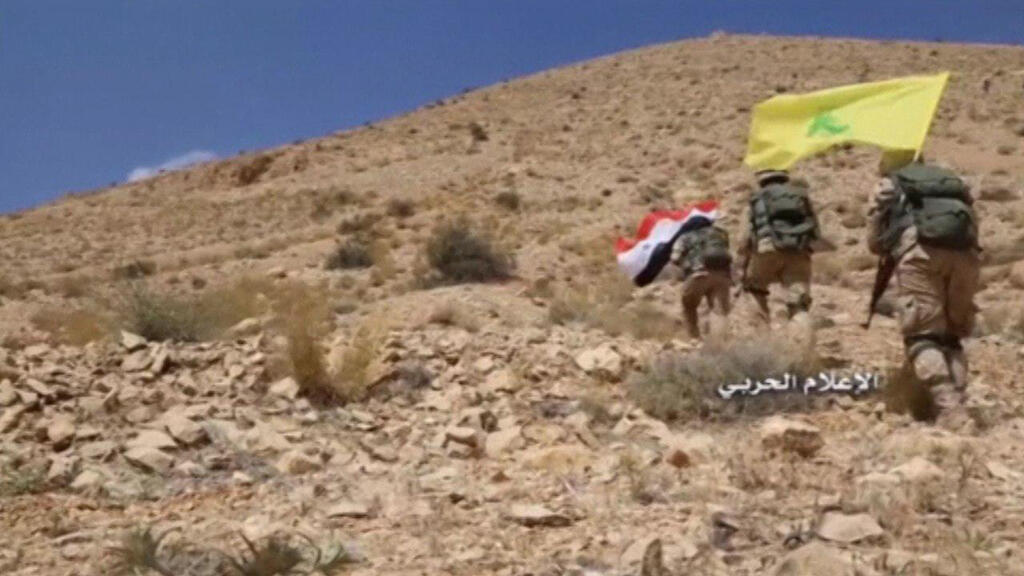
Hezbollah fighters and troops loyal to Syrian President Bashar Assad battle Islamic State insurgents near the Lebanese border, August 2017
(Photo: AP)
(Photo: Reuters)
During the height of the Syrian civil war, the group deployed thousands of fighters across the border, claiming that if they did not fight ISIS in Damascus, they would be forced to fight them in Beirut. Yet, the arrest of H.R. demonstrates that Hezbollah's dominance has produced the exact opposite effect.
While Hezbollah and ISIS are fierce ideological and military adversaries, they exist in a state of structural symbiosis. By maintaining a parallel military state, Hezbollah has systematically neutralized the official Lebanese state. When a sectarian militia controls independent ports of entry, runs illicit financial systems and dictates foreign policy, the formal government loses the capacity to govern.
This hollowing out of public institutions is precisely what allows Sunni jihadists to operate. ISIS does not need Hezbollah's permission to set up a safe haven in Beirut; it merely requires the chaos and lawlessness that Hezbollah’s parallel state creates.
The Islamist pincer: from Sharia ideology to Syria's new chaos
Following the collapse of the Assad regime, the transitional government in Damascus, led by Ahmad al-Sharaa, continues to struggle with severe instability. While al-Sharaa has attempted to project an image of pragmatic, centralized governance, the transitional administration remains fragile, and southern provinces like Daraa remain highly volatile. This governance vacuum in Syria has rejuvenated remnants of the Islamic State, which are eager to re-establish territorial influence.
This regional instability is fueled by the same underlying ideological pathogen: the desire to replace secular civil law with religious, Sharia-based governance. Whether manifested through the Shia Islamist framework of Iran's Wilayat al-Faqih, which dictates Hezbollah’s actions, or the Sunni fundamentalism of ISIS, the core premise of political Islam is fundamentally hostile to the modern nation-state.
Both models prioritize transnational religious struggles over the security, stability and welfare of the domestic population. Caught between the Shia Islamist hegemony of Hezbollah within its borders and a highly volatile Sunni Islamist landscape to its east, Lebanon is trapped in an ideological pincer that prevents the development of a professional, rule-of-law democracy.
Israel’s sovereign shield in a volatile neighborhood
The structural failures of the Lebanese state stand in sharp, undeniable contrast to the national security architecture of the State of Israel. Operating in the exact same volatile environment, Israel faces constant threats from both Shia proxies and Sunni extremist networks. However, while Lebanon relies on ad hoc operations and tolerates parallel authorities, Israel maintains a defense doctrine anchored in absolute, centralized sovereign control.
 Amine Ayoub
Israel's security model relies on several core pillars that Lebanon has abandoned. First, Israel enforces a strict sovereign monopolization of force, ensuring that all military and intelligence operations answer to a single, democratic civil authority. Second, its integrated intelligence architecture coordinates efforts between military intelligence, internal security and external operations, eliminating the blind spots that allow terrorists to hide. Third, Israel protects its territory through relentless technological and physical border integrity. Finally, Israel utilizes a policy of proactive preemption, neutralizing threats at their source before they can infiltrate civilian areas.
This uncompromising commitment to sovereign strength is the only reason Israel remains a stable, thriving democracy in a region defined by institutional collapse.
No security without absolute sovereignty
The arrest of H.R. in Beirut is a stark warning that cannot be ignored. It proves that tactical security successes are meaningless without strategic sovereign integrity. A country that allows a parallel militia to dictate its defense policy will inevitably become a breeding ground for regional instability and terror.
For Lebanon to break free from this cycle of vulnerability, it must implement radical structural changes. This requires the systematic disarmament of Hezbollah, the re-assertion of a total state monopoly on violence and the absolute rejection of Islamist political models. Only by reclaiming its national sovereignty and securing its own borders can Lebanon hope to protect its people.
- Amine Ayoub, a fellow at the Middle East Forum, is a policy analyst and writer based in Morocco. Follow him on X: @amineayoubx