


The wreckage of the Dassault Falcon 50 that smoldered this week in the fields near Ankara represents far more than a tragic aviation accident; it is the physical site of a geopolitical collapse. The death of Lieutenant General Mohammed Al-Haddad, the Chief of Staff of Libya’s western forces, along with his senior command, has violently decapitated the military leadership of the government in Tripoli. But the true scandal and the detail that should send tremors through Western capitals, is the reaction from the Turkish government.
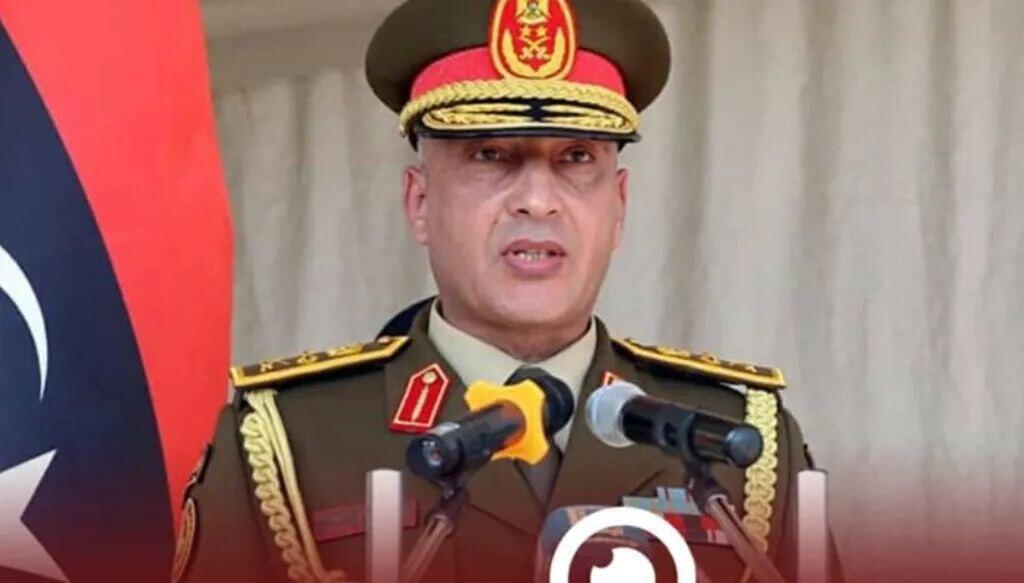
In the immediate aftermath of a crash that occurred within sight of the Turkish capital, Transport Minister Abdulkadir Uraloğlu made an announcement that reeks of diplomatic panic. The black boxes, the only objective witnesses to the disaster, would not be analyzed in Turkey. Instead, they are being shipped to a "neutral third country."
This decision is a stunning, unprecedented admission of sovereignty abdication by a NATO member state. Turkey possesses advanced aviation forensics capabilities. It manufactures complex drones and fighter components. It has the technical means to decipher a flight recorder in hours. By outsourcing the investigation of a crash that killed its key ally on its own soil, the government of Recep Tayyip Erdogan is broadcasting a message of paralyzing weakness. Ankara is terrified of what those boxes might reveal, and even more terrified of who might be responsible.
For years, the Erdogan regime has marketed itself to the West and the Arab world as a neo-Ottoman hegemon, a rising power capable of projecting force and protecting its clients across the Mediterranean. The government in Tripoli, dominated by Muslim Brotherhood affiliates and Islamist militias, staked its survival on this Turkish security umbrella. General Al-Haddad was the architect of this dependency, the man who professionalized the Islamist-leaning militias into a coherent force under Turkish tutelage.
His death in the heart of Turkey exposes the fraudulent nature of this protection. If Erdogan cannot guarantee the safety of his most important viceroy mere minutes after he departs a meeting with the Turkish Defense Ministry, the entire premise of the Turkish-Libyan alliance collapses. The neo-Ottoman "protector" has been revealed as a paper tiger, unable to secure even its own airspace against hostile actors.
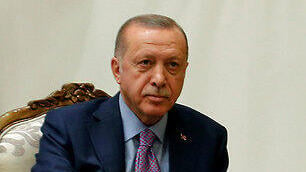
Recep Tayyip Erdogan
(Photo: Reuters)
The specter haunting this investigation is, of course, the Russian Federation. The parallels to the assassination of Yevgeny Prigozhin, whose jet fell from the sky near Moscow under similarly suspicious circumstances, are glaring. Intelligence circles are already treating the "technical failure" narrative with derision, pointing instead to the high probability of electronic warfare jamming or sabotage. Russia, which backs the rival eastern Libyan forces of Khalifa Haftar, has a clear motive to decapitate the western command.
If Russian intelligence assets were indeed responsible for downing a jet inside the capital of a NATO member, it constitutes an act of war. This explains Ankara’s desperate haste to hand the evidence to a third party. If Turkish technicians opened the black box and found proof of Russian sabotage, Erdogan would face an impossible binary: invoke NATO Article 5 and risk a direct conflict with Vladimir Putin, or suppress the truth and stand revealed as a vassal. By shipping the evidence abroad, Turkey is buying time and diffusing responsibility. It is a cowardly maneuver that exposes the hollow core of the Turkey-Russia relationship. Ankara is not a partner to Moscow; it is a hostage.
The removal of Al-Haddad leaves a dangerous vacuum in western Libya. He was the only figure capable of bridging the divide between the disparate militia cartels of Misrata and Tripoli. Without him, and with confidence in Turkish security shattered, the region is primed for a violent succession crisis that will undoubtedly be exploited by Russia’s Africa Corps and the eastern forces.
The "neutral third country" that receives those black boxes will hold the future of North African stability in its hands. But the verdict on Turkish power is already in. The pretense of Turkey as an independent regional power has been exposed as a fraud. A state that is too afraid to investigate the death of its own allies on its own territory is no power at all. It is a compromised entity, managing its own decline while its Islamist proxies in Libya are left to face the wolves alone.