


In the Egyptian coastal city of El Alamein, a high-level diplomatic summit has convened to negotiate a fifteen-point roadmap designed to reshape the political and security architecture of the Gaza Strip.
The gathering brings together senior international figures, including United States envoy Jared Kushner, Board of Peace representatives Nikolay Mladenov and Tony Blair, and Egyptian intelligence chief Hassan Rashad, alongside mediators from Qatar and Turkey. Seated across from them is Khalil al-Hayya, leading the political delegation of Hamas.
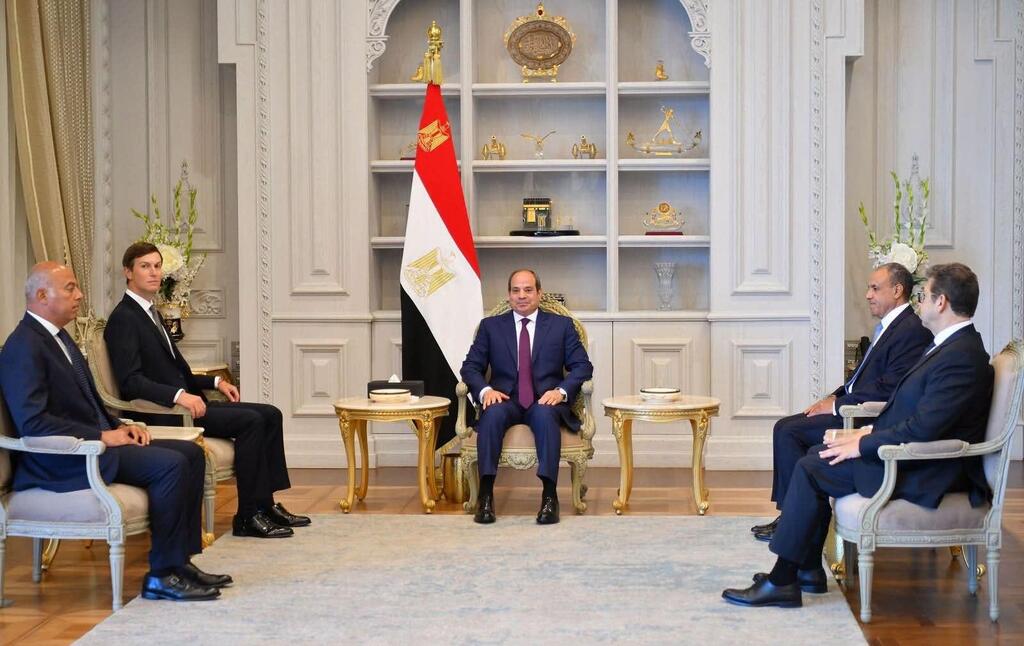
The framework outlines a sequence: an immediate ceasefire, the deployment of an international stability force, the phased withdrawal of Israeli forces, the transition of civil administration to a committee of non-partisan Palestinian technocrats and the eventual surrender of heavy weaponry by non-state factions.
The roadmap appears as a pragmatically structured pathway toward ending conflict. However, evaluating this framework requires setting aside procedural optimism and conducting a cold analysis of the entity at the negotiating table. Treating Hamas as a negotiable counterparty capable of institutional reform ignores both its foundational charter and four decades of demonstrated strategic behavior.
Hamas was established in 1987 as the Palestinian branch of the Muslim Brotherhood, an Islamist movement whose political theology explicitly rejects the sovereign existence of a Jewish state.
The foundational charter of Hamas, issued in 1988, is a binding ideological treatise.
Article 11 designates the entire area between the Jordan River and the Mediterranean Sea as an indivisible Islamic endowment, or waqf, consecrated to Muslim generations until Judgment Day, asserting that relinquishing any portion of this land constitutes a violation of religious duty.
Article 13 reinforces this stance by declaring that peaceful initiatives, soft-power proposals and international conferences are fundamentally opposed to the core principles of the movement.
Although Hamas published a revised Document of General Principles and Policies in 2017 to present an adaptable diplomatic exterior, this text did not invalidate the original 1988 charter, nor did it renounce armed conflict or recognize Israel.
Within radical Islamist strategic thought, long-term agreements with non-Muslim entities are understood through the concept of hudna.
Grounded in historical precedents such as the seventh-century Treaty of Hudaybiyyah, a hudna is never defined as a bridge toward permanent peace.
Instead, it serves as a temporary operational pause designed to preserve command structures, rebuild arsenals, reorganize subterranean infrastructure and await favorable conditions to resume conflict.
This ideological commitment directly informs the operational model Hamas built in Gaza following its violent seizure of power in 2007.
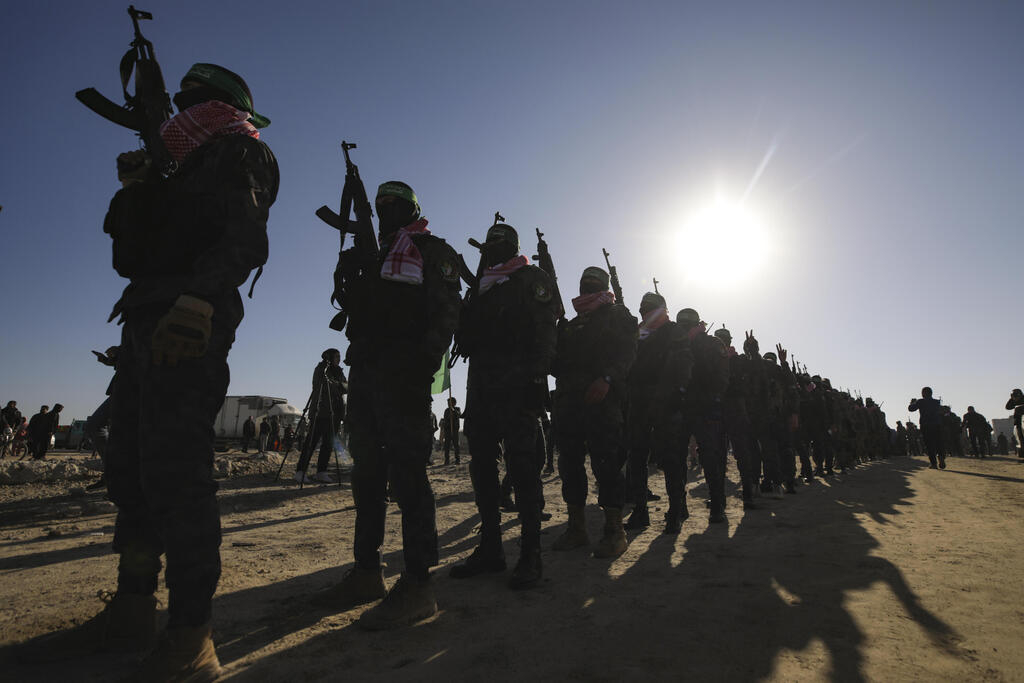
(Photo: AP/Jehad Alshrafi)
Over sixteen years of unchecked administrative control, the organization transformed the coastal enclave into a heavily fortified urban combat space designed around subterranean defense and civilian integration.
Rather than investing public resources into civilian protection or economic resilience, Hamas prioritized constructing hundreds of kilometers of reinforced underground tunnels using building materials systematically diverted from international humanitarian import channels.
Command nodes, communications networks, weapons workshops and rocket launchers were deliberately sited underneath or directly adjacent to residential apartment blocks, schools, mosques and medical facilities, including Al-Shifa Hospital.
This operational design shields military assets from aerial surveillance while ensuring that defensive counter-strikes produce civilian casualties.
For Hamas, civilian suffering in Gaza is not an unintended consequence of war to be mitigated, but a vital strategic asset cultivated to generate international diplomatic pressure capable of forcing Israeli military pauses.
Let us not forget the catastrophic assault launched on October 7, 2023, which represented the unvarnished operational execution of this doctrine. Thousands of heavily armed Hamas combatants breached the border security infrastructure and entered sovereign Israeli territory.
The subsequent violence was not an accidental breakdown of discipline, but a systematic operation designed to inflict maximum human destruction and psychological trauma.
Independent international inquiries, including the formal investigation conducted by the United Nations Special Representative of the Secretary-General on Sexual Violence in Conflict, established a clear pattern of documented crimes across southern Israel.
In agricultural communities such as Kibbutz Be'eri, Kfar Aza and Nir Oz, armed squads systematically entered private homes, executing entire families, burning residential structures with occupants trapped inside, and mutilating victims.
At the Nova music festival near Re'im, combatants murdered 364 young civilians in open fields.
The attacks were characterized by verified patterns of weaponized sexual violence, torture, physical desecration and the tactical acquisition of hostages.
Two hundred and fifty-one individuals, ranging from infants to elderly citizens, were forcefully abducted into the subterranean tunnel system.
Perpetrators documented these actions using body-worn cameras, broadcasting atrocities to demonstrate ideological triumph and dismantle Israel's national deterrence.
The fifteen-point roadmap currently under review in El Alamein attempts to address the security risks highlighted by October 7 through international oversight, third-party verification and structured demilitarization.
Proponents argue that combining an international stabilization force with a technocratic Palestinian committee will establish a stable administrative buffer capable of preventing future aggression.
However, this model ignores the structural failure of international monitoring regimes when deployed against clandestine non-state insurgencies in the Middle East.
A clear precedent exists in United Nations Security Council Resolution 1701, passed at the conclusion of the 2006 Lebanon War. Resolution 1701 mandated the complete demilitarization of southern Lebanon between the Blue Line and the Litani River under the oversight of the United Nations Interim Force in Lebanon and the Lebanese Armed Forces.
 Amine Ayoub
Under direct supervision of this international mission, Hezbollah expanded its military presence, constructed underground bunker networks and accumulated an arsenal exceeding 150,000 rockets.
Similarly, the Gaza Reconstruction Mechanism established after the 2014 conflict failed to prevent Hamas from diverting massive volumes of building materials into expanding its subterranean combat network.
If Hamas maintains its subterranean infrastructure, its clandestine leadership network and its foundational commitment to armed struggle, any civilian administration established by the international community will function merely as a civil facade behind which the military wing regenerates its combat power.
The notion that a technocratic committee or a foreign peacekeeping contingent can oversee the voluntary demilitarization of a movement whose core identity is defined by armed jihad represents a fatal strategic miscalculation.
The diplomatic initiatives in El Alamein are driven by a desire for immediate conflict resolution, operating on the flawed premise that all political factions can be integrated into a rational security framework through economic incentives and international supervision.
But an organization rooted in an unyielding ideological doctrine that mandates the destruction of its neighbor cannot be managed through contractual diplomacy.
Relying on paper roadmaps, third-party monitoring and temporary ceasefires will only repeat the failed policies that enabled the expansion of Hamas over two decades and culminated in the atrocities of October 7.
Lasting regional stability cannot be constructed on moral ambiguity or strategic self-deception. The Abraham Accords demonstrated that genuine peace and regional integration are achievable when Israel and moderate Arab nations unite around shared security interests.
However, that peaceful vision cannot exist alongside an armed ideological enclave dedicated to violent destruction on Israel's border. The only rational outcome that guarantees long-term security is the complete military defeat and administrative dismantling of Hamas and the preservation of an uncompromising security capability by Israel.
- Amine Ayoub, a fellow at the Middle East Forum, is a policy analyst and writer based in Morocco. Follow him on X: @amineayoubx