

At first glance, Israel is under no urgent pressure to reach a security agreement — or any agreement at all — with the Syria of Ahmad al-Sharaa, known until recently by his jihadist nom de guerre Abu Mohammad al-Julani. First, it remains unclear whether al-Sharaa — the man in a suit who was recently sprayed with perfume by US President Donald Trump — is truly different from al-Julani, who led the Jabhat al-Nusra terrorist group not long ago.
Second, al-Sharaa does not fully control Syria, and his rule is unstable. In practice, he controls no more than about 60% of the country’s territory and is struggling to impose his authority even over extremist jihadist militias that are part of Hayat Tahrir al-Sham, the umbrella organization he leads. These militias are unhappy with the relatively moderate Islam al-Sharaa is promoting in Syria and with his pro-Western policies.
Gallery
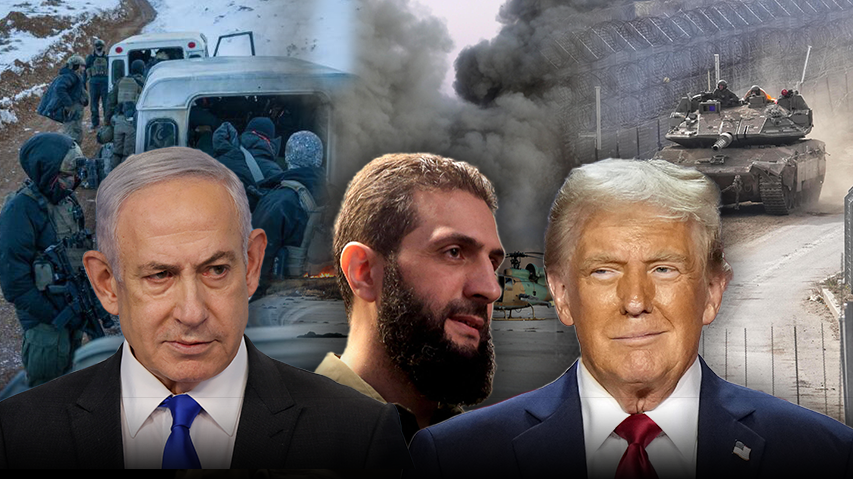
Prime Minister Benjamin Netanyahu, US President Donald Trump, and Ahmed al-Sharaa
(Photo: Haj Suleiman/Getty Images, IDF Spokesperson, AP Photo/Matias Delacroix, Abdulaziz KETAZ/AFP, Mark Israel Salem, AP PhotoAlex Brandon)
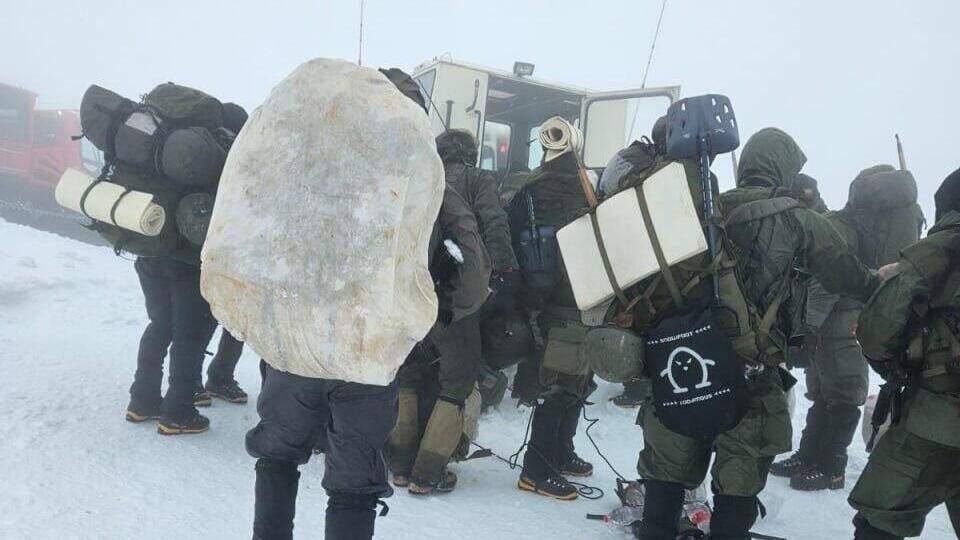
Given this reality, Israel has a clear interest in maintaining the current Israel Defense Forces deployment in the buffer zone. This includes nine forward positions inside sovereign Syrian territory — not deep inside, but several kilometers in — primarily in the northern sector on Mount Hermon and in the southern sector near the Israel-Syria-Jordan border triangle.
In addition, another line of positions is being established on Israeli territory. This deployment gives Israel optimal control over surveillance and firepower, as well as intelligence and technological monitoring not only of the Damascus basin and areas north of it, but also of northeastern Lebanon, adjacent to the Syrian border, where Hezbollah and Palestinian groups operate. Israel is also building a deep barrier against vehicles and individuals, designed to significantly delay a surprise attack from the Golan Heights, similar to the October 7 assault on communities near Gaza.
All of this provides deterrence and a measure of protection for Golan communities and, no less importantly, serves as leverage in any negotiations with the Syrian regime, which is eager to see these positions removed from what it considers its sovereign territory.
This situation suits Israel, but President Trump is pushing for negotiations and a permanent arrangement, or at least a security agreement, between Israel and Syria. One reason is that it advances his vision of stabilization, calm and peace in the Middle East — a priority for him, in part due to his desire for international recognition and a Nobel Peace Prize.
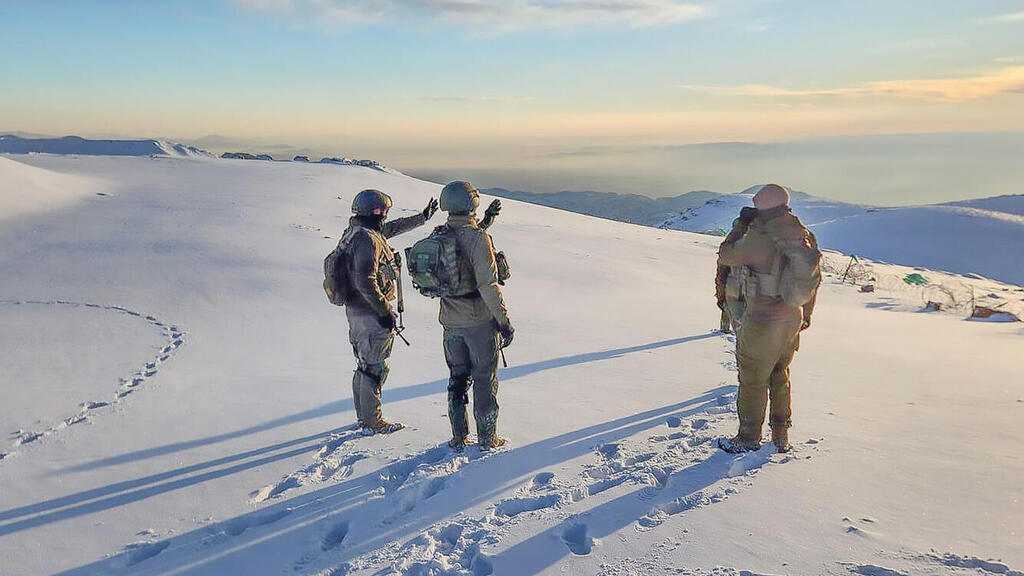
Israel Defense Forces Mountain Brigade troops on Mount Hermon near the Syrian border over the weekend, providing optimal control of surveillance and fire
(Photo: IDF Spokesperson)
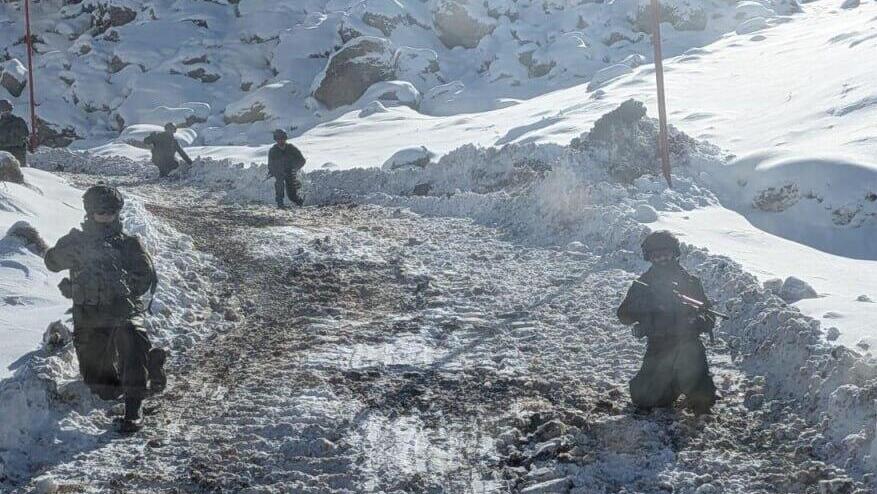
(Photo: IDF Spokesperson)
(Photo: IDF Spokesperson)
Another reason is Trump’s interest in accommodating the demands of Saudi Arabia, Qatar, the United Arab Emirates and especially Turkey. These countries seek Syria’s reconstruction for economic and Sunni religious reasons. Turkish President Recep Tayyip Erdogan also views Syria as a unique sphere of influence where he believes he can and should shape policy. Turkish companies involved in civilian reconstruction, along with Turkey’s military rebuilding Syria’s armed forces, stand to earn billions from funding provided by Saudi Arabia, Qatar and the UAE.
As a result, these countries — particularly Turkey — want the United States to recognize al-Sharaa’s rule and help him consolidate control over all of Syria in ways that advance their interests. For Turkey, this also includes curbing Syrian Kurdish autonomy, which Ankara views as a threat.
Under current conditions, following Prime Minister Benjamin Netanyahu’s meeting with Trump at Mar-a-Lago and the US operation in Venezuela, Israel has little interest in confronting Trump and instead seeks to accommodate him — even though Israel sees no immediate or urgent need for an agreement with Syria, especially given Syrian demands that would restrict Israel’s freedom of action on the Golan Heights.
Low-level Israeli representatives
Netanyahu sent relatively low-ranking representatives to the talks in Paris, compared with Syria’s delegation, which included its foreign minister and intelligence chief, and the US delegation, which included US Ambassador to Turkey Tom Barrack and Trump envoys Steve Witkoff and Jared Kushner. The Israeli representatives are not authorized to make substantive decisions but are tasked with hearing US and Syrian positions and conveying them to Netanyahu.
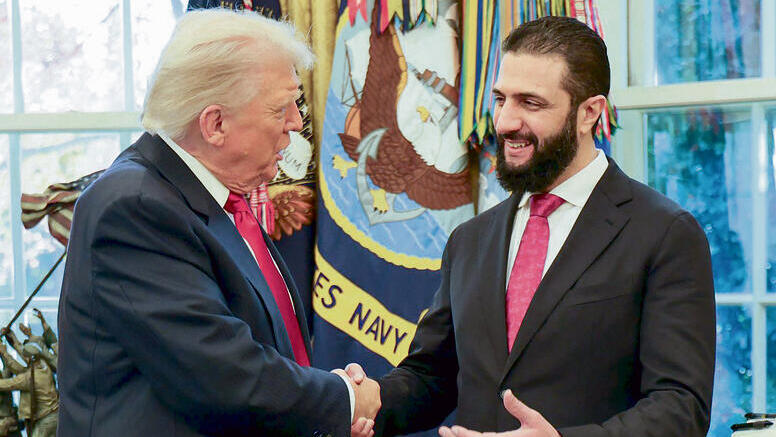
Al-Sharaa with Trump at the White House last November
(Photo: HANDOUT, AFP)
This gap is reflected in reports on the Paris meeting. US officials told reporters that a Jordan-based reconstruction coordination mechanism was discussed and that 90% of the issues had already been agreed. By contrast, the Prime Minister’s Office said only that talks were needed to stabilize Syria, meet Israel’s security requirements and address Trump’s demands, without citing concrete steps.
To understand what is really happening — and what may happen — between Israel and Syria, and between Israel, Syria and the United States, it is necessary to examine the map of interests.
Israel’s vital interest can be summed up in one sentence: preserving its gains from the Swords of Iron war in the Syrian arena and improving national security compared with the situation before October 7.
Israel’s foremost interest is preventing a surprise attack from Syrian territory against communities, military bases and infrastructure on the Golan Heights. Syria hosts jihadist elements linked to the Islamic State group, as well as Iranian-backed Shiite forces that, with vehicles and reinforcement from Iraqi Shiite militias and the Houthis, could mount such an attack within hours.
A second demand is to prevent hostile armed groups from establishing themselves within direct-fire range — mortars, anti-tank missiles, short-range rockets, drones and UAVs — and to push them away from Golan communities and transportation routes. In southern Syria, Islamic State-linked bases have previously fired into Israel, and if left unchecked, could pose a serious threat.
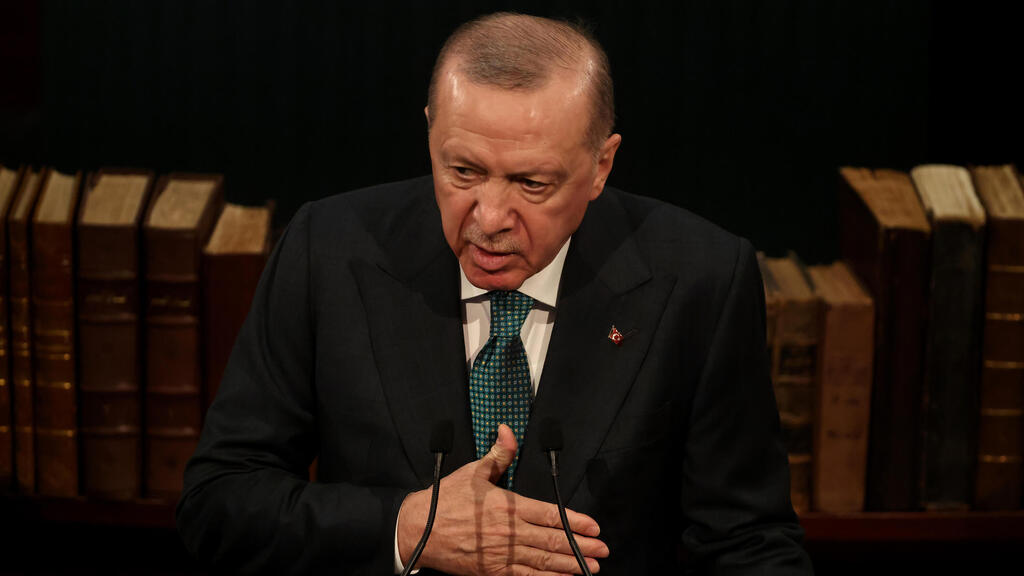
Turkish President Recep Tayyip Erdogan
(Photo: Chris McGrath/Getty Images)
A third interest is preventing the transfer of weapons, munitions, raw materials and production capabilities to Hezbollah in Lebanon. Despite efforts by the Syrian regime and the Lebanese army, smuggling routes from Iran through Iraq into the Syrian desert and onward to Hezbollah still exist, even if on a reduced scale. Hezbollah’s continued buildup remains a strategic threat.
Another strategic concern is preventing a Turkish military presence in southern Syria that could restrict Israeli Air Force freedom of action over Syria, Jordan and beyond. A previous Turkish attempt to deploy radar systems and air defense batteries at Syria’s T4 air base was halted after Israel drew a clear red line.
Israel also has a commitment to protect the Druze population, particularly in the Sweida area (Jabal al-Druze), in the event of a real threat to their lives or dignity. Over the long term, Israel also has a security interest in avoiding prolonged confrontation with the Syrian regime that could draw in the United States.
From these interests flow Israel’s core demands: demilitarizing southern Syria between Damascus and the Jordanian border, meaning barring armed groups, heavy weapons and off-road vehicles from areas near Israel’s border extending dozens of kilometers east of the Purple Line on the Golan Heights; limiting Syrian security forces to light weapons only; and preserving Israel’s right to act to thwart threats and violations.
The forward positions — two on Mount Hermon and at least one near the southern border triangle — are critical for intelligence control, early warning and rapid response against Hezbollah, Palestinian terrorist groups in Lebanon and Syria, and the Islamic State group.
No demand to withdraw from the Golan
For his part, al-Sharaa is demanding that Israel withdraw from the buffer zone and return to the 1974 disengagement agreement, allowing him to claim he is not collaborating with Israel and that he has restored Syrian sovereignty over territory held by Israel. It is important to note that, at least for now, al-Sharaa is not demanding an Israeli withdrawal from the Golan Heights itself, unlike previous Syrian leaders from the Assad family.
Israel rejects a return to the decades-old disengagement lines, arguing they do not address modern surprise-attack threats or the advanced and more lethal weapons now held by terrorist armies and militias, which have evolved significantly since the agreement was signed after the 1973 Yom Kippur War. Al-Sharaa also knows that Gulf states will not invest in Syria’s reconstruction as long as he lacks full territorial control and the country remains politically unstable.
The US interest can be summed up briefly: Trump wants to satisfy Saudi Arabia, Qatar and Turkey, even if that comes at the expense of the broad security margins Israel seeks on the Golan Heights.
Al-Sharaa plays basketball with CENTCOM commander during US visit in November


In Paris, US officials — through Ambassador Barrack — proposed creating a deconfliction coordination committee, similar to the mechanism once used with Russia. The committee would be based in Jordan and include representatives from Israel, Syria and the United States. Under this framework, Israel could provide intelligence warnings and the Syrian regime would act to neutralize threats. The committee would also enable civilian dialogue on reconstruction, infrastructure and trade, later expanding to political issues if and when talks move toward peace. For now, both sides agree to discuss only a security arrangement.
From Israel’s perspective, however, even implementation details cannot be discussed until its core demands are met: demilitarization of southern Syria, Israel’s freedom of action to counter threats inside Syria and preventing a Turkish presence that could limit Israeli air operations and pose a threat to the Golan Heights. Until these principles are agreed upon — unless Israel chooses to compromise — the talks will not produce a meaningful outcome. If they are agreed, an arrangement could be implemented quickly, allowing Israel to withdraw some of the forward positions in the central Golan Heights.