


Washington's toolkit for dealing with hostile non-state actors has a favorite instrument: the terrorist designation. It freezes assets, chills diplomacy and signals disapproval in bold letters.
On March 13, 2026, Senators Ted Cruz, Tom Cotton and Rick Scott introduced the Polisario Front Terrorist Designation Act, requiring the Secretary of State to investigate military cooperation between the Polisario and Iranian-affiliated groups and potentially designating it as a Foreign Terrorist Organization.
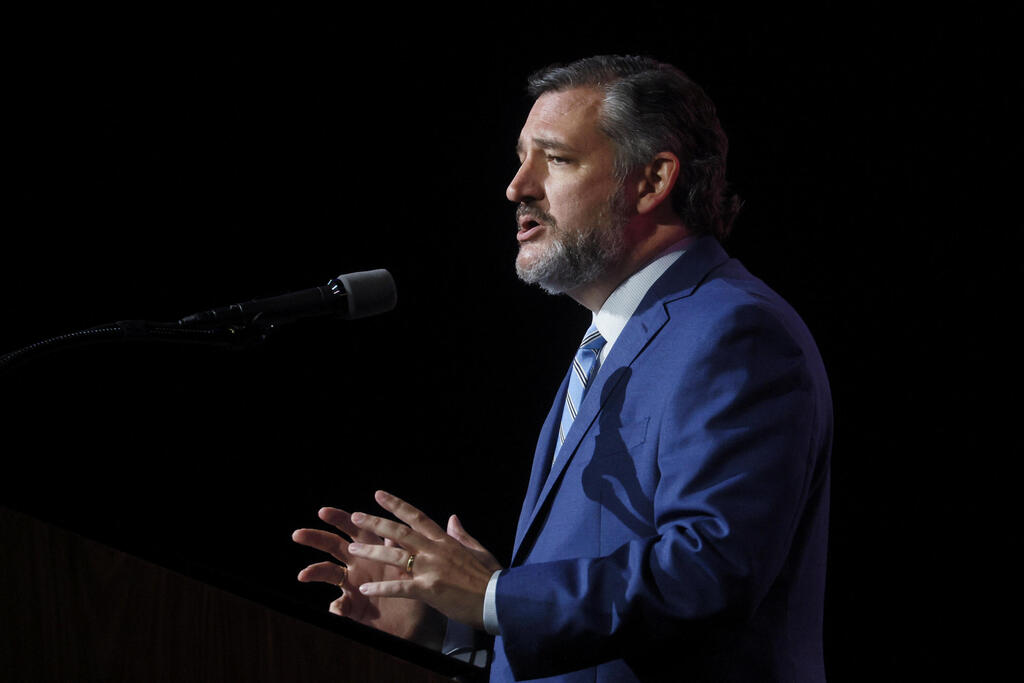
Senator Cruz has framed the group as Iran's attempt to create the "Houthis of West Africa." The instinct is understandable. But a clear-eyed look at precedent, the geopolitical architecture and the actual levers of power in this conflict reveals a hard truth: designation alone will not resolve the Western Sahara dispute. The real problem is Algeria, and terrorist labels do not reach across sovereign borders.
The designation illusion
The United States designated Hamas a terrorist organization in 1997. Nearly three decades later, Hamas governed Gaza and launched the worst massacre of Jews since the Holocaust on October 7, 2023. Hezbollah was designated the same year. It has since become the most heavily armed non-state actor on earth, colonized the Lebanese state and extended its reach from Beirut to Buenos Aires. The Islamic Revolutionary Guard Corps, whose Quds Force built both organizations into regional powers, only received its own designation in 2019, after decades of proxy warfare conducted with near-total impunity.
The pattern is consistent. Designations impose real costs on organizations that depend on international financial networks and Western legitimacy. They impose negligible costs on organizations whose patrons are sovereign states willing to absorb those costs on their behalf.
Polisario falls squarely in the second category. It exists, trains and is sustained in the Tindouf camps on Algerian soil, under Algerian military protection, funded by Algerian petrodollars and armed through Algerian logistics chains. A designation aimed at Polisario without a corresponding strategy toward Algiers is a punch thrown at a shadow.
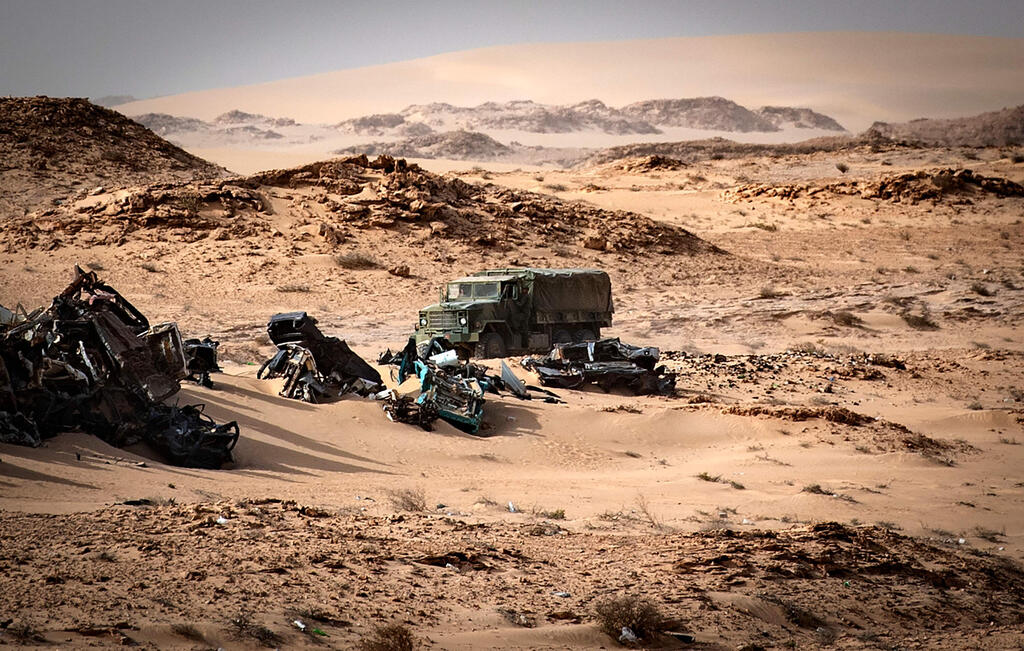
File photo from Guerguerat in Western Sahara after Morocco’s 2020 military intervention to clear a Polisario-linked blockade, an episode that helped unravel the decades-old ceasefire
(Photo: AFP)
Polisario is not an autonomous national liberation movement that happens to enjoy Algerian hospitality. It is, in operational terms, an instrument of Algerian foreign policy, calibrated to keep Morocco strategically pressured and maintain Algerian primacy in the Maghreb.
Algerian generals have financed the Tindouf camps for five decades, not out of post-colonial solidarity but because a frozen conflict serves as a strategic asset—forcing Morocco to tie down military resources, dividing the African Union and giving Algiers a card to play in negotiations with Washington and Brussels.
Algeria sources the majority of its military equipment from Moscow, maintains robust defense cooperation with Russia and has consistently positioned itself outside the Western orbit. Crucially, it remains a major gas supplier to southern Europe, with Italy particularly dependent on the Transmed pipeline. Despite regional energy pressures, Algiers has refused to reopen the Maghreb-Europe pipeline that once carried gas through Morocco to Spain—sacrificing economic integration to preserve its rivalry with Rabat.
What the UN and Mali just told us
Resolution 2797, adopted by the Security Council on October 31, 2025, represents the most decisive international shift in this conflict in decades. With 11 votes in favor and Algeria declining to participate, the resolution explicitly recognized Morocco's Autonomy Proposal as the framework for negotiations and acknowledged that genuine autonomy could represent the most feasible outcome.
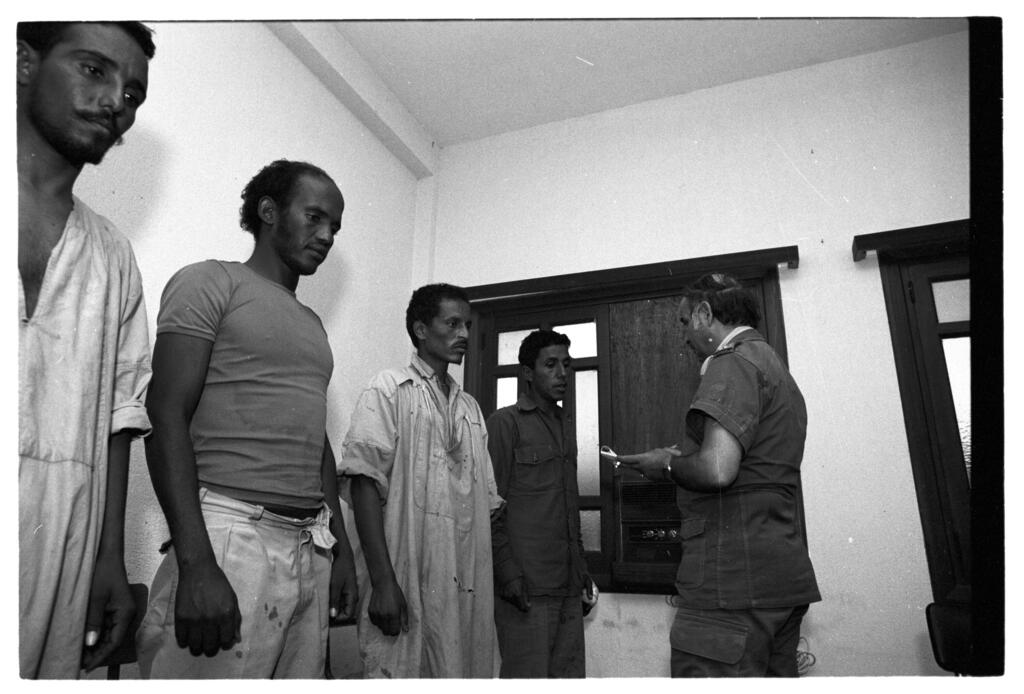
Moroccan soldiers interrogate captured Polisario fighters in the Sahara on Nov. 9, 1979
(Photo: David Rubinger)
The United States served as penholder; Ambassador Mike Waltz stated that Morocco's proposal is "the only basis for a just and lasting solution." Canada added its voice in late April 2026, with Foreign Minister Anita Anand calling the autonomy plan "serious and credible," bringing the number of endorsing states to at least 120.
Mali adds an urgent security dimension. On April 25, 2026, coordinated attacks by JNIM jihadists and Tuareg separatists struck military targets across Bamako, Sévaré, Kidal and Gao, killing Defense Minister Sadio Camara at his residence in Kati. Unverified footage circulated showing a man identifying himself as a Polisario affiliate operating in Kidal alongside the attacking factions.
The attacks followed Mali's April 2026 decision to suspend recognition of the Sahrawi Arab Democratic Republic and back the Moroccan autonomy plan. If Polisario's participation is confirmed, its trans-Saharan adventurism validates the Cruz bill's underlying premise while simultaneously illustrating why a designation, without pressure on Algiers, still solves only part of the problem.
What would actually work
Morocco’s path to consolidation runs through statecraft, not classification. The UN secretary-general’s strategic review of MINURSO’s future role is due on April 30, 2026. Washington should use this window to execute a fundamental pivot. The current peacekeeping model is an expensive relic of a referendum that will never happen.
 Amine Ayoub
First, the United States must lead the push to wind down MINURSO. Secretary of State Marco Rubio’s 2026 strategic plan already commits to ending "costly and ineffective" peacekeeping operations. MINURSO should be restructured into a technical mission dedicated solely to supporting the implementation of the Moroccan Autonomy Proposal. By removing the residual "referendum" language from the UN mandate, Washington can eliminate the legal fiction that the Polisario exploits for propaganda.
Second, the 2020 American recognition of Moroccan sovereignty must be codified in binding legislation. While the executive recognition was a historic milestone, insulating it from the whims of future administrations through an act of Congress would make Moroccan sovereignty an irreversible legal fact in U.S. law.
Third, Washington must attach strict conditionality to its security relationship with Algeria. Currently, Algiers receives American military training and dual-use technology without any requirement to reduce its support for the Polisario. This effectively subsidizes the very obstructionism America is trying to overcome. Conditionality, not just designation, is the key to breaking the stalemate.
Finally, the Abraham Accords provide the ultimate template for success. Deeper integration of Morocco into a regional security framework—featuring expanded defense cooperation with Israel and massive Gulf state investment in the Sahara—redefines the territory as an economic hub rather than a conflict zone.
Designating Polisario as a terrorist organization is a necessary recognition of a real security threat. The experiences with Hamas and Hezbollah are proof that it is not a sufficient one. Morocco deserves a strategy that targets the source of the conflict, and Washington now has the diplomatic momentum to deliver it.
- Amine Ayoub, a fellow at the Middle East Forum, is a policy analyst and writer based in Morocco.