

Ari Meridy does not describe Jewish leadership as something that begins on a stage, in a boardroom or with a title. For him, it often starts somewhere simpler: around a Shabbat table, on a bus crossing Israel or with one invitation that brings someone into a community.
That personal approach reflects the wider mission of JNFuture, Jewish National Fund-USA’s growing network for young philanthropists, professionals and Zionist leaders, ages 22-40. As a JNFuture board member, Meridy has become one of the faces of an initiative trying to bring the next generation closer to Israel in a way that is meaningful, lasting and active.
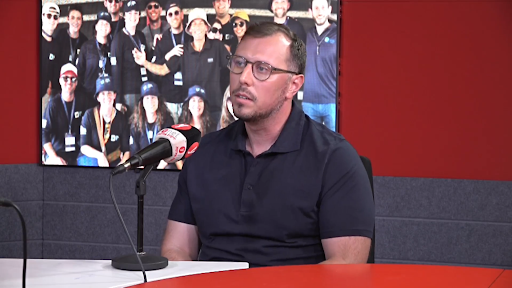
Ari Meridy in the ynet Global podcast studio


I spoke to Ari Meridy in a ynet Global podcast conversation. He came across as a natural connector: friendly, energetic and deeply people-oriented. He spoke warmly about his own Jewish journey, while also presenting the broader mission behind it. His path helps explain what JNFuture is trying to build: a model of young Jewish leadership rooted in personal relationships, firsthand encounters with Israel and a willingness to show up after October 7.
Meridy grew up outside Washington, in Chevy Chase, Maryland, in a Jewish environment that exposed him to many parts of Jewish life. He attended pluralistic Jewish day schools, an Orthodox middle school and a public high school, later moving to New York, where he attended the Heschel School. He also spent summers at Camp Ramah in Massachusetts, where Israeli emissaries helped shape his connection to Israel and Zionism.
The experience that most deeply shaped him came when he spent half a year in Israel as a 10th grader. At 16, Israel stopped being only something he had studied in school; it became a place he lived in: taking buses, walking through neighborhoods and speaking with Israelis in daily life. “When you’re actually here and living it, especially as an American Jew, it’s a very different experience,” he said.
That experience raised a question that followed him into adulthood: What role could an American Jew from the United States play in supporting Israel and the Jewish people? His search eventually brought him to Jewish National Fund-USA and, later, to JNFuture. “For me, getting involved with Jewish National Fund-USA was such a profound moment,” he said. “You really and truly impact the land and the people of Israel.”
One of JNFuture’s key vehicles is JLIM, the Jewish Leadership Institute Mission which brings young professionals from across the United States to see Jewish National Fund-USA’s work in Israel up close. These are not standard Israel tours, said Meridy, who is chair of this year’s JLIMס. They are designed to go deeper, taking participants beyond Tel Aviv and Jerusalem and into communities where JNF-USA supports development, education, housing, quality of life and resilience.
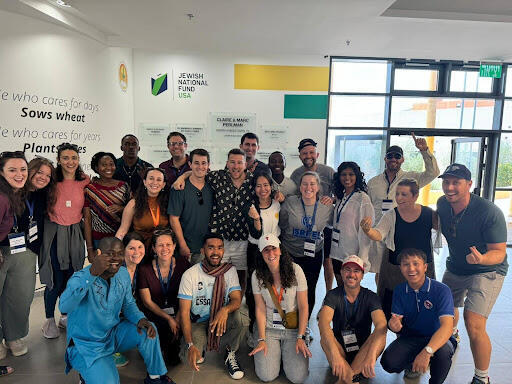
The participants in the program
Participants travel across the country, from Tel Aviv to Beersheba, to southern communities near the Gaza border, to the north and the Galilee. They meet residents, visit projects and see Israel through places and people often missing from the global news cycle. “Israel is much more than a headline,” Meridy said. “You have to be here and see it to believe it.”
That idea has become even more urgent since October 7. Meridy said the Hamas-led attack and the war that followed awakened many Jews who had not previously been as involved in Jewish communal life. For JNFuture, the missions now carry a deeper purpose: allowing young American Jews to bear witness, encounter Israeli resilience directly and return home able to speak from personal experience rather than distance.
He recalled one mission to northern Israel, where participants visited a community affected by the war and helped clean up a playground. Afterward, they were invited into the home of a woman whose son was serving in the reserves in Gaza at that moment. The sequence stayed with him: a small act of rebuilding, followed by an intimate encounter with a family living the war in the most personal way. “It’s really just the small moments that have the greatest impact,” he said.
That is where Meridy’s personal style and JNFuture’s broader purpose meet. The initiative is about Israel, philanthropy and leadership, but also about giving young Jews moments that stay with them: a conversation with a resident, a meal in someone’s home, a project that turns Israel from an idea into a lived reality.
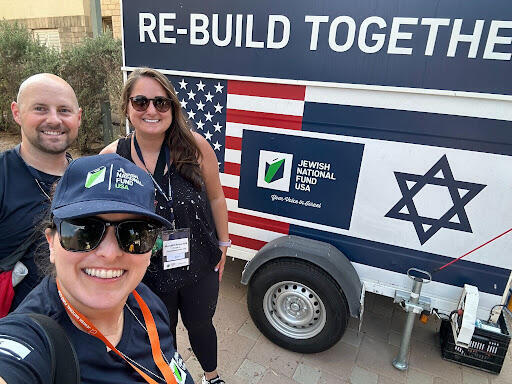
Meridy said participants return home with more than photos and memories. They bring what he called “a brand new feeling,” one that can shape how they talk about Israel, build community and invite others in. “There are only so many minds you can change,” he said. “But it really just takes a one-on-one conversation or one Shabbat dinner or one instance that can really change someone’s life.”
That philosophy extends beyond formal JNFuture programming. After October 7, Meridy said he felt he had to do something in New York. He began hosting Shabbat dinners in his backyard, bringing people together at a time when many were searching for connection. Those gatherings grew into larger monthly events, sometimes drawing 100 or 200 people. Through those dinners, he said, people have met spouses, partners and close friends. For Meridy, that is not separate from Jewish leadership. It is part of it.
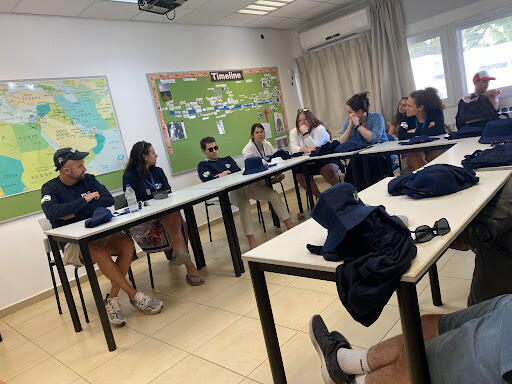
Zionist leadership is about difficult questions and understanding Israel beyond the political moment
His advice to young Jews who want to make a difference but do not know where to begin is simple: say yes. Go to the event. Accept the dinner invitation. Join the trip. Learn more. Show up. “You never know how much that invitation is really going to impact you and your life moving forward,” he said. That message captures JNFuture’s wider framing. The initiative gives young professionals a first step into Jewish National Fund-USA’s work, but it is also meant to help them grow into the next generation of Jewish communal leaders.
Meridy said meaningful Zionist leadership in 2026 is not about being the loudest voice in the room. It is about nuanced conversations, difficult questions and understanding Israel beyond the political moment. “You really have to zoom out,” he said.
For Meridy, that optimism is also embodied in Jewish National Fund-USA’s World Zionist Village, a major initiative now being developed as a gathering place for students, young adults and visitors from around the world. He described it as “the perfect intersection of Zionism, innovation and education,” a project designed to turn learning, conversation and community into deeper engagement with Israel.
In that sense, Meridy’s story is a window into what JNFuture is trying to do at a critical moment for Jewish communities in the United States and Israel. Its message is direct: Young Jews do not have to wait until later in life to lead. They can begin now, by saying yes, showing up, coming to Israel, building community and bringing others with them.
- In cooperation with Jewish National Fund-USA