

Some cities try to impress with the height of their skyscrapers. Others do it through culture. In recent years, Abu Dhabi, the capital of the United Arab Emirates, has increasingly chosen the second route.
Long regarded as quieter and more understated than neighboring Dubai, Abu Dhabi is now investing billions of dollars in an ambitious cultural district, transforming the emirate into a hub for major international institutions and cutting-edge architecture.
Gallery
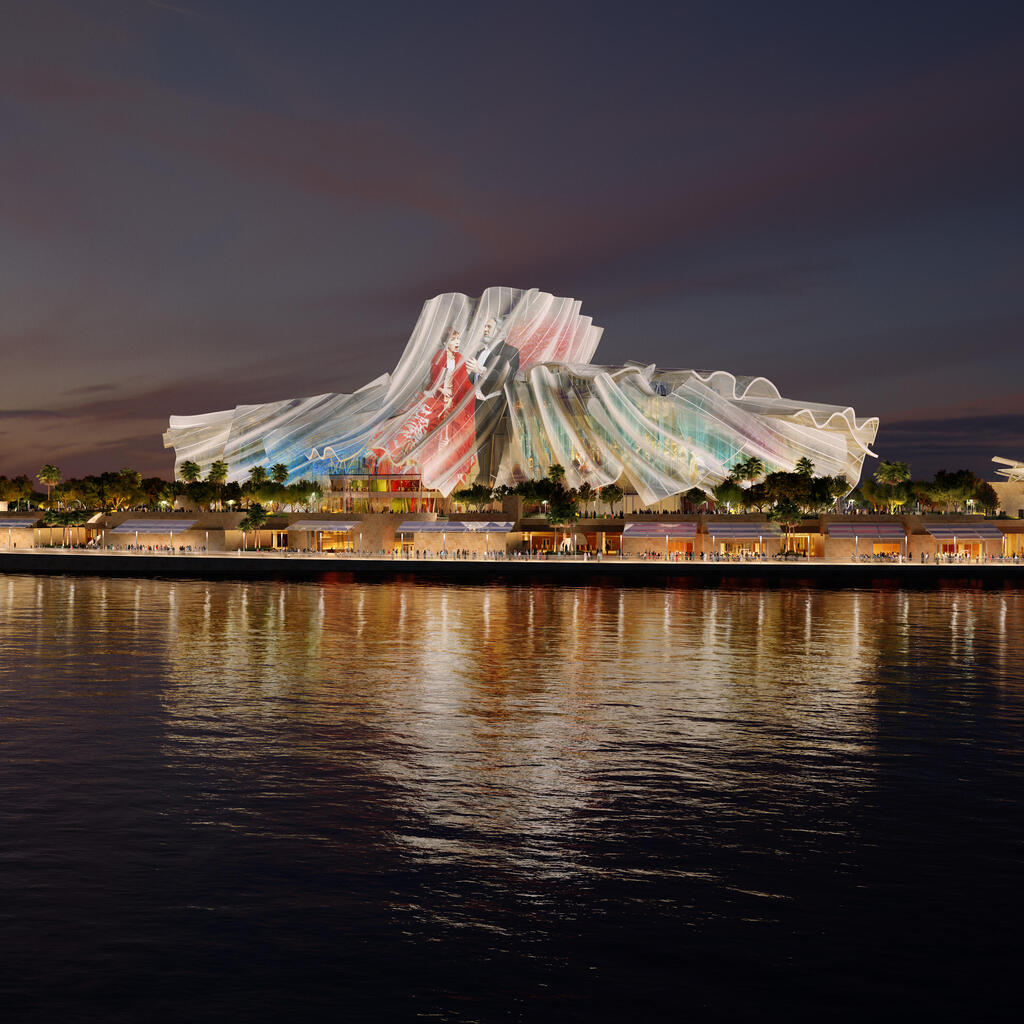
Dar al Funoon, part of Abu Dhabi’s ambitious cultural district
(Illustration: Courtesy of Frank Gehry Architects)
Alongside museums that have already opened, several more cultural institutions are under construction or development, many designed by some of the most prominent architects working today.
Entrusting these projects to a roster of international “starchitects,” most of them from the West, has turned the district into a showcase of soft power, with architecture serving as a language of prestige, influence and cultural diplomacy.
But the scale of the project also raises a larger question: Is this an authentic cultural undertaking, or spectacular architecture built primarily to strengthen the UAE’s international standing?
Those ambitions converge on Saadiyat Island, whose name means “Island of Happiness,” north of central Abu Dhabi.
The island is home to the Saadiyat Cultural District, where some of the world’s most ambitious cultural projects have been concentrated within a relatively small area: Louvre Abu Dhabi, the Abrahamic Family House interfaith complex, the Natural History Museum Abu Dhabi, the Zayed National Museum, the digital art venue teamLab Phenomena, Guggenheim Abu Dhabi and a planned performing arts center. Some have already opened, while others remain under construction or development.
Estimates put the overall investment in the district at tens of billions of dollars, making it one of the most ambitious and expensive cultural development projects ever undertaken in a single city.
Mohamed Khalifa Al Mubarak, chairman of Abu Dhabi’s Department of Culture and Tourism, said the district’s appeal lies in the unusual concentration of major cultural institutions within a single area.
Dar al Funoon, Abu Dhabi
(Video: Courtesy of Frank Gehry Architects)


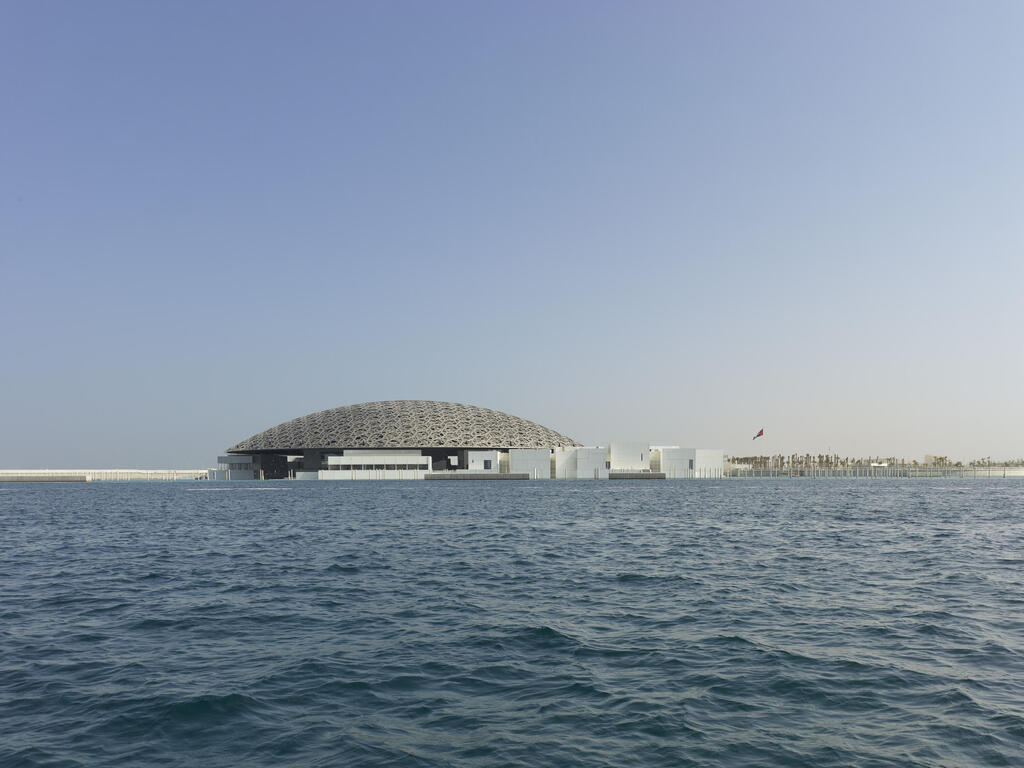
Louvre Abu Dhabi - Architecte Jean Nouvel
(Photo: Roland Halbe)
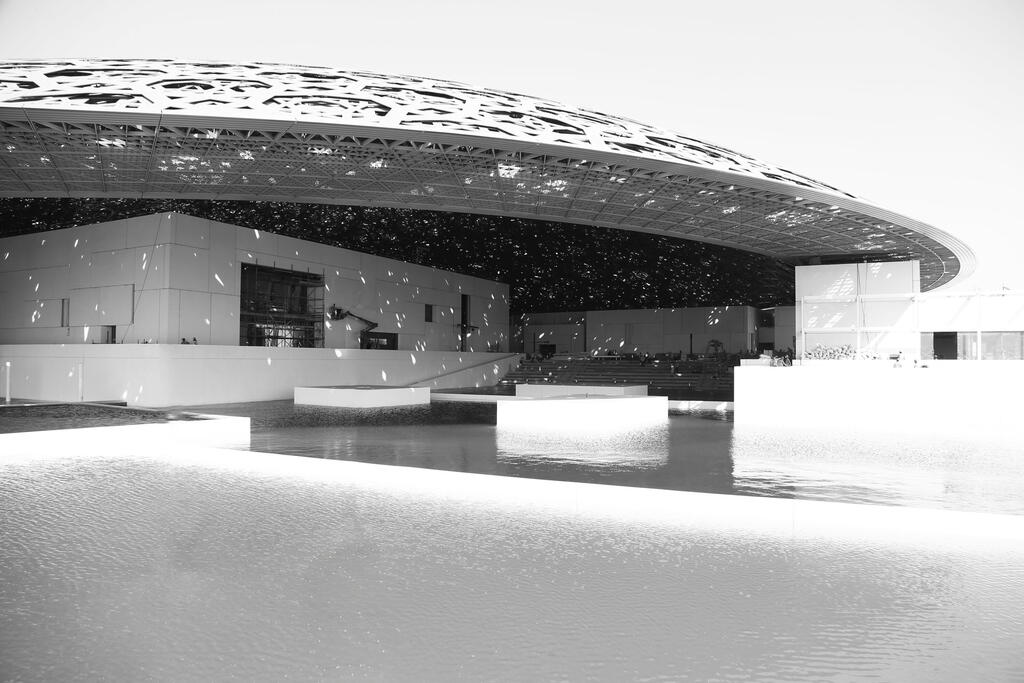
Louvre Abu Dhabi
(Photo: Sarah Al Agroobi - Abu Dhabi TCA )
Laboratory for contemporary architecture, led by the Louvre
Beyond the unusual concentration of major museums, Saadiyat has also become a rare architectural laboratory. Each institution has been designed by a different architect, with no attempt to impose a single visual language across the district. The result is a collection of buildings offering sharply different interpretations of contemporary architecture, desert climate and local identity.
Massive domes, floating roofs, geometric facades and complex building skins are not merely aesthetic gestures. Many are attempts to reinterpret Arab architectural traditions and passive climate-control techniques through a contemporary vocabulary.
In that sense, Saadiyat is not simply a place where art is displayed, but also where architecture itself has become one of the principal exhibits. Each institution embodies a different vision of culture, spanning classical and contemporary art, religion, nature, national identity and digital art, while presenting a distinct architectural approach.
The first international museum to open in the district, and the project that effectively launched the broader vision, was Louvre Abu Dhabi. The decision to establish the Louvre’s first permanent overseas outpost was unprecedented and emerged from a sweeping cultural agreement between France and the UAE.
Under the 2007 agreement, Abu Dhabi obtained the right to use the Louvre name, borrow hundreds of artworks and receive professional support in curating, conservation and museum management. In exchange, the emirate paid billions of dollars in what became one of the most expensive and ambitious cultural partnerships ever signed.
Beyond constructing another museum, the project signaled Abu Dhabi’s desire to place itself on the global cultural map by aligning itself with one of the world’s most prestigious museum brands.
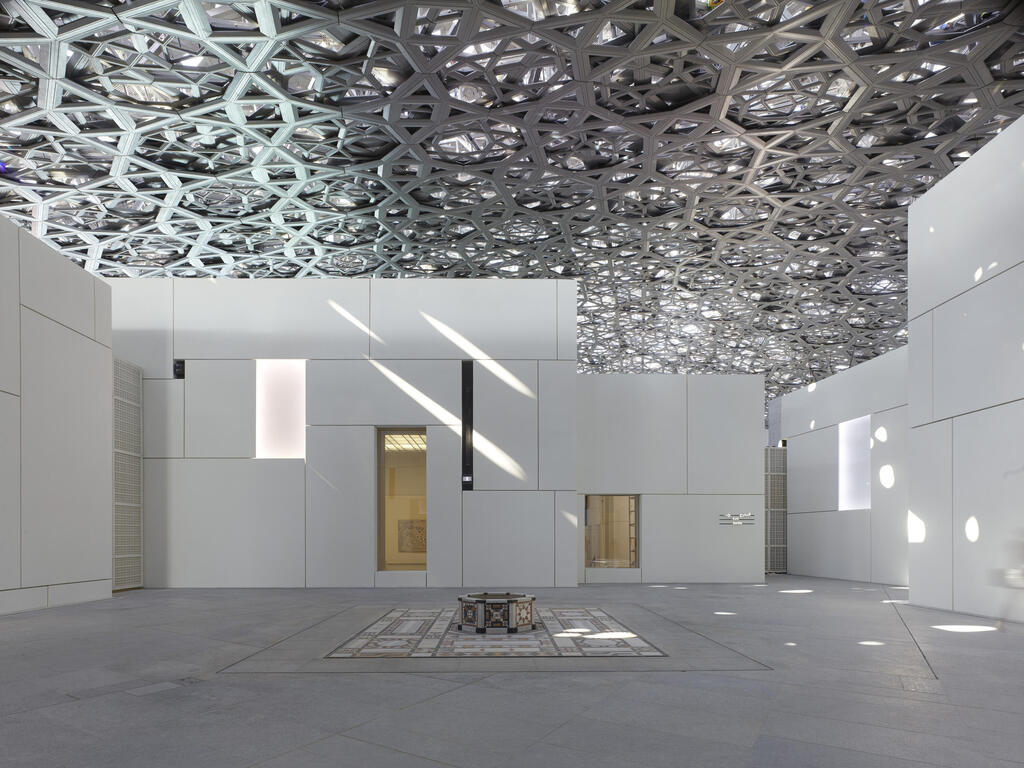
Louvre Abu Dhabi, the cultural district’s opening act, featuring Ottoman mosaic pavement
(Photo: Roland Halbe)
Its architecture was designed to make an equally international statement. French Pritzker Prize-winning architect Jean Nouvel conceived the museum as a kind of “museum city,” consisting of clusters of low white buildings surrounded by water and covered by a vast dome approximately 180 meters in diameter.
The dome is composed of eight layers of geometric patterns inspired by Arab architectural traditions. Sunlight filters through the structure to create the museum’s celebrated “rain of light,” with thousands of shafts of sunlight shifting throughout the day. The result combines advanced engineering, responses to the desert climate and references to local architectural traditions.
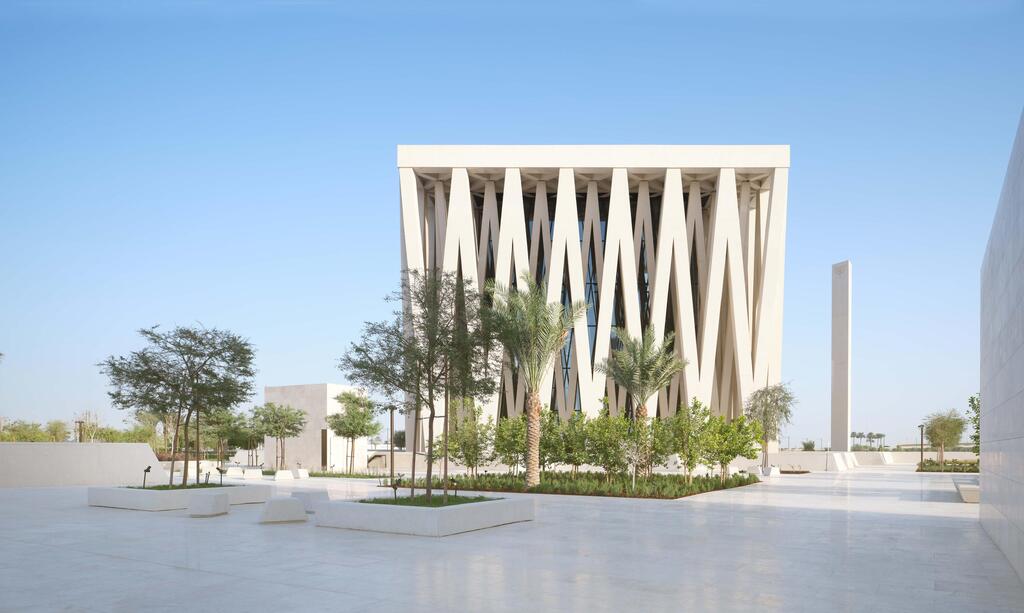
The synagogue at the Abrahamic Family House in Abu Dhabi
(Photo: Dror Baldinger)
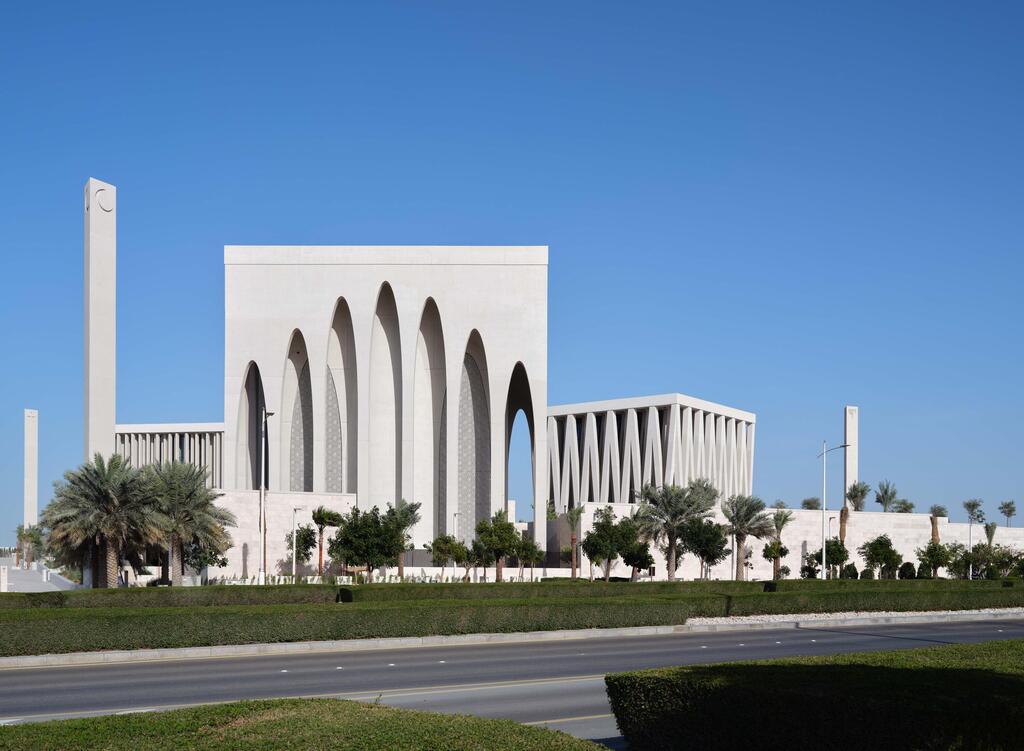
The Abrahamic Family House complex
(Photo: Adjaye Associates)
Religious tolerance as architecture
The next major institution in the district does not focus on art, but faith. The Abrahamic Family House seeks to make dialogue among Judaism, Christianity and Islam an integral part of Abu Dhabi’s cultural vision.
Opened in 2023, the complex contains a mosque, a church and a synagogue operating side by side, along with a shared educational center. Named for Abraham, a figure revered across all three monotheistic religions, the project emerged in the broader era of rapprochement that included the historic Abraham Accords signed between the UAE and Israel in 2020.
Beyond functioning as active houses of worship, the buildings are intended to serve as spaces for meetings, study and dialogue among people of different faiths. It is one of the most ambitious architectural projects built in recent years around the idea of religious tolerance, although critics may also view it as part of the UAE’s broader effort to present itself internationally as an open, moderate and influential state.
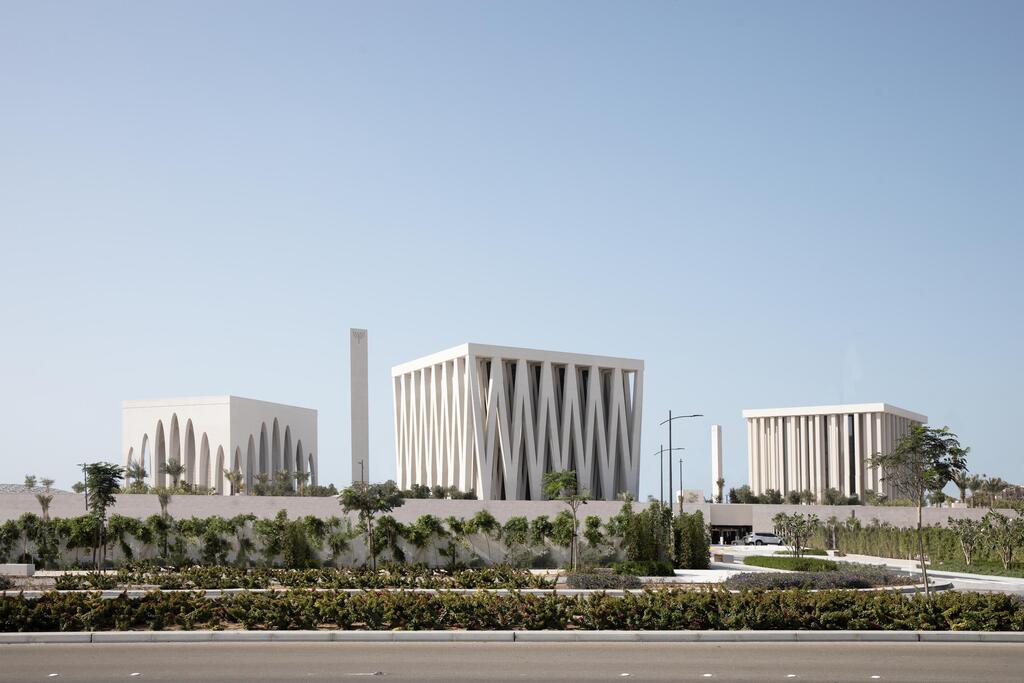
The Abrahamic Family House complex, dedicated to religious tolerance
(Photo: Adjaye Associates)
British-Ghanaian architect David Adjaye designed the project around three cubic buildings of equal size but different architectural detail. Each is adapted to the religious tradition it serves through its orientation, treatment of light, proportions and interior design. Yet all three use similar materials and stand on a shared base, symbolizing equality and common origins.
Open spaces and shaded gardens between the buildings encourage encounters among visitors. The architecture is restrained and minimalist, relying more on order, proportion and natural light than on spectacular form.
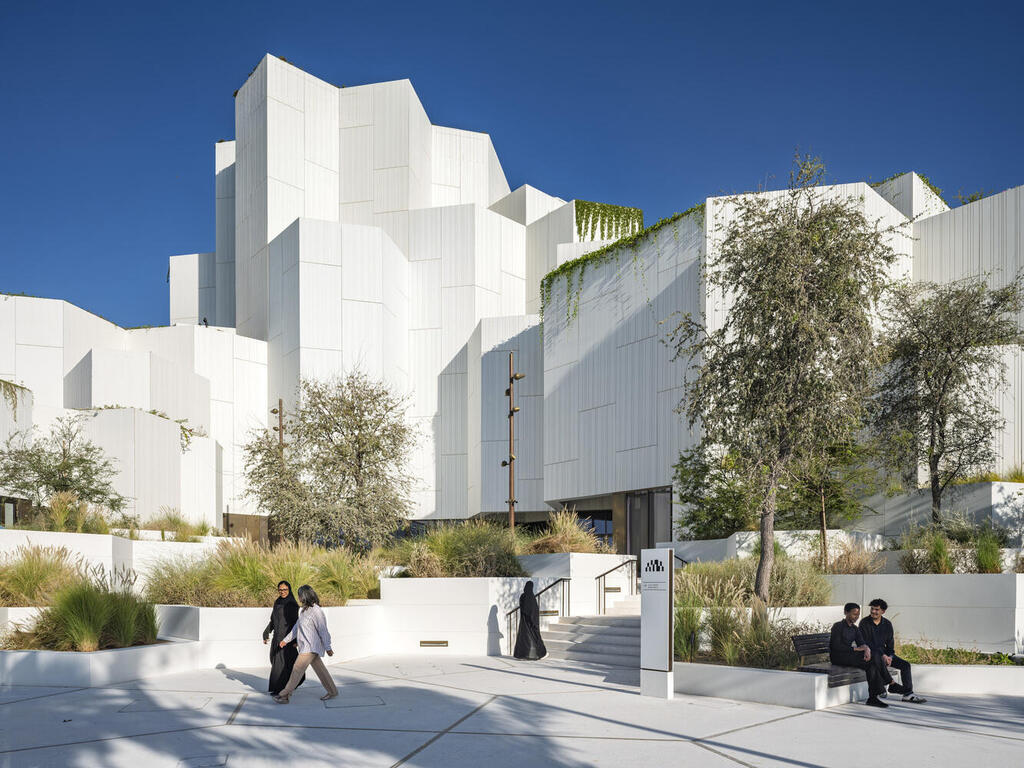
Natural History Museum Abu Dhabi by Mecanoo
(Illustration: Courtesy of Mecanoo architects)
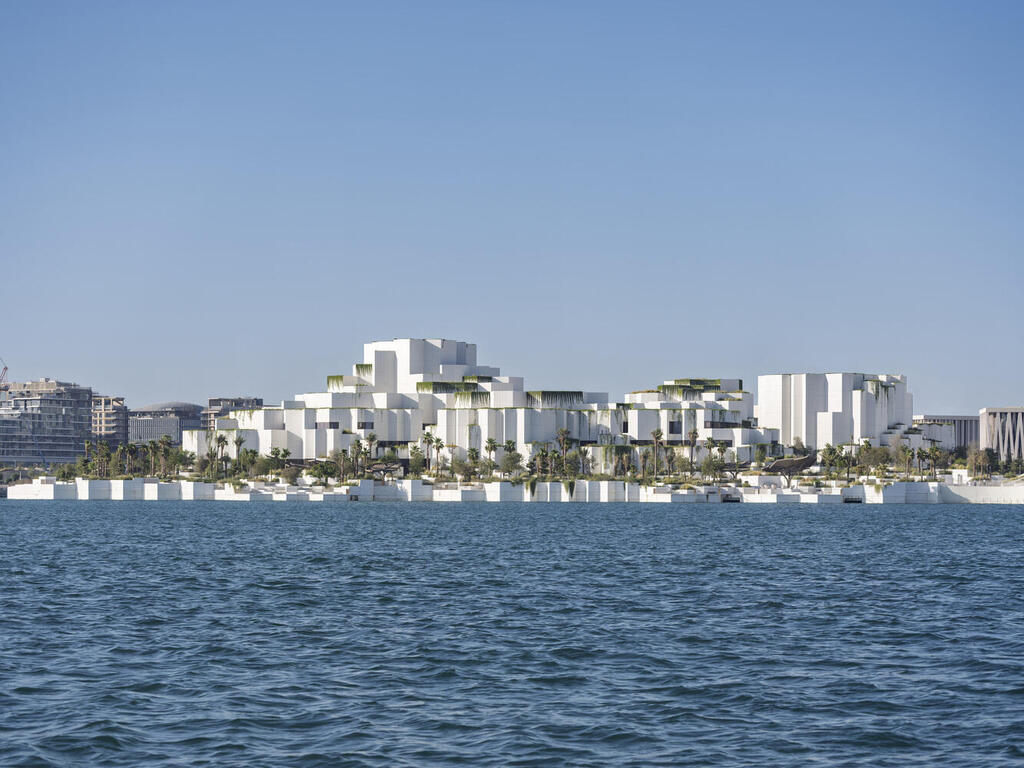
Natural History Museum Abu Dhabi by Mecanoo
(Illustration: Courtesy of Mecanoo architects)
Making science part of the cultural story
Unlike many of Saadiyat’s institutions, which focus on art, history or cultural identity, the Natural History Museum Abu Dhabi is devoted entirely to the natural sciences. Opened in 2025, the museum explores the development of the universe and life on Earth, alongside exhibitions on biodiversity, evolution, geology and climate change.
Through scientific specimens, fossils and interactive displays, it presents the processes that shaped the planet and the environmental challenges facing it today. The choice to place a natural history museum at the heart of a cultural district reflects a broader idea: that science and the environment are inseparable from the cultural narrative of the 21st century.
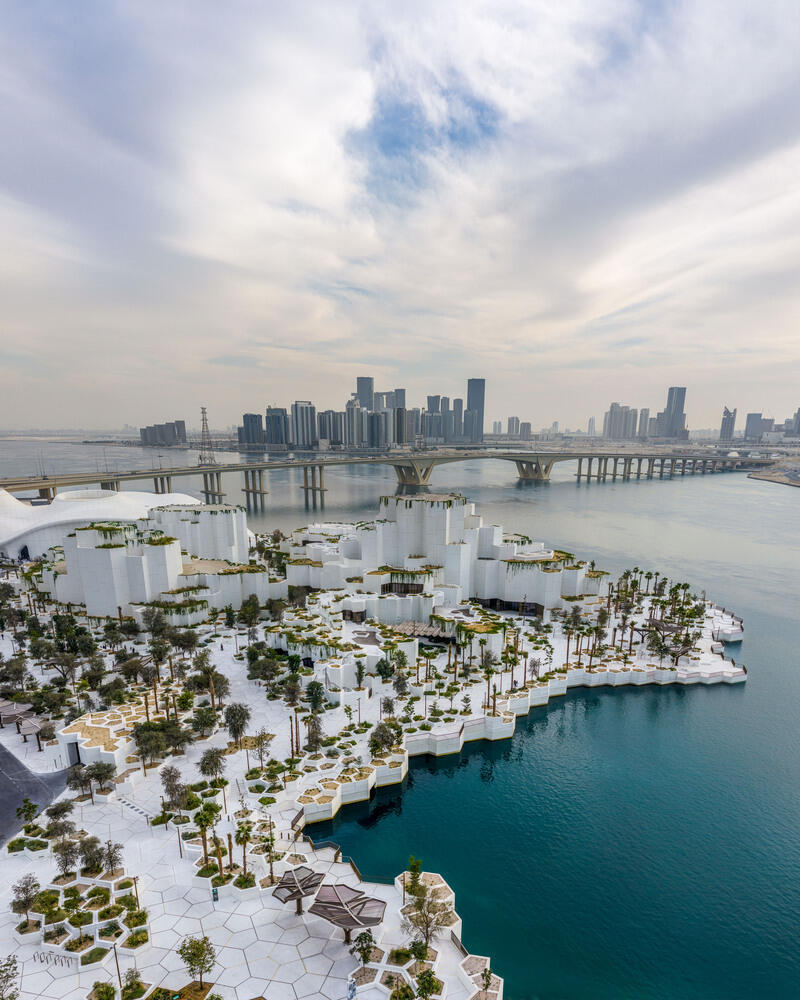
Natural History Museum Abu Dhabi by Mecanoo
(Illustration: Courtesy of Mecanoo architects)
Its architecture is similarly inspired by nature. Designed by Dutch architecture firm Mecanoo, the museum resembles a monumental rock formation apparently sculpted over millions of years by natural forces.
Rough facades and tiered interior spaces evoke canyons, cliffs and geological formations, while large openings introduce natural light and frame views of the desert landscape. Here too, the building is more than a container for exhibitions. Through material, light and form, its architecture becomes part of the museum’s story.
A national museum on falcon wings
At the center of the district is the Zayed National Museum, the first institution on Saadiyat dedicated specifically to the history and national identity of the UAE.
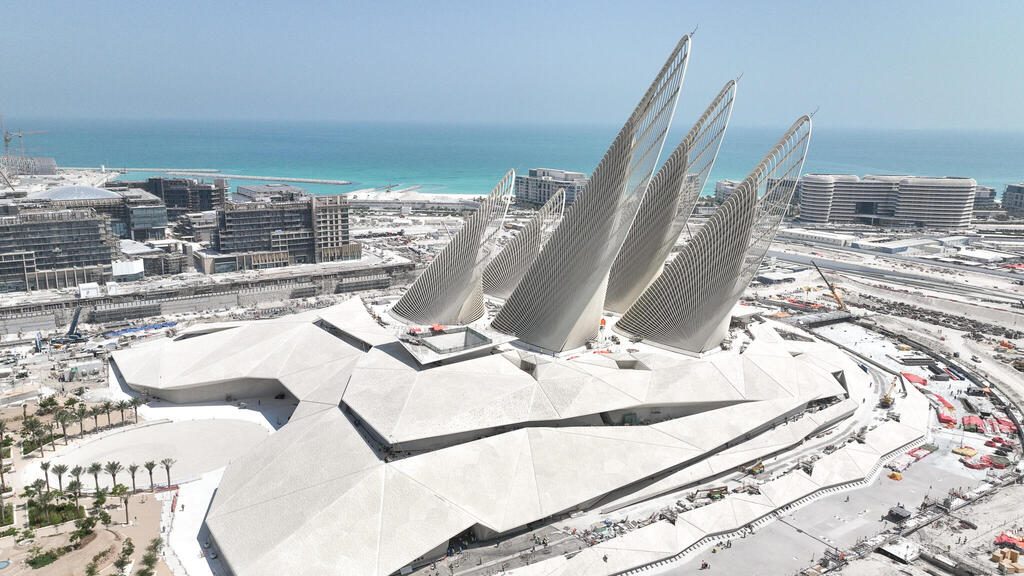
Zayed National Museum, Abu Dhabi
(Photo: Courtesy of Zayed National Museum)
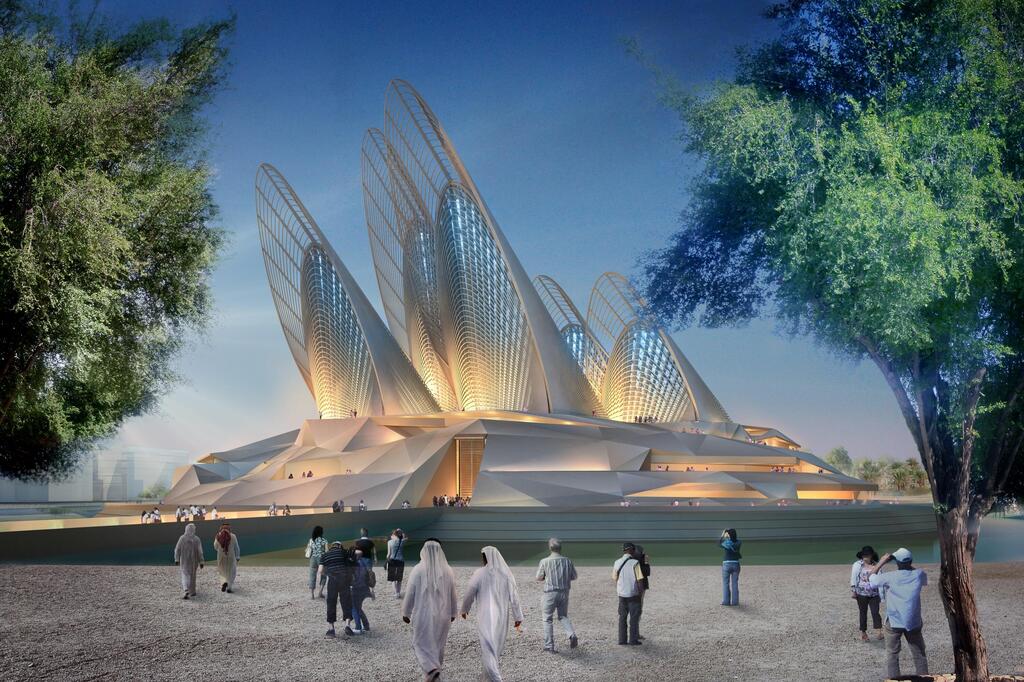
Zayed National Museum, named after Sheikh Zayed bin Sultan Al Nahyan, the UAE’s founder and first president
(Illustration: Foster + Partners)
Opened in 2025, the museum is named after Sheikh Zayed bin Sultan Al Nahyan, founder of the UAE and its first president. Its exhibitions combine archaeological artifacts, historical documents and digital displays chronicling the region’s development, from ancient settlement and maritime trade to the establishment of the federation in 1971.
A substantial portion of the museum is devoted to Sheikh Zayed and the vision associated with the creation of the UAE, making the institution a platform for presenting the country’s official national narrative.
Its architecture also ties national identity to the local environment. Designed by British firm Foster + Partners, led by Norman Foster, the museum is organized around five steel towers rising above the roof and recalling the wings of a falcon, an animal closely associated with the Emirati tradition of falconry.
The towers also serve a practical purpose, functioning as passive ventilation structures that help move air through the building and reduce cooling demands in the desert climate. The combination of local symbolism and contemporary environmental technology is a recurring theme across Saadiyat.
Two of the district’s most prominent projects still under development were designed by Canadian-American architect Frank Gehry, one of the most influential figures in contemporary architecture, who died last December.
Over more than five decades, Gehry designed some of the buildings most closely associated with the era of star architecture, including the Guggenheim Museum Bilbao and Walt Disney Concert Hall in Los Angeles.
That one of his final major projects is being realized in Abu Dhabi underscores Saadiyat’s ability to attract architecture’s biggest names.
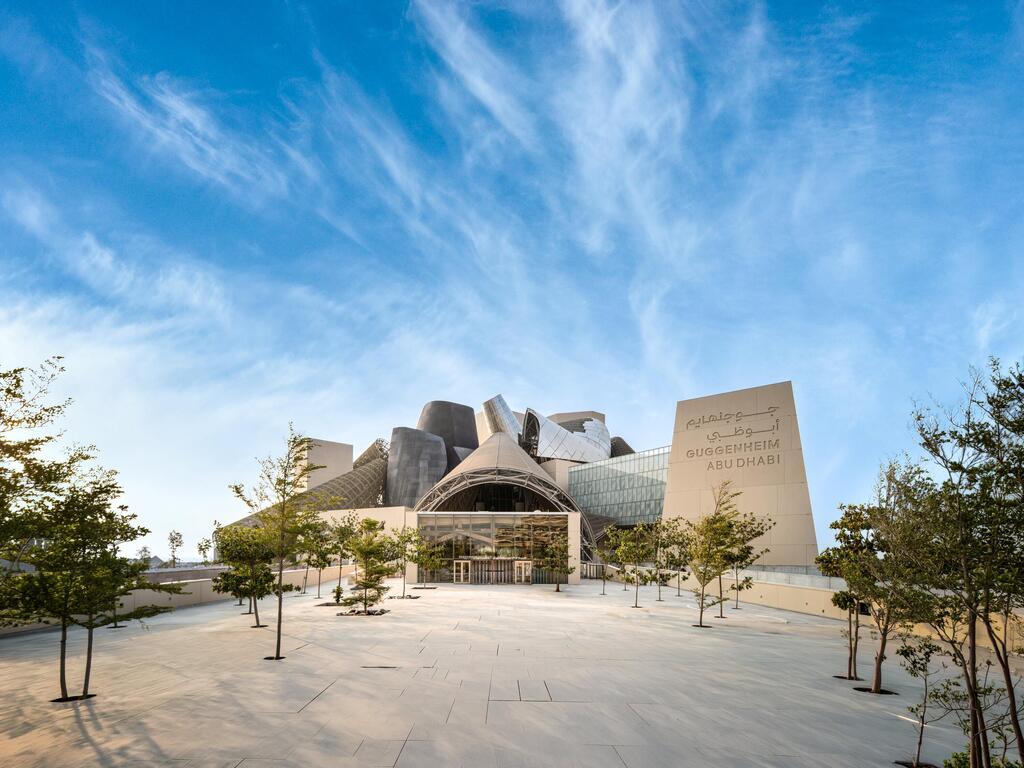
Guggenheim Abu Dhabi
(Illustration: Courtesy of Frank Gehry architects)
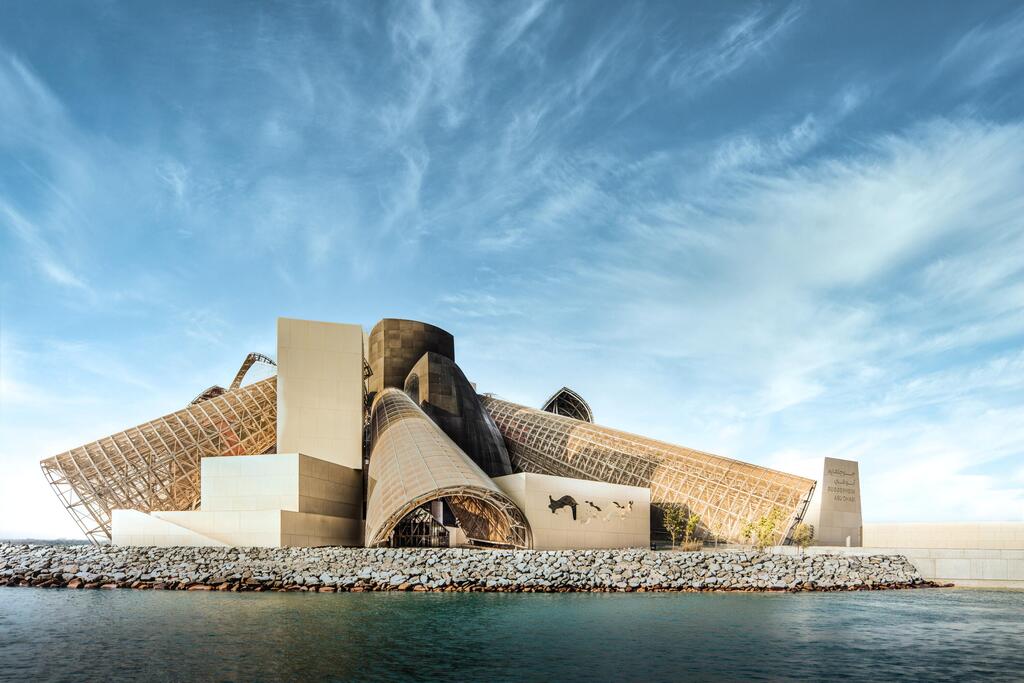
Guggenheim Abu Dhabi, expected to open in December
(Illustration: Courtesy of Frank Gehry architects)
Guggenheim Abu Dhabi, now in advanced construction and expected to open in December, is planned as the largest museum in the Guggenheim network and one of the biggest museums of modern and contemporary art in the Middle East.
Unlike other Guggenheim branches, however, it is not intended simply to reproduce the model of New York or Bilbao, but to offer a new perspective on the history of modern and contemporary art through an Abu Dhabi lens.
Its collection, assembled gradually since 2009, places significant emphasis on artists from the Middle East, North Africa, South Asia and other regions often pushed to the margins of traditional Western art narratives.
The museum aims to present modern and contemporary art as a web of exchanges, influences and cultural connections rather than only as a Western chronological or geographic progression. Its architecture reflects that ambition.
Unlike Gehry’s Guggenheim Bilbao, whose sculptural titanium exterior made it an instant global icon, the Abu Dhabi project is comparatively restrained and more directly adapted to the desert climate.
Alongside flexible gallery spaces, it incorporates courtyards, shaded areas and ventilation towers inspired by the traditional Gulf barjeel, or wind tower, in an effort to reduce energy consumption and employ passive cooling principles.
The building contains 30 galleries connected by a central atrium, with 10 sculptural cones rising above them, some reaching heights of up to 88 meters. The cones are not merely signature Gehry forms. They also contribute to natural ventilation and shading, making the architecture part of the visitor experience.
Several hundred meters away, another Gehry-designed project, Dar al Funoon (house of art), is planned as a major performing arts center. The complex is intended to bring together an opera house, concert halls, a theater and other performance spaces under one roof.
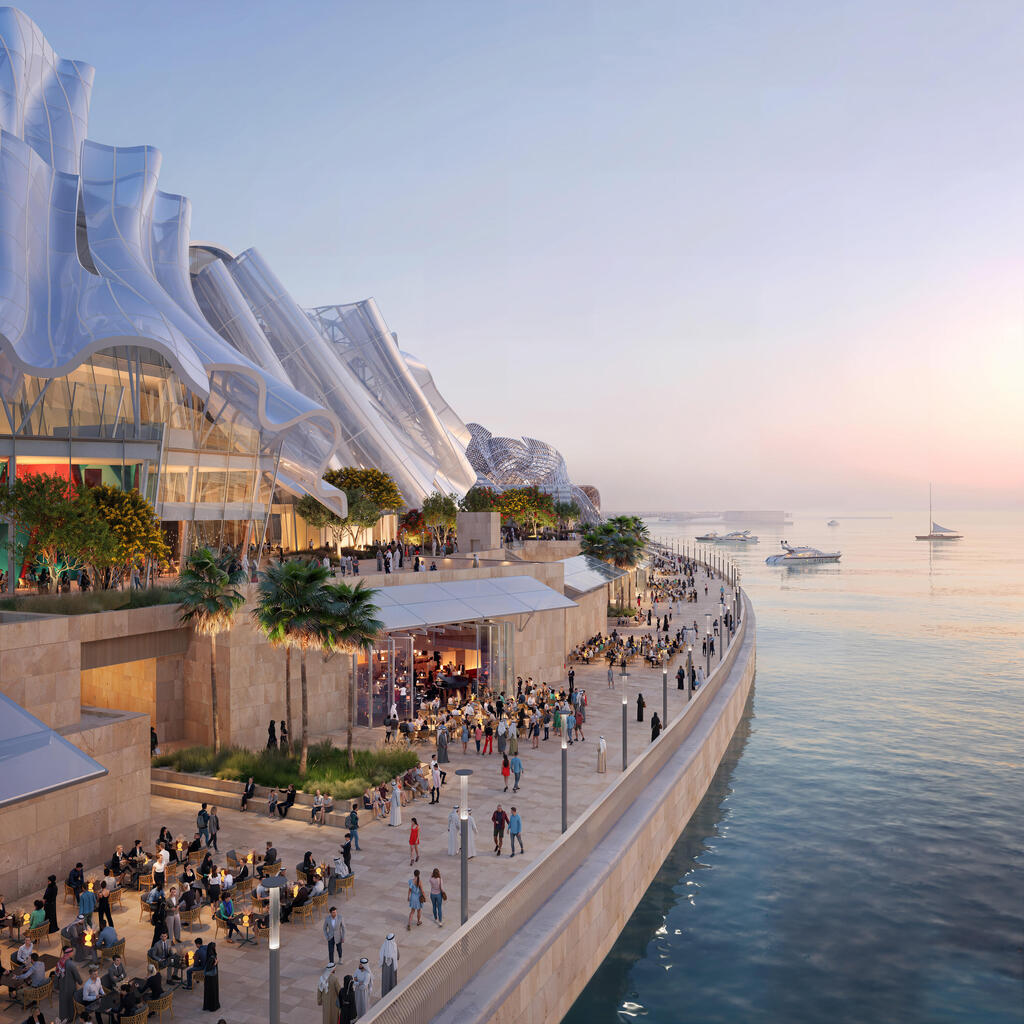
Dar al Funoon, Abu Dhabi
(Illustration: Courtesy of Frank Gehry architects)
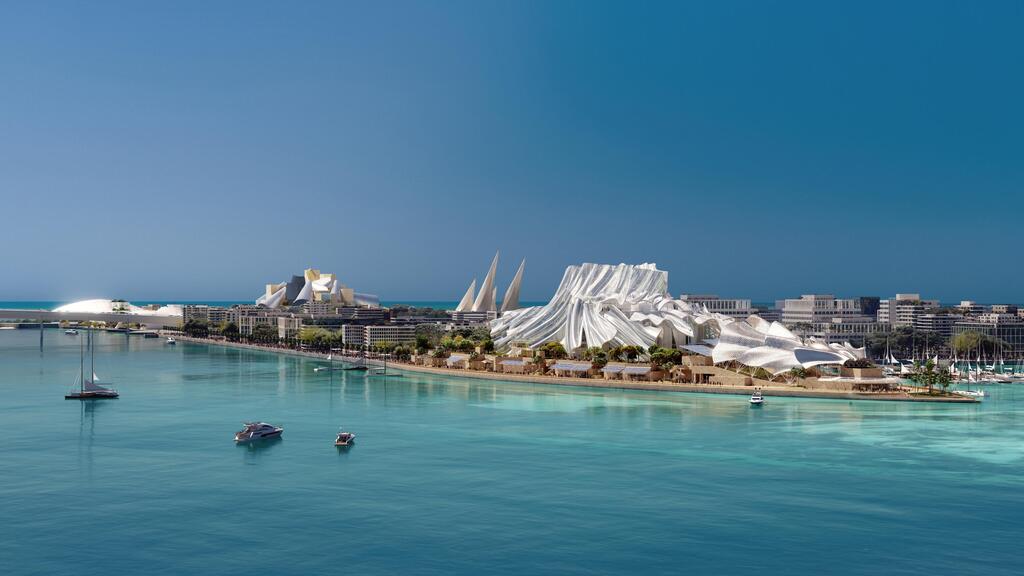
Dar al Funoon
(Illustration: Courtesy of Frank Gehry architects)
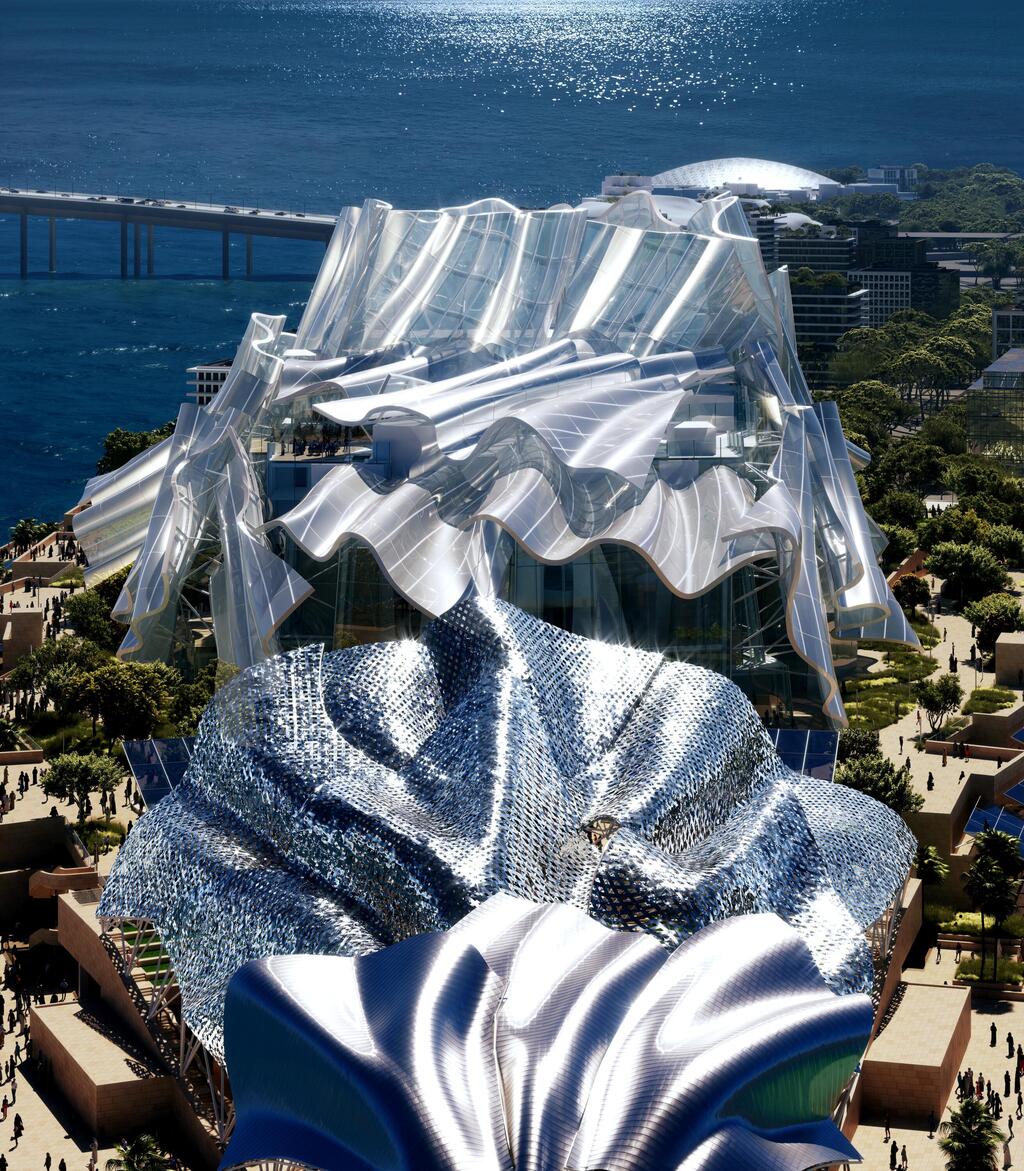
Dar al Funoon, A composition of rounded volumes woven together
(Illustration: Courtesy of Frank Gehry architects)
While most of Saadiyat’s institutions focus on visual culture, Dar al Funoon is designed to make the district active throughout the day and evening, with live performances complementing the museums.
Gehry’s familiar sculptural vocabulary remains visible in the composition of rounded volumes woven together, although the design is also adapted to the climate and local setting.
Together, the two projects encapsulate Gehry’s longstanding belief that cultural buildings should not simply house activity, but become urban symbols in their own right.
At teamLab Phenomena Abu Dhabi, visitors are not merely looking at artworks. They become part of them. Opened in 2025, the museum is operated by the Japanese art collective teamLab, which has become one of the most prominent names in immersive art through multisensory installations combining art, technology and science.
The collective operates permanent spaces in Tokyo, Osaka, Shanghai, Beijing, Macau and Jeddah, and now Abu Dhabi.
Unlike conventional museums, the works here are created through light, sound, movement and technology. Installations respond to visitors and change in real time, blurring the distinction between artwork and audience.
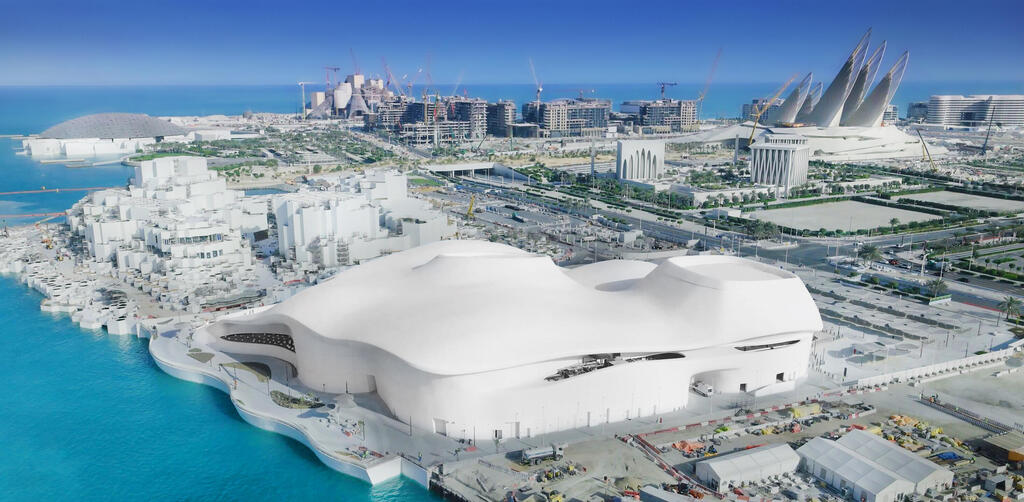
teamLab DCT Abu Dhabi
(Photo: Miral)
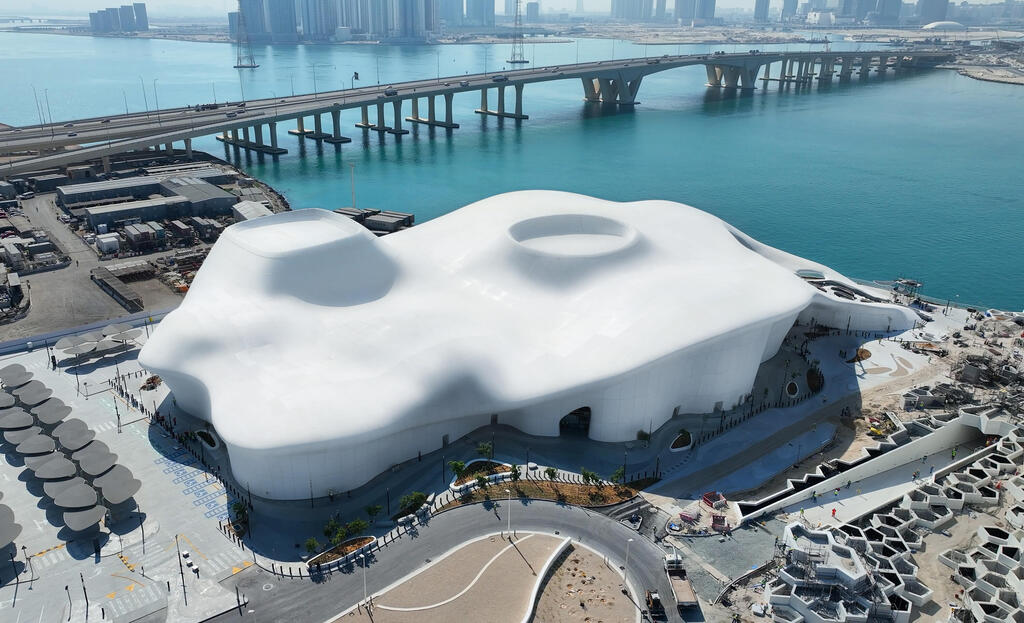
teamLab DCT Abu Dhabi
(Photo: Miral)
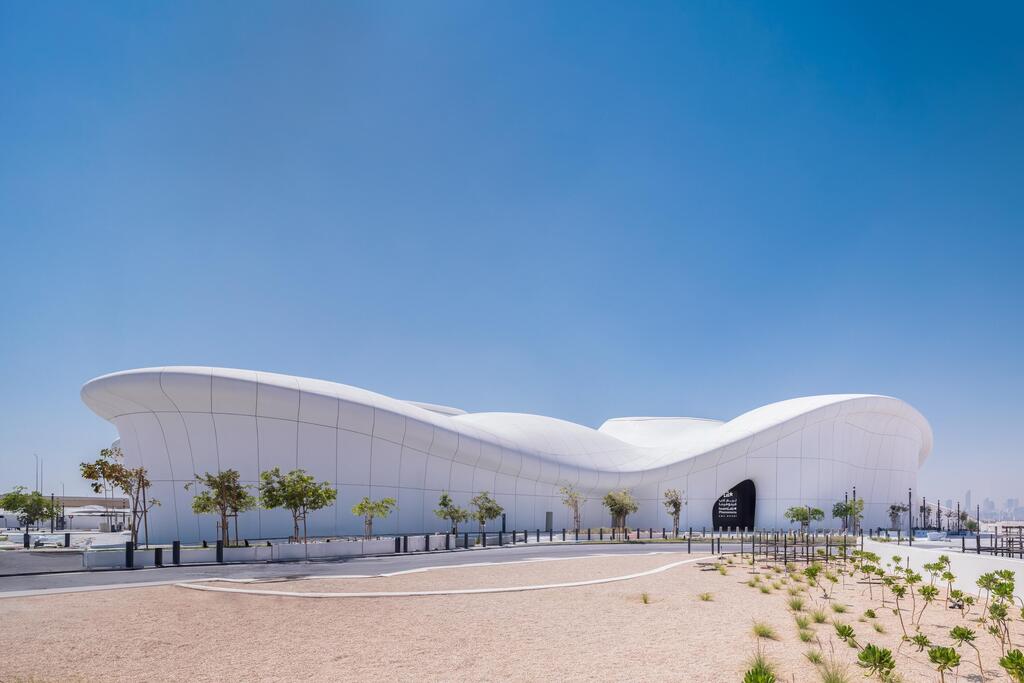
Designed as a white, amorphous and almost sealed shell, resembling a sculpture more than a public building. teamLab 8 - ©︎ teamLab Architects
(Photo: Vincent Hecht)
The building itself, designed by MZ Architects, which operates from Dubai and Lebanon, appears as a white, amorphous and almost sealed shell. With few windows and flowing lines, it resembles a sculpture or organic body more than a conventional public building. Its futuristic shape has even been compared to a spacecraft landing in the desert.
The design process also reversed the usual architectural sequence. Rather than determining the exterior first and fitting the exhibitions inside it, the outer shell was shaped around the spaces required for the digital installations. Interior areas were conceived as flexible canvases for works that constantly change according to light, sound and visitor movement.
It is difficult to dispute either the architectural quality of many of these buildings or the scale of the investment behind them. The more important question is not whether Abu Dhabi’s cultural district will become a tourist destination. In many respects, it already has.
The test will come 20 or 30 years from now: whether Saadiyat can generate an active cultural life and a local community that embraces these institutions as an integral part of the city.
Only then will it become clear whether Abu Dhabi has built museums for the public, or monumental structures designed above all to strengthen the country’s international standing through architecture, art and soft power.