


The country's most expensive and complex infrastructure project in history, the metro project, is moving forward another step. Ahead of the publication of the results of the tender to establish the infrastructure needed for tunnel excavation and station construction, NTA published Sunday morning the prequalification (PQ) process for the "Infra II" tenders.
This is the equipment and operations stage, in which companies will be selected to supply the rolling stock, establish communications and signaling systems and actually manage train traffic. The total value of the tenders at this stage alone is estimated at approximately 30 billion shekels.
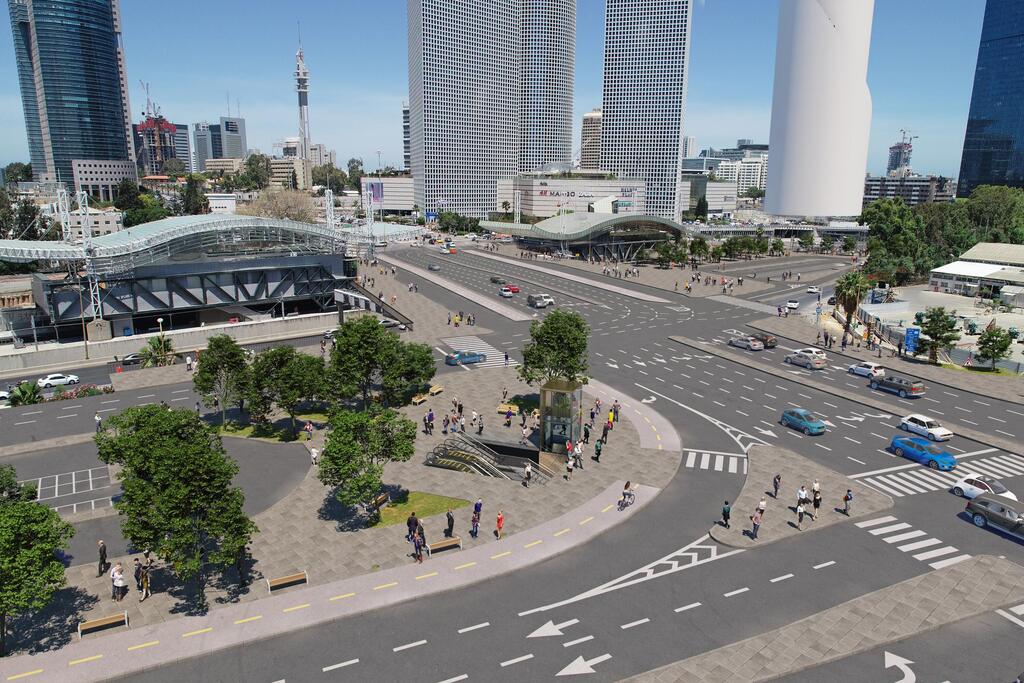
Transportation authorities and the Finance Ministry are describing the current move as a critical complementary step in planning the project. Until now, the process has focused on the "Infra I" tender, which covers the physical infrastructure for excavating the tunnels and building the framework for the 109 underground stations. That tender is valued at approximately 65 billion shekels and is currently in advanced prequalification stages involving 20 international and Israeli groups.
Moving to autonomous trains
NTA is now seeking to run the procurement processes in parallel to ensure that the stage of equipping the engineering infrastructure with operating, electrification and control systems proceeds continuously.
The main development in the new tender is its advanced technological specifications, centered on a transition to fully autonomous trains. The trains to be supplied to the Tel Aviv metropolitan area are designed to operate according to the international GOA4 standard, the highest level of automation currently available in rail transportation. It enables trains to travel, stop and manage malfunctions without human intervention and without a driver present in the train car.
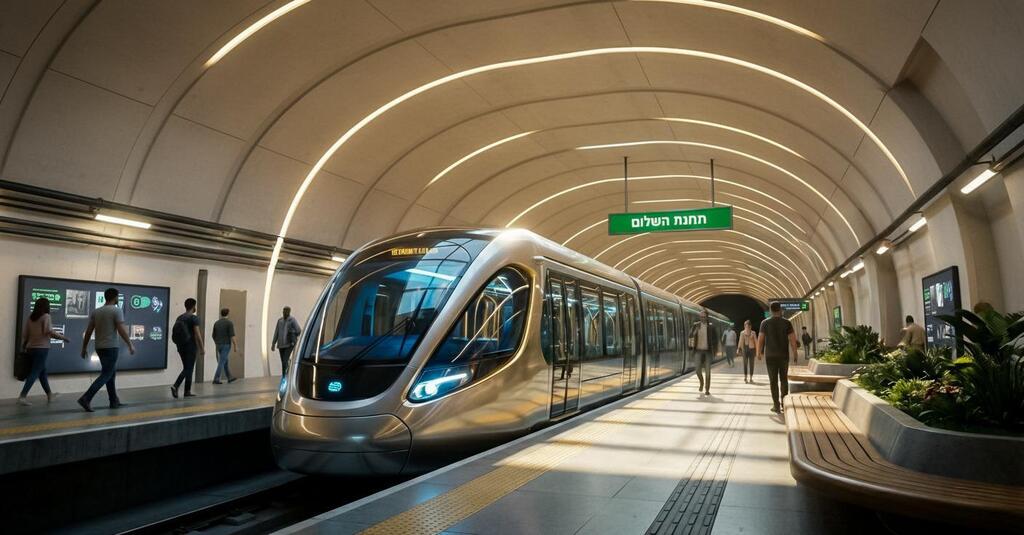
Rendering of the Tel Aviv Shalom metro station
(Illustration: NTA)
Under the tender, the winning companies will not simply supply the train cars. They will be required to design and establish an entire system linking the trains with the stations and control center. This includes smart signaling systems, electrical and energy systems, encrypted communications and finishing equipment for the underground stations. In addition, the winners will receive a long-term concession to operate and maintain the entire network.
Because of Israel's complex security environment and local threats, NTA and government ministries have developed special adaptations. The technical requirements were formulated in close coordination with Israel's security and emergency agencies, and foreign companies bidding for the tender will be required to work with Israeli cybersecurity and information security companies, which will be responsible for protecting the autonomous systems against hacking and disruption.
The launch of the tender follows an extended round of meetings held by representatives of the Finance Ministry, Transportation Ministry and NTA with dozens of global infrastructure and transportation companies in Europe and Asia. Market officials estimate that the tender will serve as a significant test of confidence in the Israeli economy's ability to attract major investments and foreign technology at this time.
The planned metro network is expected to consist of three lines spanning approximately 150 kilometers in total and connecting 24 local authorities across the metropolitan area. According to economic projections, the network is designed to carry more than 600 million passengers a year. Together with the Red, Green and Purple light rail lines, it is expected to bring the total number of annual trips to more than 800 million. For the Tel Aviv metropolitan area, the project is viewed as a long-term growth engine that is expected to reshape real estate, employment and transportation in the coming decades.