

The broader housing market may be cautious, but luxury real estate is behaving differently. In Israel’s premium residential market, particularly in Tel Aviv, Jerusalem and Herzliya, demand for rare properties has not disappeared. It has become more precise, more selective and more sophisticated.
While parts of the Israeli housing market are facing slower sales, cautious buyers and growing competition over each transaction, the luxury segment continues to operate by a different set of rules. In penthouses, unique apartments and luxury residential projects, the question is no longer only what is being built, but who knows how to reach the right buyers, generate demand and maximize value.
Gallery
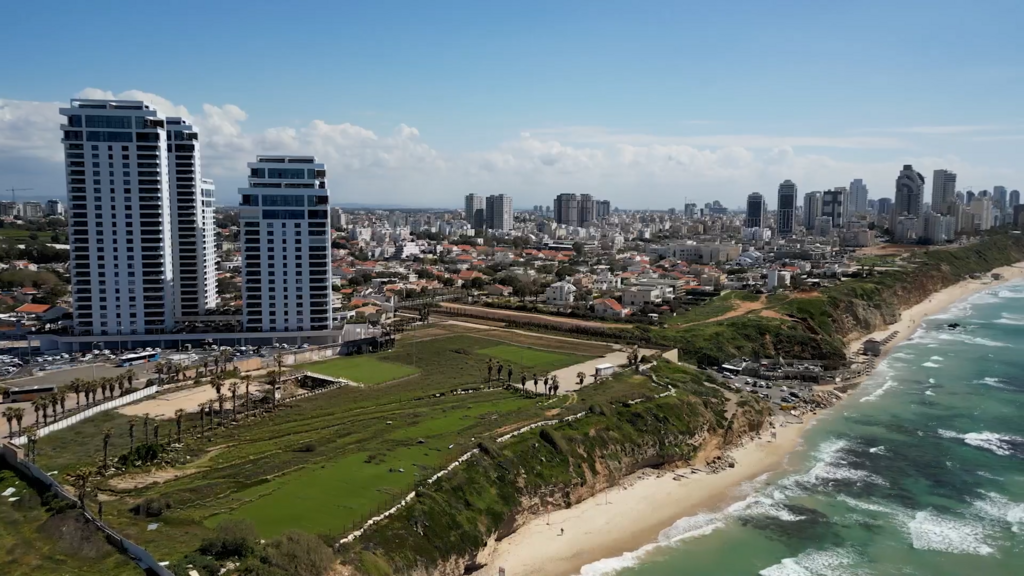
In Israel’s premium residential market, particularly in Tel Aviv, Jerusalem and Herzliya, demand for rare properties has not disappeared
(Photo: Screengrab)
For luxury buyers, real estate is not merely a place to live or a financial investment. It is also a tool for wealth preservation, a sense of security, quality of life, privacy and status. During periods of economic and geopolitical uncertainty, exceptional properties in highly desirable locations, with clear characteristics of rarity, often become even more meaningful. Even when the broader market moves cautiously, the upper end of the market continues to see transactions in the tens of millions of shekels, particularly around assets that are difficult to replace.
Globally, the prime residential market continues to demonstrate resilience in a period of volatility and uncertainty. According to Knight Frank’s The Wealth Report 2026, the global Prime International Residential Index, PIRI 100, rose by 3.2% in 2025, with 73 out of the 100 prime markets surveyed recording price growth.
In Israel, this trend is reflected mainly in luxury projects and premium properties in Tel Aviv, Jerusalem and Herzliya: penthouses, special seafront apartments, homes with open views, historic properties in Jerusalem and new projects in the most sought after locations. These are not products that are sold like ordinary apartments.
According to Lee Ziv, who led the marketing and sales of some of Israel’s most prominent luxury residential projects, including Meier on Rothschild and Port Tel Aviv Residence, “True luxury is not measured only by price per square meter, an expensive specification or an impressive lobby. It is built through rarity, an irreplaceable location, quality architecture, precise planning, privacy, a sense of security, quality of life and the ability to preserve value over time.”
Ziv says that in order to turn all of these elements into a real sale, one must first understand who the property is truly intended for.
“In the luxury market, it is not enough to build a rare asset. You need to know who the exact target buyer is, what motivates them, how to reach them, and how to turn location, rarity and story into real value in the sale process.”
One of the notable changes in recent years is the growing importance of foreign residents, premium buyers, wealthy families, entrepreneurs and businesspeople, alongside family offices and wealth managers who identify rare properties on their behalf. For them, an apartment in Tel Aviv, Jerusalem or Herzliya is not only a real estate decision. It is a family, emotional and strategic decision.
“Luxury projects, penthouses, unique apartments and premium properties in Tel Aviv, Jerusalem and Herzliya are not sold through standard marketing,” says Ziv. “These are products that require a different audience, a different language, trust, relationships, deep familiarity with foreign residents and a precise sales process. That is the difference between advertising an expensive property and selling it at its maximum value.”

Lee Ziv
(Photo: Courtesy of Lee Ziv)
For developers, the implication is clear. In a market where almost every project wants to be called “luxury,” true differentiation is not created only by the product itself, but by the way demand is built around it. A luxury project must be managed as a rare product, with a clear story, accurate pricing, a defined target audience and a network capable of reaching the right buyers.
Precisely in times of uncertainty, premium buyers are looking for a different kind of certainty: an irreplaceable location, an exceptional product, architectural quality, privacy, service and a sense of security. Therefore, while the broader market may move cautiously, true luxury properties continue to attract buyers who are not looking only for an apartment, but for an asset with long term value.
Ultimately, Israel’s luxury real estate market does not reflect the broader housing market. It is a market of rarity, trust, relationships and a deep understanding of a very specific audience. And the more complex the period becomes, the more important it is to know not only how to market an expensive property, but how to build real demand around it, reach the right audience and maximize its value.
Lee Ziv is an expert in sales, marketing and positioning of luxury real estate projects.