


Beyond the significant wartime damage to regime symbols, government buildings and strategic assets in Iran, secondary and unintended harm has also been reported at Persian heritage sites, museums, palaces and historic structures.
Some of these sites are UNESCO World Heritage locations, while others date back centuries and preserve Iran’s rich cultural and architectural legacy. They are not military targets and do not appear on official target lists, but have sustained damage as a byproduct of Israeli and U.S. airstrikes. What might seem marginal to outside observers has drawn sharp reactions in Iran.
Kazem Gharibabadi, Iran’s deputy foreign minister, said this week that “attacks on museums and historical sites are an assault on part of our cultural identity.” He added that damage to dozens of cultural and historical sites shows the conflict has expanded to include cultural heritage, calling it “clear evidence of systematic violations of international law by the regimes of the U.S. and Israel.”
Iranian officials have raised similar complaints since the start of the current war, known as Operation Roaring Lion or Epic Fury in the U.S. Tehran Governor Mohammad Sadegh Motamedian told Lebanon’s Al-Mayadeen network affiliated with the Iran-led Shiite axis that 19 museums in the capital had been damaged, along with 58 centers nationwide. “Cultural, scientific and civilian centers are among the main targets of Israeli and American attacks,” he said.
On March 4, Iranian Foreign Ministry spokesman Esmail Baghaei wrote on X that a missile strike on Tehran’s historic Arg Square damaged Golestan Palace, a UNESCO World Heritage site and one of the capital’s enduring symbols. He called the attack “a heinous crime aimed at erasing Iran’s cultural heritage, the cradle of ancient history and civilization.”
Baghaei cited international conventions, including the 1954 Hague Convention the First Additional Protocol to the 1977 Geneva Conventions, and the Rome Statute of the International Criminal Court, arguing that any deliberate targeting of cultural heritage constitutes a grave violation of international humanitarian law and a war crime. He shared footage showing debris scattered across the palace and shattered windows.
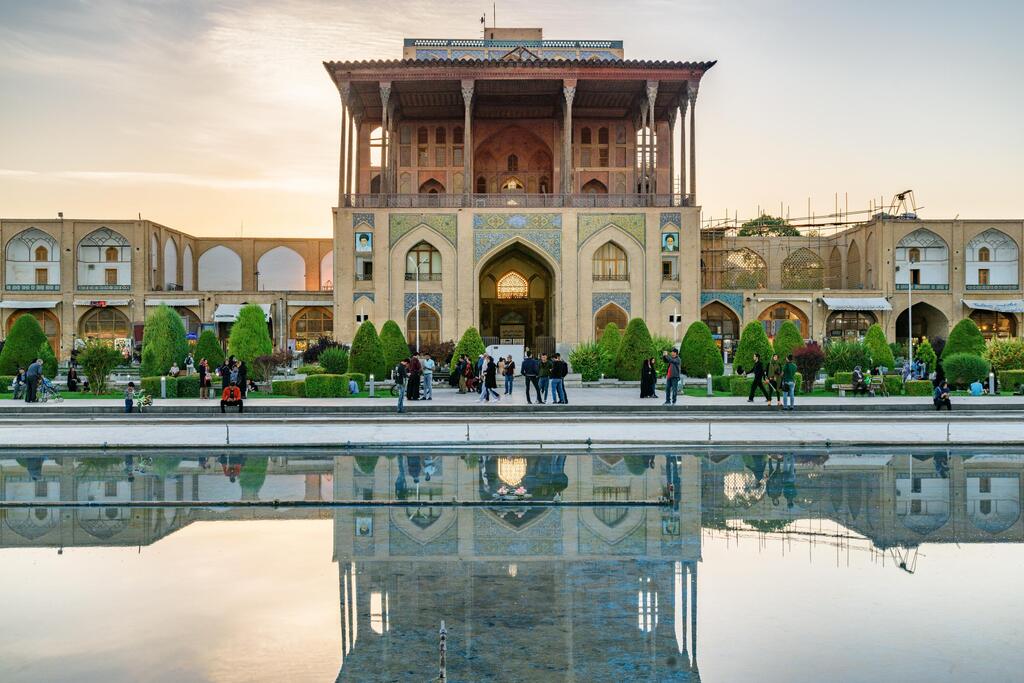
In a March 10 post, Baghaei reported damage to another UNESCO-listed site, Chehel Sotoun Palace in Isfahan, built in 1647, stating that after targeting Golestan Palace in Tehran, the United States and Israel struck another site of outstanding universal value. He described the palace as a masterpiece belonging not only to Iran but to all humanity. “The world cannot remain silent while the aggressors’ brutal crimes threaten the shared heritage of humankind.”
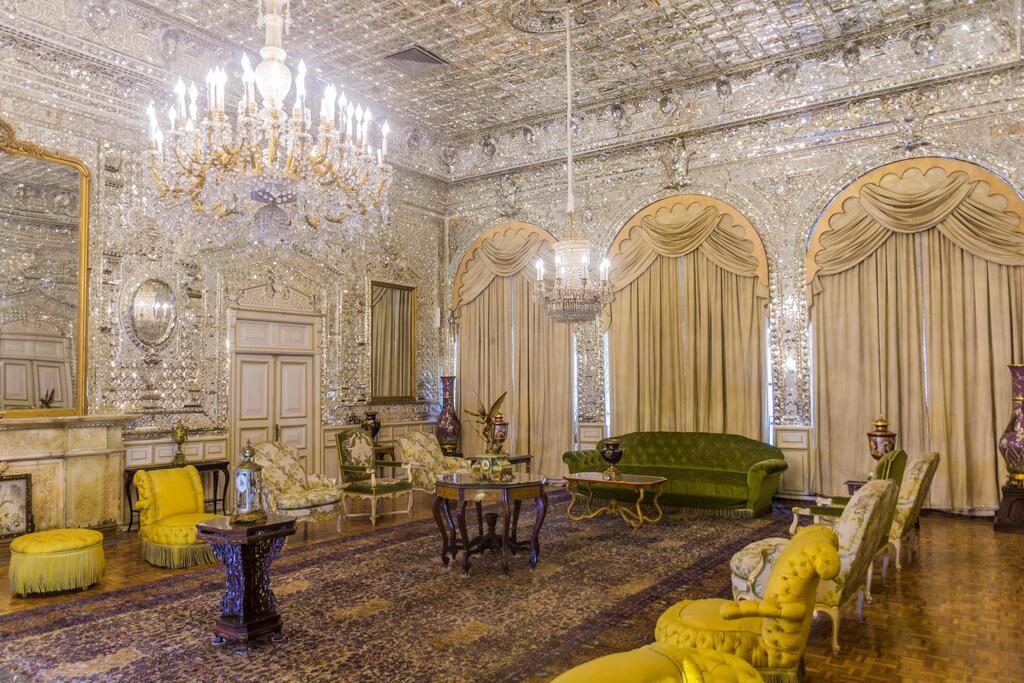
Golestan Palace before the attack
(Photo: Matyas Rehak, shutterstock)
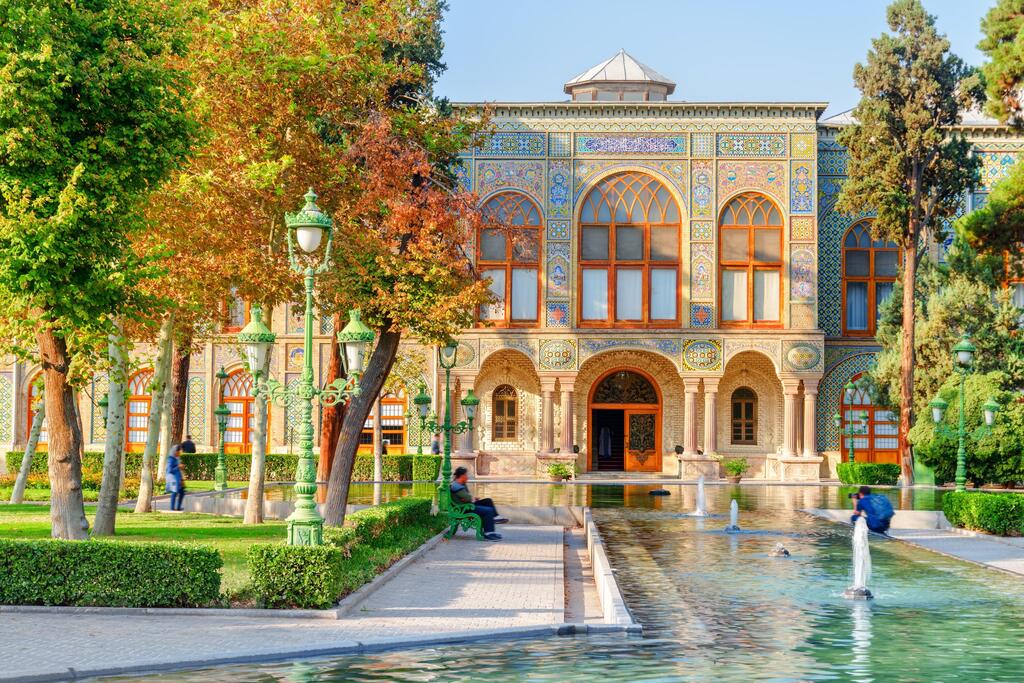
Golestan Palace Tehran
(Photo: Efired, shutterstock)
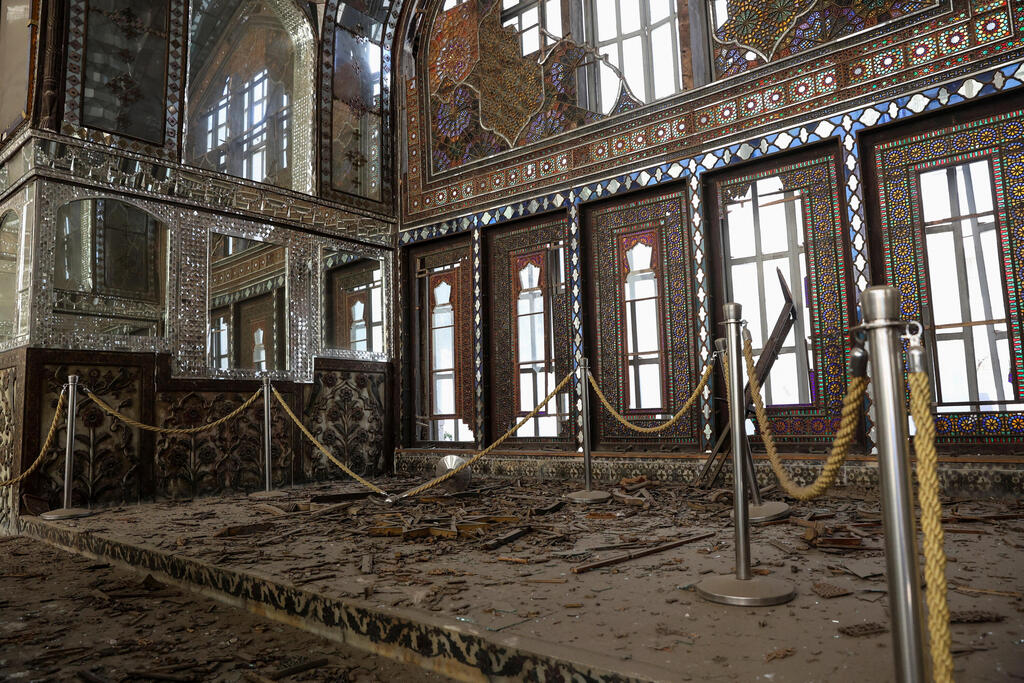
Damage at Golestan Palace
(Photo: Majid Asgaripour/WANA (West Asia News Agency) via REUTERS)
Regional Arab media have also reported on the alleged damage. Qatar’s Al-Araby Al-Jadeed published footage titled “Heritage under attack,” referring to Chehel Sotoun and Ali Qapu palaces in Isfahan. Saudi channel Asharq aired what it described as exclusive video of damage following airstrikes in the province. Iran’s Al-Alam network quoted the Isfahan governor as saying 14 UNESCO-registered archaeological sites in the province had been targeted.
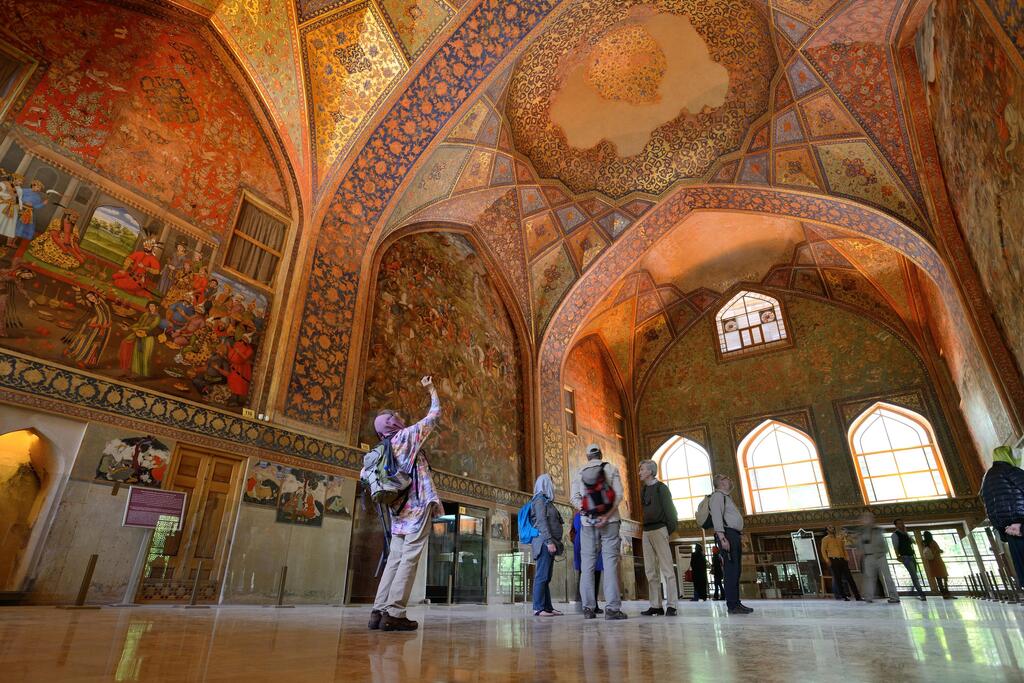
Chehel Sotoun palace in Isfahan
(Photo: astudio, shutterstock)
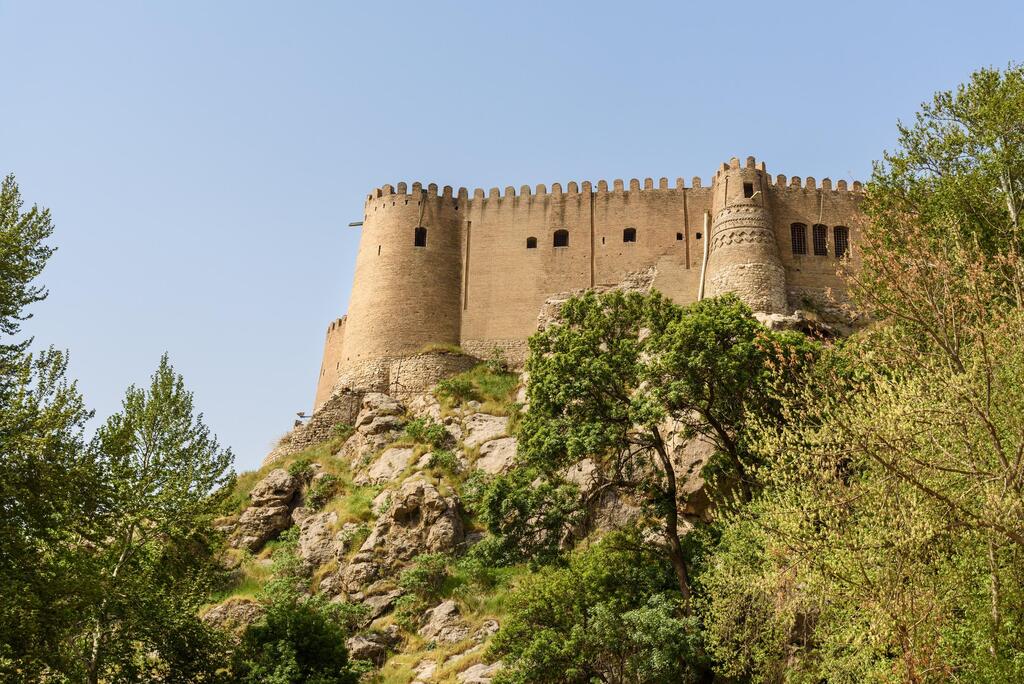
Falak-ol-Aflak Castle on top of mountain in Khorramabad
(Photo: Elena Odareeva, shutterstock)
However, available documentation does not indicate direct hits on the heritage sites themselves. Instead, the damage appears to have resulted from nearby strikes on Iranian regime targets.
According to a recent report in The Guardian, Falak-ol-Aflak Castle in Khorramabad, in Lorestan province, was among the sites affected. Ata Hassanpour, head of the provincial heritage department, said in a Telegram post that the perimeter of the castle was hit, destroying nearby offices and museums and injuring five staff members. The main structure, he said, remained intact.
Sites in Iran’s northwestern Kurdistan province have also reportedly been affected. An Iranian geologist who worked in Isfahan for years told The Guardian the city is especially vulnerable. "Isfahan has long been attacked from below, by land subsidence that is destroying the Safavid-era structures, and now from the above, by the Americans,” the geologist said. “Isfahan seems to have fewer friends than ever today.”
UNESCO response
On March 12, Iranian Foreign Minister Abbas Araghchi joined the criticism, writing on X that Israel is attacking historical monuments dating back to the 14th century. He said it's natural that a regime that won't last a century hates nations with ancient pasts. He questioned UNESCO’s response, saying, "But where's UNESCO? Its silence is unacceptable."
But UNESCO has not remained silent. The United Nations cultural agency said it is deeply concerned about the fate of heritage sites in Iran and across the region, urging all parties to protect cultural landmarks. The organization noted that the war’s impact is being felt beyond Iran, including in Lebanon.
A day later, Araghchi struck a different tone, thanking UNESCO for what he called a responsible response to the damage at Golestan Palace and expressing hope the agency would maintain a firm and principled stance against further attacks on cultural heritage, including historic monuments in Isfahan. He added that protecting these sites is an international concern.
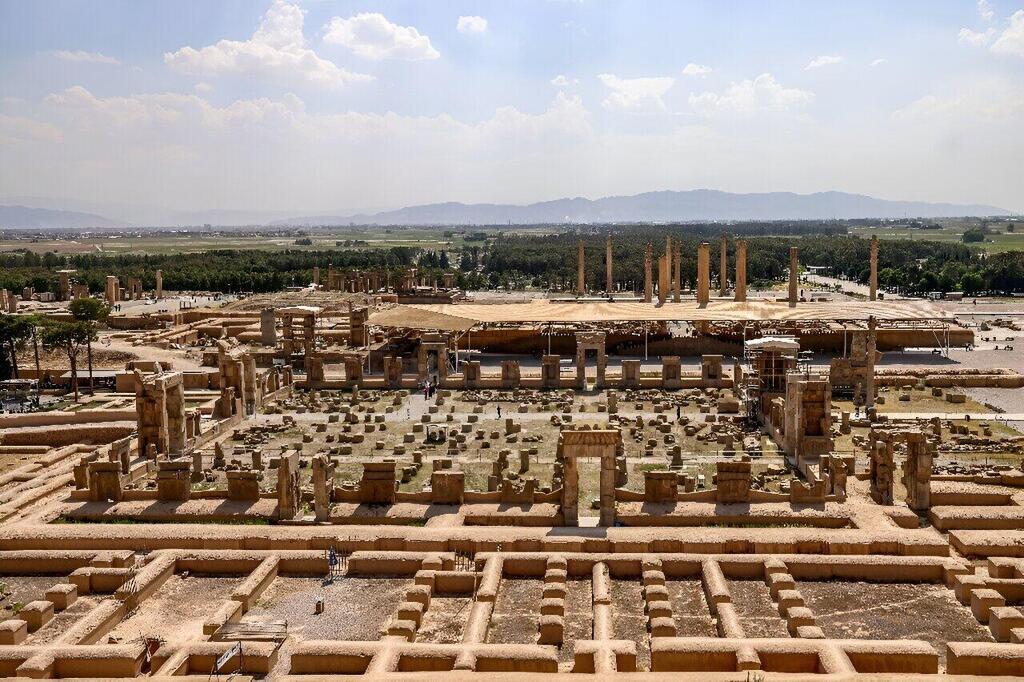
Persepolis, capital of the Persian Empire
(Photo: AFP)
‘The regime is to blame’
Iranian exiles opposed to the regime have also expressed concern over damage to Persian heritage, but place responsibility on the extremist Islamic regime.
Goldie Ghamari, an Iranian-born Canadian human rights activist, told Ynet that “the terrorist Islamic regime has ignored and neglected Iran’s cultural heritage for 47 years.” She said that after the 1979 revolution, authorities attempted to destroy Persepolis, the ancient capital of the Persian Empire, but were stopped by citizens.
“A month before the conflict, they looted palaces in Tehran, sold everything inside and stole valuable artifacts belonging to the Iranian people,” she said. “The fact that the regime is now using cultural heritage to accuse Israel and the United States is astonishingly hypocritical and shows how desperate they are.”
“Iranians know the greatest threat to Iran’s cultural heritage is the Islamic regime occupying Iran,” she added.