


In the first quarter of 2026, the nationwide average apartment price stood at NIS 2.33 million (about $803,000). Compared with the previous quarter’s average price of NIS 2.37 million (about $817,000), this marked a decline of 1.6%. Compared with the first quarter of 2025, when the average price stood at NIS 2.35 million (about $810,000), the average fell by 0.8%.
Alongside the decline in prices, the market has also seen a freeze in transactions. Combined with Bank of Israel restrictions on financing benefits, this has led contractors to launch campaigns that allow them to avoid officially lowering apartment prices — apparently because of agreements with financing bodies — while still offering discounts under certain conditions, such as membership in consumer clubs.
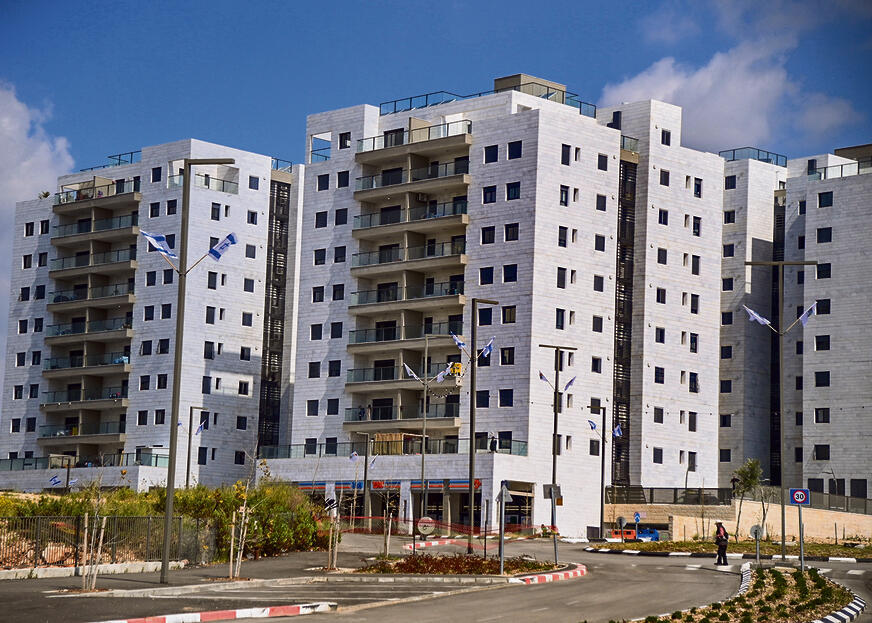
Until now, the best-known real estate campaigns were those aimed at members of the “Haver” club, created in cooperation with leading real estate companies. Recently, however, additional clubs have joined the trend, including the “Frequent Flyer” club, which partnered with Yuvalim City Boy, the Hot consumer club, which partnered with Avgad, and on Tuesday Avisror Moshe & Sons announced a partnership with the Cibus club.
In the latter case, the discount amounts to around 13% and can reach as much as NIS 700,000 (about $241,000). The developers are attempting to attract buyers at a time when the market is frozen, while trying to ensure that the discounts are not reflected in official Central Bureau of Statistics measurements, which do not include such promotions in the apartment prices they publish.
“Mamon” and ynet analyzed data published by the Central Bureau of Statistics and examined average prices in Israel’s 18 largest cities, each with more than 100,000 residents, in order to track increases and decreases in every city and district. The figures relate to the first quarter of 2026 and are calculated based on a weighted average of new and second-hand apartments of all sizes, from one to six rooms. The data covers January through March.
The figures show once again that Tel Aviv remained the most expensive city in Israel, with an average apartment price of about NIS 4.56 million (about $1.57 million). This represented an increase of 10.3% compared with the first quarter of 2025. The highest-priced property during the period was an average 4.5- to 5-room apartment that cost NIS 6.72 million (about $2.32 million). Here, however, there was a 4.5% decline compared with a similar apartment during the corresponding period. Compared with the previous quarter, the fourth quarter of 2025, prices rose 6.5%, although a higher number of transactions likely pushed the average upward.
Decline in Herzliya, Jerusalem in third place
Herzliya remained in second place with an average price of NIS 3.85 million (about $1.33 million). This reflected a decline of 2.8% compared with the corresponding period and a sharper 5% drop compared with the previous quarter. Jerusalem again ranked third, with an average apartment price of NIS 3.09 million (about $1.07 million). This represented an annual increase of 2.3%, but compared with the fourth quarter of 2025 prices fell 6.8%.
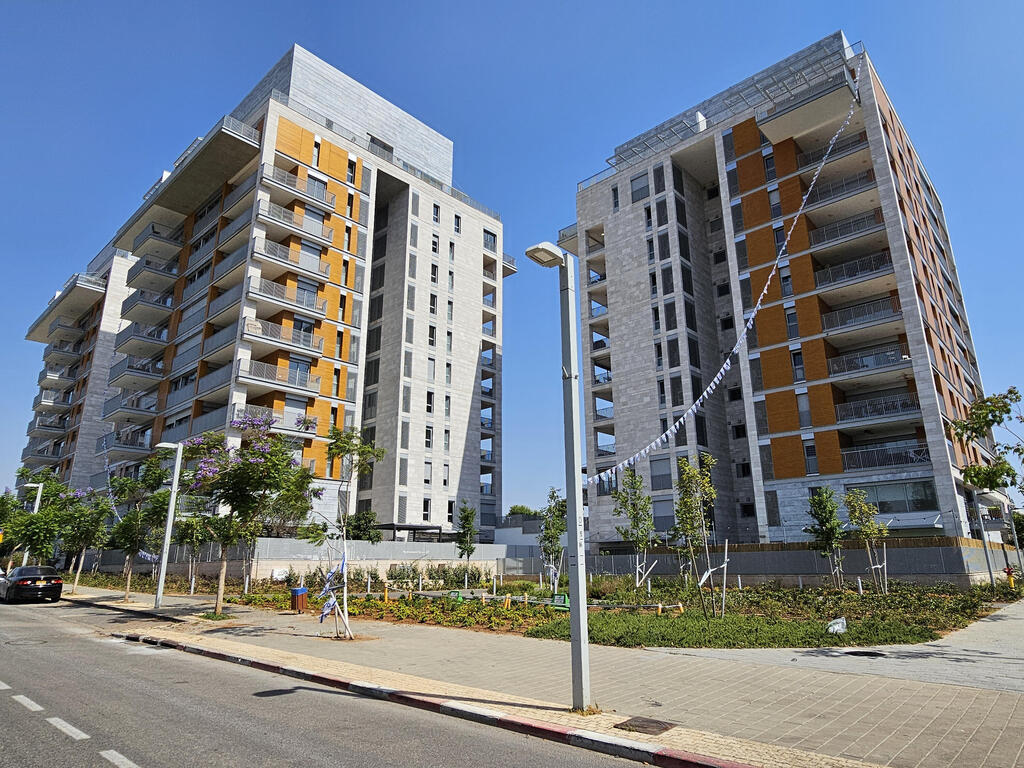
Herzliya Galil Yam neighborhood
(Photo: Yair Sagi)
Ramat Gan ranked fourth with an average apartment price of NIS 3.02 million (about $1.04 million). This reflected an annual decline of 1.4% and a steeper 5.4% drop compared with the previous quarter. Kfar Saba came in fifth, with an average apartment price of about NIS 2.93 million (about $1.01 million), posting increases compared with both the corresponding and previous quarters. The annual increase totaled about 11.2%.
Netanya ranked sixth, with an average apartment price of about NIS 2.87 million (about $990,000) in the first quarter of 2026, reflecting both annual and quarterly increases. It was followed by Rehovot, with about NIS 2.61 million (about $900,000) per apartment — an annual increase of about 2.5%, although compared with the previous quarter prices fell around 1.6%. In eighth place was Rishon Lezion, with an average apartment price of about NIS 2.57 million (about $886,000), up around 1.4% compared with the corresponding quarter and 1.2% compared with the previous quarter.
Petah Tikva ranked ninth with an average apartment price of about NIS 2.55 million (about $879,000). Prices there fell slightly, by around 0.4% compared with the corresponding quarter and by a more significant 5.8% compared with the previous quarter. Beit Shemesh ranked tenth with an average price of about NIS 2.47 million (about $852,000), reflecting an annual increase of about 3.1% and a slight quarterly decline of around 0.3%.
Holon followed in 11th place, overtaking several cities over the past year, with an average apartment price of NIS 2.36 million (about $814,000). Compared with the previous quarter prices rose in the city, although compared with the corresponding period there was a slight decline. It was followed by Bnei Brak, with about NIS 2.31 million (about $797,000), where prices declined slightly compared with the previous quarter but increased on an annual basis.
Bat Yam dropped to 13th place and posted declines in apartment prices compared with both the corresponding period and the previous quarter, with an average apartment price of about NIS 2.28 million (about $786,000). Ashdod ranked 14th, with an average apartment price of about NIS 2.09 million (about $721,000) in the first quarter of the year. Hadera was the last city to show slight declines, with the average apartment price crossing the NIS 2 million threshold (about $690,000) to reach about NIS 2.06 million (about $710,000).
The lowest prices — below NIS 2 million (about $690,000) — were recorded, as in previous quarters, in only three cities. In Be'er Sheva, where prices remained relatively stable, the average apartment price stood at about NIS 1.24 million (about $428,000). In Ashkelon, where prices declined slightly, the average stood at about NIS 1.63 million (about $562,000). In Haifa, where prices rose, the average apartment price reached about NIS 1.8 million (about $621,000).
And where can apartments still be found for less than NIS 1 million (about $345,000) at the start of 2026? In Ashkelon, where 1-2 room apartments cost about NIS 784,000 (about $270,000); in Haifa, where 1-2 room apartments cost about NIS 887,000 (about $306,000); and in Be'er Sheva, where 1-2 room apartments cost about NIS 608,000 (about $210,000) and 2.5-3 room apartments cost about NIS 849,000 (about $293,000).
Major cities recovering
A separate price review conducted by real estate appraiser Ohad Danos, former chairman of the Real Estate Appraisers Association, and obtained by ynet and Mamon, also points to a continued downward trend in the first quarter, with declines of 1.2% compared with the previous quarter and 1.6% compared with the corresponding quarter last year.

Ohad Danos
(Photo: Shahar Shirazi)
The review focuses on average prices for four-room apartments in 17 major cities. The data showed especially sharp annual declines in Modi’in, where the average price stood at about NIS 2.57 million (about $886,000), down 14%; in Rishon Lezion, where the average price stood at about NIS 2.2 million (about $759,000), down 9%; and in Netanya, where the average price stood at about NIS 2.44 million (about $841,000), down 8%.
At the same time, the number of transactions increased by about 29% compared with the previous quarter and by 9% compared with the corresponding period. “This figure becomes even more significant when taking into account that during March Israel was engaged in intense fighting on at least three fronts, with missile attacks continuing around the clock,” Danos explained.
Although average apartment prices declined, the latest Central Bureau of Statistics housing price index showed a 0.3% increase. It is important to note that the index is calculated differently from the average apartment price and relies on additional variables beyond transaction prices. Danos said that “it appears the cooling in the housing market is nearing its end, as many people are beginning to reconsider their moves in the market because of changing price declines in different localities.”
According to him, Israel’s major cities — Jerusalem, Tel Aviv and Haifa — are all recovering. Jerusalem and Tel Aviv posted average apartment prices of about NIS 3.22 million (about $1.11 million) and NIS 4.52 million (about $1.56 million) respectively, each recording annual increases of 2%. Haifa posted an average apartment price of about NIS 1.77 million (about $610,000), representing a jump of no less than 7%.
Ron Novotny, founder of the PROPLY platform and CEO of the Anglo-Saxon real estate network, explained that “despite the slowdown in sales, interest rates continuing to weigh on the market and the large inventory of unsold contractor apartments, prices are rising slightly because the market has become more selective. During a slowdown, buyers who depend on high financing rates or are waiting for interest rates to fall tend to postpone decisions. Those who remain active are mainly stronger buyers with greater equity and stronger repayment ability, looking for quality properties in high-demand areas.”

Ron Novotny
(Photo: Oz Mualem)
Novotny added that “the war has sharply refined buyers’ preferences, and over the past year there has been greater demand for new apartments with safe rooms, modern buildings and properties perceived as safer and better at preserving value. A sense of security, building quality and the ability to resell the property in the future have become more central considerations. In many cases, these are also more expensive apartments, so the shift in the mix of transactions supports rising prices in the index.”
At the same time, he stressed that it is still too early to declare a return to a broad upward trend. “PROPLY’s data points to considerable volatility between March and May. After the increase in March there was a correction, and in April prices partially declined but remained high. In May there was another slight increase. It should be remembered that during March and April there was widespread uncertainty throughout the economy because of the war with Iran, which also affected the purchasing intentions of many households. It is clear that the market has moved from weakness to a certain awakening, but it is still far from broad-based increases. At this stage, the quality of buyers and the quality of properties have more influence than the overall volume of transactions.”