

How do they manage their overdraft, how much do they pay for rent and which dream did they fulfill amid the war? People from across Israel share candid stories about their everyday lives—before and during the war. Meet the Lazarof-Lavi family from Jaffa.
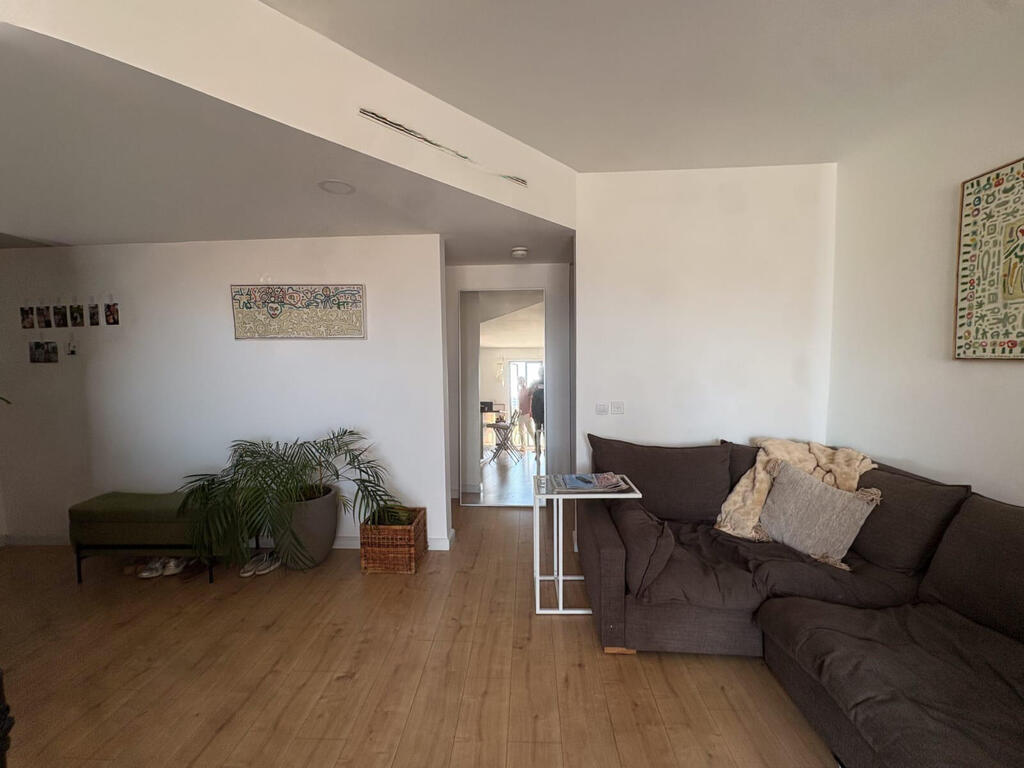
The apartment: Three-room rental in Jaffa. Monthly rent: NIS 9,200. "It's an incredible location," Lior says. "A tiny street above the Greek Market. The first time we came to see the apartment, I told Daniel, 'I'm not even going upstairs.' We live above a shopping center that was abandoned during the pandemic, and it's completely overrun by pigeons. It wasn't exactly inviting."
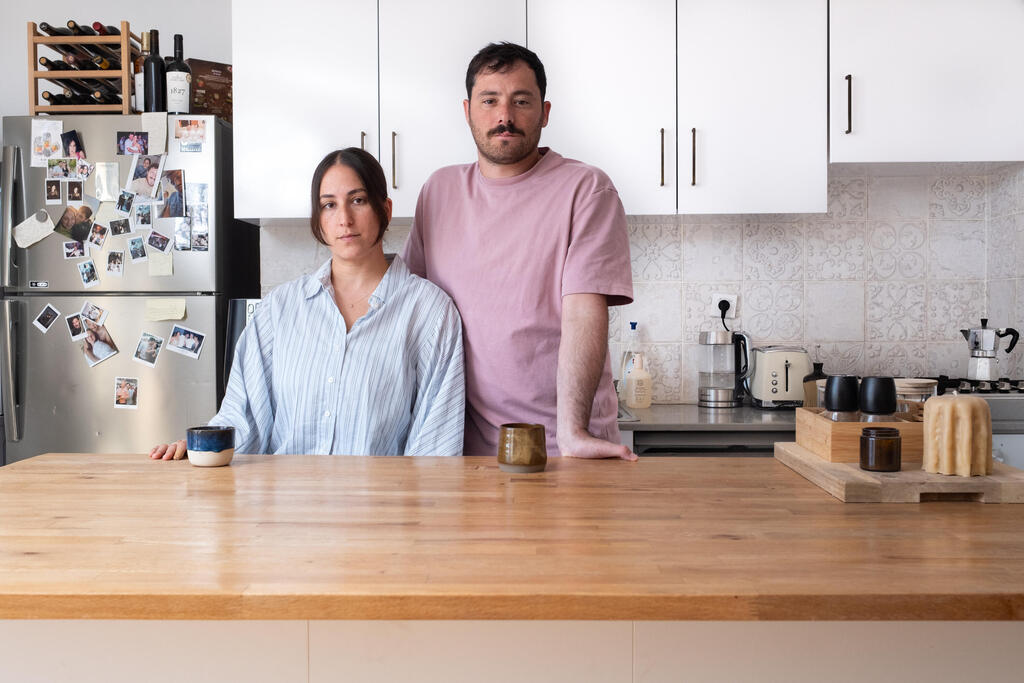
But then we stepped inside, and the apartment was stunning," she says. "There's a balcony overlooking Jaffa, an elevator, parking and a rooftop with a beautiful view of the Mediterranean."
"It was above the budget we'd set for ourselves," Daniel admits, "but we signed on the spot."
Why Jaffa?
The couple has lived in Jaffa for the past two years and says they have no plans to leave. "I absolutely love this neighborhood," Daniel says. "You're close to the beach, and you're close to Bloomfield Stadium."
Lior laughs. "Daniel is a Hapoel Tel Aviv fan. We can actually hear Eyal Golan's concerts from here. Thankfully, you can hear the music but not clearly enough to recognize the songs, so I don't feel like I'm unwillingly attending every concert."
A match made on Sheinkin
Although they met through a dating app, they later discovered they had been living just minutes apart.
"We both lived on Sheinkin Street," Lior recalls. "Daniel was at the Rothschild end, and I lived toward the other side. Our first date was at a deli halfway between our apartments."
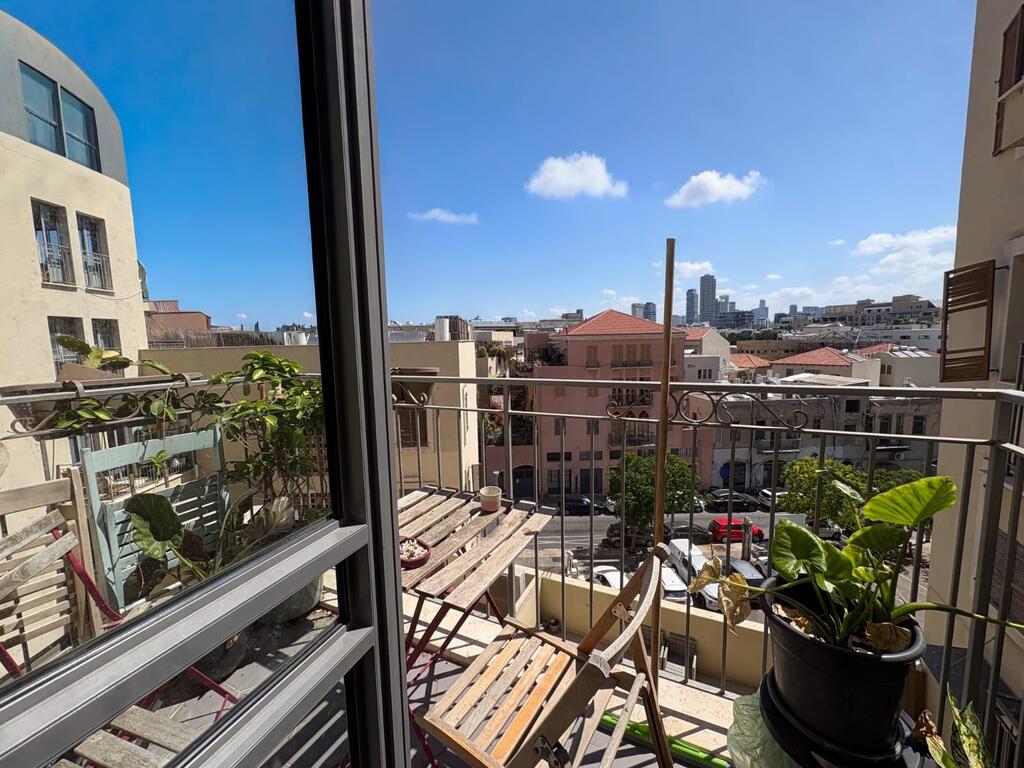
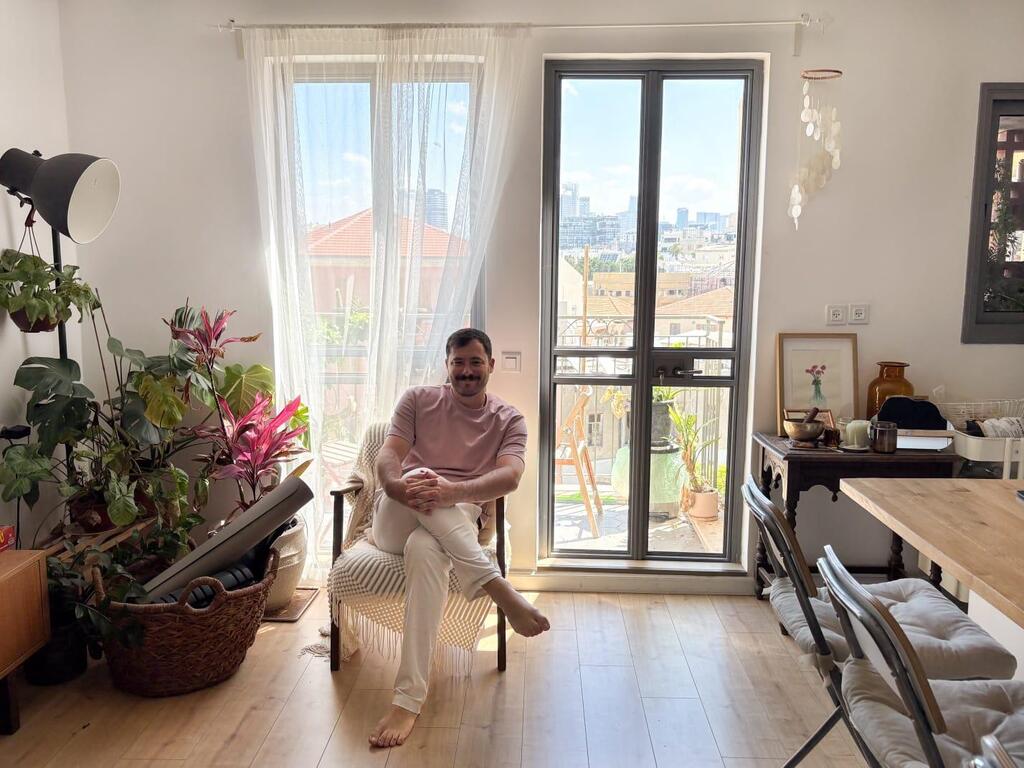
A balcony overlooking Jaffa
(Photo: Asi Haim)
Until then, they had never crossed paths. Today, they are recognized as common-law partners rather than legally married. "We had a celebration," Lior says, "but we're not officially registered anywhere. There's no chance we'll get married through the rabbinate. It simply doesn't fit the way we live our lives."
Different childhoods
Lior grew up in the northern village of Kfar Vradim, while Daniel is a lifelong Tel Avivian who was raised near the city's central Rabin Square. "People always ask what it was like growing up in Tel Aviv," Daniel says. "Honestly, it felt like a pretty normal childhood."
"I don't think so," Lior responds with a smile. "I grew up in a tiny village with no public transportation, surrounded by forests and mountains. You grew up in a city—that's very different."
For years, she imagined raising her own children in the quiet north. "Then I realized my parents had basically been my taxi drivers my entire childhood. That's life in the periphery."
As a young dancer, she was fortunate to live near one of Israel's leading dance schools. "That was pure luck," she says. "If you grow up in central Israel, there are simply many more opportunities."
Building a career through dance
Dance has been part of Lior's life for as long as she can remember. "After the army, I realized I didn't want to stop dancing. I earned a degree in dance and later moved to Hungary, where I worked across Europe. Over there, you can actually make a living as an artist."
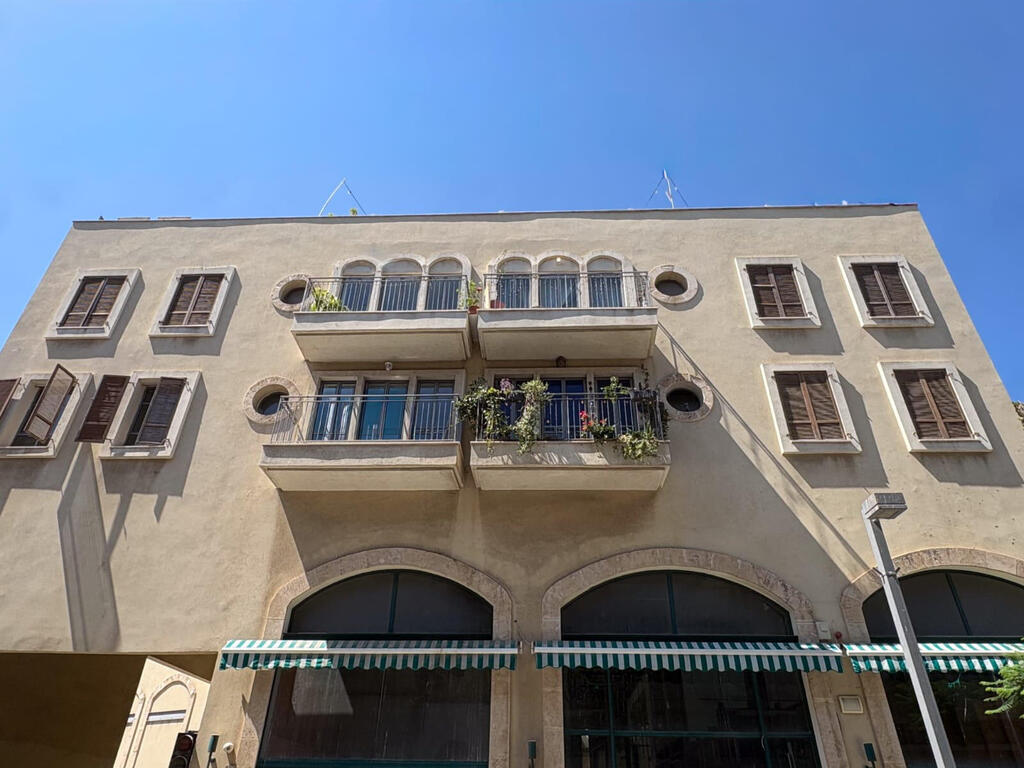
The building's facade
(Photo Asi Haim)
She performed with internationally renowned choreographers before homesickness eventually brought her back to Israel. "Nothing compares to your friendships back home," she says. "Several close friends have moved abroad in recent years, and they all say the same thing—you don't build friendships elsewhere the way you do in Israel."
Returning home meant starting from scratch. "So I began teaching."
Teaching to create
Many dancers eventually face the same question: How do you earn a living doing this?
Because she enjoyed working with children, Lior began teaching dance at an early age. Today she teaches at a community center in northern Tel Aviv and also leads dance classes for women ages 20 to 60 who want to reconnect with movement.
"My teaching pays the bills," she says. "Everything else I earn goes straight back into creating."
Turning ideas into performances
Lior describes herself first and foremost as an entrepreneur. "I love creating things from nothing," she says. An idea might begin with an open call for artists, a song she hears on the radio or simply a spark of inspiration.
"Everything starts with an Excel spreadsheet," she laughs. "I list everything—how many dancers I'll need, studio rental, rehearsals, production costs—and once I know the budget, I start raising the money to make it happen."
(Photo Asi Haim)
She runs her own company, The People Dance Theater Company, producing independent contemporary dance projects, including performances staged in public spaces throughout Israel. Her latest production is part of the Meshotetim Festival in Jaffa.
Bringing dance into the streets
Lior is also participating in Zaza, a collaborative dance initiative developed through the Old Jaffa Residency Program and the Israeli Choreographers Association.
"It's a wonderful project," she says. "The performances take place throughout Old Jaffa—in alleyways, gardens and public squares. Some pieces are designed as walking performances where the audience moves through the city together with the dancers."
The festival transforms Jaffa into a living cultural space filled with exhibitions, open studios, workshops and performances.
Stepping off the stage
Until last year, Lior was still performing herself. This year, she chose to focus on directing and producing. "I'm still in good shape," she says, "but maybe I'm getting a little old for performing." Professional dance, she explains, demands enormous physical and emotional commitment.
"I work with incredibly talented dancers, and sometimes I think, 'Why do I also need to be on stage?'" She admits she occasionally misses performing.
(Photo Asi Haim)
"There are moments when it pulls at my heart," she says. "But then I see all the backstage chaos—the dancers warming up, the adrenaline—and I'm standing there calmly with a beer and a cigarette. Sometimes it's nice to be on the other side."
Daniel: "I'm building operations for a startup in the offensive cybersecurity space. We provide offensive security services to companies that want to test how well they're protected or how vulnerable they are to malicious actors. The company was founded just a few months ago, and I left a stable job at a major tech company to join it. It's backed by a venture capital fund, and I really believe in it. I see it as both a financial opportunity for the future and a chance to work with some of the sharpest people I've met — people who aren't just interested in making a lot of money, but in doing something meaningful that will have a real impact."
Your daily routine?
"I get up, work out, then head to the office between 9 and 10 a.m., and I'm usually back home late. There's no set hour. The office is near the Azrieli Towers, so when the weather isn't too hot, I bike there. Lately I've been riding my motorcycle instead. It's demanding, but the job comes with a lot of responsibility, which makes it exciting. I see the results of my work almost immediately. At my previous company, there were 500 employees, and even the smallest change required a long process. Now, if I think something needs to be done, it happens fast. That's amazing."
How are you doing financially?
Daniel: "We're doing fine. We work hard."
Your favorite way to spend time together?
Lior: "Having a beer on the rooftop at sunset."
Daniel: "Taking a bike ride around the neighborhood."