

When Ofri Bibas first saw the plans for the memorial garden to be built in honor of her sister-in-law and nephews, she was moved to tears.
“It was beyond anything I imagined,” she said in an interview with ynet.
Gallery
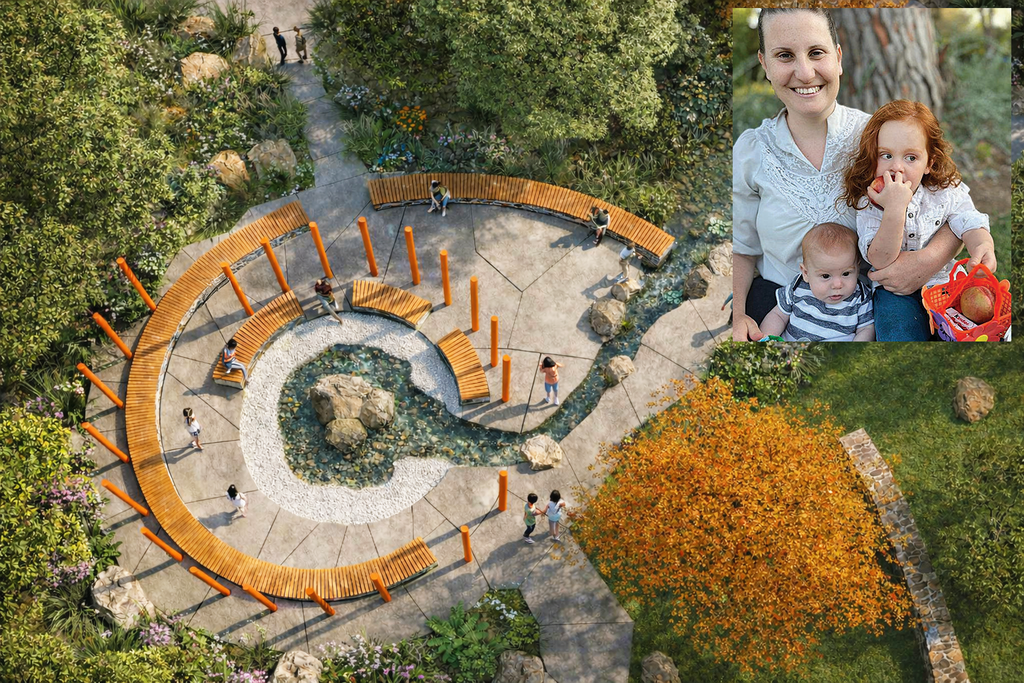
The ‘Orange Garden’ is a national therapeutic garden, the first of its kind in Israel
(Virtualization: Izy Blank Landscape Architects)
Before her eyes was a vast space of fruit trees, a flowing stream, an ecological pool and play areas, a place where, if not for that terrible day, the family could have spent quiet Saturday mornings together, surrounded by nature.
“And Ariel would probably be running around,” she said softly. “Going to the water, climbing trees and enjoying everything the garden has to offer.”
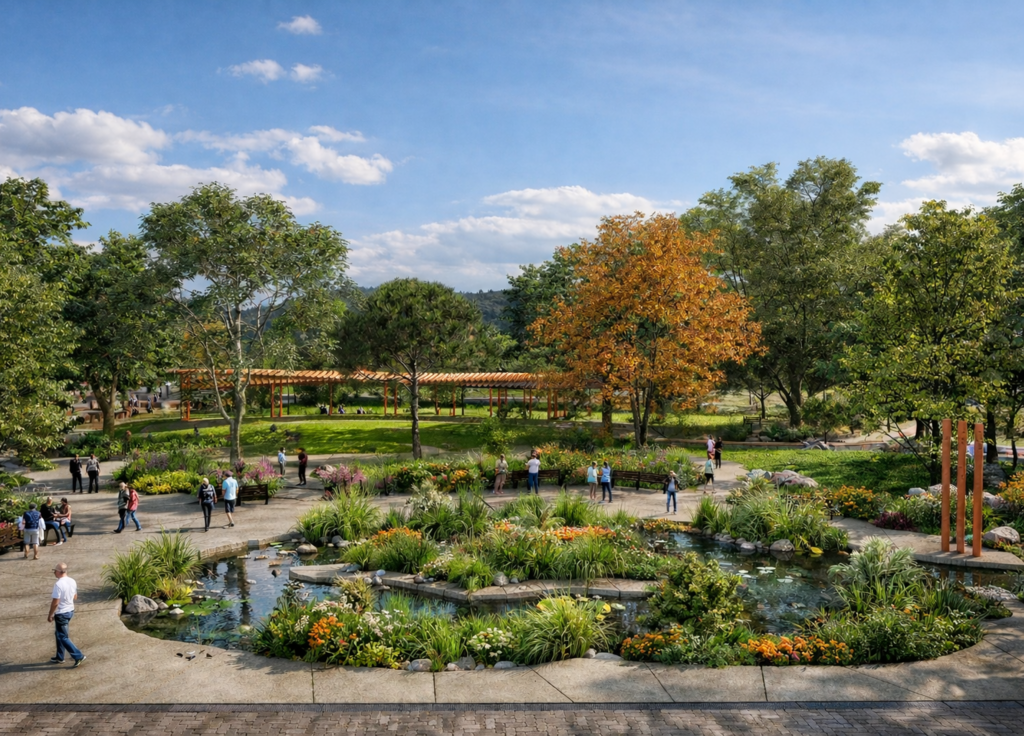
Entrance to the ‘Orange Garden’ in Migdal HaEmek in memory of the Bibas family
(Virtualization: Izy Blank Landscape Architects)
That image, of a 4-year-old boy running among the trees, lies at the heart of the “Orange Garden,” a new civilian initiative launched this week in Migdal HaEmek. The project is a national therapeutic garden, the first of its kind in Israel, dedicated to Shiri Bibas and her children, Ariel and Kfir, as well as to all children killed on October 7.
The initiative is a joint effort by the nonprofit “VeNata’ata,” the Migdal HaEmek municipality and the Bibas family.
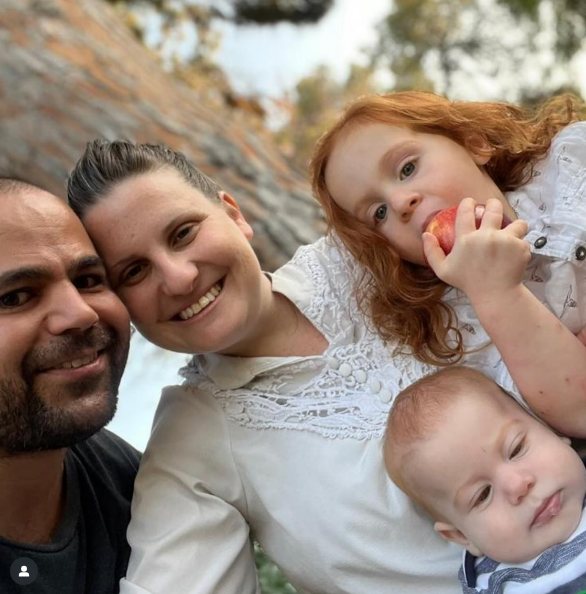
The Bibas family, Yarden, Shiri, Ariel and Kfir
(Photo: Instagram)
Since the return of Shiri and her children for burial in Israel about a year and two months ago, numerous memorial projects have been established in their honor both in Israel and abroad.
“Each one is moving and meaningful,” Ofri said. “But with the ‘Orange Garden,’ I connected immediately.”
She said the project reflects the values by which Shiri and her husband Yarden raised their children.
“Their shared love for open spaces is what led them to live in a kibbutz and raise their children there, with outdoor play, getting dirty, connecting with nature and everything it brings to the body and soul,” she said.
The garden’s design incorporates those elements, including open landscapes, water features loved by Ariel and butterflies, which were especially dear to him. An outdoor gallery will display artwork by Shiri’s parents, Margit and Yossi Silberman, who were also murdered on October 7 in their home in Nir Oz.
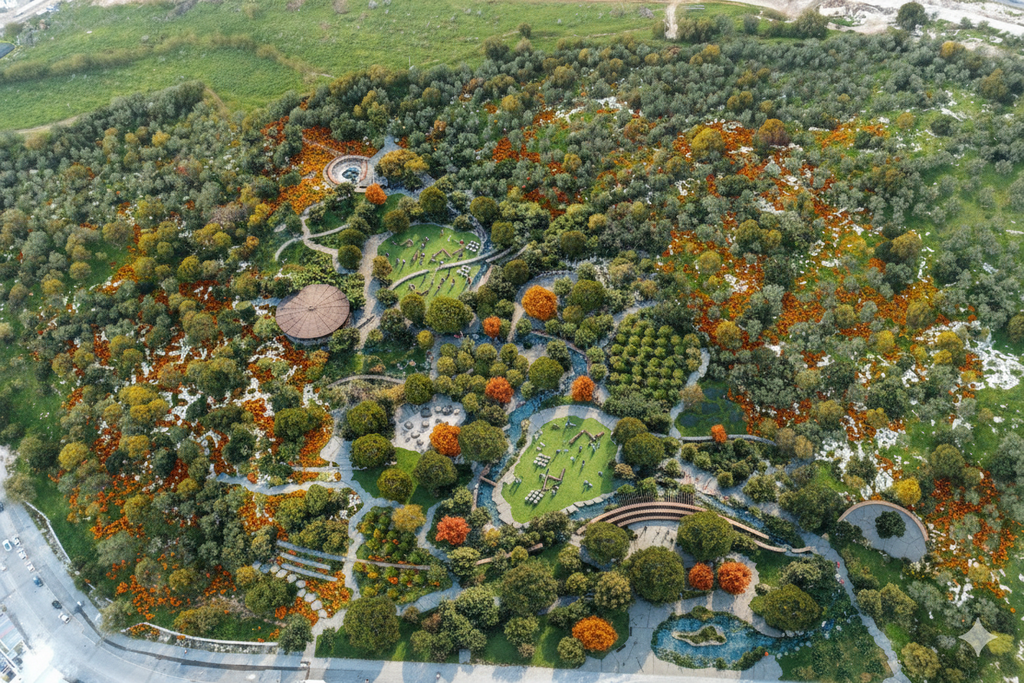
(Virtualization: Izy Blank Landscape Architects)
A memorial monument will be placed in the garden to honor all children killed in the October 7 attack and the war that followed.
“For me, it’s the most natural and fitting way to commemorate them,” Ofri said. “I imagine what it would have been like to be there with them, and that’s why I joined this project.”
On the morning of October 7, Yarden Bibas, the children’s father, was abducted first after leaving the family’s safe room to try to protect them. Hours later, Shiri was kidnapped along with Ariel, then 4, and Kfir, who was not yet a year old.
On February 1, 2025, after 484 days in Hamas captivity, Yarden Bibas was released. About three weeks later, the bodies of Shiri and the children were returned to Israel. They had been murdered by their captors in Gaza.
The idea for the “Orange Garden” grew from that tragedy.

(Virtualization: Izy Blank Landscape Architects)
The project, designed by landscape architecture firm Eazy Blank, will span about 20 dunams and be built near two kindergartens named Ariel and Kfir that are currently under construction in Migdal HaEmek.
It will include pomelo and kumquat orchards, fruits that Shiri and Ariel loved, along with dozens of play structures, therapeutic and creative spaces, and the memorial for children killed in the October 7 terrorist attack.
“We want to create a place that allows people to connect in a direct and multi-sensory way to the Bibas family and who they were,” said Doriel Rimmer, CEO of the nonprofit behind the project. “Through that, people can also process the pain and difficulty we all experienced on October 7 and since, and move toward national healing.”
In addition to its recreational features, the garden will include areas for therapy and creative activity in nature, aimed at supporting rehabilitation and healing for people with special needs.
“The ‘Orange Garden’ will be a place families can come to and feel that all of Israel is part of a story of repair,” Rimmer said. “We are used to memorials made of stone and silence. Here we chose a different model, commemoration through life itself. The laughter of children is the strongest answer to loss.”
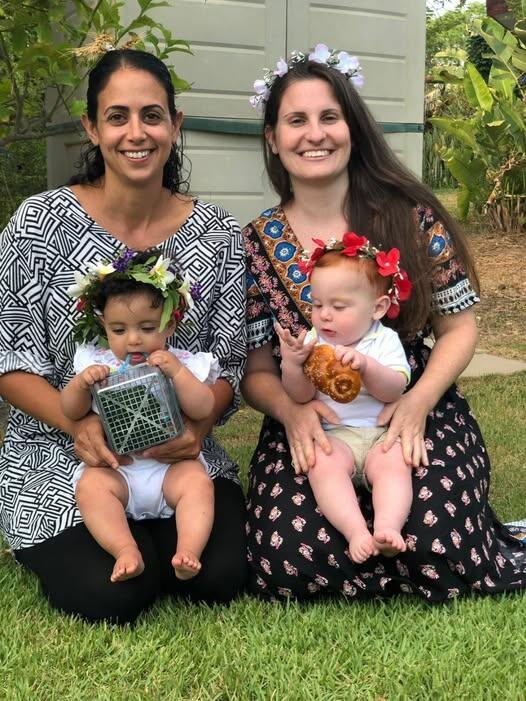
Ofri and Shiri Bibas
The project is expected to open to the public in about two years, with some sections possibly accessible earlier, potentially by the Jewish New Year in 2026.
The estimated cost of the project is NIS 25 million ($8.3M), and organizers are currently raising funds from public and private sector partners.
“We are calling on everyone to take part in building this space,” Rimmer said, “and even more, to be among its founders.”
Migdal HaEmek Mayor Yaki Ben Haim, who allocated the land and pledged to support its maintenance, said the city is proud to host the initiative.
“This is a national and meaningful project that seeks to transform deep pain into hope, growth and life,” he said. “Commemorating Shiri, Ariel and Kfir Bibas through nature, community and connection to the land reflects the Israeli spirit at its best.”