

Over the past several weeks, one topic that has literally been part of every new conversation I have with Olim and international buyers looking to buy in Israel: the shockingly weak dollar.
I've had a handful of clients whose budgets have been cut down rather dramatically in the last several months, and especially now with the dollar under 3 NIS, it's forcing some to completely reevaluate their purchase plans, whether that's the type of apartment, the neighborhood, or the city altogether.
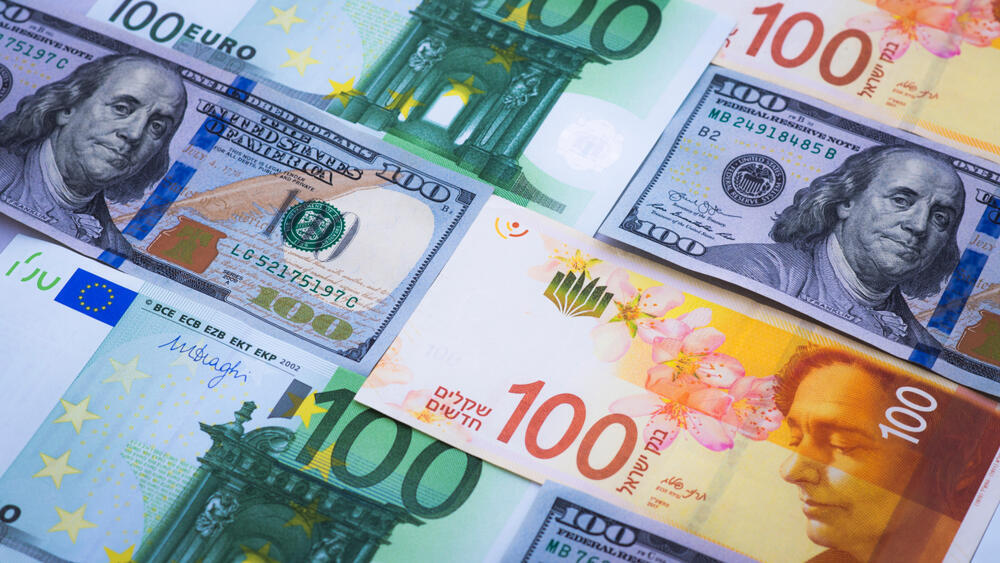
(Photo: shutterstock)
For buyers bringing money from abroad, whether in dollars, Canadian dollars, pounds, or Australian dollars, the frustration is understandable. To put into perspective: a buyer budgeting for a 3 million NIS apartment twelve months ago needed roughly $840,000. Today that same apartment costs closer to $1,060,000. That's not a rounding error. That's a quarter of a million dollars in currency movement alone, and for many buyers, that can mean the difference between moving forward and standing still.
Naturally, many buyers are asking the same question: What are my options? Should I wait, or is there a smarter way to move forward?
From what I’m seeing on the ground, serious buyers are still moving ahead. But increasingly, they are doing so more strategically.
Developers are becoming more flexible
One of the more interesting shifts I’ve been seeing lately is developers becoming increasingly creative when it comes to foreign buyers dealing with currency pressure.
In certain projects, I've seen developers offer arrangements where a meaningful portion of the purchase price, in some cases up to 60%, can be tied to a pre-agreed dollar-to-shekel benchmark rather than the live rate at time of payment. In practical terms, here is what that looks like on a real purchase:
On a 3 million NIS apartment, 60% of the purchase price or 1.8 million NIS, can be locked at a fixed rate of 40 agorot above the current exchange rate. With the dollar currently sitting around 2.80 NIS, that lock lands at approximately 3.30 to 3.40 NIS per dollar depending on the day and the project.
At the locked rate of 3.30, that 1.8 million NIS costs the buyer approximately $545,000. At today's live rate of under 3 NIS, that same amount would cost closer to $640,000. That's a saving of almost 100K USD on the locked portion alone, without the dollar moving a single point.
The construction timeline can add even more certainty to the purchase, with many projects completing in 3-4 years, which gives more breathing room for currencies to stabilize.
Every project is different, and these types of arrangements are certainly not universal. But what has become clear is that some developers understand exactly what foreign buyers are facing and are increasingly open to practical solutions that help bridge the gap.
For buyers feeling squeezed by exchange-rate movement, it is worth asking the question directly. More flexibility may exist than people assume.
Financing can create breathing room
Another conversation becoming more relevant lately is financing in Israel.
Not every buyer wants financing. Not every buyer needs it. But in certain situations, financing part of a purchase locally can reduce the immediate pressure of converting a large lump sum into shekels at a less favorable rate. That flexibility matters.
Instead of moving all capital at once, some buyers are preserving greater flexibility and spreading their exposure over time.
This is not about trying to outguess the currency market. Nobody knows where exchange rates will be six months from now. We all hope things will stabilize, but for many buyers, that breathing room alone changes the tone of the decision.
Certainty itself carries value
One thing buyers often underestimate is how valuable certainty can be.
Waiting for a better exchange rate sounds simple in theory. In reality, it can become exhausting very quickly. Rates and markets move. Inventory changes. The geopolitical situation evolves.
A buyer may spend weeks or months watching currency fluctuations every day, only to find that the apartment they originally wanted is gone, or that the opportunity has changed for reasons unrelated to exchange rates.
Sometimes locking in part of the transaction, even if the rate is not ideal, creates peace of mind and allows buyers to move forward clearly.
Especially when the decision to buy is tied to something bigger than just an investment: Aliyah plans, a second home, or creating a foothold in Israel.
Negotiations are more collaborative than buyers expect
Another shift I’m noticing is the tone of negotiations.
Buyers are bearing the brunt of the pressure exchange rates are creating. Developers are aware of it too. And I can personally attest that the vast majority of developers, the ones literally changing the Israeli skyline, are highly favorable to international clients and olim. Most take genuine pride in projects that carry a healthy mix of local Israelis and international residents.
As a result, we are still in a buyer's market, particularly in Tel Aviv and the surrounding areas. Buyers should not hesitate to negotiate. That doesn't mean low-ball offers of 25 to 30 percent under asking or demands that aren't realistic. But the assumption that pricing is fixed and immovable is simply not accurate today. There are real conversations happening right now around timing, payment structure, and creative deal terms that were far less common not long ago.
Not every project allows flexibility. Some developers are more rigid than others. But solutions can be found more often than buyers expect. It’s simply a matter of asking the right questions with the right guidance.
Looking ahead
There is no magic fix for a strong shekel and a weak dollar. Nobody knows where currencies will be several months from now.
But here is what I do know: the buyers navigating this most effectively are not the ones waiting for the perfect exchange rate, because that rate likely does not exist. They are the ones asking sharper questions, thinking more carefully about structure, and approaching transactions with more creativity than the market required a year ago.
The goal hasn't changed. The desire to buy in Israel, to plant roots, and to build something here, is as strong as ever, and in my view will only continue to grow rapidly in the years ahead.
What has changed is the path. And in today's market, understanding the tools available to you, and the developers who are willing to work with you, is the difference between a buyer who moves forward intelligently and one who is still watching the exchange rate app six months from now, waiting for a signal that may never come.
Noah Sander is a Canadian-born real estate agent based in Tel Aviv, specializing in helping international buyers and new olim navigate the Israeli property market. Founder of ZionistInvestor.com. Reach him directly: [email protected]