


As New York’s housing crisis deepens, with vacancy rates dropping to 1.4%, Mayor Zohran Mamdani is targeting “ghost towers” and trying to convert underused spaces into housing units. At the same time, many low-rise, older buildings across Manhattan remain untouched, as owners refuse lucrative offers from developers and insist on preserving the city’s historic neighborhood character.
When Liran and Goni landed at JFK Airport, they carried two overpacked suitcases and big dreams of conquering the city. Like many Israelis before them, the young couple imagined mornings starting with coffee in the Village, a short walk to an office in Midtown, and a lifestyle straight out of “Succession” — or at least “Broad City.” Instead, reality hit quickly. For nearly a year, they have been living out of suitcases, moving between exorbitantly priced Airbnb apartments and relying on acquaintances for temporary stays. Their peak housing moment so far was two weeks of cat-sitting in a luxury Upper East Side apartment while its owners vacationed in the Hamptons.
They scour social media listings, stand in long lines for tiny apartments at sky-high prices and watch their search radius expand farther from their workplaces. Desperation is pushing them to the outer edges of Brooklyn and Queens — and, on particularly difficult days, even to consider the “unthinkable”: crossing the river to join the so-called “bridge and tunnel” crowd, a dismissive New York term for suburban residents who come into Manhattan mainly on weekends. Liran and Goni recoil at the idea — and they are far from alone.
New York is under strain. The city’s housing shortage has reached historic levels, with rents and property prices soaring due to high demand and chronic supply constraints. The latest housing survey shows the vacancy rate has fallen to just 1.4%, the lowest since 1968. This desperation among residents helped propel Mamdani into office, and he is now trying to tackle the crisis without waiting years for new high-rise approvals.
His administration is advancing a financing plan that would grant about $400,000 to homeowners to convert “underused spaces” such as basements, attics and garages into legal housing units — commonly known as “granny flats.” The initiative is part of a broader plan, “City of Yes,” which aims to enable construction of about 82,000 new housing units over the next 15 years, including roughly 25,000 through such accessory units. It is another attempt to extract housing from every available corner of a city running out of space.
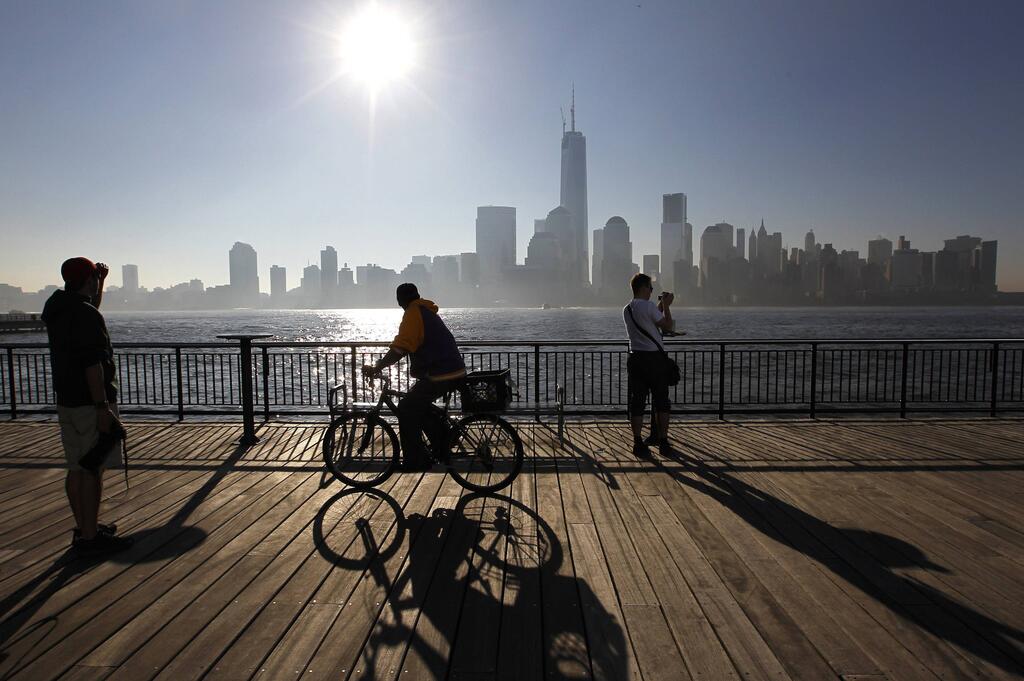
New York
(Photo: Reuters)
Yet while officials search for solutions below ground and in backyards, Manhattan’s streets tell a different story. Scattered across the borough are low-rise buildings — sometimes strikingly narrow — whose owners resisted buyout offers and developer pressure, remaining in place even as the neighborhoods around them rose skyward.
These “small rebels” are especially visible on the Upper West Side, which expanded rapidly in the late 19th century, replacing rows of low-rise townhouses with profitable apartment towers. While most owners sold out, a few held on. Their buildings, now wedged between towering high-rises, look like remnants of another city — not just architectural nostalgia, but a reminder of an unresolved question: how much room should be left for private defiance in a city facing an acute housing shortage?
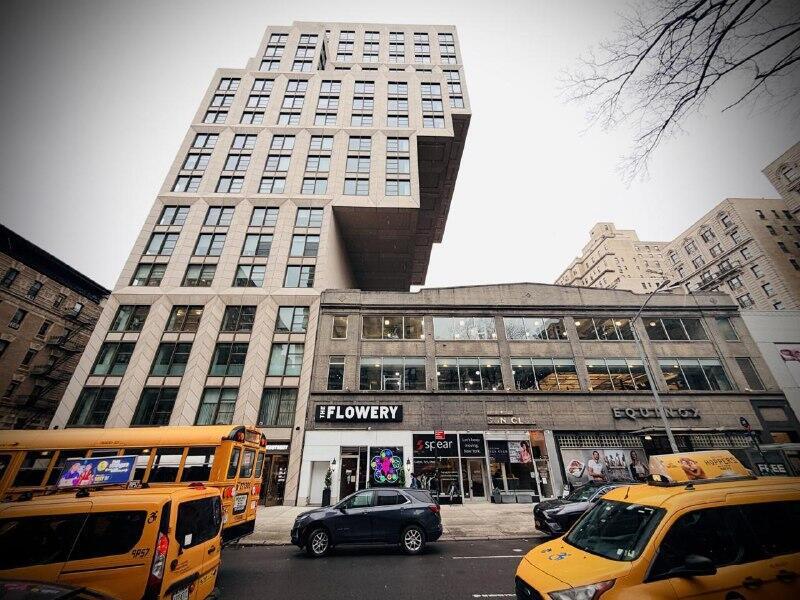
The ‘Tetris’ building at Broadway and 91st Street
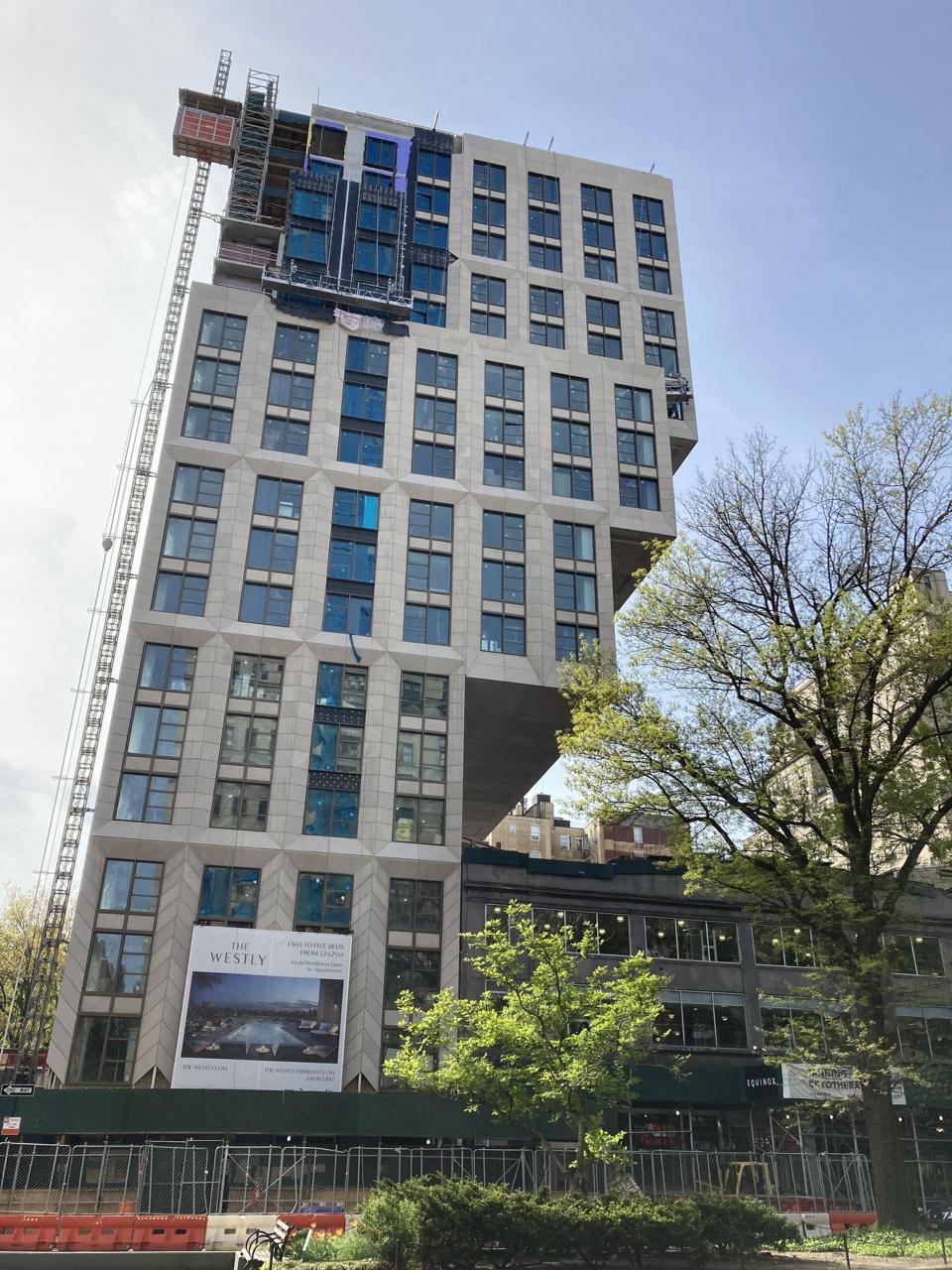
One striking example stands at the corner of Broadway and 91st Street. There, developers of the 20-story Westly residential tower were unable to acquire a neighboring low-rise building. Instead, the new structure extends sideways above it, creating a visual effect reminiscent of a paused Tetris move — a polished limestone mass hovering over a modest three-story building. Completed in 2021, the project features dozens of luxury apartments and a rooftop pool, yet it also highlights the irregularity it could not erase, as if the city itself refused to be reshaped in a straight line.
The stories behind such buildings are as compelling as their appearance. At 33 W. 63rd Street, near Lincoln Center, a five-story red-brick building constructed in 1891 was originally designed for upper-middle-class residents, with eight-room apartments and separate staircases for servants. In the 1960s, it was purchased by Col. Yechiel Raphael Elishar, a Jerusalem-born real estate figure and descendant of a prominent Jewish family, who also served in U.S. military intelligence during World War II.
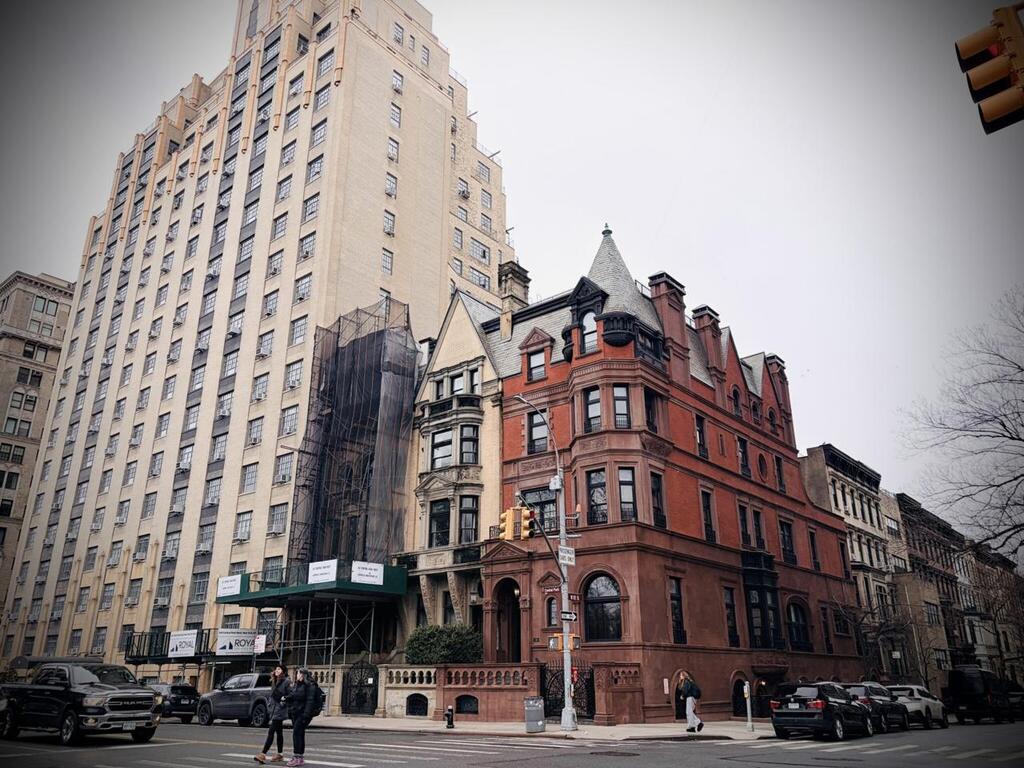
The building on W. 63rd Street
When developer Paul Milstein sought to build the 43-story One Lincoln Plaza complex, all neighboring property owners sold — except Elishar. Known as a shrewd negotiator, he repeatedly raised his demands, requested a replacement building and, after reaching an agreement, withdrew and demanded an additional donation of more than $100,000 to one of his philanthropic funds. Elishar, who founded the American Society of Technion supporters and funded a major library in Haifa, ultimately forced Milstein to build around his property.
The result left the small building standing alone, like a tooth that could not be pulled. Conditions inside deteriorated after adjacent structures were demolished, exposing interior walls to harsh winters. Still, the building remains — a lasting symbol of resistance to development.
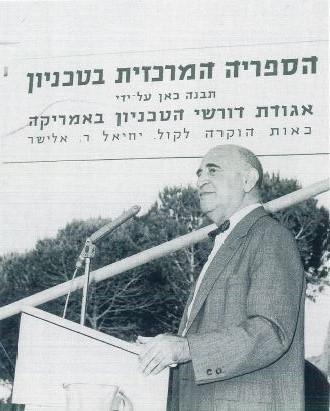
Elishar at the cornerstone-laying ceremony for the library named after him, 1962
(Photo: Technion)
A similar story unfolded at 249 West End Avenue, where a late 19th-century townhouse became the site of a quieter but equally enduring standoff. After her husband disappeared and was later found dead in 1913, Mary Cook remained in the home and refused to sell, even as developers bought surrounding properties. Towers rose on both sides — one in 1917, another in 1924 — leaving her narrow house squeezed tightly between them. Today, it stands as a physical testament to her determination.
There are many more such examples across Manhattan: buildings on West 85th Street and Central Park West preserved because a single owner refused to sell, and others on West 86th Street compressed between 1920s-era towers. Today, they serve as curiosities for architecture enthusiasts, but also as time capsules from a pre-elevator Manhattan — before doormen, rooftop pools and glass facades reshaped the city’s scale.
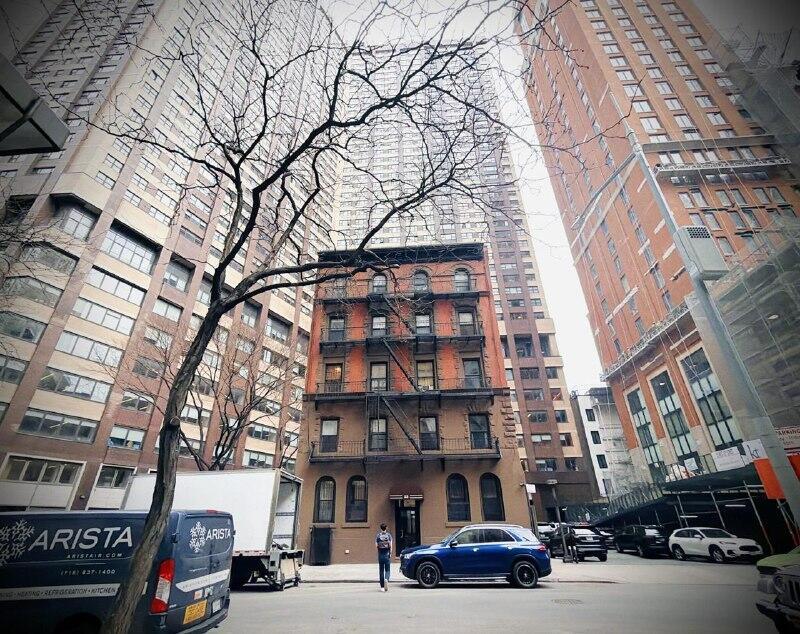
West 85th Street and Central Park West, like remnants of another city
The debate surrounding these structures is not merely sentimental. In a city facing severe housing shortages, every underbuilt lot is seen by developers, policymakers and economists as a missed opportunity. Yet these same buildings embody the character, continuity and human scale that neighborhoods like the Upper West Side now market at a premium.
Even Mamdani frames his policies as an effort to increase density without erasing neighborhood identity, acknowledging that the struggle is not only about how many housing units can be built, but also about what kind of city will remain once they are.