

The Israeli rhythmic gymnastics scene never lacks talent, with a new star emerging every few years to fulfill high expectations. As the World Championships kick off on Wednesday in Rio de Janeiro, optimism surrounds the prospect of a blue-and-white athlete on the podium, though all eyes are on Los Angeles 2028.
In May 2023, while attention focused on Daria Atamanov’s recovery for the Paris Olympics, Adi Katz and Daniela Muniz represented Israel at the European Championships.
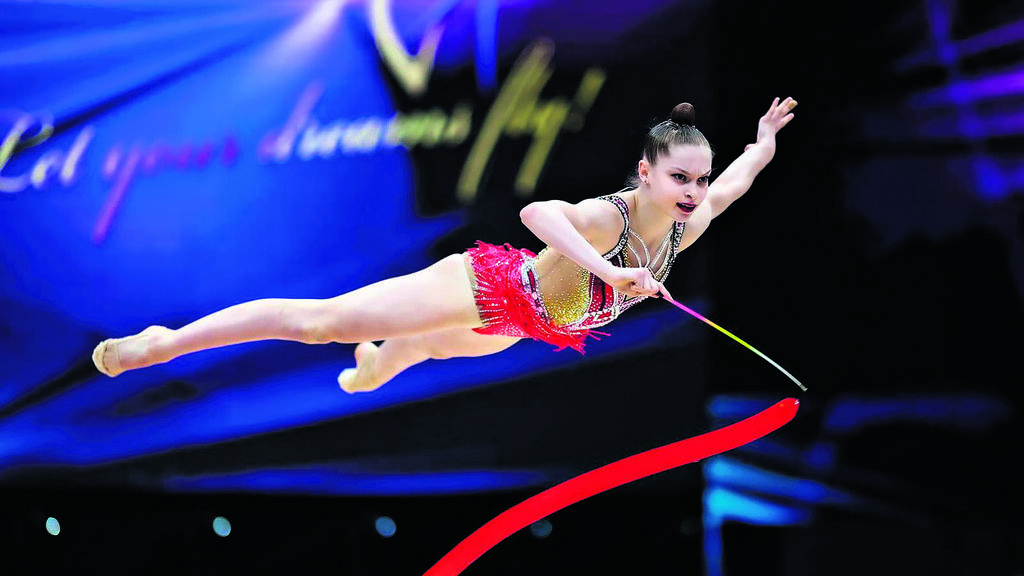
Muniz, earmarked for 2028, claimed the stage, returning a year later with gold in the clubs routine and bronze in the ball routine, leaving the question of her Olympic partner—among Alona Tal Franco, Meital Sumkin and Lian Rona—unanswered. The dynamics shifted in the past year, with 16-year-old Sumkin emerging as the top contender for Los Angeles.
The new prodigy, hailing from the same Hapoel Rishon Lezion pipeline that produced Olympic champion Linoy Ashram and Atamanov, took the lead in her first senior year. From age seven, coach Ayelet Zussman and her team recognized her potential and nurtured it with precision.
Last year, during the Olympic season, the elder Muniz trained alongside Atamanov, while Sumkin competed in a lower category. At the European Championships, she won gold in the ball routine, but Tal Franco outshone her with silver in the hoop and bronze in the clubs, hinting at a fierce Olympic selection battle. Rona also joined competitions, turning the race for two spots into a four-way contest.
As the season opened, the gymnasts split into two World Cup events: Muniz and Rona in one, Sumkin and Tal Franco in another. Though top Europeans skipped the latter, Sumkin dazzled with gold in the hoop, silver in the ribbon and bronze in the clubs. Two days later, she clinched the all-around title, a key Olympic category.
The European circuit adopted a unique duel format instead of a classic all-around, and Sumkin dominated four such matches to claim the cup. Her results prompted Zussman’s team to enter her in all four routines at the June European Championships.
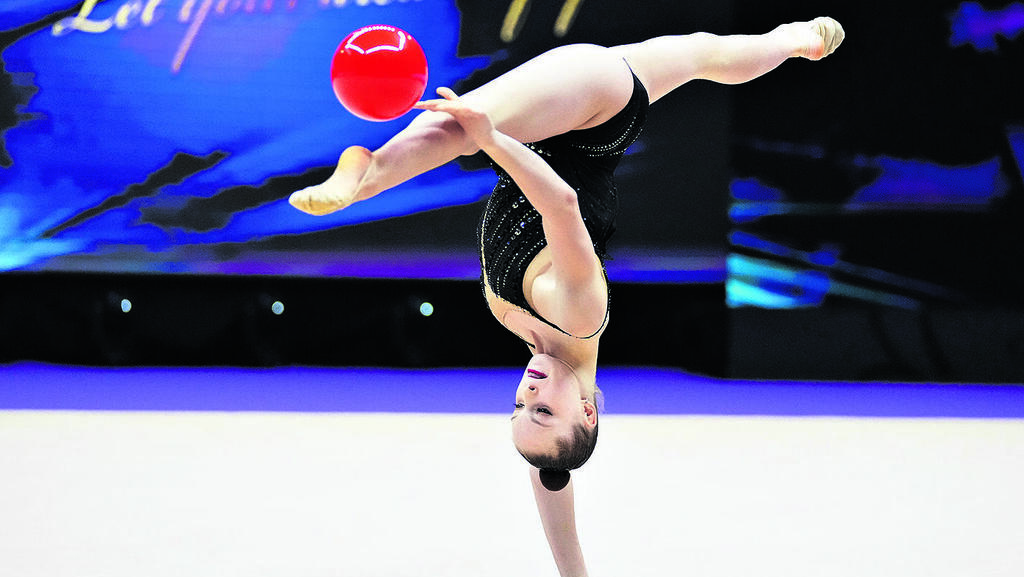
Meital Sumkin
(Photo: Ulrich Fassbender, Israel Gymnastics Federation)
On her senior debut day, she reached finals in ball and hoop, adding ribbon and all-around finals the next day. Despite a critical error in the first routine that dropped her to 21st overall, her talent shone through, captivating observers.
Former Olympian Neta Rivkin praised Sumkin, saying, “Meital combines rare strengths under the current code. She builds high difficulty levels with her apparatus work, excelling in throws, tricks, technique and dynamic routines, moving at a fast pace.”
The young gymnast rebounded for the individual finals, earning silver in ribbon and bronze in ball, though finishing fourth in hoop—her all-around stumble. Like Ashram and Atamanov, who returned with all-around bronzes from their first worlds, Sumkin left her debut with multiple medals.
Despite being the youngest competitor, she won over coaches and fans alike. “Few remain indifferent after seeing her,” an association source noted. Rivkin highlighted Sumkin’s uniqueness: “She’s very theatrical, a trait now critical in the code with more parameters for high scores.
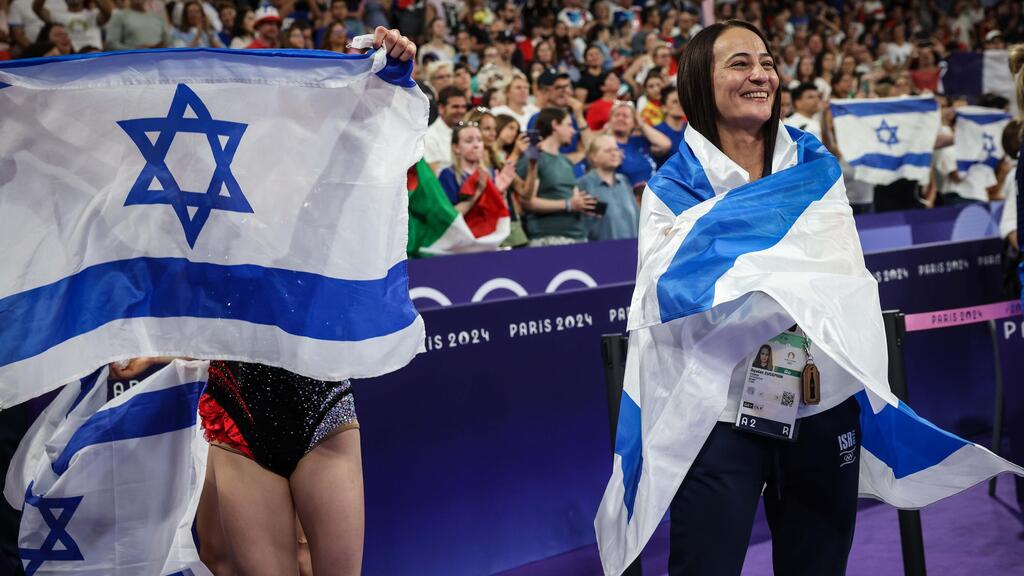
Ayelet Zussman
(Photo: Oz Mualem)
“Her style is distinct, unlike any other gymnast. She puts on a show on the mat, and with such high difficulty, the audience struggles to decipher her moves.”
Unlike Ashram’s adaptability or Atamanov’s clean routines, Sumkin follows Zussman’s guidance meticulously, with choreographers Ayelet Zussman and Julietta Cantalupi shaping her path.
Rivkin predicts rising difficulty as her campaign progresses, adding, “You can’t take your eyes off her. She’s unique, ranking among the world’s best, outpacing veteran elites.” With Ashram and Atamanov’s bronze legacies, a podium finish in Brazil seems plausible. As for a Los Angeles medal, Rivkin’s professional view offers a firm “yes.”