

Players are not entirely pleased with the condition of the pitch at the New Jersey stadium that is also set to host the final of the 2026 World Cup, underscoring one of FIFA’s biggest challenges at this tournament: the playing surfaces.
“Because of the weather and the heat, the grass dries out quickly and the game becomes slow. We can’t generate rhythm. It bothers us,” Brazil’s Vinicius Junior said.
Gallery
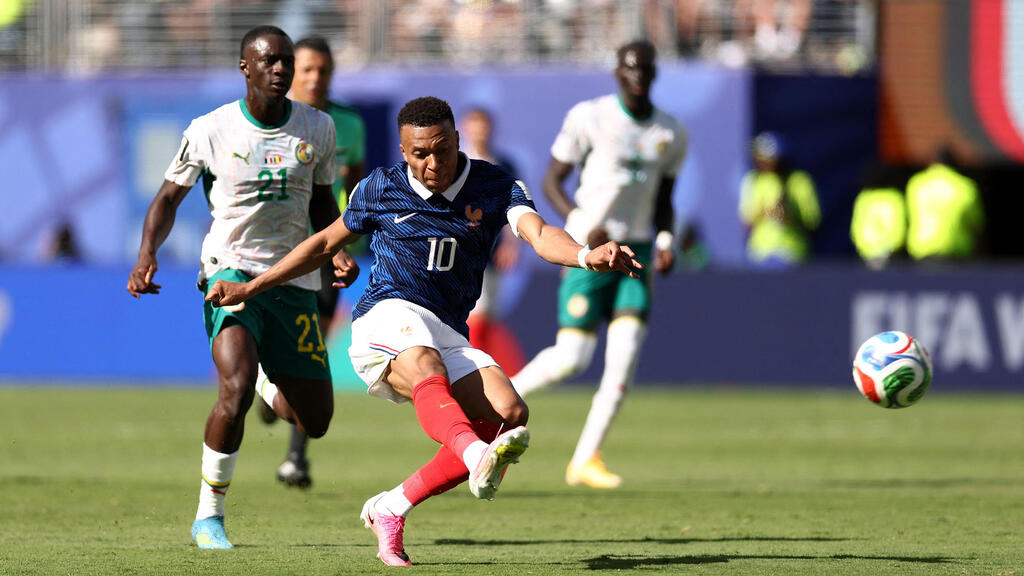
Kylian Mbappe and France face Senegal on the 'problematic' turf in New Jersey
(Photo: Charly Triballeau/AFP)
“I was surprised by the condition of the pitch. We have no choice, we have to play, but clearly the grass was not good,” said France defender William Saliba.
“The main lesson came already at the 2024 Copa America. In the match between Argentina and Canada in Atlanta, Angel Di Maria got into a good position in the opening minutes, but the ball bounced unnaturally and the move ended with a weak shot,” said agronomist Gadi Shiftan, controlled-release fertilizer marketing manager at Haifa Group. “After the match, Argentina’s players and professional staff spoke about a surface that felt like a trampoline. In a stadium normally used for American football, temporary natural grass had been laid over another surface, and the difference was noticeable.”
So how did organizers try to close that gap at the current World Cup?
“The geographic spread made the project more complicated,” Shiftan said. “In the United States, the main challenge is football stadiums, some of them with synthetic turf, that had to be quickly converted for soccer. What was needed was mainly stadium engineering: sand layers, drainage, artificial lighting, fibers and operations on top of infrastructure that was not built for soccer.
“In Dallas, they found a solution. Since the roof prevents sunlight from reaching the grass, pink plant-growth lighting systems were suspended above the field. They descend from the ceiling and allow mowing, watering and maintenance while the grass continues to grow. It is a strange sight, but it is part of the logistics.
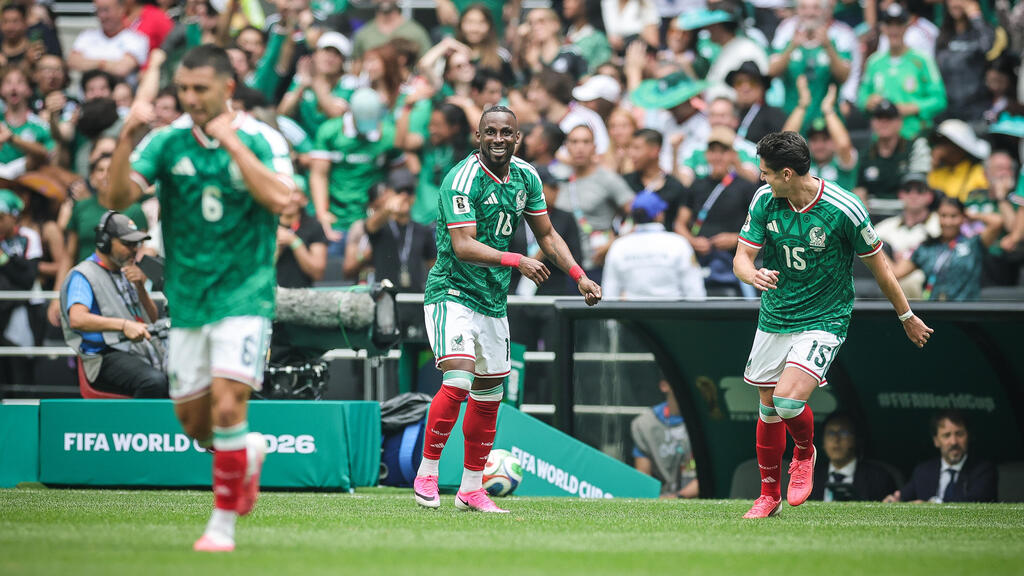
Julian Quinones and Mexico celebrate on the grass in Mexico City
(Photo: Oz Moalem)
“In Canada, the problem is different. Vancouver and Toronto present cooler climate conditions and are more sensitive to light, humidity and recovery. The focus was on cool-season grasses and managing light and growth. In Mexico, it is a third story: altitude, heat, humidity and strong sun, with clear differences between Mexico City, Guadalajara and Monterrey. The surface has to withstand heat stress, radiation and altitude without noticeably changing the behavior of the ball. FIFA was not looking for identical grass, but for similar performance, so the player would feel as little difference as possible.”
Shiftan also noted that trial plots were built at two universities, more than 170 experiments were conducted and different grass blends were tested according to climate, roof structure, match load and light conditions.
“Five millimeters in mowing height can change a match,” he said. “According to the researchers, a pitch can feel like Velcro or like a fast natural carpet just because of the length of the grass blades. That is why, at this World Cup, mowing is expected to be carried out almost daily. The growing process itself has also become a supply chain, from the turf farms to refrigerated trucks and installation at the stadium.
16 stadiums, 16 different headaches
The issue of the grass has been troubling many players and coaches at the World Cup. After France’s 3-1 win over Senegal, coach Didier Deschamps said: “My team had to change shoes because of the pitch in New Jersey, which was not particularly good. The bounce of the ball is different, so you have to get used to it.”

France coach Didier Deschamps
(Photo: Mauro Pimentel/AFP)
Midfielder Adrien Rabiot added: “I don’t even know if you can call it a pitch. It felt more like a hard, rigid artificial surface.”
Because the 16 stadiums are located in vastly different environments — from Mexico City, about 2,200 meters above sea level, to New Jersey at sea level, and from desert-like Los Angeles to humid Toronto — the pitches are made up of different types of grass, with each stadium requiring its own special installation.
Some stadiums get sunlight, while others do not. Some get rain, while others get almost none. The players are dealing with an enormous range of conditions, and so are the pitches. Who knows — perhaps in the end, the grass will be what determines which national team lifts the golden trophy.