

The 1994 World Cup felt to the United States like an alien spacecraft landing in the hills near the Hollywood sign. It was the first time a country had been awarded the tournament without even having a professional league, and it had to commit to creating one.
The U.S. national team players were then mostly college amateurs or players in small leagues abroad. Most Americans knew nothing about soccer. Some resented it as a foreign game, while those who tried to get into it did not understand how a match could end without a winner, why there were no timeouts to grab something from the fridge, or how a game could end without a single goal.
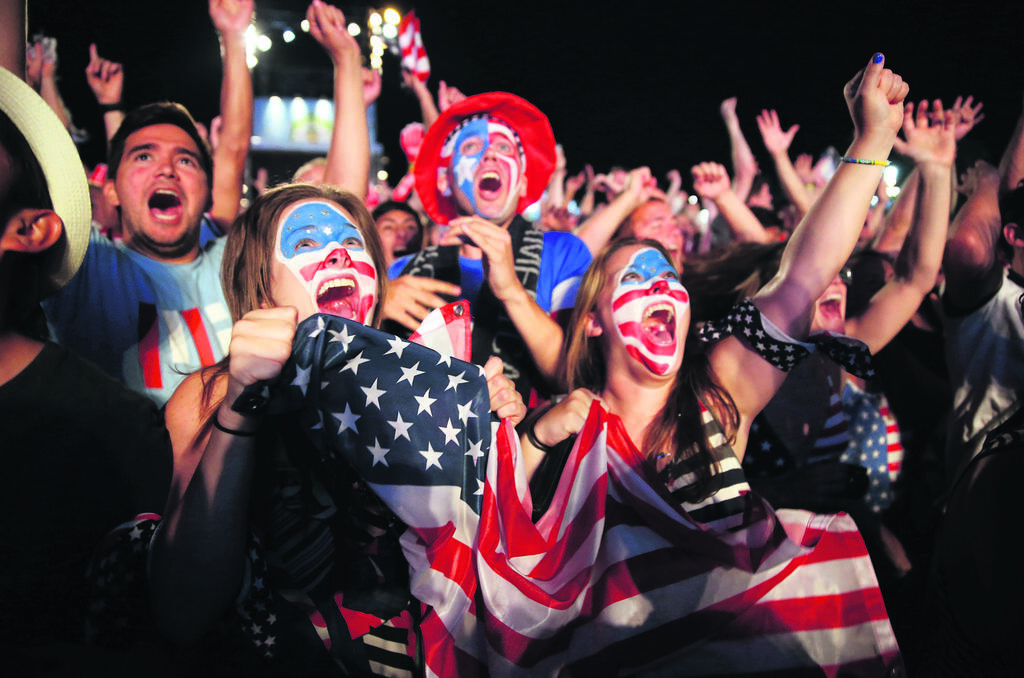
All of that meant the organizing committee for the 1994 World Cup faced a challenge probably unlike any other host: building a World Cup from scratch, truly from scratch.
“We weren’t sure how much pure soccer fan support we would have,” Alan Rothenberg, chairman of the 1994 organizing committee, recalled in an interview with Yedioth Ahronoth. “All we knew was that Americans love a big event. We said: ‘Maybe we can count on immigrants who came from soccer countries and know what the World Cup is, but for the broader public to know and get excited, we’ll have to give them a very big American event, regardless of soccer.’”
And so Oprah Winfrey hosted the opening ceremony in Chicago; Diana Ross performed and took a penalty kick that was supposed to split the goal in two with a Hollywood effect straight out of the blockbuster “Speed,” which had come out at the same time, but she missed spectacularly; the gala before the group-stage draw included performances by Smokey Robinson and James Brown; at the draw itself, the balls were pulled, among others, by boxer Evander Holyfield, Olympic gymnastics champion Mary Lou Retton and Robin Williams, whose expected chaos became a cult moment. Whitney Houston performed at the closing ceremony.
“We made people understand that this was a major event you couldn’t miss,” Rothenberg said. “We were also pretty smart about how we distributed tickets. We released them at different times, but in relatively small quantities, so we could always say they were sold out. When you see story after story in the media about tickets being snapped up, you start to worry you’re missing something big.”
FOMO before the internet?
“Exactly. We convinced FIFA to give us a replica of the trophy and took it on tour. Not just to the nine host cities, but everywhere, to generate interest, even if it was just people curious to see something they didn’t know at all.”
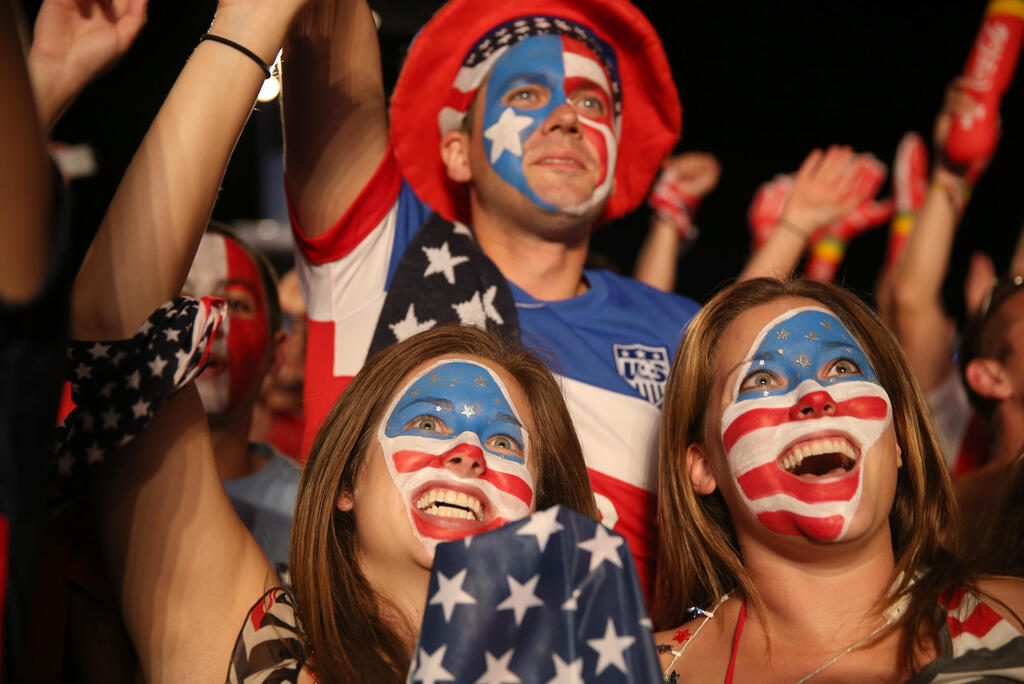
American soccer fans cheer for the national team
(Photo: Joe Raedle/Getty Images)
An American record
The 1990s were good years in the United States, and the World Cup was a true celebration, without asterisks. Part of the crowd probably did not fully understand what it was watching, but that was secondary. People danced in the streets. The event broke attendance records, with 3,587,538 total spectators and an average of 68,991 per match — records that still stand, and that no World Cup since has come close to, even after the tournament was expanded to 32 teams.
Financially, too, it was the most successful World Cup up to that point. Above all, the U.S. reached the knockout stage for the first time since 1930. The round of 16 match against Brazil on July 4 was watched by 11 million people on television. Today that may not sound like much, but at the time it was an astonishing number. The fact that the Americans were very much in the game and lost only 1-0 to the team that would go on to win the trophy created a cultural-sporting moment that helped establish soccer in the U.S. and led to the creation of MLS in 2006.
Thirty-two years after that World Cup, Americans no longer need to be told what soccer is or what the World Cup means. But Rothenberg is counting down the days with a mix of anxiety and hope.
“Everything will be fine, but there are political complications that are causing great concern,” he said. “It doesn’t seem the world is as excited to come to the U.S. as it was in 1994, and even our friends don’t like us very much right now. But here’s what I do know: The World Cup is such a huge event, and today there are already so many Americans who really love soccer and understand it, that I’m sure everything will be fine.”
A new game
Rothenberg is right. Soccer’s growth in the U.S. has been massive. About 3 million children ages 5 to 19 play in organized frameworks. It is the second most popular sport among children, at 26.5%, after basketball at 36.8% and ahead of baseball at 24.1%. On the other hand, soccer is the sport many children start, but it also loses players the fastest, for cultural and economic reasons. An athletic child will ultimately always prefer to try basketball or football and, as in every area of life in the U.S., soccer also has class and race gaps. Still, the game keeps growing.
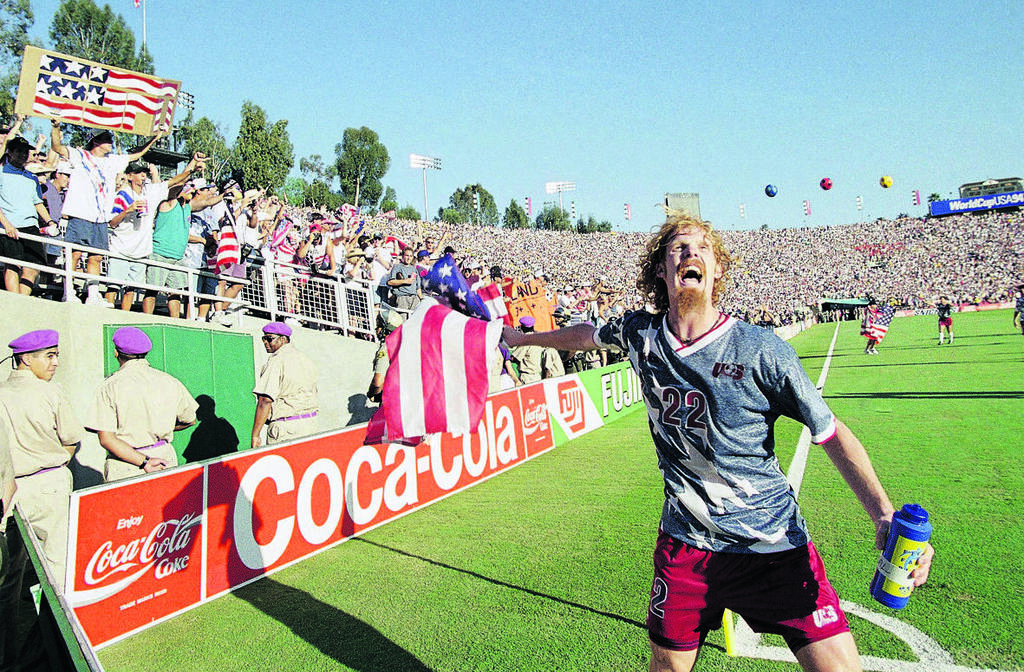
US player Alexi Lalas celebrates victory in the 1994 World Cup
(Photo: Eric Draper/AP)
Last year, average attendance at an MLS match was 21,988, with the total reaching 11.2 million over the season. Atlanta United averaged 43,992 fans at home matches. Over the past three seasons, average league attendance has stood at 22,443. It is not Barcelona, and it is not an NFL game, but it can absolutely look every other U.S. league in the eye. MLS has broadcast deals with Apple TV, Fox Sports and Univision in Spanish. Every major European league is shown in the U.S., and the growth is evident even in the number of bars where the TV is showing a soccer match.
There are two ways young Americans have connected to the game in the 21st century, almost entirely below the radar of professional sports in the U.S. One is simply to be born into it. Latinos are the fastest-growing minority in the U.S., and every such child begins playing soccer before learning to speak.
Alejandro Mohas, a 19-year-old student from Connecticut, is a third-generation American, the grandson of grandparents who came from Chile. He spent the first years of his life in Texas, which has a huge Latino population, and there absorbed two sports: soccer and baseball.

2026 US National Team playing in the World Cup
(Photo: Mike Stewart/AP)
“I have pictures of myself as a baby in the crib sleeping with a small baseball bat and a soccer ball,” recalled Mohas, who as a teenager dreamed of becoming a professional soccer player and eventually concluded he would be a better lawyer. “And when I was old enough to choose, there was no dilemma. I was born in a Latino home with soccer in my veins.”
When did you realize that in your country, in general, it was not exactly like that?
“I understood it pretty early. There are so many sports here, and people treated soccer as something foreign. Maybe because the biggest soccer fans are immigrants, or because it looked to people like some boring European game. But it’s completely different now. Everyone I know, no matter their background, loves soccer. Everyone is very invested in supporting teams all over the world.”
But not MLS teams.
“Yes, that’s true. I think not enough effort is being made to market that league and improve it. On TV, we see matches from European leagues, and the professional level is just completely different.”
The second way to get on the soccer bandwagon without coming from that tradition is to be drawn to it almost by chance. That is what happened to Sebastian Haas, 26, from New Jersey, who was born into a classic American sports family and raised on baseball. When he was 5, his family hosted a high school student from Sweden through an exchange program, and the student taught the little boy what soccer was. Haas grew up to become a Manchester United fan and brought all his friends along with him.
“At first I wasn’t thinking about world soccer, I just loved playing. I played a lot in school,” he said. “Only later did I really get into watching games from around the world. It fascinated me. How many leagues there are, how many players, how many tournaments. It is so international. I loved everything about it.”
People around the world think Americans hate soccer.
“Yes, but that’s really not true. Some people here say it’s a very boring game, that there aren’t many goals. But once you get into it and start to understand, you see that so many things are happening in this game all the time. And in what other sport is there always a chance for the underdog to win?”
Why, despite all this, has MLS not broken through?
“The truth is that I don’t follow that league either. It’s a very hard battle against all the professional leagues here, which are so big. Maybe the problem is marketing, or maybe it’s that the league is not good enough. It’s a little like how the whole world watches the NBA because it’s a much better league, and we watch European soccer because, in soccer terms, that’s like the world watching the NBA.”
A local star needed
It is easy to blame MLS, but the biggest problem preventing the gap from closing between soccer’s grassroots popularity in the U.S. and its place in the zeitgeist is mainly that the national team simply has not made the leap. The average American loves Leo Messi and Cristiano Ronaldo, but there is no one truly connecting that fan to local soccer.
After the 1994 World Cup, the narrative was that if the U.S. merely decided it wanted to win the World Cup, it could do so within 12 years. That did not really happen. Soccer grew enormously, but the national team is still not good enough.
“When you look at the national teams that succeeded, they always had an identity or a special connection,” said Rothenberg, 87, who also served as head of the U.S. Soccer Federation and oversaw the creation of MLS. “There were periods when nearly Germany’s entire lineup came from Bayern Munich. In Spain, everyone was from Barcelona or Real Madrid. France has a wonderful national training center everyone goes through. Even though they spread out and play elsewhere, they have a style and they have also spent time with each other.
“In the U.S., we have many talented players, but they meet a few weeks before a tournament, and that’s it. We are now opening a fantastic training center outside Atlanta that will be home to all U.S. national teams. Maybe we can replicate the experience of France’s Clairefontaine and start really creating an identity for American soccer.”
So where does the world get it wrong in how it sees soccer in the U.S.?
“The competition soccer has in the U.S. is much greater than the competition it has anywhere else. There is so much high-level professional sports here, and all of it is much more established than soccer. In most parts of the world, soccer is the No. 1 sport with almost no competition. There are countries where there is only soccer. Here the competition is for the time, attention and money of sports fans, and it is brutal.”
The sport in the role of immigrant
The upcoming World Cup will be completely different from 1994 in almost every way. Organizationally, the biggest difference is that this time there is no one like Rothenberg. Then there was an American organizing committee that ran everything. This time, the organization is in FIFA’s hands, with each host city having its own committee. That is one reason why, even before it begins, this World Cup is not approaching the organizational level of 1994.
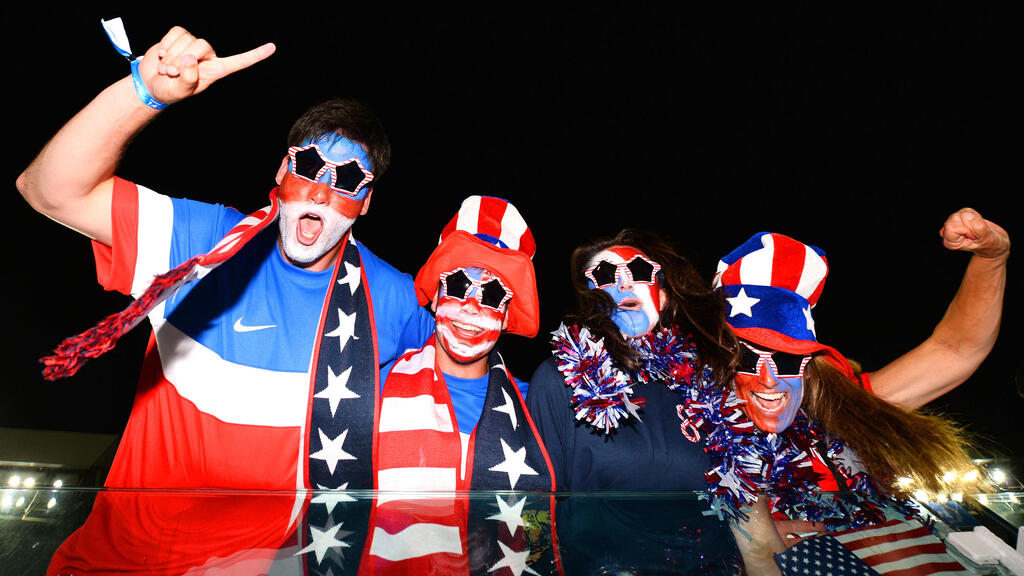
Those crazy US soccer fans
(Photo: Jamie McDonald/Getty Images)
“What happened then,” Rothenberg recalled, “was that FIFA kept the television rights and international marketing rights, and transferred the organization itself to the U.S. federation, which set up an organizing committee. We ran it like a business, like a corporation. I was the CEO and people worked for me. Each city had a person in charge who reported to us at the command center. Now everything is in FIFA’s hands, and they do not have the connections and understanding of the U.S. So this time there are 11 different cities, and each has a host committee put together differently, with different regulations and customs.
“In 1994, our challenge was to create something no one knew. But we knew how to put on a big event. Now it’s exactly the opposite. Everyone knows what the World Cup is, but organizationally and operationally it is much more complex. What is true is that now there are communities that know how to host soccer matches. We had people who had never hosted a soccer match.”
On the other hand, there is no longer a need to explain the rules to viewers. Gone are the days when Americans thought a game ending 0-0 or 1-0 was necessarily boring. Not only do they understand the game much better, they have also learned to embrace the experience.
“Everyone who goes with me to watch a game for the first time comes out in love,” Mohas explained. “People of a certain generation grew up here with an anti-soccer attitude that had nothing to do with the game itself, its ethos or what it can give. There is no other game that creates community like soccer. I coach American kids who have no soccer background, and parents come to me and tell me how their child opened up and became happy since playing soccer. It takes time to get used to the idea that there are other forms of sport too, certainly in a country that has so much sports and where soccer is a kind of immigrant.”
How critical is it that the U.S. team succeed at this World Cup?
“Not like in 1994,” Rothenberg said. “Because we started from zero, no matter how good a job we did organizing it, if the U.S. team had embarrassed itself, it would have cast a huge cloud over the World Cup, and I don’t know if MLS would have been founded at all, or certainly not so quickly. The fact that the team was competitive, that we beat Colombia, which was a favorite before the tournament, and that we stood up well against Brazil, gave us a kind of respect.
“Today we have a talented team, but it has not played much together, suffered injuries and looked very bad in some games. Of course, I don’t want to think about the possibility that we won’t get out of the group stage, and clearly the further we advance, the better. But even if the team does not succeed in the tournament as we hope, it will no longer be fatal for soccer in America.”
Both Mohas and Haas, representatives of the younger generation, believe a strong U.S. performance at the World Cup is indeed very important. “It will achieve in a few weeks the effect people have been trying to achieve here for years,” Mohas said.
“In America, people love winners,” Haas said. “If the national team goes as far as possible, it will make a huge difference.”
Both are hoping to manage to get tickets and fulfill the dream of seeing a World Cup match. “I check the prices every day, hoping something will drop into a normal range,” Haas said. “These really are impossible prices. I would be happy to see my national team, but I think that in the best case maybe I’ll manage to see Senegal against Norway at MetLife Stadium, and even that would move me very much.”