

Apple’s predicament: About a week after outgoing Apple CEO Tim Cook announced price increases for most of the company’s products and blamed the surge in memory chip prices, it turns out Apple is already looking for a solution — and it runs through China.
According to a Financial Times investigation published Saturday, the tech giant has been applying heavy pressure on the Trump administration in recent weeks to secure approval to buy chips from Chinese manufacturer CXMT, short for ChangXin Memory Technologies, which the Pentagon placed on a blacklist because of its alleged ties to the Chinese military.
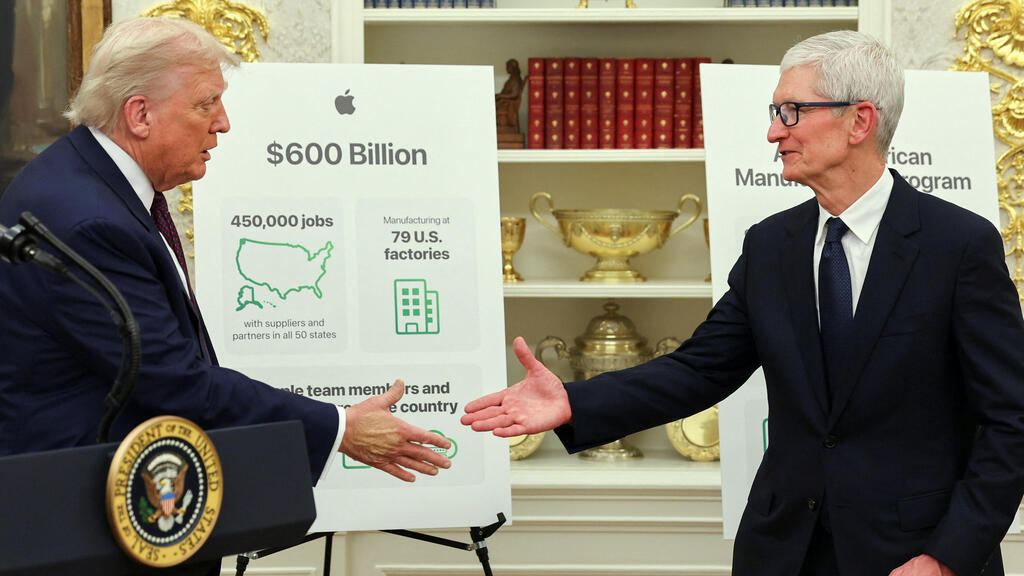
According to the report, Apple approached the U.S. Commerce Department more than a month ago and is simultaneously conducting a campaign with officials in the White House and Washington. Legally, Apple is not actually barred from buying chips from CXMT, but the manufacturer’s inclusion on the Pentagon’s list of “Chinese military companies” makes any cooperation with it politically sensitive.
Price hikes exposed the problem
The report comes shortly after Apple announced an unusual price increase for MacBook and iPad computers, a move that wiped about $263 billion off the company’s market value in a single trading day. In its announcement, the company said memory chip prices had become so expensive that it could no longer maintain current pricing levels, forcing it to pass some of the costs on to consumers.
Behind the price increase lies one of the biggest crises to hit the chip industry in recent years. Three years ago, memory manufacturers were coping with excess supply and low prices. The artificial intelligence revolution has completely changed the picture.
Tech giants are now investing hundreds of billions of dollars in building server farms for AI systems, and the enormous demand for advanced HBM memory chips has led manufacturers to divert a large share of their production capacity to them. The result is a shortage of standard DRAM chips used in computers, smartphones and tablets — precisely the components Apple buys in hundreds of millions of units each year.
Apple currently relies on only three major DRAM suppliers: U.S.-based Micron and South Korea’s Samsung and SK Hynix. Adding CXMT as another supplier could increase competition and reduce the growing pressure to raise prices.
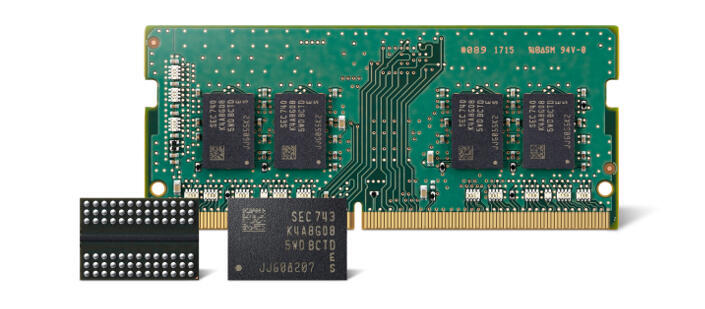
Samsung DRAM memory
(Photo: Samsung)
The company flagged by the Pentagon
But CXMT is not just another chipmaker. The company is considered one of the Chinese government’s most strategically important firms in the chip sector, and the Pentagon has placed it on a list of companies it says have ties to China’s military.
The list usually has no direct legal effect, but it sends a clear signal from the U.S. government to American companies and investors that the entities involved are sensitive from a security standpoint. According to sources who spoke with the Financial Times, Apple is now seeking assurances from the administration that, at least in the near future, no restrictions will be imposed that would prevent it from working with CXMT. It remains unclear, however, whether the White House will be willing to provide such a guarantee.
Either way, the mere possibility that Apple could begin buying chips from the Chinese company is already drawing sharp opposition in Washington. Rep. John Moolenaar, chairman of the House China committee, told the Financial Times that Apple would be making a serious mistake by choosing to work with a Chinese company linked to the military. He said such a move would strengthen China in a field where the United States is trying to reduce its dependence.
This is not the first time Apple has run into trouble over a Chinese chip supplier. In 2022, the company considered using memory chips from YMTC in iPhones sold in China, but backed away after heavy pressure from U.S. lawmakers.
Now, with the surge in memory prices directly affecting its product prices and profitability, Apple appears forced to reconsider options that were once deemed too sensitive. The question is whether the Trump administration will agree to let one of the world’s most profitable and valuable companies rely on a chipmaker the Pentagon has warned against.