

When Google was preparing for its historic IPO in 2004, co-founder Larry Page outlined an almost messianic vision in his letter to shareholders. A better society, Page argued, depends on free, unbiased access to high-quality information.
For more than two decades, Google fulfilled that vision by positioning itself as the internet's traffic director. It answered the queries of billions of users with lists of links, sending them out to the open web — millions of websites operated by news organizations, academic institutions, businesses and bloggers.
Gallery
For more than two decades, Google fulfilled that vision by positioning itself as the internet's traffic director
(Photo: Getty Images)
But in the era of generative artificial intelligence, the tech giant is making a sharp U-turn that threatens to undermine the economic model of the web itself.
Users stay inside Google
According to a report by The New York Times, the shift accelerated after Google integrated AI Mode, powered by Gemini, into its search engine. The iconic search box, which remained largely unchanged for nearly a quarter-century, has become a chat interface that delivers polished, concise and comprehensive answers instead of directing users to the original sources.
The data shows users are now entering search queries that are three times longer and spending up to nine additional minutes inside Google's search interface without leaving it. Recent studies estimate that in roughly 75% of these new search sessions, users never leave Google at all.
For website owners, content creators and publishers, the consequences have been severe. The term "Google Zero," coined years ago by The Verge Editor-in-Chief Nilay Patel to describe the point at which traffic from Google would collapse to zero, has gone from a theoretical concept to a growing reality.
Internet infrastructure company Cloudflare reports that between mid-2025 and spring 2026, human traffic to e-commerce, financial and media websites fell by about 40%. At the same time, more than half of all internet traffic is now generated by bots and automated agents.

Google AI Mode, powered by Gemini
(Photo: Google)
Even the Wikimedia Foundation, which operates Wikipedia, has seen visitor numbers decline by about 8%, while AI models extract vast amounts of information from the site without providing equivalent value in return. Whereas Google's traditional search algorithm rewarded content creators with links and traffic, large language models ingest their content and rewrite it into new responses.
The trend is not unique to Google. Competitors including Perplexity, OpenAI's ChatGPT Search and Microsoft's Copilot operate in much the same way, transforming the search engine into a closed-answer system. The shift moves the internet further away from the original vision of Tim Berners-Lee, who conceived the web in 1989 as an open, borderless system.
Google rejects those claims, saying it continues to direct billions of clicks to websites every week. Liz Reid, the company's vice president and head of Search, has argued that reports of collapsing traffic rely on flawed methodologies. Even so, public and regulatory pressure continues to mount.
Britain's Competition and Markets Authority has already required Google to make changes to its AI interface, including providing clear links to original sources and giving websites the right to opt out of AI crawling. Many media companies, including Vox Media, are now rethinking their strategies, selling digital assets and focusing more heavily on podcast networks and direct audience channels.
Eyes on the hardware market
Even as the web grapples with these changes, Google is also trying to challenge Nvidia and other AI hardware companies.
According to a report by The Information, Google is developing a dedicated server chip codenamed "Frozen v2," which could significantly reshape the company's AI infrastructure.
The new chip would hardwire parts of Gemini's architecture directly into the silicon. The move is a direct response to one of the technology industry's most pressing challenges: a severe shortage of computing capacity in data centers, which has reportedly forced Google Cloud to turn away some outside customers.
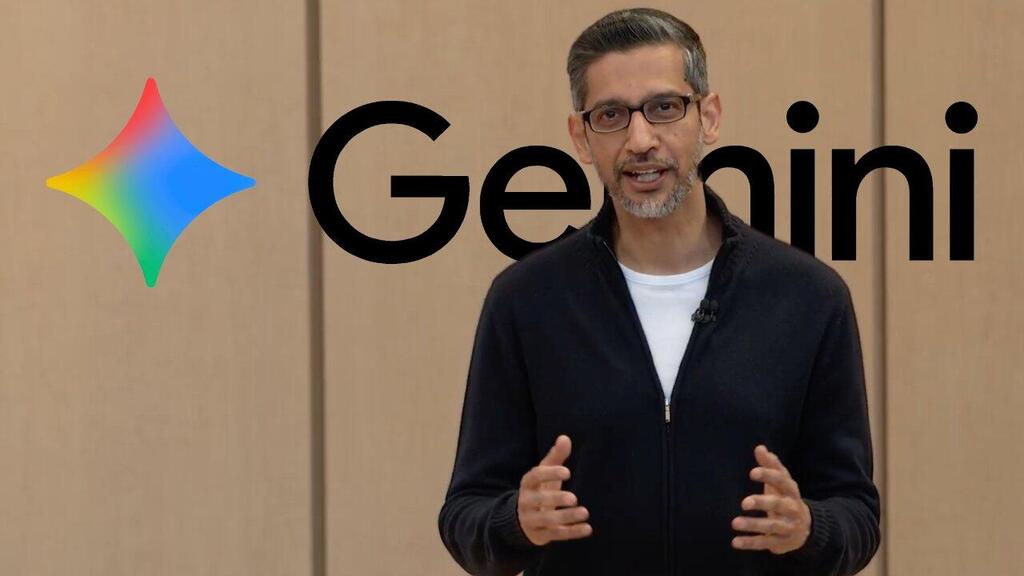
Google CEO Sundar Pichai
(Photo: Google)
Engineers working on the project estimate that the chip, slated for deployment beginning in 2028, could deliver six to 10 times more tokens — units of processed text — per unit of energy than Google's latest-generation TPU processors.
Unlike general-purpose processors such as GPUs, which must make complex real-time decisions for every AI model they run, the new chip permanently embeds parts of Gemini's processing pipeline into the transistors themselves. By hardwiring specific functions into the hardware, Google can dramatically shorten data paths and significantly improve response times.
The shift toward custom AI hardware extends well beyond Google's labs and is gaining momentum worldwide. Canadian startup Taalas unveiled its HC1 chip this year, taking the concept even further by hardwiring Meta's Llama 3.1 8B model directly into TSMC silicon.
The chip reportedly delivers 17,000 tokens per second per user without requiring expensive high-bandwidth memory. Meanwhile, Nvidia has signed a $20 billion technology licensing agreement with AI inference chip designer Groq, while companies across Europe and Asia — particularly in China — are exploring custom chips for domestic AI models to reduce dependence on U.S. infrastructure.
Even so, Google does not plan to replace its existing TPU lineup. Instead, the new chip will complement the current architecture. Google's TPU family has recently split into separate processors for AI training and inference, with the new chip serving as a specialized accelerator for specific workloads.
The target deployment date of 2028 also coincides with reports that Google has tapped Intel to package millions of TPU processors, underscoring the company's vision of future data centers as hybrid systems that combine general-purpose processors with specialized AI silicon.