

Israel Electric Corporation (IEC) has completed a groundbreaking development, the first of its kind in the world: a dedicated robotic system mounted on a drone that enables the installation and removal of orange warning balls on overhead transmission line ground wires — without the need for helicopters or elevated work platforms.
This Israeli-made technology was developed to address a complex safety, operational and economic challenge in building and maintaining the national transmission grid, with the primary goal of ensuring the safety and well-being of the company’s employees. The strategic move positions the IEC at the forefront of global innovation in the field, reflecting its commitment to advancing workplace safety, innovation and efficiency, while also creating the potential to export the solution internationally.
Gallery
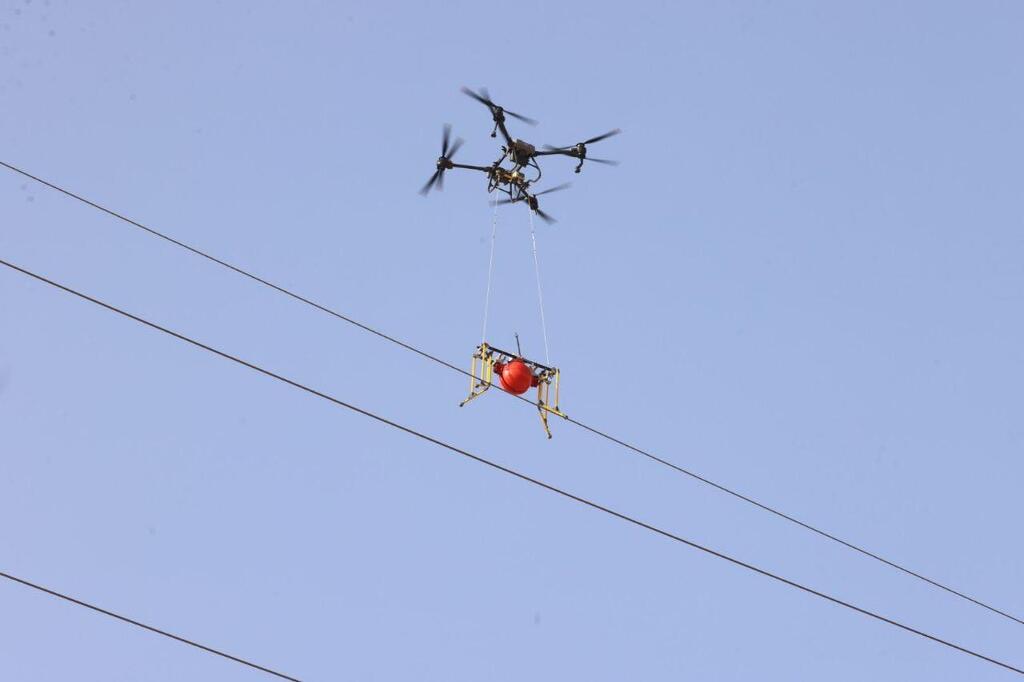
Drone-mounted robotic system installs warning balls on Israel Electric Corporation high-voltage transmission lines without helicopters or lift crews
(Photo: Israel Electric Corporation)
The warning balls are installed on transmission line ground wires at fixed intervals, at heights ranging from 20 to 70 meters (65 to 230 feet) above ground level. Their purpose is to alert low-flying civilian and military aircraft to the presence of power lines in the area, in accordance with requirements set by aviation authorities and the Israeli Air Force.
The measure is intended to help prevent aviation accidents, as overhead transmission lines can pose a significant obstacle to aircraft operating at low altitudes, particularly in open or agricultural areas. Each year, the IEC installs thousands of new warning balls as part of the ongoing construction and expansion of the transmission grid, while also maintaining and replacing existing ones damaged by weather and environmental conditions.
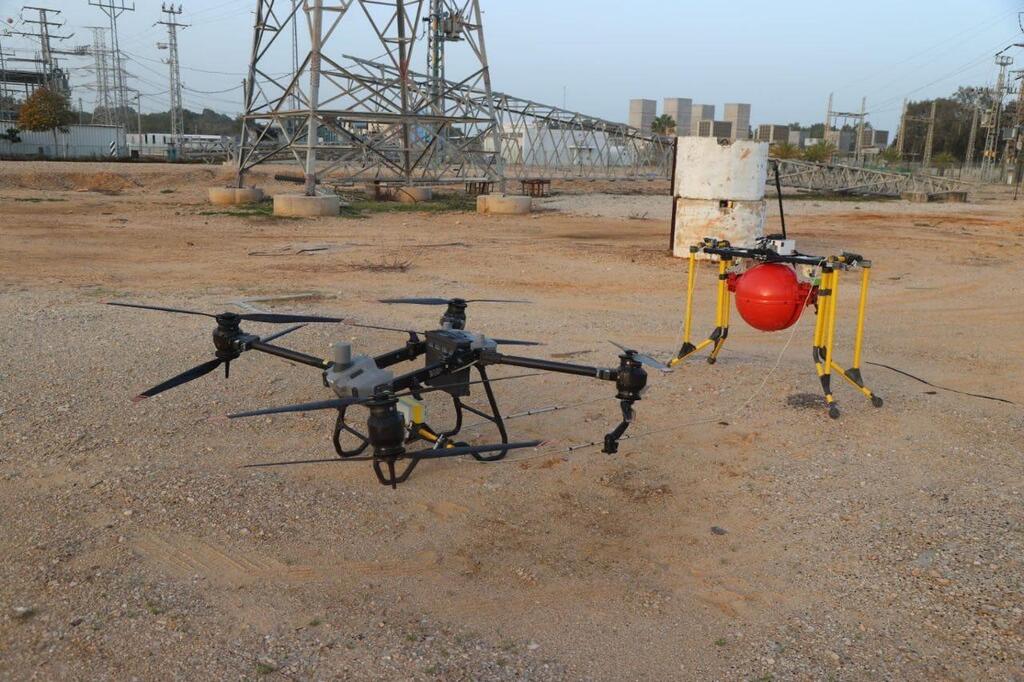
Drone-mounted robotic system installs warning balls on Israel Electric Corporation high-voltage transmission lines without helicopters or lift crews
(Photo: Israel Electric Corporation)
At the core of the development is an advanced robotic system mounted on a drone. For the aerial installation process, a specialized warning ball was developed featuring an automatic “Click Clamp” connection mechanism, allowing the drone to attach and detach the ball from the wire remotely and with precision.
The technology enables a touch-free installation process at great heights, with operators maintaining full control from the ground in real time. According to the IEC, the system significantly reduces employee exposure to high-risk work at elevated heights and near live high-voltage infrastructure.
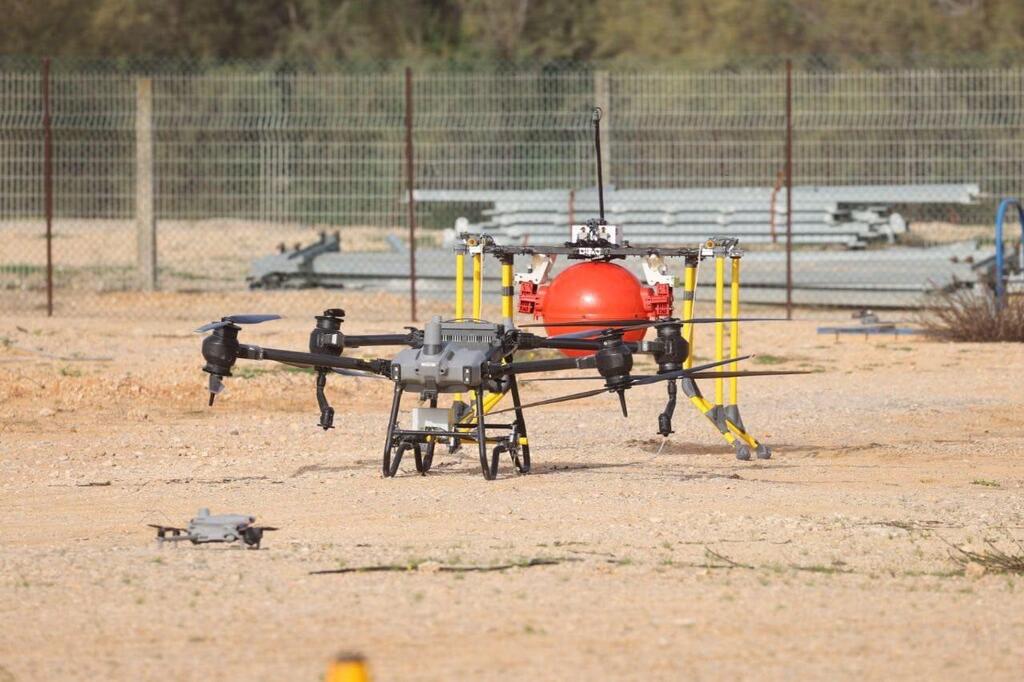
Drone-mounted robotic system installs warning balls on Israel Electric Corporation high-voltage transmission lines without helicopters or lift crews
(Photo: Israel Electric Corporation)
Until now, installation and replacement of the warning balls relied on traditional methods involving dedicated helicopters or aerial lifts, with field crews carrying out complex operations near live electrical lines. The company said those methods exposed workers to substantial safety risks while also requiring costly and logistically complex operations.
The new system was developed in collaboration with Israeli company Kronos following a public tender issued by the IEC. The technology is expected to gradually replace traditional installation methods, improving worker safety while reducing installation and maintenance costs and streamlining operational processes.
“This development reflects a broader philosophy at the IEC, where technological innovation must first and foremost serve the safety of our employees, as well as the continuity and reliability of the power grid,” said Herzl Friedman, the IEC’s vice president of engineering and strategy. “Integrating such technological developments allows us to perform complex tasks more accurately, efficiently and safely, while reducing our dependence on heavy equipment and complicated logistical processes.”
First published: 14:33, 05.20.26